0%
Empowering Investigative Minds
Develop practical skills in cybercrime investigation, evidence examination, forensic analysis, and report writing through 1 Month guided practical sessions and virtual laboratories.
Enroll NowFree SessionGain practical exposure to digital investigations, cybercrime analysis, digital evidence handling, and forensic reporting through a structured 1 Month internship program. Learn through theory sessions, practical demonstrations, virtual labs, case studies, and real-world investigation workflows.
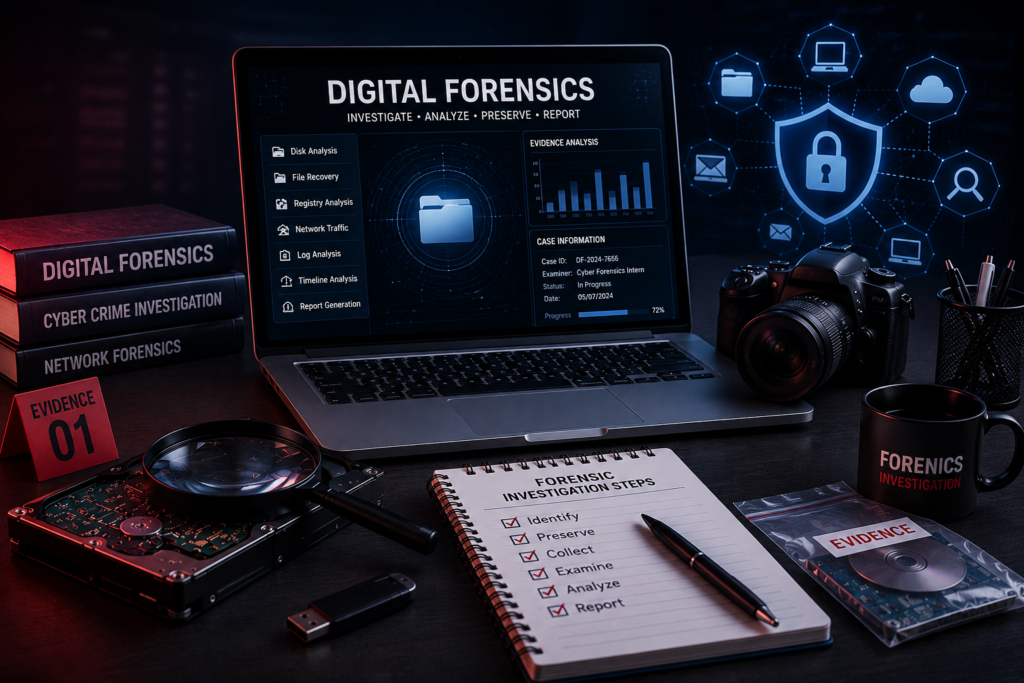
Pre-Recorded Theory & Practical Sessions
Live Mentor Guidance & Doubt Solving Sessions
Virtual Labs
Study Notes
Assignments & Assessments
Industry-Level Case Studies
Downloadable Evidence Files
Downloadable Cyber Forensics Software/Tools
Forensic Report Writing Practice
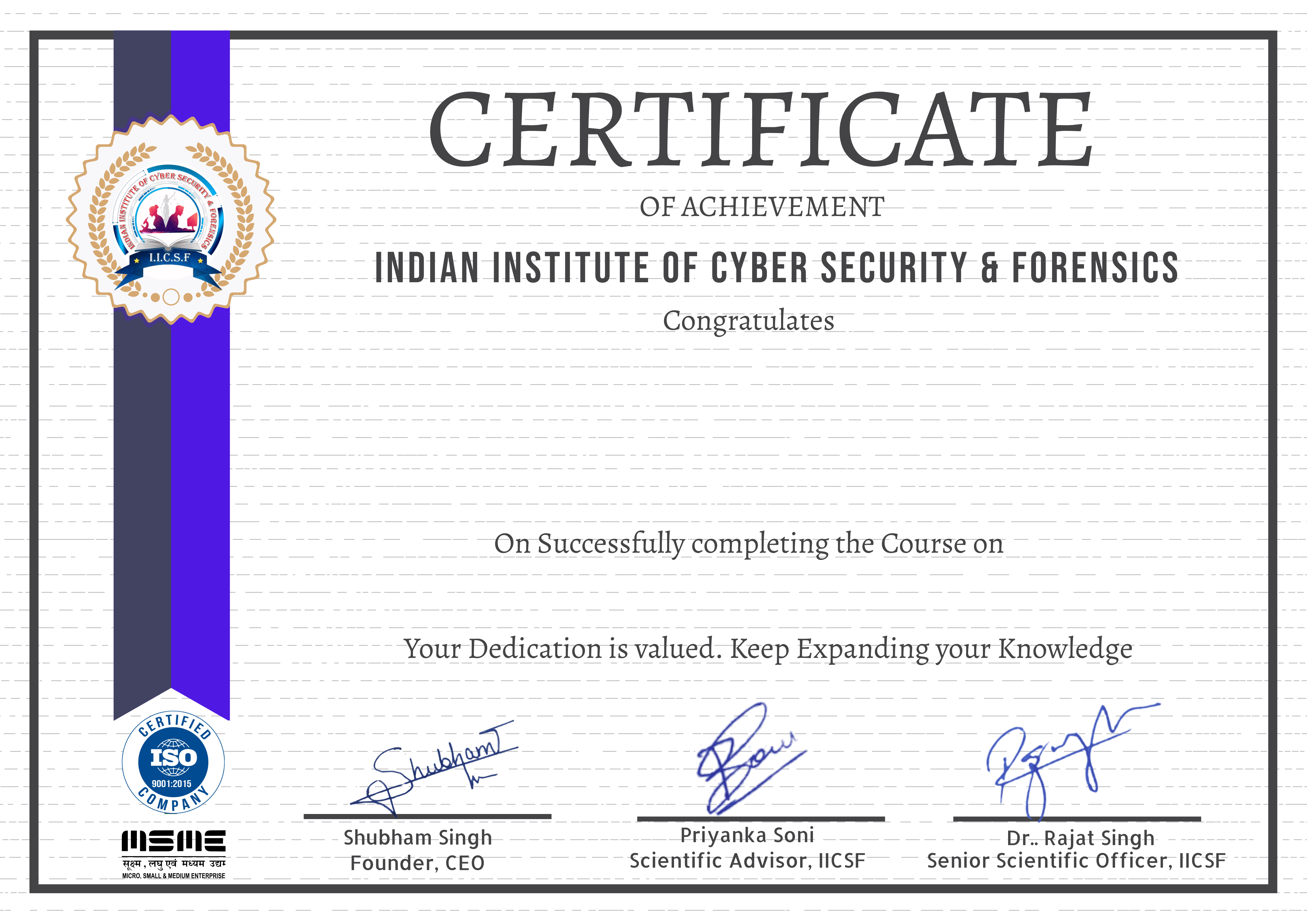
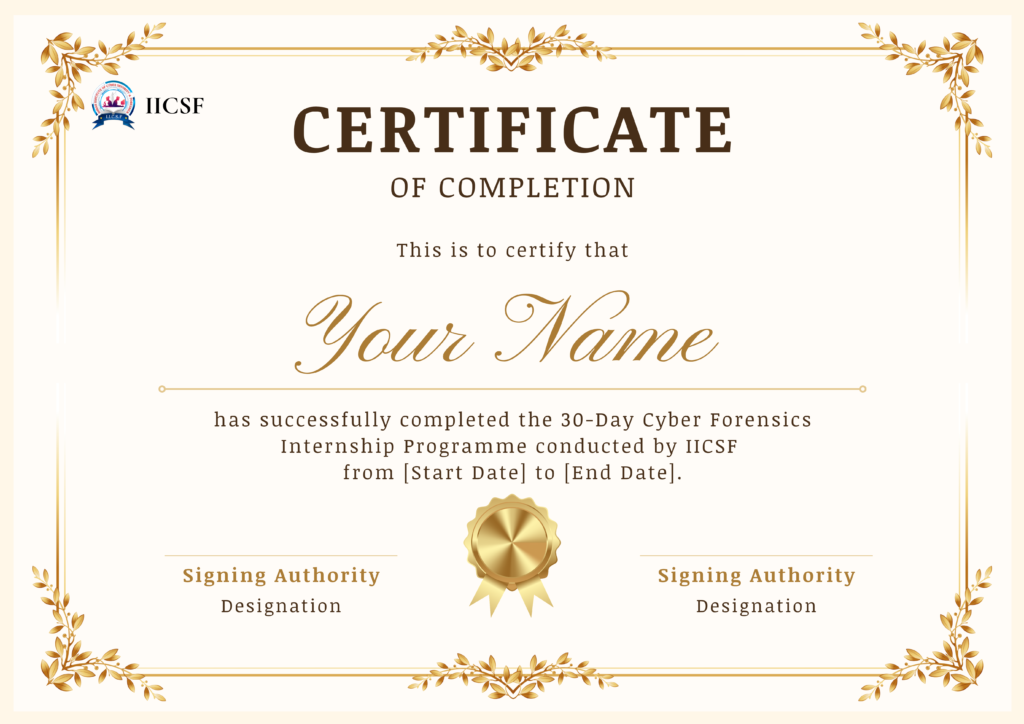
Internship Certificate on Successful Completion
Letter of Recommendation (LOR) for Meritorious Students
15 Theory & 15 Practical industry-oriented modules covering digital investigations, cybercrime analysis, digital evidence examination, forensic methodologies, and professional forensic reporting.
Explore the complete internship syllabus comprising 15 modules covering cyber forensic concepts and practical investigations.
Introduction to Cyber Forensics, Digital Evidence and its Types, Characteristics of Digital Evidence, Metadata and Types of Metadata, Digital Forensics Investigation Process, Identification, Preservation, Analysis, Documentation and Presentation Phases, Handling Digital Evidence in Different System States (Switched Off, Switched On and Under Attack), Evidence Acquisition and Preservation Techniques, Types of Cyber Forensics, Cyber Forensic Tools and Utilities, Chain of Custody and Evidence Integrity, Collection, Packaging and Forwarding of Digital Evidence, Evidence Admissibility in Court, Challenges in Cyber Forensics.
Fundamentals of Disk Forensics and Storage Media, Understanding File Systems and Partition Structures, Master Boot Record (MBR) and GUID Partition Table (GPT) Analysis, Deleted File Recovery Techniques, File Carving and Data Reconstruction Methods, Identification and Analysis of File System Artifacts, Timeline Creation and Event Correlation, Investigation of USB Devices and External Storage Media, Analysis of Hidden and Deleted Partitions, Practical Disk Examination Methodologies Using Forensic Tools.
Fundamentals of Forensic Acquisition and Evidence Preservation, Logical and Physical Acquisition Techniques, Bit-by-Bit Disk Imaging Procedures, Live and Dead Acquisition Methods, Hashing Algorithms and Hash Verification Techniques, Maintaining Evidence Integrity During Acquisition, Creation and Validation of Forensic Images, Use of Industry-Standard Imaging Tools, Documentation of Acquisition Procedures, Best Practices for Secure Evidence Handling and Preservation.
Introduction to Operating System Forensics, Windows Operating System Architecture and Components, User Accounts, Profiles and Authentication Artifacts, Windows Registry Structure and Registry Analysis Techniques, Event Log Investigation and Log Correlation, Startup Programs and Persistence Mechanisms, Analysis of System and Application Artifacts, User Activity Reconstruction, Examination of Temporary Files and System Metadata, Identification of Indicators of Compromise Through Operating System Evidence.
Fundamentals of Volatile Memory Analysis, RAM Acquisition and Memory Imaging Techniques, Process and Service Analysis, Detection of Suspicious and Hidden Processes, Analysis of Active Network Connections and Open Ports, Malware Detection Through Memory Examination, Registry Extraction and Analysis from Memory Dumps, Investigation of Running Applications and User Activity, Introduction to Volatility Framework and Plugins, Practical Memory Artifact Analysis for Incident Response Investigations.
Fundamentals of Network Communication and Investigation, Packet Capture and Traffic Collection Techniques, Analysis of Network Traffic Using Wireshark, Understanding Common Network Protocols and Their Artifacts, Detection of Suspicious Network Activity, Intrusion Detection and Network Monitoring Concepts, Log Collection and Correlation Techniques, Investigation of Network-Based Attacks and Security Incidents, Identification of Indicators of Compromise in Network Traffic, Practical Network Forensic Investigation Methodologies.
Fundamentals of Web Browser Forensics, Browser Architecture and Storage Mechanisms, Analysis of Browsing History and User Activity, Investigation of Search Queries and Download Records, Examination of Cookies, Cache and Session Data, Recovery of Deleted Browser Artifacts, Analysis of Saved Passwords and Credential Storage, Reconstruction of User Sessions and Online Activities, Collection and Preservation of Browser-Based Evidence, Investigation of Browser Artifacts Across Multiple Browsers and Platforms.
Email Architecture and Communication Protocols, Email Header Analysis and Interpretation, Email Tracking and Tracing Techniques, Phishing Email Investigation, Email Spoofing Detection Methods, Attachment and Embedded Link Analysis, Email Metadata Examination, Recovery of Deleted Emails, Email Evidence Collection, Preservation and Documentation.
Fundamentals of Malware and Threat Landscape, Static Malware Analysis Techniques, Dynamic Malware Analysis in Controlled Environments, Sandbox-Based Malware Investigation, Malware Behavior and Execution Analysis, Indicators of Compromise (IOCs) Identification, Malware Artifact Extraction, Persistence Mechanism Analysis, Incident Investigation and Malware Attribution Techniques.
Mobile Device Acquisition Methods and Procedures, Android Device Forensics, iOS Device Forensics, Call Log and Contact Analysis, SMS, MMS and Messaging Application Investigation, Mobile Application Artifact Analysis, Location and GPS Data Examination, Media File Recovery, Mobile Evidence Extraction and Recovery Techniques.
Data Hiding and Concealment Techniques, Encryption and Password Protection Methods, Secure Deletion and Data Wiping Techniques, Log Manipulation and Event Tampering, Timestamp Modification and Time Stomping, Steganography Fundamentals and Detection, Artifact Obfuscation Methods, Detection and Analysis of Anti-Forensic Activities, Countermeasures Against Evidence Tampering.
Fundamentals of Database Systems and Architecture, Database Structure and Schema Analysis, Transaction Log Examination and Reconstruction, Data Recovery and Restoration Techniques, Investigation of Unauthorized Access and Privilege Abuse, Database Metadata Analysis, SQL Database Forensics, Detection of Data Manipulation and Tampering, Database Evidence Collection and Preservation.
Cloud Computing Fundamentals, Cloud Evidence Sources, Acquisition Challenges in Cloud Environments, Log Collection and Analysis, SaaS, PaaS and IaaS Investigations, Cloud Incident Investigation, Cloud Security Monitoring, Cloud Evidence Preservation.
Internet of Things (IoT) Fundamentals, IoT Device Architecture, IoT Evidence Sources, Smart Device Investigations, Networked Device Analysis, Firmware and Log Examination, IoT Data Acquisition, Challenges in IoT Forensics.
Principles of Forensic Documentation, Evidence Documentation Techniques, Investigation Findings Presentation, Chain of Custody Documentation, Report Structuring and Formatting, Visual Evidence Presentation, Court-Admissible Reporting Practices, Professional Forensic Report Preparation.
Each module follows a step-by-step learning approach, beginning with core concepts and advancing to practical forensic investigations and evidence analysis.
🎥 Pre-Recorded Theory Sessions
📝 Study Notes
✅ Assessment
🧪 Pre-Recorded Practical Sessions
📖 Lab Manual
📁 Evidence Files
🛠 Investigation Tools
💻 Virtual Lab
📋 Case Study
📄 Report Submission
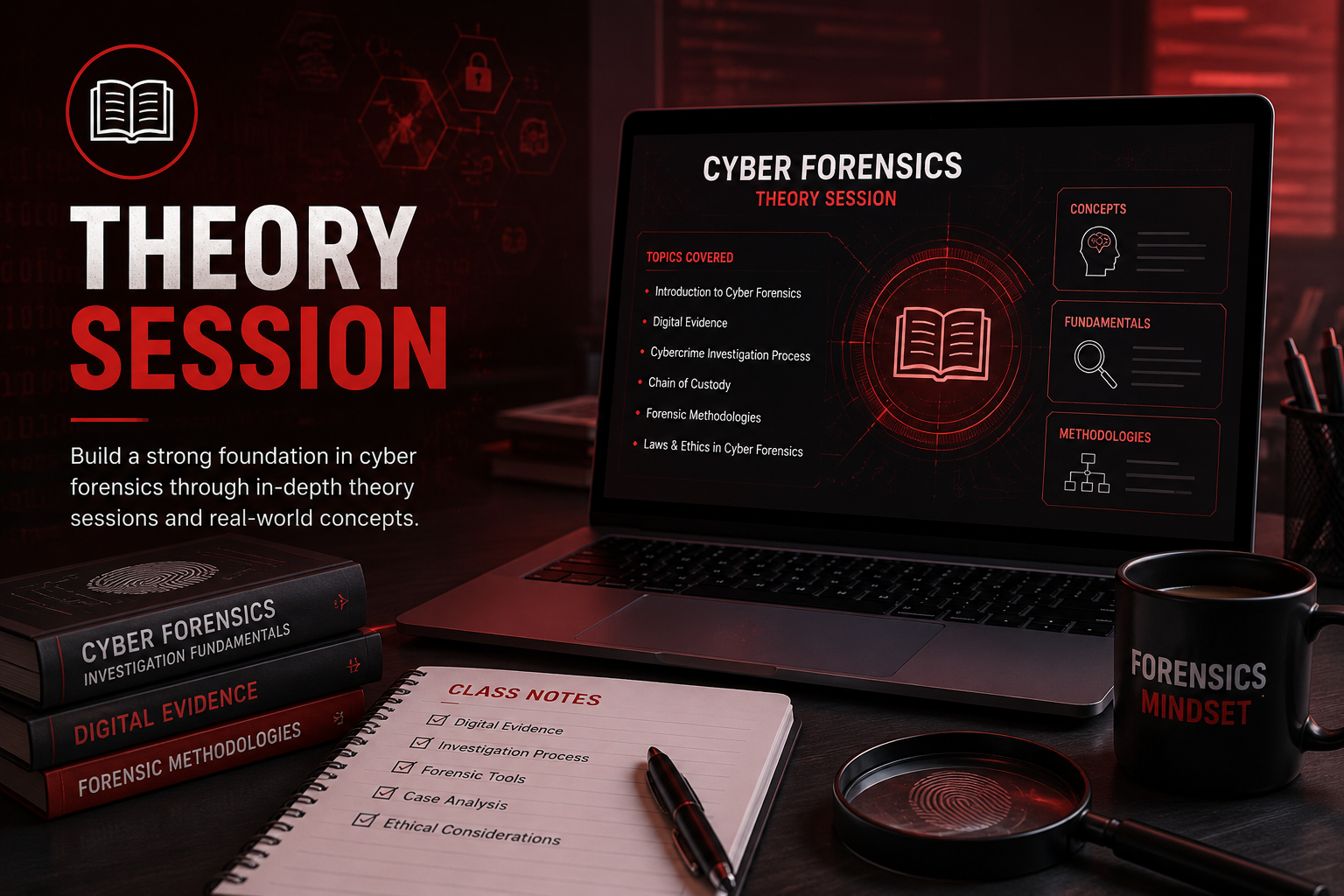
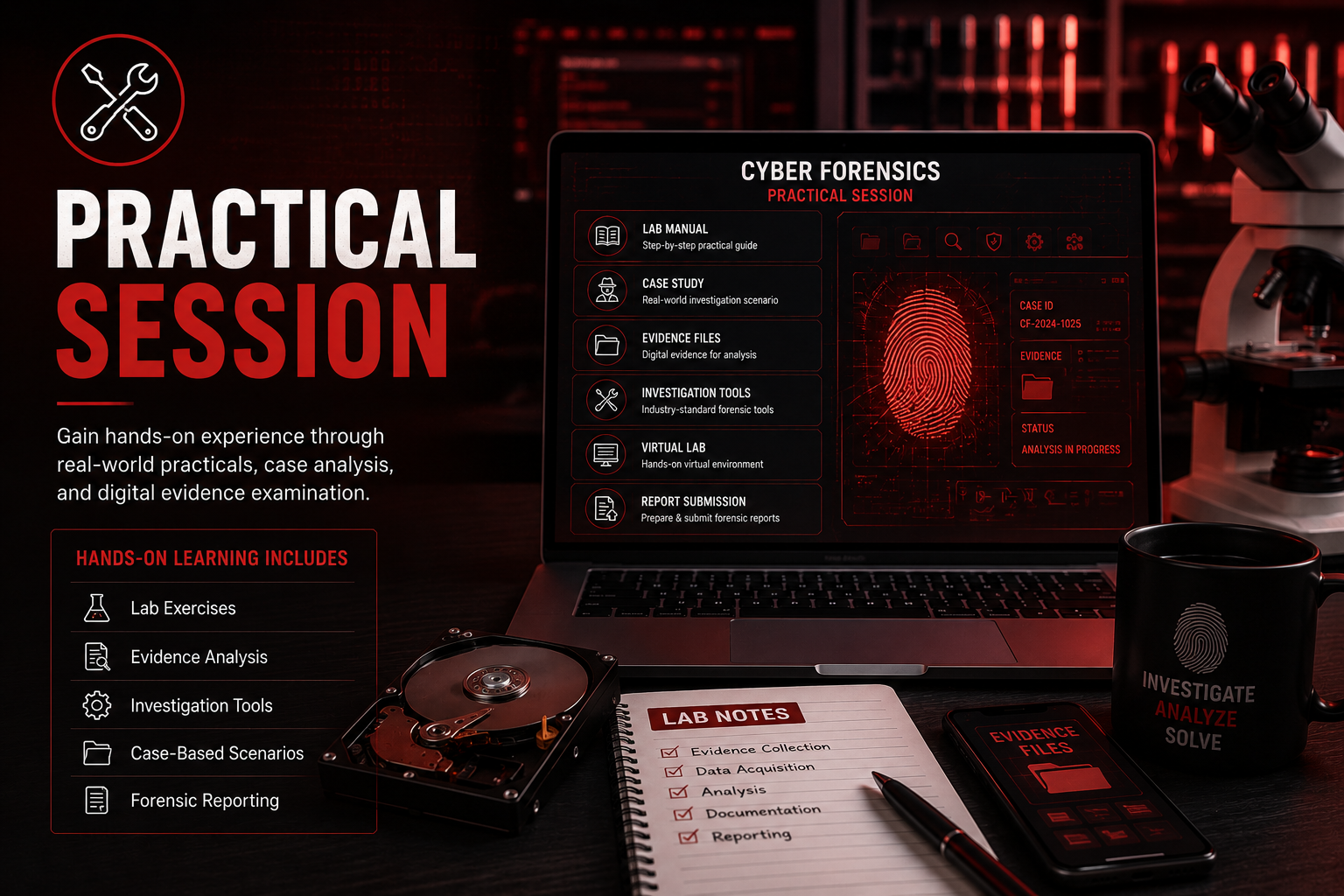
Designed to provide a comprehensive learning experience through theory, practical training, virtual labs, case studies, assessments, and professional mentorship.




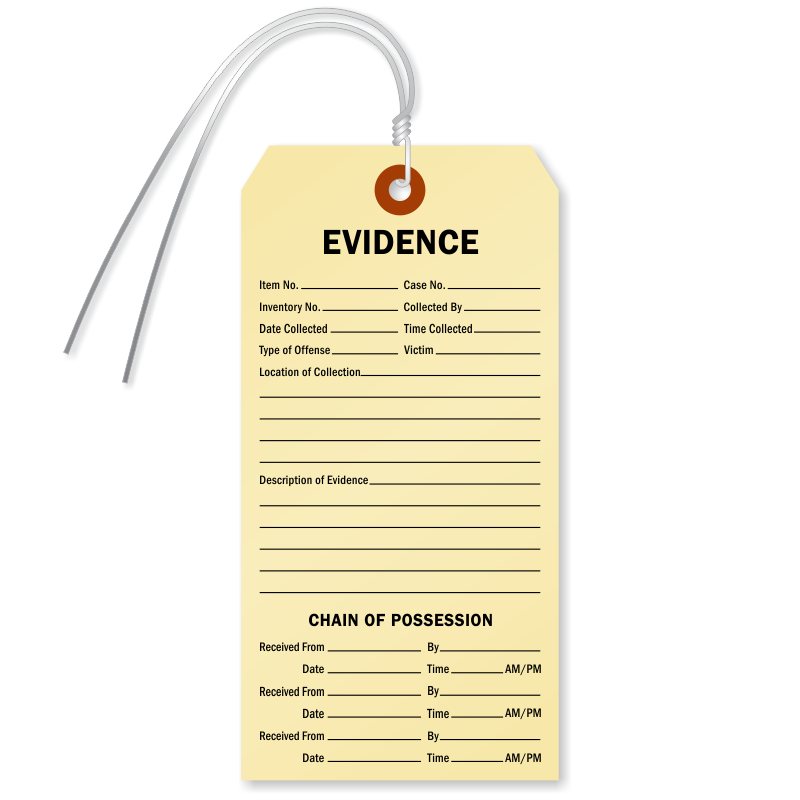

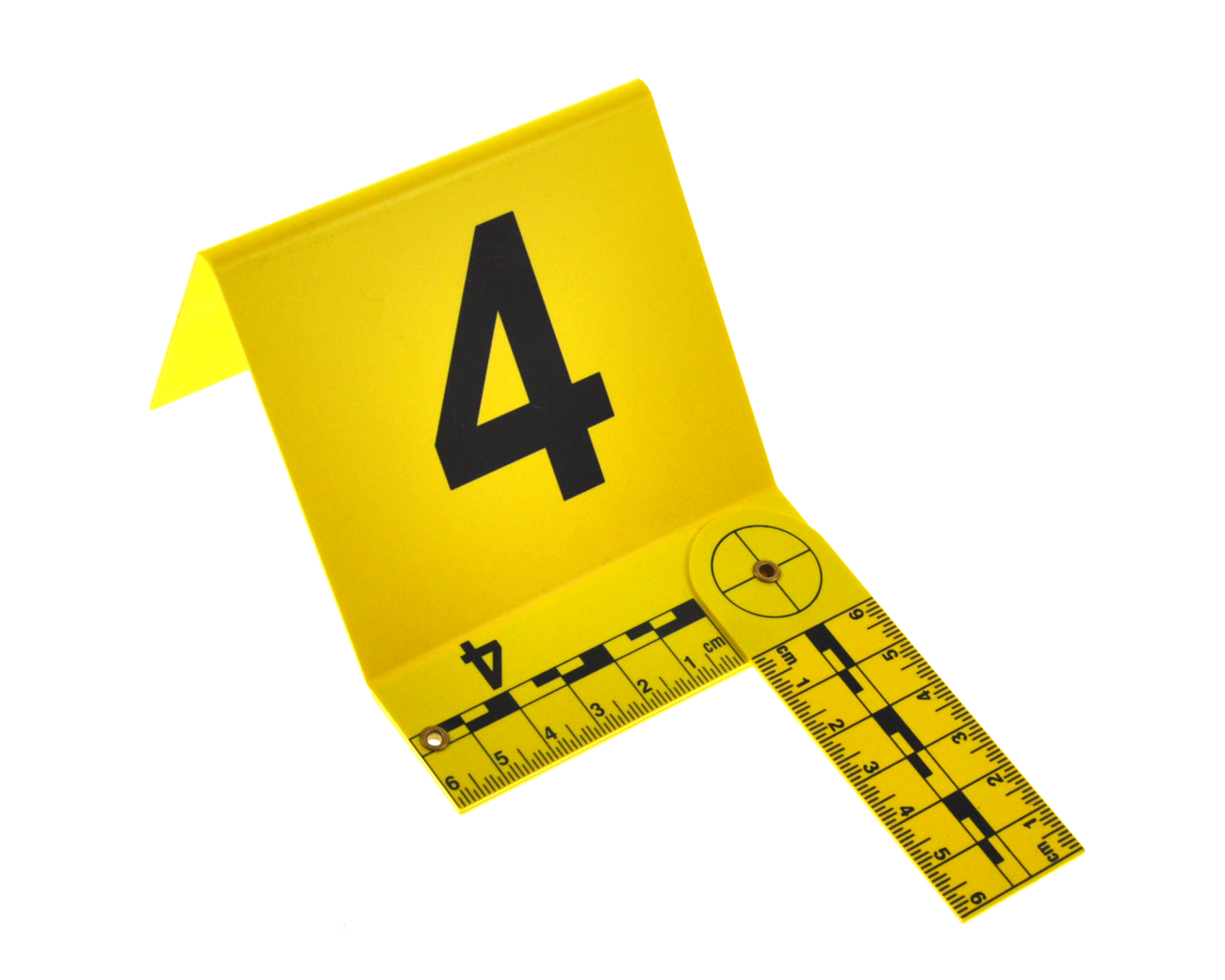
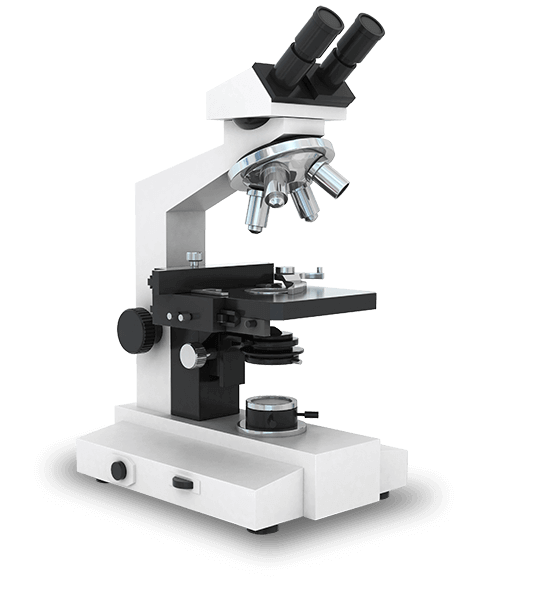


Build hands-on skills with professional tools through guided exercises used in cyber forensics and digital investigations.
Build the knowledge and practical expertise required to investigate digital evidence, analyze cyber incidents, and prepare professional forensic reports.
✓ Analyze Digital Evidence
✓ Perform Disk Investigations
✓ Conduct Memory Analysis
✓ Investigate Network Activity
✓ Examine Browser Artifacts
✓ Analyze Malware Indicators
✓ Perform Mobile Investigations
✓ Prepare Forensic Reports
✓ and Much More…
Demonstrate your practical cyber forensic knowledge through verifiable certification and performance-based recognition.
Designed for learners, students, and professionals seeking practical knowledge in cyber forensics and digital investigations.
➤ Forensic Science Students
➤ Undergraduate Students (Any Discipline)
➤ Postgraduate Students (Any Discipline)
➤ Cyber Security, Computer Science & IT Students
➤ Digital & Cyber Forensics Aspirants
➤ Engineering Students (B.Tech, BCA, MCA, M.Tech)
➤ Law Students Interested in Cyber Crime Investigation
➤ Criminology & Criminal Justice Students
➤ Police, Law Enforcement & Investigation Personnel
➤ Working Professionals Seeking Skill Enhancement
➤ Ethical Hacking & Cyber Security Enthusiasts
➤ Freshers Looking to Build a Career in Cyber Security
Find answers to common questions about the Cyber Forensics Internship Program, learning methodology, certification, and enrollment process.
No. The internship is designed for students, beginners, cybersecurity enthusiasts, and professionals. All essential concepts are covered from the fundamentals.
Yes. Every module includes dedicated practical sessions, hands-on demonstrations, virtual labs, and investigation-based exercises.
Yes. Participants will receive study notes, lab manuals, evidence files, and additional learning resources for each module.
Yes. Download links and guidance for relevant forensic tools and software used during practical sessions will be provided.
Yes. Learners will work on industry-oriented case studies designed to simulate real-world cyber forensic investigations.
Yes. The theory and practical sessions are pre-recorded, allowing participants to learn at their own pace and convenience.
Yes. Live mentor guidance and doubt-solving sessions are conducted to support learners throughout the internship.
Yes. Participants who successfully complete the internship requirements will receive an Internship Completion Certificate.
Find answers to common questions about the Cyber Forensics Internship Program, learning methodology, certification, and enrollment process.

Discount Available for a group of 3 or More Students! Contact Us to Avail Exclusive Discount Coupons.