Brand Image
0%
Empowering Investigative Minds

IICSF

NET/JRF

Study Notes

Paper 2

Forensic Science

General Forensics
Definition

Forensic Science is the application and implementation of scientific methods and techniques for the purpose of justice. It involves analyzing evidence, identify suspects, understand the circumstances of a crime, and establish connections between crime scenes, individuals, and criminal activities.


History & Development
  • 700s : Chinese used fingerprints to establish identity of documents and clay sculpture, but without any formal classification system
  • 1248 : A Chinese book, Hsi Duan Yu (the washing away of wrongs), contains a description of how to distinguish drowning from strangulation. This was the first recorded application of medical knowledge to the solution of crime.
  • 1609 : The first treatise on systematic document examination was published by François Demelle of France
  • 1686 : Marcello Malpighi, a professor of anatomy at the University of Bologna, noted fingerprint characteristics. However, he made no mention of their value as a tool for individual identification
  • 1784 : In Lancaster, England, John Toms was convicted of murder on the basis of the torn edge of wad of newspaper in a pistol matching a remaining piece in his pocket. This was one of the first documented uses of physical matching.
  • 1800s : Thomas Bewick, an English naturalist, used engravings of his own fingerprints to identify books he published.
  • 1810 : Eugène François Vidocq, in return for a suspension of arrest and a jail sentence, made a deal with the police to establish the first detective force, the Sûreté of Paris.
  • 1810 : The first recorded use of question document analysis occurred in Germany. A chemical test for a particular ink dye was applied to a document known as the Konigin Hanschritt.
  • 1813 : Mathieu Orfila, a Spaniard who became professor of medicinal/forensic chemistry at University of Paris, published Traite des Poisons Tires des Regnes Mineral, Vegetal et Animal, ou Toxicologie General. Orfila is considered the father of modern toxicology. He also made significant contributions to the development of tests for the presence of blood in a forensic context and is credited as the first to attempt the use of a microscope in the assessment of blood and semen stains.
  • 1823 : John Evangelist Purkinje, a professor of anatomy at the University of Breslau, Czechoslovakia, published the first paper on the nature of fingerprints and suggested a classification system based on nine major types. However, he failed to recognize their individualizing potential.
  • 1828 : William Nichol invented the polarizing light microscope.
  • 1830s : Adolphe Quetelet, a Belgian statistician, provided the foundation for Bertillon’s work by stating his belief that no two human bodies were exactly alike
  • 1831 : Leuchs first noted amylase activity in human saliva.
  • 1835 : Henry Goddard, one of Scotland Yard’s original Bow Street Runners, first used bullet comparison to catch a murderer. His comparison was based on a visible flaw in the bullet which was traced back to a mold.
  • 1836 : James Marsh, an Scottish chemist, was the first to use toxicology (arsenic detection) in a jury trial.
  • 1839 : H. Bayard published the first reliable procedures for the microscopic detection of sperm. He also noted the different microscopic characteristics of various different substrate fabrics.
  • 1851 : Ludwig Teichmann, in Krakow, Poland, developed the first microscopic crystal test for hemoglobin using hemin crystals.
  • 1854 : An English physician, Maddox, developed dry plate photography, eclipsing M. Daguerre’s wet plate on tin method. This made practical the photographing of inmates for prison records.
  • 1856 : Sir William Herschel, a British officer working for the Indian Civil service, began to use thumbprints on documents both as a substitute for written signatures for illiterates and to verify document signatures.
  • 1862 : The Dutch scientist J. (Izaak) Van Deen developed a presumptive test for blood using guaiac, a West Indian shrub.
  • 1863 : The German scientist Schönbein first discovered the ability of hemoglobin to oxidize hydrogen peroxide making it foam. This resulted in first presumptive test for blood.
  • 1864 : Odelbrecht first advocated the use of photography for the identification of criminals and the documentation of evidence and crime scenes.
  • 1877 : Thomas Taylor, microscopist to U.S. Department of Agriculture suggested that markings of the palms of the hands and the tips of the fingers could be used for identification in criminal cases. Although reported in the American Journal of Microscopy and Popular Science and Scientific American, the idea was apparently never pursued from this source.
  • 1879 : Rudolph Virchow, a German pathologist, was one of the first to both study hair and recognize its limitations.
  • 1880 : Henry Faulds, a Scottish physician working in Tokyo, published a paper in the journal Nature suggesting that fingerprints at the scene of a crime could identify the offender. In one of the first recorded uses of fingerprints to solve a crime, Faulds used fingerprints to eliminate an innocent suspect and indicate a perpetrator in a Tokyo burglary.
  • 1882 : Gilbert Thompson, a railroad builder with the U.S Geological Survey in New Mexico, put his own thumbprint on wage chits to safeguard himself from forgeries.
  • 1883 : Alphonse Bertillon, a French police employee, identified the first recidivist based on his invention of anthropometry.
  • 1887 : Arthur Conan Doyle published the first Sherlock Holmes story in Beeton’s Christmas Annual of London.
  • 1889 : Alexandre Lacassagne, professor of forensic medicine at the University of Lyons, France, was the first to try to individualize bullets to a gun barrel. His comparisons at the time were based simply on the number of lands and grooves.
  • 1891 : Hans Gross, examining magistrate and professor of criminal law at the University of Graz, Austria, published Criminal Investigation, the first comprehensive description of uses of physical evidence in solving crime. Gross is also sometimes credited with coining the word criminalistics.
  • 1892 : (Sir) Francis Galton published Fingerprints, the first comprehensive book on the nature of fingerprints and their use in solving crime.
  • 1892 : Juan Vucetich, an Argentinean police researcher, developed the fingerprint classification system that would come to be used in Latin America. After Vucetich implicated a mother in the murder of her own children using her bloody fingerprints, Argentina was the first country to replace anthropometry with fingerprints.
  • 1894 : Alfred Dreyfus of France was convicted of treason based on a mistaken handwriting identification by Bertillon.
  • 1896 : Sir Edward Richard Henry developed the print classification system that would come to be used in Europe and North America. He published Classification and Uses of Fingerprints.
  • 1898 : Paul Jeserich, a forensic chemist working in Berlin, Germany, took photomicrographs of two bullets to compare, and subsequently individualize, the minutiae.
  • 1900 : Karl Landsteiner first discovered human blood groups and was awarded the Nobel prize for his work in 1930. Max Richter adapted the technique to type stains. This is one of the first instances of performing validation experiments specifically to adapt a method for forensic science. Landsteiner’s continued work on the detection of blood, its species, and its type formed the basis of practically all subsequent work.
  • 1901 : Paul Uhlenhuth, a German immunologist, developed the precipitin test for species. He was also one of the first to institute standards, controls, and QA/QC procedures. Wassermann (famous for developing a test for syphilis) and Schütze independently discovered and published the precipitin test, but never received due credit.
  • 1901 : Sir Edward Richard Henry was appointed head of Scotland Yard and forced the adoption of fingerprint identification to replace anthropometry.
  • 1901 : Henry P. DeForrest pioneered the first systematic use of fingerprints in the United States by the New York Civil Service Commission.
  • 1902 : Professor R.A. Reiss, professor at the University of Lausanne, Switzerland, and a pupil of Bertillon, set up one of the first academic curricula in forensic science. His forensic photography department grew into Lausanne Institute of Police Science.
  • 1903 : The New York State Prison system began the first systematic use of fingerprints in United States for criminal identification.
  • 1904 : Oskar and Rudolf Adler developed a presumptive test for blood based on benzidine, a new chemical developed by Merck.
  • 1904 : Locard published L’enquête criminelle et les méthodes scientifique, in which appears a passage that may have given rise to the forensic precept that “Every contact leaves a trace.”
  • 1906 : American President Theodore Roosevelt established Federal Bureau of Investigation (FBI).
  • 1910 : Victor Balthazard, professor of forensic medicine at the Sorbonne, with Marcelle Lambert, published the first comprehensive hair study, Le poil de l’homme et des animaux. In one of the first cases involving hairs, Rosella Rousseau was convinced to confess to murder of Germaine Bichon. Balthazard also used photographic enlargements of bullets and cartridge cases to determining weapon type and was among the first to attempt to individualize a bullet to a weapon.
  • 1910 : Edmund Locard, successor to Lacassagne as professor of forensic medicine at the University of Lyons, France, established the first police crime laboratory.
  • 1910 : Albert S. Osborne, an American and arguably the most influential document examiner, published Questioned Documents.
  • 1912 : Masao Takayama developed another microscopic crystal test for hemoglobin using hemochromogen crystals.
  • 1913 : Victor Balthazard, professor of forensic medicine at the Sorbonne, published the first article on individualizing bullet markings.
  • 1915 : Leone Lattes, professor at the Institute of Forensic Medicine in Turin Italy, developed the first antibody test for ABO blood groups. He first used the test in casework to resolve a marital dispute. He published L’Individualità del sangue nella biologia, nella clinica, nella medicina, legale, the first book dealing not only with clinical issues, but heritability, paternity, and typing of dried stains.
  • 1915 : International Association for Criminal Identification, (to become The International Association of Identification (IAI), was organized in Oakland, California.
  • 1916 : Albert Schneider of Berkeley, California first used a vacuum apparatus to collect trace evidence.
  • 1918 : Edmond Locard first suggested 12 matching points as a positive fingerprint identification.
  • 1920 : Charles E. Waite was the first to catalog manufacturing data about weapons.
  • 1920s : Georg Popp pioneered the use of botanical identification in forensic work.
  • 1920s : Luke May, one of the first American criminalists, pioneered striation analysis in tool mark comparison, including an attempt at statistical validation. In 1930 he published The identification of knives, tools and instruments, a positive science, in The American Journal of Police Science.
  • 1920s : Calvin Goddard, with Charles Waite, Phillip O. Gravelle, and John H Fisher, perfected the comparison microscope for use in bullet comparison.
  • 1921 : John Larson and Leonard Keeler designed the portable polygraph.
  • 1923 : Vittorio Siracusa, working at the Institute of Legal Medicine of the R. University of Messina, Italy, developed the absorption-elution test for ABO blood typing of stains. Along with his mentor, Lattes also performed significant work on the absorption-inhibition technique.
  • 1923 : In Frye v. United States, polygraph test results were ruled inadmissible. The federal ruling introduced the concept of general acceptance and stated that polygraph testing did not meet that criterion.
  • 1924 : August Vollmer, as chief of police in Los Angeles, California, implemented the first U.S. police crime laboratory.
  • 1925 : Saburo Sirai, a Japanese scientist, is credited with the first recognition of secretion of group-specific antigens into body fluids other than blood.
  • 1926 : The case of Sacco and Vanzetti, which took place in Bridgewater, Massachusetts, was responsible for popularizing the use of the comparison microscope for bullet comparison. Calvin Goddard’s conclusions were upheld when the evidence was reexamined in 1961.
  • 1927 : Landsteiner and Levine first detected the M, N, and P blood factors leading to development of the MNSs and P typing systems.
  • 1928 : Meüller was the first medico-legal investigator to suggest the identification of salivary amylase as a presumptive test for salivary stains.
  • 1929 : K. I. Yosida, a Japanese scientist, conducted the first comprehensive investigation establishing the existence of serological isoantibodies in body fluids other than blood.
  • 1929 : Calvin Goddard’s work on the St. Valentine’s day massacre led to the founding of the Scientific Crime Detection Laboratory on the campus of Northwestern University, Evanston, Illinois.
  • 1930 : American Journal of Police Science was founded and published by staff of Goddard’s Scientific Crime Detection Laboratory in Chicago. In 1932, it was absorbed by Journal of Criminal Law and Criminology, becoming the Journal of Criminal Law, Criminology and police science.
  • 1931 : Franz Josef Holzer, an Austrian scientist, working at the Institute for Forensic Medicine of the University of Innsbruck, developed the absorption-inhibition ABO typing technique that became the basis of that commonly used in forensic laboratories. It was based on the prior work of Siracusa and Lattes.
  • 1932 : The Federal Bureau of Investigation (FBI) crime laboratory was created.
  • 1935 : Frits Zernike, a Dutch physicist, invented the first interference contrast microscope, a phase contrast microscope, an achievement for which he won the Nobel prize in 1953.
  • 1937 : Holzer published the first paper addressing the usefulness of secretor status for forensic applications.
  • 1937 : Walter Specht, at the University Institute for Legal Medicine and Scientific Criminalistics in Jena, Germany, developed the chemiluminescent reagent luminol as a presumptive test for blood.
  • 1937 : Paul Kirk assumed leadership of the criminology program at the University of California at Berkeley. In 1945, he formalized a major in technical criminology.
  • 1938 : M. Polonovski and M. Jayle first identified haptoglobin.
  • 1940 : Landsteiner and A.S. Wiener first described Rh blood groups.
  • 1940 : Vincent Hnizda, a chemist with the Ethyl Corporation, was probably the first to analyze ignitable fluid. He used a vacuum distillation apparatus.
  • 1941 : Murray Hill of Bell Labs initiated the study voiceprint identification. The technique was refined by L.G. Kersta.
  • 1945 : Frank Lundquist, working at the Legal Medicine Unit at the University of Copenhagen, developed the acid phosphatase test for semen.
  • 1946 : Mourant first described the Lewis blood group system.
  • 1946 : R.R. Race first described the Kell blood group system
  • 1950 : M. Cutbush, and colleagues first described the Duffy blood group system.
  • 1950 : August Vollmer, chief of police of Berkeley, California, established the school of criminology at the University of California at Berkeley. Paul Kirk presided over the major of criminalistics within the school.
  • 1950 : Max Frei-Sulzer, founder of the first Swiss criminalistics laboratory, developed the tape lift method of collecting trace evidence.
  • 1950 : The American Academy of Forensic Science (AAFS) was formed in Chicago, Illinois. The group also began publication of the Journal of Forensic Science (JFS).
  • 1951 : F. H. Allen and colleagues first described the Kidd blood grouping system.
  • 1953 : Kirk published Crime Investigation, one of the first comprehensive criminalistics and crime investigation texts that encompassed theory in addition to practice.
  • 1954 : R. F. Borkenstein, captain of the Indiana State Police, invented the Breathalyzer for field sobriety testing.
  • 1958 : A. S. Weiner and colleagues introduced the use of H-lectin to determine positively O blood type.
  • 1959 : Hirshfeld first identified the polymorphic nature of group specific component (Gc).
  • 1960 : Lucas, in Canada, described the application of gas chromatography (GC) to the identification of petroleum products in the forensic laboratory and discussed potential limitations in the brand identity of gasoline.
  • 1960s : Maurice Muller, a Swiss scientist, adapted the Ouchterlony antibody-antigen diffusion test for precipiten testing to determine species.
  • 1963 : D.A. Hopkinson and colleagues first identified the polymorphic nature of erythrocyte acid phosphatase (EAP).
  • 1964 : N. Spencer and colleagues first identified the polymorphic nature of red cell phosphoglucomutase (PGM).
  • 1966 : R. A. Fildes and H. Harris first identified the polymorphic nature of red cell adenylate cyclase (AK).
  • 1966 : Brian J. Culliford and Brian Wraxall developed the immunoelectrophoretic technique for haptoglobin typing in bloodstains.
  • 1967 : Culliford, of the British Metropolitan Police Laboratory, initiated the development of gel-based methods to test for isoenzymes in dried bloodstains. He was also instrumental in the development and dissemination of methods for testing proteins and isoenzymes in both blood and other body fluids and secretions.
  • 1968 : Spencer and colleagues first identified the polymorphic nature of red cell adenosine deaminase (ADA).
  • 1971 : Culliford published The Examination and Typing of Bloodstains in the Crime Laboratory, generally accepted as responsible for disseminating reliable protocols for the typing of polymorphic protein and enzyme markers to the United States and worldwide.
  • 1973 : Hopkinson and colleagues first identified the polymorphic nature of esterase D (ESD).
  • 1974 : The detection of gunshot residue (GSR) using scanning electron microscopy with electron dispersive X-rays (SEMEDX) technology was developed by J. E. Wessel, P. F. Jones, Q. Y. Kwan, R. S. Nesbitt and E. J. Rattin at Aerospace Corporation.
  • 1975 : J. Kompf and colleagues, working in Germany, first identified the polymorphic nature of red cell glyoxalase (GLO).
  • 1975 : The Federal Rules of Evidence, originally promulgated by the U.S. Supreme Court, were enacted as a congressional statute. They are based on the relevancy standard in which scientific evidence that is deemed more prejudicial than probative may not be admitted.
  • 1976 : Zoro and Hadley in the United Kingdom first evaluated GC-MS for forensic purposes.
  • 1977 : Fuseo Matsumur, a trace evidence examiner at the Saga Prefectural Crime Laboratory of the National Police Agency of Japan, notices his own fingerprints developing on microscope slides while mounting hairs from a taxi driver murder case. He relates the information to co-worker Masato Soba, a latent print examiner. Soba would later that year be the first to develop latent prints intentionally by “Supergluefuming.
  • 1977 : The fourier transform infrared spectrophotometer (FTIR) is adapted for use in the forensic laboratory.
  • 1977 : The FBI introduced the beginnings of its Automated Fingerprint Identification System (AFIS) with the first computerized scans of fingerprints.
  • 1978 : Brian Wraxall and Mark Stolorow developed the “multisystem” method for testing the PGM, ESD, and GLO isoenzyme systems simultaneously. They also developed methods for typing blood serum proteins such as haptoglobin and Gc.
  • 1984 : Alec Jeffreys developed the first DNA profiling test. It involved detection of a multilocus RFLP pattern. He published his findings in Nature in 1985.
  • 1986 : In the first use of DNA to solve a crime, Jeffreys used DNA profiling to identify Colin Pitchfork as the murderer of two young girls in the English Midlands. Significantly, in the course of the investigation, DNA was first used to exonerate an innocent suspect.
  • 1983 : The polymerase chain reaction (PCR) was first conceived by Kary Mullis, while he was working at Cetus Corporation. The first paper on the technique was not published until 1985.
  • 1986 : The human genetics group at Cetus Corporation, led by Henry Erlich, developed the PCR technique for a number of clinical and forensic applications. This resulted in development of the first commercial PCR typing kit specifically for forensic use, HLA DQα (DQA1), about 2 years later.
  • 1986 : In People v. Pestinikas, Edward Blake first used PCR-based DNA testing (HLA DQα) , to confirm different autopsy samples to be from the same person. The evidence was accepted by a civil court. This was also the first use of any kind of DNA testing in the United States
  • 1987 : DNA profiling was introduced for the first time in a U.S. criminal court. Based on RFLP analysis performed by Lifecodes, Tommy Lee Andrews was convicted of a series of sexual assaults in Orlando, Florida.
  • 1987 : New York v. Castro was the first case in which the admissibility of DNA was seriously challenged. It set in motion a string of events that culminated in a call for certification, accreditation, standardization, and quality control guidelines for both DNA laboratories and the general forensic community.
  • 1988 : Lewellen, McCurdy, and Horton, and Asselin, Leslie, and McKinley both publish milestone papers introducing a novel procedure for the analysis of drugs in whole blood by homogeneous enzyme immunoassay (EMIT).
  • 1990 : K. Kasai and colleagues published the first paper suggesting the D1S80 locus (pMCT118) for forensic DNA analysis. D1S80 was subsequently developed by Cetus (subsequently Roche Molecular Systems) corporation as a commercially available forensic DNA typing system.
  • 1991 : Walsh Automation Inc., in Montreal, launched development of an automated imaging system called the Integrated Ballistics Identification System, or IBIS, for comparison of the marks left on fired bullets, cartridge cases, and shell casings. This system was subsequently developed for the U.S. market in collaboration with the Bureau of Alcohol, Tobacco, and Firearms (ATF).
  • 1992 : In response to concerns about the practice of forensic DNA analysis and interpretation of the results, the National Research Council Committee on Forensic DNA (NRC I) published DNA Technology in Forensic Science.
  • 1992 : Thomas Caskey, professor at Baylor University in Texas, and colleagues published the first paper suggesting the use of short tandem repeats for forensic DNA analysis. Promega corporation and Perkin-Elmer corporation in collaboration with Roche Molecular Systems independently developed commercial kits for forensic DNA STR typing.
  • 1992 : The FBI contracted with Mnemonic Systems to developed Drugfire, an automated imaging system to compare marks left on cartridge cases and shell casings. The ability to compare fired bullets was subsequently added.
  • 1993 : In Daubert et al. v. Merrell Dow, a U.S. federal court relaxed the Frye standard for admission of scientific evidence and conferred on the judge a “gatekeeping” role. The ruling cited Karl Popper’s views that scientific theories are falsifiable as a criterion for whether something is “scientific knowledge” and should be admissible.
  • 1994 : Roche Molecular Systems (formerly Cetus) released a set of five additional DNA markers (“polymarker”) to add to the HLA-DQA1 forensic DNA typing system.
  • 1996 : In response to continued concerns about the statistical interpretation of forensic DNA evidence, a second National Research Council Committee on Forensic DNA (NRC II) was convened and published The Evaluation of Forensic DNA Evidence.
  • 1996 : The FBI introduced computerized searches of the AFIS fingerprint database. Live scan and card scan devices allowed interdepartmental submissions.
  • 1996 : In Tennessee v. Ware, mitochondrial DNA typing was admitted for the first time in a U.S. court.
  • 1998 : An FBI DNA database, NIDIS, enabling interstate cooperation in linking crimes, was put into practice.
  • 1999 : The FBI upgraded its computerized fingerprint database and implemented the Integrated Automated Fingerprint Identification System (IAFIS), allowing paperless submission, storage, and search capabilities directly to the national database maintained at the FBI.
  • 1999 : A Memorandum of Understanding is signed between the FBI and ATF, allowing the use of the National Integrated Ballistics Network (NIBIN), to facilitate exchange of firearms data between Drugfire and IBIS.
History of Forensic Science in India
  • 1849 : First Chemical laboratory established in Madras. Similar labs were established in Calcutta in 1853, Agra in 1864 & Bombay in 1870.
  • 1879 : Anthropometric Bureau in Calcutta was established
  • 1897 : First Fingerprint bureau in the world was established in Calcutta. Richard Henry developed Ten finger Fingerprint Classification with the aid by Khan Bahadur Azizul Huq & Rai Bahadur Hem Chandra Sen
  • 1898 : Nagpur Department of Explosives established. Five Regional offices were established in : Kolkata, Bombay, Madras, Agra, Gwalior. Three Sub offices were established in Sivakasi, Domia & Asansol.
  • 1902 : Calcutta CID was established. Rai Bahadur pandit shambhu nath is considered as Father of Indian CID.
  • 1904 : GEQD Kolkata established Headed by C.R.Hardless
    • 1906 transferred to Shimla GEQD Headed by F Brewster under CID
      • 1949 S.N Sen 1st Indian Head 
  • 1910 : Kolkata Serology department was established. It was later renamed after Independence as Office of serologist & chemical examiner to the Government of India.
  • 1915 : Footprint Section under CID Kolkata was established.
  • 1917 : Note Forgery Section under CID Kolkata was established.
  • 1930 : A Ballistics laboratory along with an Arms expert in Kolkata was established.
  • 1952 : SFSL Kolkata was established.
  • 1905 : CFPB Shimla established on the recommendation of Royal Police Commission. But later in 1922 was abolished on the recommendation of Inchcape Committee
  • 1955 : CFPB Delhi was established under IB later was Transferred under CBI in 1973
  • 1956 : CDTS Kolkata was established
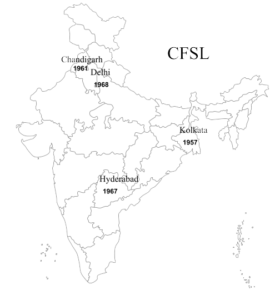
  • 1957 : CFSL Kolkata was established. In 1970 Neutron activation analysis under CFSL Kolkata was set up at BARC Trombay
  • 1960 : Indian Academy of forensic science established
  • 1972 : LNJN NICFS Delhi was established
  • 1983 : Post of Chief forensic scientist & Forensic science directorate created under BPR&D on the recommendation of V.K.Street, UK.
  • 1998 : DNA typing facility in CFSL Kolkata was started.
  • Merger of GEQD
    • GEQD Kolkata merged with CFSL Kolkata
    • GEQD Shimla merged with CFSL Chandigarh
    • GEQD Hyderabad merged with CFSL Hyderabad
  • Centre of Excellence
    • CFSL Kolkata: Biology
    • CFSL Hyderabad: Chemical
    • CFSL Chandigarh: Physical
  • “ Neutron activation brought under CFSL Hyderabad from BARC Trombay”

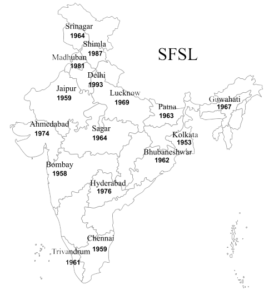
Committee for establishment of SFSL

  • Central forensic science advisory committee,1959 under MHA, N.Delhi later transformed into Standing Committee on Forensics Science, 1972 under BPR&D still exist
  • Central medico legal advisory committee,1955 under MHA, N.Delhi later Dissolved
  •  

Committee on Teaching of forensic science in University

  • Central advisory committee on forensics
    • Headed by K.F. Rustamji
    • Advised by UGC head DS Kothar & BPR&D head DP Kohli

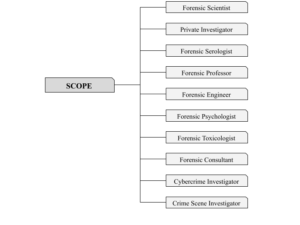
Scope


The scope of forensic science is broad and encompasses various scientific disciplines and applications. Here are the primary areas:

  1. Crime Scene Investigation: Involves the identification, documentation, collection, and preservation of evidence at crime scenes, ensuring its integrity for analysis.

  2. Forensic Biology and DNA Analysis: Analyzes biological samples (e.g., blood, saliva, hair) for DNA profiling, crucial for identifying individuals and establishing connections between victims and suspects.

  3. Forensic Chemistry: Focuses on analyzing substances like drugs, poisons, explosives, and other chemicals found at crime scenes to understand their composition and relevance.

  4. Forensic Toxicology: Studies the effects of drugs, alcohol, poisons, and other chemicals in the body to help determine cause of death, impairment, or poisoning.

  5. Forensic Pathology: Examines bodies to determine the cause and manner of death, often involving autopsies and analysis of injuries, disease, or trauma.

  6. Forensic Anthropology: Analyzes human skeletal remains to establish identity, cause of death, and other information, particularly when the body is decomposed.

  7. Forensic Odontology: Uses dental records and bite mark analysis to help identify victims or connect suspects to a crime.

  8. Forensic Entomology: Studies insects and other organisms found on decomposing remains to estimate time of death and other forensic details.

  9. Forensic Ballistics: Examines firearms, bullets, gunshot residues, and related materials to determine how a shooting occurred and identify weapons.

  10. Forensic Document Examination: Analyzes handwriting, typesetting, ink, paper, and other document features to authenticate or detect forgery.

  11. Digital Forensics: Investigates digital devices and data (e.g., computers, smartphones, networks) to recover, analyze, and interpret electronic evidence.

  12. Forensic Psychology: Assesses the mental state of suspects, witnesses, and victims to determine competency, intent, or psychological motives.

  13. Forensic Accounting: Analyzes financial records to detect fraud, embezzlement, or financial misconduct.

  14. Forensic Engineering: Investigates accidents, structural failures, and product malfunctions to determine the cause and potential negligence.

  15. Wildlife Forensics: Applies forensic science techniques to crimes involving animals, such as poaching and illegal trade of endangered species.

  16. Cyber Forensics: Focuses on investigating cybercrimes, including hacking, cyberstalking, and other internet-based crimes.

  17. Environmental Forensics: Analyzes environmental contamination to identify sources of pollution and hold parties accountable for environmental crimes.

  18. Forensic Linguistics: Examines language patterns, word choice, and grammar in written or spoken communication to assess authorship or interpret meaning in legal contexts.

  19. Forensic Archeology: Combines archeological methods with forensic science to uncover and examine remains and artifacts from historic crime scenes or mass graves.

Ethics in Forensic Science

Key aspects of ethics in forensic science:

  1. Objectivity and Impartiality: Forensic scientists must remain unbiased, providing conclusions based solely on evidence, without personal beliefs or external pressures influencing their findings.

  2. Accuracy and Reliability: Forensic analysis should follow established protocols and methods to ensure results are accurate, reproducible, and scientifically valid.

  3. Confidentiality: Sensitive information from cases must be kept confidential to protect the rights and privacy of individuals involved, with data shared only with authorized personnel.

  4. Integrity of Evidence: Evidence must be collected, handled, and stored correctly to prevent contamination, loss, or tampering, maintaining a strict chain of custody.

  5. Honesty in Reporting: Reports should accurately reflect findings, including any limitations or uncertainties, without exaggerating results or making unsupported conclusions.

  6. Competence: Forensic scientists should work within their area of expertise, continuously updating their skills and knowledge to provide reliable analysis.

  7. Avoiding Conflicts of Interest: Scientists should disclose and avoid any conflicts that might compromise their objectivity, such as personal, financial, or professional interests.

  8. Testimony Integrity: When testifying, forensic experts should communicate findings truthfully, clearly, and without bias, ensuring they do not mislead the court.

  9. Respect for Human Rights: All forensic work should respect individuals’ rights, avoid unethical practices, and support justice without discrimination.

  10. Accountability: Forensic scientists should be accountable for their work, open to peer review, and willing to admit and correct errors to maintain public trust in the field.

Each ethical principle ensures that forensic science upholds justice, reliability, and public confidence in legal proceedings.


Nature & Types

Physical Evidence: Any tangible items that may be found at the crime scene, on the victims, or on the culprit are referred to as physical evidence. 

Trace Evidence: The term “tracing evidence” refers to physical evidence that is present in minute but quantifiable numbers.

In a criminal investigation, the analysis of the evidence acquired at the scene is utilized to support or refute the case’s facts. 

Physical evidence can be either:
  • Primary Evidence: Directly proves a fact, like an eyewitness testimony or video footage showing an event.
  • Corroborative evidence: Correlating data, which frequently validates or supports a criminal hypothesis,
  • Circumstantial evidence:  Infers a conclusion indirectly about crime.
  • Conflicting evidence: Irreconcilable evidence that comes from different sources
  • Exculpatory evidence: Evidence tending to establish a criminal defendant’s innocence 
  • Incriminating evidence: Evidence tending to establish guilt
  • Inceptive evidence: It is used to show whether or not a crime has been committed.
  • Testimonial Evidence: Statements made by witnesses or experts under oath.
  • Hearsay Evidence: Statements made outside the court, generally not admissible unless exceptions apply.

Search methods

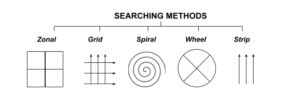
There are several common search methods, each method is chosen based on the size, type, and nature of the search area and the specific goals of the investigation or study.

  • Grid Search: The search area is divided into a grid, and each section is thoroughly searched. Useful for small, confined areas.
  • Zone or Sector Search: The area is divided into zones or sectors, and each one is searched individually. This is ideal for complex scenes with various rooms or barriers.
  • Spiral Search: The searcher starts at a central point and moves outward in a circular or spiral pattern. This method is useful in large, open areas.
  • Line or Strip Search: Searchers line up and move in a straight line across the area. Each person covers a specific width to ensure no gaps. This is effective for large, flat areas.
  • Wheel Search: Similar to the zone search, but typically divides the area into sectors, each of which is searched thoroughly. Often used for large, specific search areas.
  • Random Search: There is no systematic pattern; the search is conducted randomly, often in cases where time is limited, and precision is less critical.

Collection, Preservation, Packing & Forwarding of Physical & Trace evidence for forensic analyses
1. Collection of Physical & Trace Evidence
  • Goal: Evidence is collected accurately, avoiding contamination or degradation.
  • Types of Evidence:
    • Physical Evidence: Larger, visible items like weapons, clothing, and bloodstains.
    • Trace Evidence: Microscopic or smaller materials, such as hair, fibers, glass fragments, and soil.
  • Steps:
    • Document Scene: Photographs, videos, and detailed notes are taken before any items are moved or collected.
    • Prioritize Evidence: Fragile or degradable evidence, such as biological samples, is collected first to prevent deterioration.
    • Use Appropriate Tools: Tweezers, gloves, and masks are used to avoid contamination; bare hands do not touch evidence.
    • Establish Chain of Custody: Every handler and transfer of evidence is recorded to maintain legal admissibility.
2. Preservation of Physical & Trace Evidence
  • Goal: Evidence degradation or alteration is prevented until analysis.
  • Methods:
    • Temperature Control: Biological samples are refrigerated or frozen to prevent bacterial growth.
    • Prevent Contamination: Different types of evidence are stored separately to avoid cross-contamination, such as keeping biological samples isolated.
    • Protection from Environment: Evidence is shielded from sunlight, humidity, and extreme temperatures to prevent degradation.
    • Minimize Handling: Direct handling is limited, and unnecessary movement or contact with evidence items is avoided.
  • Documentation:
    • Each item is labeled with a unique identifier, date, and collection details.
    • Any preservation techniques or changes in the evidence’s condition after collection are documented.
3. Packing of Physical & Trace Evidence
  • Goal: Evidence is packaged securely for lab transport, maintaining its integrity.
  • Packing Techniques:
    • Use Appropriate Packaging Materials:
      • Biological evidence is placed in paper bags or envelopes (plastic is avoided to prevent DNA degradation).
      • Trace evidence, like fibers and hair, is stored in small envelopes, glass vials, or druggist folds.
      • Sharp objects are placed in rigid, puncture-resistant containers to prevent injury and contamination.
    • Label Packaging: Each package is clearly labeled with evidence type, date, case number, and collector’s name.
    • Seal Containers: Tamper-evident tape and seals are used to prevent unauthorized access.
  • Special Considerations:
    • Evidence is packed separately to prevent cross-contamination, especially for biological samples.
    • Hazardous materials are double-bagged to ensure secure containment.
4. Forwarding Evidence for Forensic Analysis
  • Goal: Evidence is transported to the forensic lab, preserving the chain of custody and ensuring safe handling.
  • Procedures:
    • Chain of Custody Documentation: All necessary documentation, including transfer forms outlining the evidence’s history and handling, is completed.
    • Forwarding Letter: A formal note accompanies the items sent to the lab, outlining the purpose, contents, and authorities’ signatures.
    • Secure Transport: Lockable containers or tamper-evident bags are used, with handling limited to authorized personnel only.
    • Special Handling Instructions: Specific handling requirements (e.g., refrigeration, fragile material) are clearly indicated on packaging and transfer forms.

Chain of Custody

Chain of custody is the process of maintaining and documenting the handling, transfer, and storage of evidence from the moment it is collected until it is presented in court or analysis is completed. It ensures that evidence is accounted for and remains uncontaminated and tamper-free, preserving its integrity for legal and investigative purposes.

Purpose:
  • Legal Integrity: Establishes evidence as admissible in court by proving it has not been altered or tampered with.
  • Accountability: Ensures that every individual who handles the evidence can be identified, supporting transparency in evidence handling.
  • Authenticity: Confirms that evidence presented in court is the same as what was originally collected at the scene.
Key Components:
  • Documentation:
    • Each piece of evidence is accompanied by a chain of custody form that records the unique identifier, case details, date, time, and location of collection.
    • Any transfer, examination, or alteration to the evidence must be documented in real-time, noting the name of each handler and any changes observed.
  • Unique Identification:
    • Evidence items are tagged or labeled with unique identifiers, like barcodes or alphanumeric codes, that correspond to chain of custody records.
    • Tags include information such as the case number, collection date, location, and evidence type.
  • Custody Transfers:
    • Each transfer or handoff of evidence from one individual to another is logged, with signatures or initials from both parties to verify accountability.
    • Only authorized personnel can access or handle evidence, reducing the risk of unauthorized interference.
  • Security Measures:
    • Evidence is stored in secure, controlled-access environments (e.g., locked evidence rooms or cabinets) when not being examined.
    • Security protocols include limited access, tamper-evident seals, and alarm systems to prevent unauthorized access.
Process:
  1. Collection:
    • Evidence is collected at the scene, documented thoroughly, and tagged with identifying information.
    • The chain of custody form is initiated, noting collection details and the identity of the collector.
  2. Transfer and Handling:
    • Evidence is transferred as needed for transport, analysis, or storage. Each transfer is logged, with both the sender and receiver recording the transaction.
    • Handling is minimized to reduce contamination or damage; appropriate tools (gloves, forceps) are used.
  3. Storage:
    • Evidence is stored securely, with conditions (e.g., temperature control) maintained according to evidence type.
    • Log entries are made for any access or movement within storage facilities.
  4. Analysis:
    • Evidence analyzed in labs is checked out and documented, noting the purpose and timeframe of the examination.
    • Any alteration in the condition of evidence during analysis is documented, and chain of custody records are updated.
  5. Court Presentation:
    • When evidence is presented in court, chain of custody documents are provided to establish its authenticity and reliability.
    • After court proceedings, evidence is either stored, returned, or appropriately disposed of, with documentation maintained.
Importance:
  • Ensures Reliability: A well-maintained chain of custody supports the credibility of evidence, increasing the reliability of forensic results.
  • Protects Against Legal Challenges: Gaps or inconsistencies in chain of custody documentation can lead to evidence exclusion in court.
  • Maintains Public Trust: Proper evidence handling builds public trust in investigative and legal institutions, showing transparency and accountability.
Challenges:
  • Human Error: Mistakes in labeling, documentation, or handling can create gaps or inaccuracies.
  • Storage Limitations: Inadequate facilities or security can compromise evidence integrity.
  • Complexity in High-Volume Cases: Managing large amounts of evidence over long periods can strain record-keeping and storage systems.


Nature of Crime Scene

Crime Scene is the location where a crime has occurred or where evidence of a crime may be found. Its primary function is to serve as the physical space that holds crucial evidence. Crime scene could be static means a single, immovable location where the crime occurred (e.g., a room, building) or it could be dynamic in nature, involving movement, such as in a car chase or where evidence may have been transferred between locations.


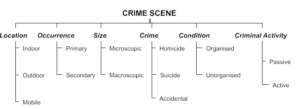
Types of Crime Scene

Crime scenes vary based on

1. Location
  • Indoor: Crime scenes located within enclosed structures (e.g., homes, buildings).
  • Outdoor: Crime scenes located outside in open areas (e.g., streets, fields).
  • Mobile: Crime scenes associated with vehicles or other mobile objects that can move from one place to another.
2. Occurrence
  • Primary Scene: The main location where the crime took place.
  • Secondary Scene: Additional locations related to the crime, where evidence may have been moved or found (e.g., a suspect’s home, vehicle).
3. Size
  • Microscopic: Small-scale crime scenes that focus on specific, minute pieces of evidence (e.g., bloodstains, fingerprints).
  • Macroscopic: Large-scale crime scenes that encompass entire areas or rooms (e.g., a whole house, a section of a forest).
4. Type of Crime
  • Homicide: Crime scenes involving unlawful death.
  • Suicide: Scenes where a death appears to be self-inflicted.
  • Accidental: Scenes where incidents result in unintended harm or death, often requiring verification that no foul play was involved.
5. Condition
  • Organised: Crime scenes that appear planned, showing evidence of premeditation and careful actions by the perpetrator.
  • Unorganised: Crime scenes that appear chaotic, often impulsive, and lacking order, possibly suggesting a spontaneous act or inexperienced perpetrator.
6. Criminal Activity
  • Passive: Crime scenes where the criminal activity is low-energy or involves minimal physical interaction (e.g., poisoning, fraud).
  • Active: Crime scenes with high-energy interactions, often involving direct physical contact or aggression (e.g., assaults, break-ins).

Preservation of Crime Scenes
  • Preserving a crime scene is crucial to avoid contamination or loss of evidence. Preservation involves careful, methodical steps to secure the scene and protect all physical, biological, and digital evidence.

  • Steps in Crime Scene Preservation:

    • Securing the Scene: First responders secure the perimeter, restricting unauthorized access.
    • Documentation: Detailed photography, videography, sketches, and notes are taken before evidence collection.
    • Search Methods: Using methods like grid, spiral, or zone search to systematically locate all evidence.
    • Collection of Evidence:
      • Handling Biological Evidence: Use gloves, masks, and sterile equipment to prevent contamination.
      • Handling Digital Evidence: Follow cyber protocols to ensure the integrity of digital data.
      • Proper Packaging: Each piece of evidence is packed separately in appropriate containers (e.g., paper bags for biological samples, plastic bags for non-biological).
    • Labeling and Chain of Custody: Label all evidence with details such as the case number, date, and time of collection. Chain of custody ensures evidence remains unaltered and accounted for.
  • Challenges in Crime Scene Preservation:

    • Environmental Factors: Weather or natural conditions (like rain or heat) may degrade evidence in outdoor scenes.
    • Human Interference: Unauthorized personnel or onlookers may disturb or contaminate the scene.
    • Time-Sensitive Evidence: Biological evidence and certain chemicals deteriorate over time, requiring prompt collection.

Criminal Investigations

Criminal investigations aim to systematically collect, analyze, and preserve evidence to reconstruct events and establish facts that identify suspects and victims, ultimately bringing perpetrators to justice. Investigators employ various forensic techniques and methods based on the crime type, scene characteristics, and the nature of the evidence.

1. Unnatural Deaths
  • Definition: Unnatural deaths include fatalities from external causes such as homicide, suicide, accidental death, or unexplained circumstances.
  • Investigative Focus:
    • Autopsy and Medical Examination: Determines the cause and manner of death (e.g., asphyxiation, stabbing, poisoning).
    • Scene Analysis: Collect evidence from the death scene, including bloodstains, fingerprints, and personal items.
    • Witness Testimonies: Interviews with family, friends, or witnesses to understand the victim’s background, relationships, and any threats.
  • Types of Evidence: Bloodstains, fingerprints, weapon marks, toxicology reports, medical records.
2. Criminal Assaults
  • Definition: Criminal assaults are violent physical attacks on individuals, potentially leading to serious injury or death.
  • Investigative Focus:
    • Injury Analysis: Examine the nature of injuries (e.g., blunt force trauma, lacerations) to determine the type of weapon used and the sequence of events.
    • Suspect Identification: Gather fingerprints, DNA, or eyewitness statements to identify the assailant.
    • Behavioral Analysis: Profiling techniques may help understand the motive and pattern of the attacker.
  • Types of Evidence: DNA (e.g., blood, saliva), fingerprints, weapon traces, clothing fibers, and CCTV footage.
3. Sexual Offenses
  • Definition: Sexual offenses include crimes involving sexual assault, molestation, and rape, often associated with physical, psychological, and forensic challenges.
  • Investigative Focus:
    • Victim Examination: A medical exam, including a Sexual Assault Evidence Kit (SAEK), is conducted to collect biological evidence and assess injuries.
    • Collection of Biological Evidence: DNA evidence (e.g., bodily fluids, hair) is crucial in linking the suspect to the victim.
    • Interviewing Victims and Witnesses: Sensitive questioning and counseling are provided to support the victim and gather information.
  • Types of Evidence: Bodily fluids, hair, fibers, bruising patterns, and items of clothing.
4. Poisoning
  • Definition: Poisoning involves the intentional or accidental ingestion, inhalation, or exposure to toxic substances leading to injury or death.
  • Investigative Focus:
    • Toxicology Tests: Conduct tests on blood, urine, stomach contents, and tissues to identify toxins or drugs.
    • Scene Analysis: Search for signs of poison containers, syringes, or medications at the scene.
    • Background Check: Gather information about the victim’s lifestyle, relationships, and any recent activities involving substances.
  • Types of Evidence: Chemical residues, medications, bodily fluids, autopsy reports, and environmental samples.
5. Vehicular Accidents
  • Definition: Vehicular accidents cover collisions and hit-and-run cases involving vehicles, which may lead to property damage, injury, or fatalities.
  • Investigative Focus:
    • Scene Reconstruction: Analyze skid marks, vehicle damage, and debris to reconstruct the event’s timeline and possible causes.
    • Witness Accounts and Surveillance Footage: Testimonies and video evidence aid in understanding circumstances and identifying responsible individuals.
    • Mechanical Inspection: Examine vehicle conditions, such as brake functionality, tire quality, and possible defects.
  • Types of Evidence: Tire marks, debris, vehicle parts, CCTV footage, injury patterns, and toxicology reports.

Courts

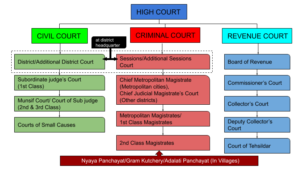
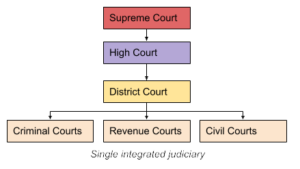
The judicial system in India is organized in a hierarchy to address civil and criminal cases, each level having specific types, powers, and jurisdictions. Courts operate under various legal frameworks, such as the Criminal Procedure Code (Cr.P.C.), 1973, and the Indian Evidence Act, 1872, which also define the role of experts and admissibility of evidence.
Types of Courts, Powers, and Jurisdiction
  • Supreme Court of India:

    • Jurisdiction: Apex court with original, appellate, and advisory jurisdiction.
    • Powers: Has the authority over constitutional matters, appeals, and disputes between states and the central government.
  • High Courts:

    • Jurisdiction: Each state or union territory has a High Court with original and appellate jurisdiction.
    • Powers: Handles cases under its territorial jurisdiction, can hear appeals, and has supervisory powers over subordinate courts.
  • District and Sessions Courts:

    • Jurisdiction: Serve as the principal courts in a district for both civil (District Court) and criminal cases (Sessions Court).
    • Powers: District Courts hear civil cases, while Sessions Courts handle serious criminal cases, such as those involving severe punishments.
  • Subordinate and Magistrate Courts:
    • Jurisdiction: Lower-level courts handling minor civil and criminal matters.
    • Powers: Magistrate Courts are categorized into Chief Judicial Magistrate, First-Class Magistrate, and Second-Class Magistrate, each with specific powers for sentencing and case handling.

Admissibility of Evidence in Courts
  • Indian Evidence Act, 1872: Governs the rules for admissibility of evidence in Indian courts.
  • Types of Evidence Admissible:
    • Oral Evidence: Statements made by witnesses in court, which must be direct.
    • Documentary Evidence: Written or recorded material (documents, digital files) relevant to the case.
    • Material Evidence: Physical objects or exhibits presented in court.
    • Expert Evidence: Opinions provided by experts, such as forensic scientists, which are admissible to aid the court in understanding complex facts.
  • Relevance and Competence: For evidence to be admissible, it must be relevant, competent, and comply with established procedures under the Evidence Act.
Definition of Experts
  • Expert: Defined under Section 45 of the Indian Evidence Act, an expert is an individual with specialized knowledge, skill, or experience in a specific field such as science, art, trade, or the like. Experts provide their opinion on matters beyond the understanding of laypersons.
  • Examples: Forensic scientists, medical practitioners, document examiners, ballistics experts, and fingerprint analysts.
Provisions in Cr.P.C., 1973 & Indian Evidence Act Relating to Experts and Their Reports
  • Section 45 of the Indian Evidence Act: Allows expert opinions as admissible evidence on matters requiring specialized knowledge (e.g., fingerprints, handwriting, toxicology).
  • Sections 293, Cr.P.C. 1973: Enables courts to consider reports from government scientific experts, such as forensic reports, without the need for the expert’s personal appearance unless explicitly required by the court.
  • Section 46, Indian Evidence Act: Allows experts to be cross-examined on their opinions, enhancing the credibility and reliability of expert testimony.
Court Procedures Pertaining to Expert Testimony & Witness
  • Examination-in-Chief: The expert witness presents findings and opinions in court, explaining how evidence was analyzed and conclusions were reached.
  • Cross-Examination: Defense or opposing counsel questions the expert, challenging the methodology, qualifications, and findings to verify credibility.
  • Re-Examination: The counsel who called the expert may clarify points questioned during cross-examination.
  • Presentation of Expert Reports: Expert reports are presented as written documentation. Courts may accept the report directly under Section 293 Cr.P.C. if it is from a certified government lab or call the expert to testify.
  • Reliability of Expert Testimony: Courts assess the reliability of an expert’s opinion based on their qualifications, methodologies, and adherence to standardized procedures.


Organization of Forensic Science Laboratories of Centre and State, NCRB and NICFS.

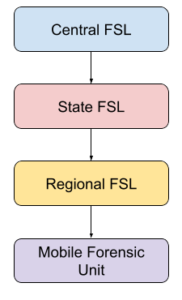
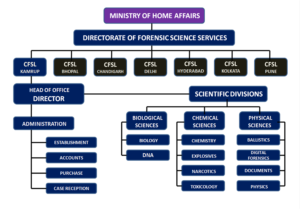
Central Forensic Science Laboratories (CFSLs)
  • Operated by the Government of India under the Directorate of Forensic Science Services, providing expertise in various forensic disciplines to support national investigations.

State Forensic Science Laboratories (FSLs)
  • Managed by individual states, assisting local law enforcement agencies.

NCRB (National Crime Records Bureau)

  • Collects, compiles, and maintains crime data, supporting data-driven policymaking.
  • Works under the Ministry of Home Affairs
  • Established in 1986
  • NCRB plays a crucial role in modernizing police operations and supporting policymaking by offering reliable crime statistics and insights.

1. Objectives and Functions

  • Data Collection and Analysis: Collects crime statistics from all states and union territories, producing annual reports like the Crime in India report.
  • Crime and Criminal Tracking Network & Systems (CCTNS): Launched to digitize and connect police stations nationwide, CCTNS facilitates data sharing and efficient case management.
  • Integrated Database Systems: NCRB manages databases such as the National Fingerprint Database (Automated Fingerprint Identification System – AFIS) and a central repository for cybercrime data.

2. Key Publications and Reports

  • Crime in India: Comprehensive report providing data on crime trends, offenses, conviction rates, and demographics of criminals.
  • Accidental Deaths & Suicides in India (ADSI): Annual report covering non-crime fatalities like suicides, road accidents, and natural disasters.
  • Prison Statistics India: Offers insights into prison demographics, capacities, and the socio-economic backgrounds of inmates.

3. Technological Initiatives and Training

  • National Automated Fingerprint Identification System (NAFIS): A digitized fingerprint database, aiding in identity verification and investigation.
  • National Cybercrime Training Centre (NCTC): An online training platform for law enforcement to enhance cybercrime investigation skills.
  • Coordination and Capacity-Building: NCRB conducts training sessions for police officers on data management, crime analytics, and cyber forensics.

4. Importance in Law Enforcement and Policy

  • Policy Support: Provides data-driven insights for formulating and evaluating crime prevention policies.
  • Enhanced Investigation: Facilitates sharing of critical information across states, improving inter-state crime investigation and tracking.
  • Public Awareness: NCRB’s reports serve as a reference for researchers, policymakers, and the public, contributing to transparency and awareness about crime trends in India.
NICFS (Now NFSU)
  • Trains forensic professionals and conducts research in criminology and forensic sciences.
  • Established in 4 January 1972
  • 1972-1976 was under BPRD, Later independent department under MHA
  • Named as NICFS in 1991, Renamed as LNJN in 2003
  • Started teaching courses in 2004

Fundamental Rights: Right of Equality (Articles 14 to 18) 
  • Art. 14: Equality before law and equal protection of laws
  • State can’t deny to any person right to Equality
  • Available to both citizens and foreigners
  • Exceptions
    • President, art.361
    • Governor, art.361
    • Foreign diplomats, ambassadors, sovereigns
    • Members of parliament, art.105
    • Members of state legislatures, art.194
    • Implementation of certain DPSP, 31c

Equality before law

Equal protection of laws

  • Negative concept: Rich people of high class gets same punishment as poor,no immunity
  • Means rule of law ( A.V.Dicey)
  • Taken from U.K const.
  • Positive concept: All persons in similar conditions & circumstances treated alike
  • Means discrimination can be done between groups but not within groups
  • Taken from U.S const.


  • Art. 15: Prohibition of discrimination on grounds of Religion, race, caste, sex or place of birth
  • Access to public shops, restaurants, hotels & places of public entertainment
  • Use of wells, tanks, bathing ghats, roads & places wholly or partially maintained by gov.
  • Exceptions
    • Special provisions for women & children
    • Provisions for advancement of socially & educationally backward classes { 1 C.A.A, 1951 }
    • Provisions for admission of socially & educationally backward classes in educational institution including private { 93 C.A.A, 2004 }


  • Art. 16: Equality of opportunity in matters of public employment
  • State can prescribe necessary qualifications & recruitment tests
  • Posts may reserved for residents of state
  • Reservation of seats for backward classes
  • Promotion on basis of consequential seniority { 85 C.A.A, 2001 & 77 C.A.A, 1995 }
  • Separate vacancy for backlog for backward classes { 81 C.A.A, 2000 }


  • Art. 17: Abolition of untouchability
  • Prohibition of its practice in any form
  • Untouchability (offences) act, 1955
  • Civil rights (protection) act, 1976

Offences

Punishments

  • Refusal of admission in public institutions
  • Insulting
  • Prohibition in worship & its places
  • Min. 6 months or ₹500 or both
  • Debarred from contesting elections
  • Cognizable offence( No warrant req.)
  • Non-Compoundable( No compromise)


  • Art. 18: Abolition of titles
  • Military & academic titles permitted
  • Citizens can’t accept foreign titles
  • Foreigners can accept after president’s consent
Right of Freedom (Articles 19 to 22) as per the Constitution of India
  • Art. 19: Guarantees 6 rights
  1. Speech & expression
  2. Assemble peacefully without arms
  3. Form association, unions & co-operatives{97th C.A.A, 2011}
  4. Move freely within territory of india
  5. Reside & settle in any part of india
  6. Practice any profession or to carry out any occupation, business or trade


  • Art. 20: Protection in respect of conviction of offences
  • No ex-post facto law
  • No double jeopardy
  • No self incrimination


  • Art. 21: Protection of life and personal liberty
  • Right to
    • Live with human dignity
    • Livelihood
    • First aid
    • Free legal aid
    • Against handcuffing
    • Privacy 
    • Travel abroad


  • Art. 21 A: Right to education
  • Free & compulsory edu.
  • Earlier part of DPSP 45
  • 6-14 yrs : elementary & primary edu.
  • Embedded by 86th C.A.A, 2002
  • RTE(Right to education) act, 2009
    • 2005: Bill drafted
    • 2009: Passed
    • 1 April 2010: Enforced
    • 25% quota in private schools for SC/ST/OBC/Disabled


  • Art. 22: Protection against arrest & detention

Punitive 

Preventive 

  • Available for ordinary laws
  • Punishment after trial & conviction by court
  • Applicable after crime is committed
  • Produced before magistrate (duty magistrate or at house) within 24 hours of arrest
  • Grounds of detention communicated
  • Available for preventive laws
  • Detention without trial &  conviction by court
  • Applicable before crime is committed
  • 3 months max. or HC permission for extension
  • Grounds of detention communicated
  • Preventive detention Act 1953, Repealed in 1969 
  • Maintenance of Integral Security Act (MISA) 1971, Repealed in 1978 
  • Conservation of Foreign Exchange and Prevention of Smuggling Activities Act (COFEPOSA) 1974 
  • National Security Act (NASA) 1980
  • Prevention of Black Marketing And Maintenance of Supplies of Essential Commodities Act (PBMSECA) 1980 
  • Terrorist and Disruptive Activities (Prevention) Act (TADA) 1985, Repealed in 1995 
  • Prevention of Illicit Traffic in Narcotics Drugs and Psychotropic Substances Act (NDPSA) 1988  
  • Prevention of Terrorism Act(POTA) 2002, Repealed in 2004
Criminal profiling

It is a method used to predict the characteristics, behavior, and psychological traits of offenders and victims in a crime investigation. It helps investigators narrow down suspects, understand motives, and anticipate possible future actions by analyzing behavior patterns and crime scene details.

Victim Profiling
  • Objective: Identifies characteristics, habits, and background of the victim to determine why they were targeted.
  • Role in Investigation: Offers insights into the offender’s motive, possible connection to the victim, and risk factors associated with the victim’s lifestyle.
  • Information Analyzed: Age, gender, occupation, lifestyle, personal relationships, and any factors that might make the victim vulnerable.
Culprit Profiling
  • Objective: Builds a psychological and behavioral profile of the suspect to aid in locating and apprehending them.
  • Types of Information Used: Crime scene analysis, modus operandi (method of committing the crime), and potential psychological patterns.
  • Behavioral Indicators: Analyzes repetitive behaviors, selection of victim type, and the nature of interaction with the victim to outline personality traits.
Role in Crime Investigation
  • Narrowing Down Suspects: Profiles help focus on individuals matching the behavioral and psychological patterns identified.
  • Understanding Motive and Intent: Assists investigators in determining the purpose of the crime (e.g., financial gain, revenge, thrill-seeking).
  • Anticipating Next Moves: Profiling can predict future actions, especially in cases involving serial crimes, enabling proactive intervention.
  • Interdisciplinary Use: Combines psychology, criminology, and forensic science to offer a comprehensive picture aiding law enforcement agencies.

Lie Detection Techniques
  • Lie Detection techniques are controversial, unproven, and of questionable accuracy
  • On May 5, 2010 the Supreme Court of India in the case of Smt. Selvi vs. State of Karnataka declared 
    • Lie Detection, Narco Analysis & Brain Mapping Unconstitutional
    • It Violates Article 20(3) of Fundamental Rights
    • These techniques requires consent & cannot be conducted forcefully
    • When conducted with consent 
      • Consent should be recorded before a Judicial Magistrate
      • Is regarded as evidence according to Section 27 of IEA
    • Suspects right are mentioned in National Human Rights Commision (NHRC)
  • Section 161(2) of the Code of Criminal Procedure : Such person shall be bound to answer truly all questions relating to such case put to him by such officer, other than questions the answers to which would have a tendency to expose him to a criminal charge or to a penalty or forfeiture.

Lie Detection (Polygraphy)

  • Polygraph is a Greek word meaning “many writings”
  • AKA –
    • Psycho- Physiological detection of Deception (PDD)
    • Truth verification
    • Detection of truth
  • A polygraph is a machine in which the multiple (“poly”) signals from the sensors are recorded on a single strip of moving paper (“graph”).
  • Purpose of polygraph
    • event-specific investigation
    • Crime investigation

History

    • 1885 : Cesare Lombroso -recorded suspects’ blood pressure as police questioned them.
    • William Moulton Marston invented a device that measured blood pressure automatically during questioning
    • Vittorio Benussi – focused on breathing, or respiration as Breathing speeds up during stress
  • 1921 : John Larson – invented a machine that measured blood pressure, pulse (heartbeat), and respiration
  • Leonarde Keeler
      • improved the polygraph
      • added a third measurement i.e. galvanic skin response (GSR), shows the degree to which a person’s skin conducts electricity.
      • Conductivity depends on the amount of sweat produced by skin
  • 1925 : Keeler patents his version of the polygraph
  • 1981 : David Lykken develops “guilty knowledge” form of questioning for polygraph tests

Principle

  • The interaction of emotions and body when a person tell lies causes certain changes in the body which are both visible and invisible.These changes are measured by lie detection technique.
  • Perception or consciously held feelings of guilt produce a defence mechanism toward off the impending punishment of crime.

Working

  • Polygraph testing combines interrogation with physiological measurements obtained using the polygraph
  • The polygraph relies on measurements of autonomic and somatic activity.
  • Steps in polygraph analysis:
    • Setting up the polygraph and preparing the subject being tested
    • Asking questions
    • Profiling the test subject
    • Analyzing and evaluating test data
  • Records physiological phenomena—typically
    • respiration
    • heart rate
    • blood pressure
    • electrodermal response (electrical conductance at the skin surface)
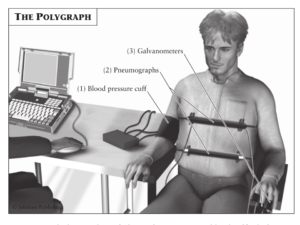
  • Pneumograph : 
  • It’s a corrugated rubber tube 
      • Tied around the subject’s chest
      • It measures respiratory changes
      • When the chest or abdominal muscles expand, the air inside the tubes is displaced. 
      • In an analog polygraph, the displaced air acts on a bellows, an accordion-like device that contracts when the tubes expand. 
      • This bellows is attached to a mechanical arm, which is connected to an ink-filled pen that makes marks on the scrolling paper when the subject takes a breath. 
      • A digital polygraph also uses the pneumographs, but employs transducers to convert the energy of the displaced air into electronic signals.
    • Sphygmograph :
      • It is an inflated cuff.
      • It’s wrapped around the upper arm.
      • It measures cardiovascular changes.
      • As blood pumps through the arm it makes sound; the changes in pressure caused by the sound displace the air in the tubes, which are connected to a bellows, which moves the pen.
  • Electrode : 
    • it is attached to the palm of finger it measures the galvanic skin response
    • Principle : When the device is placed in contact with a person’s fingertips, a speaker, by a drop in its pitch, signals an increase in the skin’s conductivity that can result from the perspiration produced when a lie is told.
  • Plethysmograph :
    • It is a transducer.
    • It is attached to the thumb.
    • It measures the blood volume reflecting the pulse rate.
  • A polygraph examination includes a series of yes/no questions to which the examinee responds while connected to sensors that transmit data on these physiological phenomena by wire to the instrument, which uses analog or digital technology to record the data
  • All the readings are recorded on the polygraph paper collectively known as polygram.

Techniques

During questioning the subject following approach is applied

  • Relevant/ irrelevant questions (RIQ)
  • Peak of tension technique (POT)
    • Only one pertinent but emotionally charged question is asked
  • Control question technique (CQT)
  • Miscellaneous technique
    • Multiple general question technique
    • Guilty knowledge test
    • Silent answer technique
    • Asking questions to which subject must lie

Limitations

  • Measures changes in blood pressure, breath rate and perspiration rate, but these physiological changes can be triggered by a wide range of emotions.

Narco Analysis
  • Term was coined by Horseley & Means “Anaesthesia” or “Torpor”
  • Also known as Truth Serum or Drug Hypnosis or Narco Interview technique
  • Hypnosis is induced by using Barbiturates or other psychotropic drugs 
  • 1st used in 1922, when Robert House, a Texas obstetrician used the drug Scopolamine on two prisoners in America
  • Application was first documented by Dr. William Bleckwenn
  • Principle : By using imagination a person is able to lie In this test, subject’s imagination is neutralised by making him/her semi-conscious in this state, it becomes difficult to lie and answers would be restricted to facts s/he is already aware of 
  • Team of Experts :
    • Clinical Forensic Psychologist
    • Psychiatrist 
    • Physician 
    • Anesthetist 
    • Audio-Videographer 
    • Writer
  • Procedure: It includes
    • Pre Test Interview 
    • Pre-Narcotic State Interview 
    • Semi-Narcotic State Interview
    • Post Test Interview
  • Drug : 
    • known as ‘truth drug’ or ‘truth serum’ : ethanol, scopolamine, 3-quinuclidinyl benzilate, midazolam, flunitrazepam, sodium thiopental, and amobarbital
    • Sodium Pentothal or Sodium Amytal is given intravenously to induce hypnosis
    • A 5% or 10% solution of drug injected slowly in antecubital vein 
    • As individual’s speech starts slurring interview begins
  • Other Methods
    • 0.5 mg scopolamine hydrobromide, subcutaneously, followed by 0.25 mg every 20 min (average 3-6 injections), till proper stage of questioning is reached
    • 100 mg sodium seconal, 15 mg morphine and 0.5 mg of scopolamine hydrobromide may be given
  • Wrong dose can result in a person going into a coma, or even death.
  • MOA:
    • Sodium Pentothal(thiopental,Thiopentone)is a rapid onset, Short acting barbiturate 
    • Acts on GABA-A Receptor 
    • GABA Receptor are Inhibitory channel & barbiturate enhance inhibitory activity

Brain Mapping
    • Invented by Lawrence Farewell in 1995
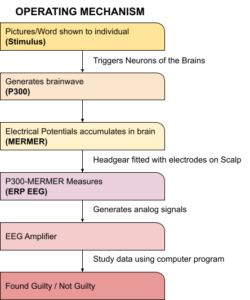
    • It is a Lie Detection Technique which uses Electroencephalography(EEG)
    • Detects concealed information stored in the brain by measuring brainwave responses
    • Measures the response to Visual & Auditory Stimulus
      • Stimulus: Thing or Event that evokes specific functional reaction in an Organ or Tissue
    • It measures electrical brainwave responses to words, phrases or pictures presented on a computer screen
    • Uses cognitive brain responses & does not depends on emotions
    • Electroencephalography (EEG) :
      • Measurement of electrical activity produced by brain as recorded from electrodes placed on the scalp
      • 10 -100s of electrodes positioned on different locations of the head
      • EEG signals(in range of mini-volts) are amplified & digitalized after processing
  • P300 :
    • Uses brain response to detect brain’s recognition of known information
    • P300 is an event related potentials (ERP) which can be recorded via Electroencephalography (EEG) 
    • Electrical signals known as P300 is emitted approximately 300 milliseconds after it is confronted with the stimulus
  • Based on electrical signal known as MERMER (Memory & Encoding Related Multifaceted Electrophalohgraphic Response)
    • Utilizes late Negative Potentials (LNP)
  • Brain Signature Profiling (BSP) or Brain Electrical Oscillation Signature (BEOS) is another EEG procedure 
    • Developed in 2003 by CR Mukundan

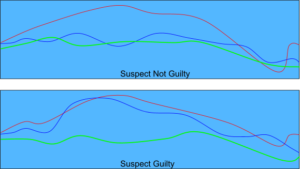
  • Suspect is tested looking at 3 types of information
  • RED : Target 
    • Information the suspect is expected to know
  • GREEN : Irrelevant
    • Information not known to suspect
  • BLUE : Probes
    • Information of Crime that only suspect would know

  • It has a record of 100% accuracy

Concept of quality control management in Forensic institutions.

Quality Control (QC) in forensic institutions ensures accuracy, reliability, and integrity in forensic analyses and outcomes. This process involves implementing standardized protocols, regular audits, and performance checks to maintain high standards across laboratories and investigations.

1. Key Aspects of Quality Control in Forensics
  • Standard Operating Procedures (SOPs): Strict adherence to standardized procedures for evidence handling, analysis, and reporting to ensure consistency.
  • Accreditation and Certification: Laboratories are certified by agencies like the National Accreditation Board for Testing and Calibration Laboratories (NABL) to meet international quality standards.
  • Training and Competency: Continuous training ensures that forensic staff stay updated with technological advances and best practices.
2. Quality Assurance Programs
  • Internal and External Audits: Regular audits assess compliance with protocols, uncover discrepancies, and guide improvement.
  • Proficiency Testing: Forensic staff participate in testing to validate their skills and ensure accurate analysis.
3. Benefits of Quality Control in Forensics
  • Enhances Credibility: Consistent quality management establishes the reliability of forensic reports in court.
  • Error Minimization: Reduces the chance of errors, which is critical given the high stakes of forensic evidence in judicial processes.
  • Public Trust: Ensures transparency and upholds public trust in forensic institutions by delivering impartial and scientifically sound evidence.

Quality control in forensic institutions not only assures precise and unbiased results but also strengthens the credibility of forensic contributions within the justice system.

Instrumentation

Microscopy is the technique of using microscopes to observe objects and areas of objects that cannot be seen with the naked eye. This field is essential in scientific research, especially in biology, materials science, and medical diagnostics.

Components of a Microscopе

A microscope consists of several key components that work together to magnify and resolve fine details in small specimens. Here are the main components and their functions:

1. Eyepiece (Ocular Lens)

  • The ocular, or eyepiece, is a cylinder comprehending multiple lenses

  • Its purpose is to converge the image in focus. 

  • The top of the body tube has an eyepiece inserted into it. 

  • Magnification values for eyepieces comprises 2x, 5x and 10x.

2. Objective Lenses

  • These are the primary lenses located close to the specimen. They usually come in sets (4x, 10x, 40x, 100x) on a rotating nosepiece.

  • Each objective lens provides a different level of magnification and resolution.

3. Stage

  • The flat platform where the slide with the specimen is placed.

  • Most stages have clips to hold the slide in place and allow easy movement to observe different areas.

4. Stage Clips or Mechanical Stage

  • These hold the slide in position on the stage. Mechanical stages have knobs to move the slide precisely in small increments.

5. Illuminator or Light Source

  • Provides light to illuminate the specimen. In most modern microscopes, this is an LED or halogen light source.

  • Older microscopes may have mirrors to reflect ambient light onto the specimen.

6. Condenser

  • Located below the stage, it focuses light from the illuminator onto the specimen for clearer visualization.

  • It often has an adjustable diaphragm to control light intensity and contrast.

7. Diaphragm or Iris

  • A rotating disk under the stage that controls the amount of light reaching the specimen.

  • Adjusting the diaphragm can improve contrast and resolution, depending on the transparency of the specimen.

8. Nosepiece or Turret

  • A rotating part that holds the objective lenses and allows quick switching between different magnifications.

9. Focus Adjustment Knobs

  • Coarse Focus: Moves the stage or objective lenses quickly and is used for general focusing.

  • Fine Focus: Allows precise adjustments to bring the specimen into sharp focus, especially under high magnification.

10. Body Tube (Head)

  • Connects the eyepiece to the objective lenses and ensures proper alignment for viewing.

11. Arm

  • The part connecting the body tube to the base, providing structural support.

  • It’s the handle used to carry the microscope.

12. Base

  • The bottom part of the microscope that provides stability.

Together, these components allow microscopes to magnify specimens, focus light on them, and enable detailed observation and analysis. Each part plays a crucial role in the clarity, contrast, and usability of the microscope


Polarized Light Microscope

  • It is a type of optical microscope that uses polarized light to observe specimens. 
  • It is especially useful for studying birefringent & optically anisotropic materials—materials that split light into two distinct beams traveling at different velocities—such as minerals, crystals, polymers, and some biological tissues. 
  • Anisotropic substances, such as uniaxial or biaxial crystals, oriented polymers, or liquid crystals, generate interference effects in the polarized light microscope, which result in differences of color and intensity in the image as seen through the eyepieces and captured on film, or as a digital image.
  • PLM is commonly used in fields like mineralogy, geology, chemistry, and materials science.

Key Components of a Polarized Light Microscope

  1. Polarizer:
    • Positioned beneath the condenser, it polarizes the incoming light, meaning it aligns the light waves in a single plane.
    • This light is then directed toward the specimen, making it easier to observe birefringent materials.
  2. Analyzer:
    • Located above the objective lenses, this second polarizing filter is set perpendicular to the polarizer.
    • The analyzer can be removed or rotated to adjust contrast and image clarity.
  3. Rotatable Stage:
    • Allows the user to rotate the specimen, which is important because birefringent materials change appearance when observed from different angles.
    • Typically graduated for precise measurements, especially useful in crystallography and mineral studies.
  4. Condenser with a Centerable Diaphragm:
    • The condenser helps focus light on the specimen. In a PLM, the condenser may have adjustments for precise light control.
    • A centerable diaphragm allows the user to adjust the light to achieve the best possible image contrast and detail.
  5. Compensators or Retardation Plates:
    • These plates (e.g., quartz wedge, first-order red plate) are inserted into the light path to add specific wavelengths or retardations, enhancing the contrast and colors of birefringent materials.
    • They help in determining optical properties of the material, such as refractive index and birefringence.
  6. Special Objective Lenses:
    • Some PLMs use strain-free objective lenses to minimize optical distortions that can interfere with polarized light observations.

How Polarized Light Microscopy Works

  1. Polarized Light Generation: The polarizer filters incoming light to oscillate in a single direction.
  2. Interaction with the Sample: The polarized light interacts with the birefringent sample, splitting into two rays (ordinary and extraordinary) that move at different speeds and have different polarizations.

Recombination of Light: When these rays exit the specimen, they pass through the analyzer, recombining to produce interference colors that reveal information about the sample’s internal structure.

Applications of Polarized Light Microscopy

  • Geology and Mineralogy: Essential for identifying minerals in thin rock sections based on interference colors and birefringence patterns.
  • Biology: Used to examine crystalline structures in biological samples, such as muscle fibers, collagen, and starch granules.
  • Materials Science: Assists in analyzing polymers and synthetic fibers, as many exhibit birefringence.
  • Forensic Science: Helps in analyzing fibers, paints, and glass fragments, which may be birefringent and can reveal crucial details about their origin or composition.

Advantages of Polarized Light Microscopy

  • Enhances contrast without the need for staining.
  • Reveals specific optical properties like birefringence, which provides unique information about sample composition and structure.
  • Allows for qualitative and quantitative analysis of crystalline and fibrous materials.

Comparison Microscope

  • It compares two separate objects side-by-side
  • It has two separate microscopes connected by an optical bridge, which allows a viewer to observe and compare two specimens simultaneously within the same field of view. 
  • This setup is commonly used in forensic science, particularly in ballistics, document analysis, and tool mark identification.

Key Components of a Comparison Microscope

  1. Dual Optical Paths:
    • The comparison microscope consists of two separate optical paths, each with its own set of objective lenses and eyepiece. This setup allows each side to magnify an independent specimen.
  2. Optical Bridge:
    • The bridge combines the images from the two separate optical paths into a split-screen view so that half of each specimen appears in one eyepiece.
    • This feature allows the user to see both specimens side-by-side in a single field of view, aiding in direct comparison.
  3. Illumination System:
    • Each microscope has its own adjustable light source to control lighting independently for each specimen. This is important to ensure that both specimens are equally well-lit for comparison.
    • Illumination settings can be adjusted to achieve optimal contrast, which is particularly useful in forensic examination of surfaces, textures, or tool marks.
  4. Stage:
    • Each microscope has its own stage, where the specimens are placed. The stages can be moved independently, allowing precise alignment and positioning of the specimens for accurate side-by-side viewing.
  5. Focus Adjustment:
    • Both microscopes have individual focus adjustments to allow clear viewing of each specimen at various magnifications.

How a Comparison Microscope Works

The comparison microscope operates by bringing together images from two separate specimens into a split view within one eyepiece. The optical bridge merges the images, so they appear as two halves within a single circular field of view. This setup enables examiners to directly compare details like patterns, striations, and markings.

Applications of Comparison Microscopy

  • Forensic Ballistics: Used to compare bullets, cartridge cases, and shell casings. By comparing the striations and markings on two bullets, for example, a forensic expert can determine if they were fired from the same gun.
  • Tool Mark Analysis: Helps identify if specific tools made certain marks or impressions, which is useful in crime scene investigations.
  • Document Examination: Used to compare handwriting, ink, and paper samples, which is valuable for detecting forgeries or alterations.
  • Trace Evidence: Allows comparison of fibers, hair, glass fragments, or other trace materials for similarity or common origin.

Advantages of Comparison Microscopy

  • Enhanced Accuracy: Direct side-by-side viewing of specimens in the same field of view improves accuracy and reduces observer error.
  • Efficient Analysis: Allows fast and easy comparison of microscopic features without needing to switch between separate images.
  • Detailed Forensic Analysis: Reveals minute differences or similarities in striations, markings, or structural characteristics that may not be visible with standard microscopy.

The comparison microscope has become an indispensable tool in forensic science, enabling detailed comparisons that can support or refute evidence in criminal cases. Its ability to present two images simultaneously within one eyepiece provides a highly effective means of identifying matches or discrepancies at a microscopic level.


Stereomicroscope

  • It is also known as a dissecting microscope
  • It provides a three-dimensional (3D) view of a specimen. 
  • It is commonly used for viewing larger, opaque samples that cannot be observed with a compound microscope, making it a popular tool in fields such as biology, archaeology, manufacturing, and electronics.

Key Components of a Stereomicroscope

  1. Binocular Viewing Head:
    • The stereomicroscope has two separate optical paths, one for each eye, which creates a three-dimensional view. This binocular setup provides depth perception and a realistic 3D image.
  2. Objective Lenses:
    • Stereomicroscopes have lower magnification compared to compound microscopes, usually ranging from 2x to 50x, suitable for examining larger specimens in detail.
    • Some stereomicroscopes offer zoom capability, allowing for continuous magnification adjustments without needing to change lenses.
  3. Eyepieces (Ocular Lenses):
    • Each eyepiece magnifies the image further, typically around 10x, providing an additional layer of magnification and maintaining a stereoscopic (3D) effect.
  4. Illumination System:
    • Top (Incident) Lighting: Illuminates the sample from above, useful for observing opaque, solid specimens.
    • Bottom (Transmitted) Lighting: Projects light through transparent or translucent samples from below. Some stereomicroscopes have both options for versatile viewing.
  5. Stage:
    • The stage is often a flat platform that provides a stable surface for the specimen. Unlike compound microscopes, the stage is usually large and open, allowing for easy manipulation of larger samples.
  6. Focus Adjustment Knob:
    • This allows for fine-tuning of the focus, making it easy to adjust for different specimen heights or fine details.

How a Stereomicroscope Works

The stereomicroscope works by using two separate optical paths angled slightly apart. Each path captures an image from a different perspective, and the two images are merged into one by the brain, giving a three-dimensional view. This 3D perspective provides a clear sense of depth, allowing the user to see the topography and structure of the specimen.

Applications of Stereomicroscopy

  • Biology: Used to examine the surface of larger specimens like insects, plants, and organs without the need for sectioning.
  • Dissection: Essential in biology labs for dissections, as it provides a clear, magnified, and realistic view of specimens.
  • Manufacturing and Quality Control: Helps inspect the details and quality of small parts, such as electronic components, circuit boards, and machine parts.
  • Archaeology and Paleontology: Allows detailed examination of artifacts, fossils, and small geological samples.
  • Gemology and Jewelry Making: Used for detailed inspection of gems, minerals, and jewelry for imperfections or detailed crafting.

Advantages of a Stereomicroscope

  • 3D View: Provides depth perception, which is critical for observing surface features and textures.
  • Lower Magnification for Larger Samples: Ideal for larger, opaque samples that don’t require extreme magnification.
  • Ease of Use and Flexibility: Allows easy manipulation of samples, making it suitable for tasks requiring hands-on interaction with the specimen.

 Fluorescence Microscopе

  • It uses fluorescence to generate an image of a specimen. 
  • In fluorescence microscopy, samples are labeled with fluorescent dyes (fluorophores) that emit light when excited by a specific wavelength. 
  • This technique is widely used in biological and medical research to visualize and study specific structures, molecules, or processes within cells and tissues.

Key Components of a Fluorescence Microscope

  1. Light Source:
    • Fluorescence microscopes use intense light sources that can emit specific wavelengths required to excite fluorescent dyes. Common light sources include xenon or mercury arc lamps, LED lights, or lasers.
    • These sources provide the necessary energy to excite fluorophores so they emit light at a different wavelength.
  2. Excitation Filter:
    • This filter allows only the specific wavelength needed to excite the fluorophore to pass through, blocking other wavelengths of light from the source.
    • The filtered light is then directed onto the specimen, exciting the fluorescent dyes.
  3. Dichroic Mirror:
    • A specially designed mirror that reflects the excitation light toward the specimen but transmits the emitted fluorescence light from the specimen to the eyepiece or camera.
    • This ensures that only the fluorescent light emitted by the specimen reaches the observer or detector.
  4. Emission Filter:
    • Positioned after the dichroic mirror, this filter only allows light of the specific emission wavelength to pass through and blocks the excitation light.
    • The emission filter ensures that the final image seen is free from interference by unwanted light wavelengths, providing a clear fluorescent signal.
  5. Objective Lenses:
    • Special high-quality lenses are used to collect and focus the emitted fluorescence light.
    • These objectives often have high numerical apertures to gather as much fluorescent signal as possible and enhance image brightness.
  6. Detector:
    • Fluorescence microscopes typically include a sensitive camera, such as a CCD or CMOS camera, to capture fluorescent images for documentation and analysis.
    • In some advanced fluorescence microscopes, photomultiplier tubes or other specialized detectors are used for precise measurements of fluorescence intensity.

How Fluorescence Microscopy Works

  1. Excitation: The sample is labeled with specific fluorescent dyes that bind to structures or molecules of interest. When exposed to the excitation wavelength, the fluorophores absorb energy and enter an excited state.
  2. Emission: As the fluorophores return to their ground state, they emit light at a longer wavelength than the excitation light. This emitted light is typically in the visible spectrum, allowing it to be captured by the microscope.

Detection: The emitted fluorescent light passes through the dichroic mirror and emission filter, which blocks any remaining excitation light. The filtered fluorescent light then reaches the eyepiece or camera, forming an image.

Applications of Fluorescence Microscopy

  • Cell Biology: Allows visualization of specific cellular structures, such as the nucleus, mitochondria, or cytoskeleton, using targeted fluorescent dyes or antibodies.
  • Genetics and Molecular Biology: Fluorescence microscopy is crucial in studying gene expression, protein localization, and molecular interactions within cells.
  • Medical Diagnostics: Used in pathology to identify abnormal cells, infectious agents, and other diagnostic markers in tissue samples.
  • Live Cell Imaging: Enables real-time observation of dynamic processes like cell division, movement, and signaling pathways by using fluorescent proteins or dyes compatible with living cells.
  • Environmental Microbiology: Helps visualize microorganisms in environmental samples, such as bacteria and algae, often using autofluorescence or specific fluorescent markers.

Advantages of Fluorescence Microscopy

  • High Sensitivity and Specificity: Can detect minute amounts of specific molecules within a complex sample.
  • Multi-Color Imaging: Different fluorescent dyes can be used simultaneously, enabling visualization of multiple structures or molecules in the same sample.
  • Dynamic Studies: Allows observation of biological processes in live cells, making it invaluable for studying cell function and behavior over time.

Limitations of Fluorescence Microscopy

  • Photobleaching: Fluorophores can lose their fluorescence over time with prolonged exposure to light, limiting observation time.
  • Phototoxicity: Intense light exposure can damage live cells, which is a consideration in live-cell imaging.

Background Fluorescence: Autofluorescence from cellular components or the sample matrix can interfere with the specific fluorescence signal, reducing image contrast


Electron Microscopе

  • It uses a beam of electrons instead of light to magnify objects, allowing for extremely high resolution and magnification. 
  • It can reveal details at the nanometer scale, making them essential for studying ultra-small structures in biology, materials science, nanotechnology, and other fields.

Key Components of an Electron Microscope

  1. Electron Gun:
    • The source of electrons, usually a tungsten filament or field emission gun. It emits electrons by heating the filament or using an electric field.
  2. Electromagnetic Lenses:
    • Electrons cannot pass through glass lenses as light does, so electron microscopes use electromagnetic lenses to focus the electron beam. These lenses adjust the beam to achieve different levels of magnification and focus.
  3. Specimen Holder:
    • The sample is mounted on a holder in the vacuum chamber. In TEM, specimens must be extremely thin, while SEM samples only require the surface to be conductive.
  4. Vacuum System:
    • The entire electron path must be kept in a vacuum to prevent electron scattering from air molecules. This vacuum environment ensures a clear and stable image.
  5. Detectors:
    • TEMs use detectors to capture transmitted electrons, forming a detailed image of the specimen’s internal structure.
    • SEMs use secondary electron detectors to capture emitted electrons from the sample surface, creating detailed images of the surface texture.
  6. Imaging Screen/Computer Monitor:
    • The detected electron signals are converted into an image that is displayed on a monitor, where it can be analyzed and saved for further examination.

Principle of Electron Microscopy

  • Electrons are accelerated to generate a monochromatic beam. When this beam interacts with the specimen, various scattering and emission phenomena occur, enabling high-resolution imaging.

  • Backscattered Electrons (BSE): Created by elastic scattering, useful for identifying areas with different atomic numbers (e.g., materials contrast).

  • Secondary Electrons (SE): Created by inelastic scattering near the surface, ideal for SEM imaging and topography studies.

  • Inner-Shell Ionization: Ejection of secondary electrons as high kinetic energy from the inner shell

  • X-rays: Generated during electron transitions between energy levels, used in energy-dispersive X-ray spectroscopy (EDX) to determine elemental composition.

How an Electron Microscope Works

  1. Electron Beam Generation: The electron gun produces a stream of electrons, which are accelerated toward the specimen.
  2. Focusing and Scanning: Electromagnetic lenses focus the electron beam onto the sample. In TEM, the beam penetrates the specimen, while in SEM, the beam scans the surface.
  3. Electron-Specimen Interaction: As the electrons interact with the specimen, they generate signals (transmitted electrons, backscattered electrons, or secondary electrons).
  4. Detection and Imaging: Detectors collect these signals, which are then processed to create a high-resolution image of the sample on a monitor.

Types of Electron Microscopes

  1. Transmission Electron Microscope (TEM):
    • In a TEM, a beam of electrons passes through an ultra-thin specimen to produce an image. The electrons that pass through are detected to create a high-resolution image of the internal structure.
    • TEMs can achieve magnifications up to 2 million times, revealing details like cellular organelles, viruses, or atomic lattice structures in materials.
  2. Scanning Electron Microscope (SEM):
    • SEMs work by scanning a focused beam of electrons across the surface of a specimen. The electrons interact with the sample’s surface, creating signals that are detected to form a 3D-like image.
    • SEMs are ideal for studying surface textures and topographies of specimens, and they can achieve magnifications up to around 1 million times.
  3. Scanning Transmission Electron Microscope (STEM):
    • STEM combines aspects of both TEM and SEM by using a focused electron beam that scans over a thin specimen. This technique is highly sensitive and can detect atomic arrangements, often coupled with spectroscopic analysis.

Applications of Electron Microscopy

  • Biology and Medicine: Electron microscopes are used to study viruses, cellular structures (like organelles and membranes), and other biological specimens that require high resolution.
  • Materials Science: Essential for analyzing metals, ceramics, and polymers at the atomic level to understand their properties and structures.
  • Nanotechnology: Enables visualization and manipulation of nanoparticles, nanomaterials, and nanodevices.
  • Forensic Science: Used for analyzing minute details in evidence, such as fibers, gunshot residue, or surface details of materials.
  • Semiconductor Industry: Used in the fabrication and analysis of microchips and circuit components at microscopic scales.

Advantages of Electron Microscopy

  • High Resolution and Magnification: Capable of visualizing structures at the atomic level, far beyond the capabilities of light microscopes.
  • Detailed Surface and Internal Imaging: Allows both surface and cross-sectional imaging, useful for a wide range of scientific applications.
  • 3D Visualization (SEM): Produces three-dimensional-like images, making it ideal for studying surface topographies.

Limitations of Electron Microscopy

  • Sample Preparation: Specimens require extensive preparation, especially for TEM, as samples need to be ultra-thin.
  • Vacuum Requirement: The microscope operates in a vacuum, which limits the ability to examine living samples.
  • Cost and Complexity: Electron microscopes are expensive, require specialized training, and are generally available only in dedicated laboratories.
  • Potential Artifacts: The high-energy electron beam can sometimes alter or damage delicate specimens.

SEM (Scanning Electron Microscope)

  • Developed by Manfred von Ardenne, in Germany, 1931
  • Requires low kinetic energy electrons which need not penetrate deep inside the sample (interact on the surface up to a few nm of the depth)
  • Electron source: Tungsten filament or a LaB6 cathode housed inside an electron gun
  • Electron beam is accelerated by low voltage(between 2 to 50 KV)
  • SEM column and sample chamber were fixed at moderate vacuum of about 10-5 to 10-7 Torr (10-3 to 10-4 Pa) to allow the electrons to travel freely from the electron beam source to the sample and then to the detectors
  • Technique does not require to accelerate the electrons
  • Strong magnetic field is not needed, magnetic lenses used are smaller
  • Two stage lens system is placed below the electron gun which comprises of
    • Condenser lens
      • Narrows down electron beam to a spot of about 0.5 to 5 nm diameter that scans the specimen
    • Objective lens
      • Focuses very small probe on to the specimen
  • Specimen is mounted on a stage, which can move in horizontal and vertical axes, tilt or rotate
  • Beam passes through pairs of scanning coils located near the end of the column, which deflect the beam in the x and y axes to perform a scan over the sample surface
  • Signals generated as a result of due interactions in form of SEs, BSEs etc.
  • Different signal intensities are displayed as patterns of varying brightness on a Cathode Ray Tube (CRT) corresponding to the morphology of the sample surface area scanned by the beam
  • Electron detectors: Scintillator type also known as Everhart- Thornley detector meant for secondary electron imaging and solid-state detector for backscattered electrons
  • Freeze-etching is a method for preservation of specimen’s structures in scanning Electron Microscope

TEM (Transmission  Electron Microscope)

    • Developed by Max Knoll and Ernst Ruska, in Germany, 1931
    • Used for thin specimen which allows the incident electrons to traverse through after due interactions
    • These interactions are translated into signals which are magnified and focused on imaging device such as phosphor screen or a CCD camera
    • Lighter areas of image represent the thinner sections of specimen through which greater number of electrons passed & darker areas reflect the dense regions of the object
    • Technique allows visualization of samples on a molecular level, allowing topographical, morphological as well as compositional studies
    • Produces  2D images of high-resolution of the order of nanometers and magnification of 102 to 106 X, enabling to image planes and columns of atoms
    • Electron-diffraction patterns for crystalline studies can be obtained
    • Components of TEM:
  • Illumination system
        • comprises of electron source: thermionic gun (emits monochromatic beam of electrons)
        • Electron source, inside the gun is tungsten filament or lanthanum hexaboride source housed in an electron-accelerating chamber
        • Filament is connected to a high voltage supply (about 200-300 kV) which heats it up to about 2700K, the temperature sufficient for thermionic emission of electrons from tungsten
        • Immediately after emission from cathode, electrons are accelerated to their final kinetic energy by applying an electric field parallel to the optic axis.
        • Most of the accelerated electrons are absorbed by the anode plate and only 1% pass through the fine hole, therefore the beam current in a TEM is typically 1% of the emission current from the cathode.
  • Condenser
        • Converge the illumination and produces an almost parallel electron beam which is incident on the specimen in form of a spot
  • Stage
  • Objective
        • Electromagnetic lens made of coils which encounter high excitation current and produces the magnetic field to focus the electrons
        • Highly stabilized current supply is required for accurate focusing of specimen
        • The coils of lens utilize high voltage and generate large amount of heat, thus are kept under insulation and are provided with thermal distributors.
  • Intermediate lens and Projector lens
        • Produces pattern in the back focal plane of the objective lens which is used by the projector lens to form image on the screen
        • Projector lens produces image across the fluorescent screen
  • TEM screen, Detectors and Image Recorder
      • A phosphor screen converts the diffraction pattern of electrons into visible light signals
      • The screen is made of fluorescing material Zinc Sulfide (ZnS)
 

Spectrophotometry: A quantitative analytical method used to measure the absorbance or transmittance of light by a substance as a function of wavelength.

 Principles

  • Interaction with Light:
    • Molecules absorb specific wavelengths of light depending on their structure.
  • Beer-Lambert Law: A=ε⋅c⋅l
  • Where:
    • A: Absorbance (unitless)
    • ε: Molar absorptivity (L mol⁻¹ cm⁻¹)
    • c: Concentration of the analyte (mol L⁻¹)
    • l: Path length of the sample cuvette (cm)

Components of a Spectrophotometer

  1. Light Source:
    • UV-Vis Range: Deuterium lamps for UV, tungsten-halogen lamps for visible light.
    • IR Range: Nernst glower or silicon carbide sources.
  2. Monochromator:
    • Separates light into specific wavelengths using prisms or diffraction gratings.
  3. Cuvette/Cell:
    • Holds the sample, typically made of quartz (for UV) or glass (for visible).
  4. Detector:
    • Converts light into an electrical signal; common types include photodiodes and photomultiplier tubes.
  5. Readout System:
    • Displays the absorbance, transmittance, or concentration.

Measurement Modes

  1. Absorbance Mode:
    • Measures how much light is absorbed by the sample.
  2. Transmittance Mode:
    • Measures the percentage of light passing through the sample.
    • Relationship: A=−log⁡10(T)
    • Where T is transmittance.

Procedure

  1. Preparation:
    • Calibrate the instrument using a blank (solvent without analyte).
  2. Sample Analysis:
    • Place the sample in the cuvette and record absorbance at the desired wavelength.
  3. Data Interpretation:
    • Use Beer-Lambert Law for concentration determination or compare with a calibration curve.

Applications

  • Biochemistry:
    • Determination of protein, DNA, or RNA concentrations.
  • Environmental Science:
    • Analysis of pollutants in water or air.
  • Clinical Diagnostics:
    • Measurement of blood analytes (e.g., hemoglobin, glucose).
  • Industrial:
    • Quality control of dyes, paints, and chemicals.

Advantages

  • High sensitivity and specificity.
  • Fast and relatively simple operation.
  • Applicable to a wide range of analytes.

Limitations

  • Requires clear, non-turbid samples.
  • Interference from impurities or overlapping spectra.
  • Limited to substances that absorb light in the accessible range.

Common Errors

  • Instrumental Errors:
    • Misalignment of optics, stray light, or detector noise.
  • Sample Preparation Errors:
    • Improper dilution, air bubbles, or particulate matter.
  • Calibration Errors:
    • Inaccurate blanking or outdated standards.

UV-Visible Spectroscopy

A technique used to measure the absorption or transmission of ultraviolet (UV) (200–400 nm) and visible (400–700 nm) light by a sample.

Principle

  • Electronic Transitions: Molecules absorb UV or visible light, causing electrons to transition from lower energy levels (ground state) to higher energy levels (excited state).
  • Chromophores: Functional groups in molecules responsible for absorbing UV-Vis light (e.g., C=C, C=O, aromatic rings).

Key Concepts

  1. Absorbance (AA):
    • Proportional to the concentration of the absorbing species.
    • A=−log⁡10(T)
  2. Beer-Lambert Law: A=ε⋅c⋅l

Instrumentation

  1. Light Source:
    • Deuterium Lamp: Emits in the UV range.
    • Tungsten-Halogen Lamp: Emits in the visible range.
  2. Monochromator:
    • Uses diffraction gratings or prisms to isolate specific wavelengths.
  3. Sample Cell (Cuvette):
    • Made of quartz (for UV range) or glass (for visible range).
  4. Detector:
    • Converts transmitted light into an electrical signal (e.g., photodiode, photomultiplier tube).
  5. Readout Device:
    • Displays absorbance or transmittance values.

Measurement Process

  1. Baseline Calibration:
    • Use a blank (solvent-only) sample to set the instrument to zero absorbance.
  2. Sample Analysis:
    • Place the sample in the cuvette and measure absorbance at specific wavelengths.
  3. Spectrum Collection:
    • Record absorbance or transmittance as a function of wavelength to obtain the UV-Vis spectrum.

Applications

  1. Qualitative Analysis:
    • Identification of compounds based on characteristic absorption peaks.
  2. Quantitative Analysis:
    • Concentration determination using Beer-Lambert Law or calibration curves.
  3. Applications in Various Fields:
    • Biochemistry: Protein, DNA, or RNA concentration measurement.
    • Environmental Science: Analysis of pollutants in water or air.
    • Pharmaceuticals: Drug purity and stability testing.
    • Food Industry: Analysis of dyes, vitamins, and antioxidants.

Common Absorption Regions

  • UV Range (200–400 nm):
    • Transitions in unsaturated molecules (e.g., π → π*, n → π*).
  • Visible Range (400–700 nm):
    • Transitions associated with colored compounds and dyes.

Factors Affecting Absorption

  1. Molecular Structure:
    • Presence of conjugated double bonds increases absorption.
  2. Solvent:
    • Polar solvents can shift absorption maxima (bathochromic or hypsochromic shifts).
  3. pH:
    • Ionization states of the analyte can affect absorption.
  4. Concentration:
    • High concentrations may lead to deviations from Beer-Lambert Law.

Advantages

  • Rapid and easy to use.
  • Non-destructive.
  • Applicable to both organic and inorganic compounds.

Limitations

  • Not suitable for highly concentrated or opaque samples.
  • Requires chromophores for UV-Vis activity.
  • Overlapping spectra may complicate analysis.

Infrared (IR) Spectroscopy 

A technique used to study molecular vibrations and identify functional groups by measuring the absorption of infrared light (IR) by a sample.

Principle

  • Molecular Vibrations: IR light causes bonds in molecules to stretch, bend, or twist. The absorbed energy corresponds to the natural frequencies of these vibrations.
  • Functional Group Identification: Different bonds and functional groups absorb IR light at characteristic wavelengths or wavenumbers.

IR Regions

  1. Near-IR (4000–14,000 cm⁻¹): Overtone and combination bands.
  2. Mid-IR (400–4000 cm⁻¹): Most common range for identifying functional groups.
  3. Far-IR (10–400 cm⁻¹): Used for studying heavy atoms and lattice vibrations.

Instrumentation

  1. IR Source:
    • Common sources include globar (silicon carbide) or Nernst glower (ceramic rod).
    • Radiation Sources & Transducers

        • Radiation sources
      • Nernst Glower:
            • Rod of oxides of Zirconium, Yttrium, Erbium
            • Electrically heated at 15000 C to produce IR
      • Nichrome Wire:
            • Simple Nichrome wire which emit IR when electrically heated
      • Globber:
            • Silicon Carbide rod when electrically heated at 11000 to 15000 C produces IR
        • Transducers
      • Pyroelectric:
            • Constructed from triglycine sulphate
      • Photo-conducting:
            • Constructed from MCT(mercury fluoride- cadmium chlorite)
            • high sensitivity
            • fast response
            • used for MIR and FIR
      • Thermal:
          • Bolometers are used for FIR
  2. Sample Holder:
    • Samples may be solid (pellets or films), liquid (thin films), or gas (cells with long path lengths).
  3. Monochromator:
    • Uses prisms or diffraction gratings to isolate specific wavenumbers.
  4. Detector:
    • Thermal detectors (e.g., thermocouples) or photon detectors (e.g., mercury cadmium telluride).
  5. Readout System:
    • Converts detector signals into a spectrum (plot of absorbance or transmittance vs. wavenumber).

Sample Preparation

  • Solids: Mixed with KBr to form a pellet or used as a thin film.
  • Liquids: Placed between salt plates (e.g., NaCl or KBr).
  • Gases: Measured in specialized gas cells.

IR Spectrum Interpretation

  1. X-Axis: Wavenumber (cm−1\text{cm}^{-1}), inversely proportional to wavelength.
  2. Y-Axis: Transmittance (%) or absorbance.
  3. Regions in Mid-IR:
    • 4000–2500 cm⁻¹: Stretching vibrations (e.g., O-H, N-H, C-H).
    • 2500–2000 cm⁻¹: Triple bond region (e.g., C≡C, C≡N).
    • 2000–1500 cm⁻¹: Double bond region (e.g., C=O, C=C, C=N).
    • 1500–400 cm⁻¹: Fingerprint region, unique for each molecule.

Applications

  1. Qualitative Analysis:
    • Identifying functional groups and chemical structures.
  2. Quantitative Analysis:
    • Measuring the concentration of compounds based on absorbance intensity.
  3. Applications in Various Fields:
    • Chemistry: Reaction monitoring and structure elucidation.
    • Pharmaceuticals: Drug identification and purity testing.
    • Environmental Science: Detection of pollutants.
    • Materials Science: Characterization of polymers and coatings.

Common Functional Group Absorption Ranges

Functional GroupAbsorption Range 
O-H (alcohols)3200–3600 (broad)
N-H (amines)3300–3500
C-H (alkanes)2800–3000
C=O (carbonyls)1650–1750
C=C (alkenes)1600–1680
C≡C, C≡N (triple bonds)2100–2300

Advantages

  • Non-destructive.
  • Can analyze solids, liquids, and gases.
  • Provides specific information about functional groups.

Limitations

  • Complex spectra may require advanced interpretation.
  • Weak IR signals for nonpolar bonds.
  • Cannot identify isomers with identical functional groups.

 Raman Spectroscopy 

A spectroscopic technique used to study vibrational, rotational, and other low-frequency modes in a system by measuring the inelastic scattering of light (Raman scattering).

  • Discovered in 1928, by C. V. Raman
  • Received Nobel Prize in 1930
  • Based on inelastic scattering of monochromatic light, usually from a laser 
  • Inelastic scattering : the frequency of photons in monochromatic light changes upon interaction with a sample
  • Photons from laser light are absorbed by the sample and then re-emitted. 
  • Raman effect : Frequency of the re-emitted photons is shifted up or down in comparison with original monochromatic frequency 
  • This shift provides information about vibrational, rotational and other low frequency transitions in molecules
  • Raman spectroscopy can be used to study solid, liquid and gaseous sample

Principle

  • Raman Effect: When light interacts with molecules, most of it scatters elastically (Rayleigh scattering). A small fraction scatters inelastically, shifting to higher (Stokes) or lower (anti-Stokes) energy.
  • Energy Shifts: These shifts correspond to vibrational energy levels, providing a molecular fingerprint.

Key Concepts

  1. Raman Scattering:
    • Inelastic scattering of photons caused by molecular vibrations or rotations.
    • Two types:
      • Stokes Scattering: Photon loses energy, resulting in longer wavelength.
      • Anti-Stokes Scattering: Photon gains energy, resulting in shorter wavelength.
  2. Complementarity with IR Spectroscopy:
    • Raman is sensitive to polarizability changes, while IR is sensitive to dipole moment changes.

Instrumentation

  1. Light Source:
    • A monochromatic laser (e.g., argon-ion, Nd, or diode lasers) provides the excitation light.
  2. Sample Interaction:
    • Laser light interacts with the sample, and scattered light is collected.
  3. Spectrometer:
    • Uses a monochromator to separate scattered light into its components.
  4. Detector:
    • Typically a charge-coupled device (CCD) for high sensitivity.
  5. Optical Filters:
    • Filters like notch or edge filters block Rayleigh scattering and allow only Raman scattering to pass.

Raman Spectrum

  • X-Axis: Raman shift (in cm⁻¹), the difference between the incident and scattered light frequencies.
  • Y-Axis: Intensity of scattered light.
  • Key Regions:
    • 400–1800 cm⁻¹: Fingerprint region (characteristic molecular vibrations).
    • Above 2000 cm⁻¹: Functional group vibrations.
  • Scattering Frequency: Vs
  • Incident Frequency: Vi
    • Rayleigh Scattering: Vs = Vi
    • Raman Scattering: Vs Vi (Around 1%  of Scattering)
  • Raman Scattering is a Two Photon process
    • Stokes lines: Vs < Vi (Electron absorbs Energy)
    • Anti-Stokes lines: Vs > Vi (Electron emits Energy)
    • Raman Spectra gives molecular Fingerprint
    • Different molecules have different Raman Spectra
    • Qualitative Analysis : Identifying Rotational Level from the spectra
    • Quantitative Analysis : Concentration is determined from intensity of spectra lines
    • Coherent Anti-Stokes Raman Spectroscopy (CARS)
        • When a molecule is polarized by an exciting field, the polarization contains terms that involve the square, cube, and so on of the field strength also the first power
        • Because of the nonlinear terms, which become important only when the exciting field or fields are very strong as in laser excitation, the molecule can combine several photons to yield another photon of different but related frequency
    • Surface Enhanced Raman Spectroscopy (SERS)
      • Raman scattering is enhanced when the analyte is adsorbed on colloidal metallic surfaces. 
      • Silver, gold, and copper are the metals found to be most effective

Sample Requirements

  • States Analyzed: Solids, liquids, and gases.
  • Preparation: Minimal; works well for opaque or aqueous samples.

Applications

  1. Chemistry:
    • Identifying molecular structure and bonding.
  2. Material Science:
    • Characterizing carbon materials, polymers, and nanostructures.
  3. Biology:
    • Analyzing proteins, lipids, and DNA.
  4. Pharmaceuticals:
    • Drug quality control and polymorphism studies.
  5. Forensics:
    • Identifying trace evidence and explosives.

Advantages

  • Non-destructive.
  • Minimal sample preparation.
  • Can analyze samples in aqueous environments.
  • Complementary to IR spectroscopy.

Limitations

  • Weak Raman signals for some molecules.
  • Fluorescence interference from impurities or the sample.
  • Requires a high-power laser, which can cause heating or damage to sensitive samples.

Atomic Absorption Spectroscopy (AAS)

An analytical technique used to determine the concentration of elements by measuring the absorption of light by free atoms in the gaseous state.

Principle

  • Atomic Absorption:
    • Atoms absorb light of specific wavelengths corresponding to electronic transitions.
    • The amount of absorbed light is proportional to the concentration of the element in the sample.
  • Beer-Lambert Law: A=ε⋅c⋅l

Components of AAS

  1. Radiation Source:
    • Hollow Cathode Lamp (HCL): Emits light at the specific wavelength of the target element.
    • Electrodeless Discharge Lamp (EDL): For elements requiring higher energy or specific conditions.
  2. Atomizer:
    • Converts the sample into free atoms.
    • Types:
      • Flame Atomizer: Uses fuel-oxidant flames (e.g., acetylene-air).
      • Graphite Furnace Atomizer: Electrically heats the sample, offering higher sensitivity.
  3. Monochromator:
    • Isolates the specific wavelength absorbed by the atoms.
  4. Detector:
    • Photomultiplier tube or solid-state detector measures the intensity of absorbed light.
  5. Readout Device:
    • Converts the detector signal into absorbance or concentration values.

Measurement Process

  1. Sample Preparation:
    • Dissolve the sample in a suitable solvent to create a solution.
  2. Atomization:
    • Introduce the solution into the atomizer to generate free atoms.
  3. Light Absorption:
    • Measure the reduction in light intensity at the target wavelength.
  4. Calibration:
    • Use standard solutions of known concentrations to create a calibration curve.

Types of AAS

  1. Flame AAS (FAAS):
    • Uses a flame to atomize the sample.
    • Ideal for routine analysis of elements like Na, K, Ca, and Mg.
  2. Graphite Furnace AAS (GFAAS):
    • Higher sensitivity for trace element analysis (e.g., Pb, Cd).
  3. Hydride Generation AAS (HGAAS):
    • Specialized for elements forming volatile hydrides (e.g., As, Se).
  4. Cold Vapor AAS (CVAAS):
    • Specific to mercury analysis using a vapor generation technique.

Applications

  1. Environmental Science:
    • Monitoring trace metals in water, air, and soil.
  2. Clinical Diagnostics:
    • Measuring metal ions in biological samples (e.g., blood, urine).
  3. Food and Agriculture:
    • Analysis of mineral content in food and fertilizers.
  4. Industrial:
    • Quality control in metallurgy and manufacturing.

Advantages

  • High specificity for target elements.
  • Sensitive and accurate for trace and ultra-trace analysis.
  • Applicable to a wide range of elements.

Limitations

  • Limited to metal and metalloid elements.
  • Matrix interferences can affect accuracy.
  • Requires careful sample preparation.
  • Flame atomizers are less sensitive than graphite furnaces.

Key Considerations

  • Interference Types:
    • Spectral Interference: Overlapping absorption lines.
    • Chemical Interference: Reactions preventing atomization.
    • Physical Interference: Variations in sample viscosity or flow rate.
  • Overcoming Interference:
    • Use matrix modifiers, background correction, or optimize instrument conditions.

Atomic Emission Spectroscopy (AES)

An analytical technique used to determine the concentration of elements in a sample by measuring the light emitted from excited atoms or ions.

Principle

  • Atomic Emission:
    • Atoms are excited to higher energy levels by an external energy source (e.g., flame, plasma, arc, or spark).
    • When these atoms return to their ground state, they emit light at specific wavelengths corresponding to the energy difference between levels.
  • Element Identification and Quantification:
    • Each element emits light at characteristic wavelengths, providing a “fingerprint.”
    • The intensity of emitted light is proportional to the element’s concentration.

Types of AES

  1. Flame Emission Spectroscopy (FES):
    • Uses a flame as the excitation source.
    • Commonly used for alkali and alkaline earth metals (e.g., Na, K, Ca).
  2. Inductively Coupled Plasma (ICP-AES):
    • Plasma (argon-based) is used for excitation.
    • Highly sensitive and capable of multi-element analysis.
  3. Arc/Spark Emission Spectroscopy:
    • Used for analyzing solid samples in metallurgy.

Components of AES

  1. Excitation Source:
    • Provides energy to excite the atoms.
    • Examples: Flame, inductively coupled plasma (ICP), arc, or spark.
  2. Sample Introduction:
    • Liquid Samples: Introduced via nebulization.
    • Solid Samples: Introduced directly for arc/spark spectroscopy.
  3. Monochromator/Polychromator:
    • Separates emitted light into its component wavelengths.
  4. Detector:
    • Converts light into electrical signals.
    • Examples: Photomultiplier tubes (PMTs) or charge-coupled devices (CCDs).
  5. Readout System:
    • Displays the emission spectrum or element concentrations.

Measurement Process

  1. Sample Preparation:
    • Convert the sample into a form suitable for atomization (e.g., solution for nebulization).
  2. Atomization and Excitation:
    • Excite atoms using the chosen energy source.
  3. Emission Measurement:
    • Detect and measure light emitted at specific wavelengths.
  4. Calibration:
    • Create a calibration curve using standards of known concentrations.

Applications

  1. Environmental Science:
    • Trace metal analysis in water, air, and soil.
  2. Clinical and Biological:
    • Determining mineral levels in biological samples.
  3. Food and Agriculture:
    • Analysis of nutrient content in food and fertilizers.
  4. Industrial and Metallurgy:
    • Quality control in alloys, steels, and ceramics.
  5. Forensics:
    • Analysis of trace evidence, such as glass or paint.

Advantages

  • High sensitivity and precision for trace and major element analysis.
  • Capable of simultaneous multi-element analysis (especially ICP-AES).
  • Broad analytical range (ppb to percent levels).

Limitations

  • Interference:
    • Spectral overlap from emission lines of other elements or matrix components.
  • Instrument Cost:
    • High for advanced systems like ICP-AES.
  • Sample Preparation:
    • Requires careful handling to avoid contamination.
  • Energy Source Dependency:
    • Flame sources are less sensitive compared to plasma.

Comparison of AES Methods

MethodExcitation SourceSensitivityApplications
Flame Emission (FES)FlameModerateAlkali/alkaline earth metals
ICP-AESPlasma (argon)HighMulti-element analysis, trace metals
Arc/Spark EmissionElectrical dischargeHigh (for solids)Metals and alloys

Key Considerations

  • Matrix Effects:
    • Minimize using internal standards or matrix matching.
  • Calibration:
    • Use high-purity standards for accurate quantification.
  • Safety:
    • Handle high-temperature sources (e.g., plasma or flame) with care.
 

Neutron Activation Analysis (NAA)

A non-destructive analytical technique used to determine the elemental composition of a sample by measuring gamma rays emitted after neutron irradiation.

Principles

  • Irradiation: The sample is bombarded with neutrons, causing certain nuclei to become radioactive isotopes.
  • Decay: The radioactive isotopes emit gamma rays, which are characteristic of specific elements.
  • Detection: The energy and intensity of gamma rays are analyzed to identify and quantify elements.

Types of NAA

  1. Instrumental NAA (INAA): No chemical separation; direct gamma-ray analysis.
  2. Radiochemical NAA (RNAA): Involves chemical separation to enhance sensitivity and selectivity.

Process

  1. Preparation:
    • Clean, weigh, and encapsulate the sample.
  2. Irradiation:
    • Expose the sample to a neutron source (e.g., nuclear reactor or neutron generator).
  3. Decay Period:
    • Allow short-lived isotopes to decay if necessary.
  4. Measurement:
    • Detect gamma rays using a high-purity germanium (HPGe) detector or sodium iodide detector.
  5. Data Analysis:
    • Compare gamma-ray spectra to reference standards.

Key Equations

  • Activity (A):
    A=Nσϕ(1−e−λt)
    Where:

    • N: Number of target nuclei
    • σ: Neutron cross-section
    • ϕ: Neutron flux
    • λ: Decay constant
    • t: Irradiation time
  • Decay Law:
    A(t)=A0e−λt

Applications

  1. Environmental Studies: Trace metal analysis in soil and water.
  2. Forensics: Gunshot residue, trace evidence.
  3. Archaeology: Artifact composition analysis.
  4. Material Science: Impurity analysis in semiconductors.
  5. Medicine: Analysis of biological samples.

Advantages

  • Non-destructive.
  • High sensitivity for trace elements.
  • Multi-element capability.
  • Requires minimal sample preparation.

Limitations

  • Requires access to a neutron source.
  • Radioactive waste management is needed.
  • Limited by the half-lives of produced isotopes.
  • High-cost instrumentation.

Important Considerations

  • Neutron Sources: Research reactors or isotopic sources (e.g., Californium-252).
  • Gamma-Ray Detectors:
    • HPGe for high resolution.
    • NaI(Tl) for general use but lower resolution.
  • Matrix Effects: Corrections may be required for self-shielding and neutron flux variations.

X-rays and X-ray-Based Techniques

Electromagnetic radiation with wavelengths ranging from 0.01 nm to 0.01nm corresponding to high photon energies (0.1–100 keV).

  • Production:
    1. Bremsstrahlung Radiation: Deceleration of high-energy electrons produces a continuous spectrum of X-rays.
    2. Characteristic X-rays: Specific energy emissions when inner-shell electrons are ejected, and outer-shell electrons fill the vacancies.

Key X-ray Properties

  • High energy and penetration power.
  • Short wavelengths allow atomic-level analysis.
  • Can interact with matter through absorption, scattering, and fluorescence.

X-ray-Based Analytical Techniques

(a) X-ray Fluorescence (XRF) Spectroscopy

  • X-Ray Fluorescence (XRF) is a non-destructive analytical technique used to determine the elemental composition of materials. It is widely used in forensics, geology, archaeology, environmental science, and material science.

    Principle of XRF

    1. Interaction of X-rays with Matter:

      • X-rays are directed onto a sample.
      • These high-energy rays interact with the atoms of the sample, ejecting inner-shell electrons.
      • This creates a vacancy in the electron shell, causing outer electrons to drop into the lower-energy shell.
    2. Emission of Fluorescent X-rays:

      • When outer-shell electrons transition to fill the vacancy, they release energy in the form of characteristic X-rays, which are specific to each element.
    3. Detection:

      • The emitted X-rays are detected and analyzed to determine the presence and concentration of elements in the sample.

    Instrumentation of XRF

    1. X-ray Source:

      • Commonly an X-ray tube or a radioactive source like cadmium-109.
      • Provides the primary X-ray beam to excite the sample.
    2. Sample Chamber:

      • Holds the sample during analysis.
      • Ensures consistent positioning and protection from environmental interference.
    3. Detector:

      • Detects the fluorescent X-rays emitted by the sample.
      • Types of detectors:
        • Si(Li) Detectors: High resolution.
        • PIN Diodes or Silicon Drift Detectors (SDDs): High sensitivity.
    4. Processor and Software:

      • Processes signals from the detector.
      • Converts energy readings into a spectrum for quantitative and qualitative analysis.

    Types of XRF Techniques

    1. Wavelength Dispersive XRF (WDXRF):

      • Separates fluorescent X-rays by wavelength.
      • High precision and resolution.
      • Suitable for complex samples.
    2. Energy Dispersive XRF (EDXRF):

      • Separates X-rays by energy.
      • Faster and more compact than WDXRF.
      • Ideal for portable and field applications.

    Sample Preparation for XRF

    1. Solid Samples:

      • Polished or pressed into a pellet form.
      • Must be free from contamination.
    2. Powder Samples:

      • Ground into fine particles.
      • Mixed with a binder for stability.
    3. Liquid Samples:

      • Placed in a thin film to ensure uniform thickness.
    4. Thin Films or Coatings:

      • Directly analyzed without extensive preparation.

    Applications of XRF

    1. Forensic Science:

      • Identification of trace elements in evidence (e.g., paints, glass, soil).
      • Non-destructive analysis of valuable evidence.
    2. Geology:

      • Mineral and ore analysis.
      • Determination of elemental composition in rocks.
    3. Archaeology:

      • Characterization of ancient artifacts.
      • Analysis of pottery, ceramics, and coins.
    4. Environmental Studies:

      • Detection of heavy metals in soil and water.
      • Monitoring pollution levels.
    5. Industrial Applications:

      • Quality control in manufacturing.
      • Alloy analysis and coating thickness measurement.

    Advantages of XRF

    • Non-destructive technique.
    • Rapid analysis with minimal sample preparation.
    • High precision and reproducibility.
    • Ability to detect a wide range of elements (from sodium to uranium).

    Limitations of XRF

    • Ineffective for detecting elements lighter than sodium (atomic number < 11).
    • Matrix effects may interfere with accuracy.
    • Requires calibration and proper standardization.
    • Surface analysis may not represent bulk material.

(b) X-ray Diffraction (XRD)

A technique used to study the atomic structure of crystalline materials by analyzing the diffraction patterns produced when X-rays interact with the crystal lattice.

Principle

Bragg’s Law:

nλ=2dsin⁡θ

Where:

  • n: Order of reflection (integer)
  • λ: Wavelength of incident X-rays
  • d: Interplanar spacing in the crystal lattice
  • θ: Angle of incidence

Working Mechanism:

  • X-rays are scattered by the electron clouds of atoms in the crystal.
  • Constructive interference occurs when Bragg’s Law is satisfied, producing a diffraction pattern.

Instrumentation

  1. X-ray Source: Produces monochromatic X-rays (e.g., Cu Kα: 1.54 Å).
  2. Sample Stage: Holds and orients the sample.
  3. Monochromator: Filters out unwanted wavelengths.
  4. Detector: Measures the intensity and angle of diffracted beams.
  5. Goniometer: Controls the angles of the X-ray source, sample, and detector.

Types of XRD Techniques

  1. Powder XRD: Used for polycrystalline materials and produces a diffraction pattern with concentric rings that correspond to different lattice planes.
  2. Single-Crystal XRD: Provides detailed information about the 3D atomic arrangement and requires high-quality single crystals.
  3. High-Resolution XRD (HRXRD): Used for epitaxial thin films and multilayers.

Applications

  1. Crystallography: Determination of crystal structures and unit cell parameters.
  2. Phase Identification: Identification of crystalline phases in mixtures.
  3. Stress/Strain Analysis: Evaluating residual stress in materials.
  4. Texture Analysis: Determining preferred orientations of grains in polycrystalline samples.
  5. Quantitative Analysis: Estimation of phase composition using techniques like Rietveld refinement.
  6. Material Science: Characterization of polymers, ceramics, metals, and thin films.

Data Analysis

XRD Pattern: A graph of intensity (y-axis) vs. 2θ (diffraction angle, x-axis).

Key Features:

  • Peak Position (): Indicates interplanar spacing (d).
  • Peak Intensity: Reflects atomic arrangement and orientation.
  • Peak Width: Provides information on crystal size and strain (Scherrer equation).

Scherrer Equation:

D=Kλ\βcos⁡θ

Where:

  • DD: Crystallite size
  • KK: Shape factor (~0.9)
  • β\beta: Full-width at half-maximum (FWHM) in radians
  • λ\lambda: Wavelength of X-rays

Advantages

  • Non-destructive.
  • Applicable to solids, powders, and thin films.
  • Provides detailed structural information.

Limitations

  • Requires crystalline samples.
  • Limited to average bulk properties; cannot resolve defects at the atomic level.
  • May face challenges with amorphous materials, which lack a long-range order.

(c) X-ray Photoelectron Spectroscopy (XPS)

  • Principle:
    • Measures binding energy of electrons ejected by X-ray photons to analyze surface composition.
  • Applications:
    • Surface analysis, thin-film characterization.
  • Advantages:
    • Sensitive to surface layers (~10 nm).
  • Limitations:
    • Limited depth of analysis.

(d) Energy Dispersive X-ray Spectroscopy (EDX/EDS)

  • Principle:
    • Used in conjunction with electron microscopes to identify elemental composition by analyzing emitted X-ray spectra.
  • Applications:
    • Microanalysis in materials science, forensics, and metallurgy.
  • Advantages:
    • High spatial resolution.
  • Limitations:
    • Limited by sample preparation requirements.

(e) Small-Angle X-ray Scattering (SAXS)

  • Principle:
    • Measures X-ray scattering at small angles to determine particle size, shape, and distribution in nanomaterials.
  • Applications:
    • Nanoparticle characterization, polymer studies.
  • Advantages:
    • Sensitive to nanometer-scale structures.
  • Limitations:
    • Requires highly specialized equipment.

(f) Computed Tomography (X-ray CT)

  • Principle:
    • Combines multiple X-ray images to create cross-sectional or 3D images.
  • Applications:
    • Medical imaging, material inspection, and defect analysis.
  • Advantages:
    • Non-invasive and detailed visualization.
  • Limitations:
    • Requires significant computational resources.

X-ray Interactions with Matter

  • Absorption: Basis for techniques like X-ray Absorption Spectroscopy (XAS).
  • Scattering: Forms the basis of XRD and SAXS.
  • Emission: Utilized in XRF and EDX.

Applications of X-ray Techniques

  1. Material Science: Phase analysis, stress/strain analysis.
  2. Geology: Mineral identification and geochemical analysis.
  3. Biology: Protein crystallography, medical imaging.
  4. Forensics: Trace evidence analysis.
  5. Engineering: Failure analysis, quality control.

Advantages of X-ray Techniques

  • Non-destructive.
  • High sensitivity for many elements.
  • Versatile, applicable to solids, liquids, and gases.

Limitations of X-ray Techniques

  • Limited effectiveness for light elements.
  • Requires expensive instrumentation.
  • Radiation safety considerations.

Mass Spectroscopy

Mass Spectroscopy (MS) is an analytical technique used to determine the mass-to-charge ratio (m/z) of ions. It provides detailed information about the molecular weight, structure, and chemical composition of compounds, making it a powerful tool in forensic science, chemistry, biochemistry, and environmental analysis.

Principle of Mass Spectroscopy

  1. Ionization: The sample is ionized to form charged particles (ions).
  2. Acceleration: The ions are accelerated through an electric field, aligning their velocities.
  3. Separation: The ions are separated based on their mass-to-charge ratio (m/z) by a magnetic or electric field.
  4. Detection: The ions are detected, and their abundance is recorded as a mass spectrum.

Instrumentation of Mass Spectroscopy

  1. Sample Introduction:

    • The sample is introduced as a solid, liquid, or gas.
    • Common methods: Direct insertion, GC-MS (Gas Chromatography-MS), or LC-MS (Liquid Chromatography-MS).
  2. Ion Source:

    • Converts molecules into ions.
    • Types of ionization techniques:
      • Electron Ionization (EI): High-energy electrons impact the sample, ionizing it.
      • Chemical Ionization (CI): Reagent gas ionizes the sample.
      • Electrospray Ionization (ESI): Produces ions in liquid samples, ideal for biomolecules.
      • Matrix-Assisted Laser Desorption/Ionization (MALDI): Uses a laser to ionize large molecules like proteins.
  3. Mass Analyzer:

    • Separates ions based on their m/z ratio.
    • Types:
      • Quadrupole: Uses oscillating electric fields for m/z separation.
      • Time-of-Flight (TOF): Measures time ions take to travel a fixed distance.
      • Magnetic Sector: Uses a magnetic field to bend the ion trajectory.
      • Ion Trap: Traps ions and selectively ejects them based on m/z.
  4. Detector:

    • Detects ions and converts them into an electrical signal.
    • Common types: Electron multiplier or Faraday cup.
  5. Data System:

    • Processes the signals into a mass spectrum.

Mass Spectrum

  • A graph of ion abundance (y-axis) versus m/z ratio (x-axis).
  • Provides:
    • Molecular Ion Peak (M⁺): Represents the molecular mass of the compound.
    • Base Peak: The most intense peak, used as a reference (set at 100%).
    • Fragment Peaks: Smaller ions formed by fragmentation of the molecule, providing structural information.

Applications of Mass Spectroscopy

  1. Forensic Science:

    • Identification of drugs, explosives, and toxins.
    • Analysis of trace evidence like paint, glass, and ink.
  2. Biochemistry:

    • Protein identification and sequencing.
    • Metabolomics and lipidomics studies.
  3. Pharmaceutical Industry:

    • Quality control of drugs.
    • Identifying impurities in formulations.
  4. Environmental Science:

    • Detection of pollutants and contaminants.
    • Analysis of soil and water samples.
  5. Material Science:

    • Characterization of polymers and composites.
    • Determination of isotopic ratios in materials.

Advantages of Mass Spectroscopy

  • High sensitivity and accuracy.
  • Ability to analyze complex mixtures.
  • Provides molecular and structural information.
  • Applicable to a wide range of samples (solids, liquids, gases).

Limitations of Mass Spectroscopy

  • Requires expensive instrumentation.
  • Skilled operators needed for data interpretation.
  • Some ionization techniques may fragment sensitive molecules.
  • Matrix effects can interfere with the results.

Key Terms in Mass Spectroscopy

  • Mass-to-Charge Ratio (m/z): The ratio of an ion’s mass to its charge.
  • Isotopic Peaks: Peaks due to naturally occurring isotopes (e.g., C-13, H-2).
  • Fragmentation: Breaking of a molecule into smaller ions during ionization.
  • Resolution: Ability to distinguish between two closely spaced m/z values.

Commonly Used Mass Spectrometry Techniques

  1. GC-MS (Gas Chromatography-Mass Spectrometry):

    • Combines gas chromatography for separation with MS for detection.
    • Used for volatile and semi-volatile compounds.
  2. LC-MS (Liquid Chromatography-Mass Spectrometry):

    • Combines liquid chromatography for separation with MS for detection.
    • Suitable for non-volatile and polar compounds.
  3. MALDI-TOF MS:

    • Used for large biomolecules like proteins and polymers.
  4. Tandem MS (MS/MS):

    • Two mass analyzers in sequence.
    • Used for detailed structural analysis.

Sample Preparation in MS

  • Proper preparation ensures accuracy and prevents instrument contamination.
  • Common steps:
    • Dissolving solid samples in a compatible solvent.
    • Filtering or diluting complex mixtures.
    • Adding a matrix (in MALDI) to enhance ionization.

Chromatographic Techniques: TLC, GLC, HPLC, HPTLC

Chromatography is a powerful analytical technique used to separate mixtures into their individual components. It involves the distribution of components between a stationary phase (solid or liquid) and a mobile phase (liquid or gas). The components of the mixture move at different rates depending on their interaction with the stationary phase, allowing for their separation. 

Thin Layer Chromatography (TLC) Study Notes

Thin Layer Chromatography (TLC) is a simple and rapid chromatographic technique used to separate and identify compounds in a mixture based on their differential interactions with a stationary phase and a mobile phase.

Principle

  • Stationary Phase: A thin layer of adsorbent (e.g., silica gel, alumina) coated on a flat surface like glass, plastic, or aluminum.
  • Mobile Phase: A liquid solvent or mixture of solvents.
  • Separation Mechanism:
    • Components of the sample mixture migrate at different rates based on their affinities for the stationary phase and solubility in the mobile phase.
    • Components with stronger interactions with the stationary phase move slower, while those with weaker interactions move faster.

Procedure

  1. Preparation:
    • Apply a thin, uniform layer of the stationary phase on a TLC plate.
    • Allow it to dry and activate in an oven if needed.
  2. Sample Application:
    • Spot the sample solution near one end of the plate using a capillary tube.
    • Ensure spots are small and well-spaced to prevent overlapping.
  3. Development:
    • Place the TLC plate in a developing chamber containing the mobile phase (solvent system).
    • Ensure the solvent level is below the sample spots to avoid dissolution.
    • Cover the chamber to maintain a saturated atmosphere and allow the mobile phase to ascend by capillary action.
  4. Detection:
    • Remove the plate when the solvent front is near the top.
    • Mark the solvent front and air-dry the plate.
    • Visualize separated components using UV light, iodine vapor, or staining reagents.
  5. Analysis:
    • Measure the distance traveled by each component and calculate the Rf value
    • Rf=Distance traveled by the compound/Distance traveled by the solvent front

Applications

  1. Qualitative Analysis:
    • Identification of compounds by comparing RfR_f values with standards.
  2. Purity Testing:
    • Detection of impurities in drugs, chemicals, or other samples.
  3. Reaction Monitoring:
    • Tracking the progress of chemical reactions.
  4. Separation:
    • Preliminary separation of complex mixtures (e.g., plant extracts).
  5. Forensic Science:
    • Detection of drugs, inks, and explosives.
  6. Food Analysis:
    • Testing food additives, contaminants, and dyes.

Visualization Techniques

  1. UV Light: Compounds absorbing UV light appear as dark spots under a UV lamp.
  2. Iodine Vapor: Reacts with compounds to produce colored spots.
  3. Staining Reagents: Specific chemicals (e.g., ninhydrin for amino acids) enhance visibility.

Values

  • The Rf value is a characteristic of a compound under specific conditions.
  • Factors affecting Rf:
    • Polarity of the compound.
    • Nature of the stationary and mobile phases.
    • Chamber conditions (temperature, humidity).

Gas-Liquid Chromatography (GLC)

Gas-Liquid Chromatography (GLC) is a type of gas chromatography in which the stationary phase is a liquid coated on an inert solid support, and the mobile phase is an inert carrier gas. It is widely used to separate and analyze volatile and semi-volatile compounds.

Principle

  • Mobile Phase: An inert gas (e.g., helium, nitrogen, argon) carries the sample through the column.
  • Stationary Phase: A liquid film coated on a solid support inside the column.
  • Separation occurs based on the differential distribution of analytes between the stationary phase and the mobile phase:
    • Compounds with higher affinity for the stationary phase move slower.
    • Compounds with lower affinity elute faster.

Components of a GLC System

  1. Carrier Gas Supply:
    • Provides the mobile phase (e.g., helium, nitrogen).
    • Flow rate must be stable for reproducible results.
  2. Injection System:
    • Introduces the sample into the column in a vaporized form.
    • Split and splitless injection modes are common.
  3. Column:
    • Packed Column: Contains a solid support coated with the liquid stationary phase.
    • Capillary Column: Narrow columns with the stationary phase coated on the inner walls (higher resolution).
  4. Oven:
    • Maintains a controlled temperature for the column.
    • Temperature can be constant or programmed (temperature gradient).
  5. Detector:
    • Detects and quantifies eluting components.
    • Common detectors:
      • Flame Ionization Detector (FID)
      • Thermal Conductivity Detector (TCD)
      • Mass Spectrometer (GC-MS)
  6. Data Recorder:
    • Captures and processes signals from the detector to produce a chromatogram.

Procedure

  1. Sample Preparation:
    • Ensure the sample is volatile and thermally stable.
    • If necessary, derivatize non-volatile compounds to make them volatile.
  2. Injection:
    • Inject a small volume (typically 1–10 µL) of the sample into the injection port.
  3. Separation:
    • The sample vaporizes and is carried into the column by the mobile phase.
    • Components interact with the stationary phase, separating based on their boiling points and polarity.
  4. Detection:
    • As components elute, they are detected, and a chromatogram is generated.

Applications

  1. Pharmaceutical Industry:
    • Analysis of volatile drugs, solvents, and impurities.
  2. Environmental Monitoring:
    • Detection of pollutants in air and water (e.g., volatile organic compounds, pesticides).
  3. Food and Beverage Industry:
    • Testing flavor compounds, food additives, and contaminants.
  4. Petroleum Industry:
    • Analysis of hydrocarbons in fuels and oils.
  5. Forensic Science:
    • Identification of drugs, arson residues, and toxins.
  6. Chemical Industry:
    • Quality control of raw materials and products.

Detectors in GLC

DetectorKey FeaturesApplications
Flame Ionization Detector (FID)High sensitivity for organic compounds.Hydrocarbons, alcohols, esters.
Thermal Conductivity Detector (TCD)Universal detector, detects all compounds.Permanent gases, volatiles.
Electron Capture Detector (ECD)Highly sensitive for electronegative compounds.Halogenated compounds, pesticides.
Mass Spectrometry (GC-MS)Identifies compounds based on mass.Complex mixtures, unknown compounds.

High-Performance Liquid Chromatography (HPLC)

High-Performance Liquid Chromatography (HPLC) is a chromatographic technique used to separate, identify, and quantify components in a mixture using high-pressure liquid as the mobile phase. It offers high resolution and precision for a wide range of compounds.

Principle

  • Stationary Phase: A packed column containing a solid adsorbent or a liquid immobilized on a solid support.
  • Mobile Phase: A liquid solvent or solvent mixture.
  • Separation occurs based on the differential interaction of analytes with the stationary and mobile phases:
    • Compounds with stronger interactions with the stationary phase elute slower.
    • Compounds with weaker interactions elute faster.

Components of an HPLC System

  1. Solvent Reservoir:
    • Contains the mobile phase (e.g., water, acetonitrile, methanol).
  2. Pump:
    • Delivers the mobile phase at high pressure (up to 6000 psi or more).
  3. Injector:
    • Introduces the sample into the mobile phase stream.
    • Typically, a small volume (1–100 µL) is injected.
  4. Column:
    • Analytical Column: Packed with stationary phase material (e.g., silica, reversed-phase C18).
    • Responsible for separation of components.
  5. Detector:
    • Monitors eluted compounds.
    • Common detectors:
      • UV-Visible Detector
      • Fluorescence Detector
      • Refractive Index Detector
      • Mass Spectrometer (LC-MS)
  6. Data Recorder:
    • Processes detector signals to generate a chromatogram.

Types of HPLC

  1. Based on Mode of Interaction:

    • Normal-Phase HPLC:
      • Stationary Phase: Polar (e.g., silica).
      • Mobile Phase: Non-polar solvents.
      • Separates non-polar compounds.
    • Reversed-Phase HPLC:
      • Stationary Phase: Non-polar (e.g., C18).
      • Mobile Phase: Polar solvents.
      • Suitable for polar compounds.
    • Ion-Exchange HPLC:
      • Separates charged analytes based on ionic interactions.
    • Size-Exclusion HPLC:
      • Separates molecules based on size using porous stationary phases.
  2. Based on Gradient:

    • Isocratic HPLC: Mobile phase composition remains constant.
    • Gradient HPLC: Mobile phase composition changes during the run to improve separation.

Procedure

  1. Sample Preparation:
    • Dissolve the sample in an appropriate solvent.
    • Filter or centrifuge to remove particulates.
  2. Injection:
    • Introduce the sample into the mobile phase via the injector.
  3. Separation:
    • The mobile phase carries the sample through the column, where components separate based on interactions with the stationary phase.
  4. Detection:
    • Eluted compounds are detected, and their signals are recorded.
  5. Analysis:
    • Analyze the chromatogram to identify and quantify components.

Applications

  1. Pharmaceutical Industry:
    • Drug purity testing and formulation analysis.
    • Stability studies.
  2. Food Industry:
    • Detection of contaminants, additives, and nutrients.
  3. Environmental Analysis:
    • Monitoring pollutants in water, soil, and air.
  4. Clinical Research:
    • Biomarker and metabolite analysis.
  5. Biotechnology:
    • Protein and nucleic acid purification.
  6. Forensic Science:
    • Drug and toxin identification.

Detectors in HPLC

DetectorKey FeaturesApplications
UV-Visible DetectorMost common, detects UV-active compounds.Drugs, organic molecules.
Fluorescence DetectorHigh sensitivity for fluorescent compounds.Vitamins, polycyclic aromatics.
Refractive Index DetectorUniversal but low sensitivity.Carbohydrates, lipids.
Mass Spectrometer (LC-MS)Highly sensitive, identifies based on mass.Complex biological samples.

High-Performance Thin Layer Chromatography (HPTLC)

High-Performance Thin Layer Chromatography (HPTLC) is an advanced version of Thin Layer Chromatography (TLC) that offers higher resolution, sensitivity, and automation for the separation and analysis of compounds.

Principle

  • Similar to TLC, HPTLC separates compounds based on their differential affinities for the stationary phase (a coated adsorbent layer) and the mobile phase (a solvent or solvent mixture).
  • Enhanced separation is achieved through precision coating, smaller particle size, and optimized techniques.

Features of HPTLC

  • Stationary Phase: Uniformly coated plates with fine particles of silica gel or other adsorbents.
  • Mobile Phase: Carefully optimized solvent systems for better separation.
  • Automation: Automated sample application, development, and detection improve reproducibility and accuracy.

Components of an HPTLC System

  1. Applicator:
    • Automatic applicators ensure precise and reproducible sample spotting.
  2. HPTLC Plates:
    • Pre-coated plates with adsorbents of high purity and uniform thickness.
  3. Development Chamber:
    • Controlled environment for solvent development (e.g., saturated tanks or automated chambers).
  4. Detection System:
    • High-resolution densitometers or scanners for quantitative analysis.
  5. Software:
    • For data acquisition, processing, and reporting.

Procedure

  1. Sample Preparation:
    • Dissolve the sample in a suitable solvent and filter if necessary.
  2. Sample Application:
    • Apply small, precise volumes of the sample on the plate using an automatic applicator.
  3. Development:
    • Develop the plate in a controlled chamber with an optimized solvent system.
    • The mobile phase travels up the plate by capillary action.
  4. Drying:
    • Allow the plate to dry completely after development.
  5. Visualization:
    • Detect the separated spots using UV light, iodine vapor, or derivatizing agents.
  6. Densitometry:
    • Quantitative analysis using a densitometer to measure the intensity of the spots.
  7. Analysis:
    • Calculate RfR_f values and compare them with standards for identification.

Applications

  1. Pharmaceutical Industry:
    • Analysis of active pharmaceutical ingredients, impurities, and herbal drugs.
  2. Food Industry:
    • Detection of food additives, contaminants, and adulterants.
  3. Environmental Science:
    • Monitoring pollutants in water and soil samples.
  4. Forensic Science:
    • Analysis of drugs, toxins, and inks in forensic samples.
  5. Natural Products Research:
    • Identification and quantification of secondary metabolites in plants.

Comparison: TLC vs. HPTLC

AspectTLCHPTLC
Plate CoatingManual or semi-uniformAutomated and highly uniform
Particle SizeLargerSmaller (improves resolution)
SensitivityModerateHigh
Sample ApplicationManualAutomated
QuantificationVisualQuantitative (via densitometry)
 

Comparison of Techniques

Feature

TLC

GLC

HPLC

HPTLC

Stationary Phase

Solid (plate)

Liquid (coated solid support)

Solid (packed column)

Solid (plate)

Mobile Phase

Liquid (solvent)

Gas

Liquid

Liquid (solvent)

Sample Type

Non-volatile compounds

Volatile compounds

Non-volatile compounds

Non-volatile compounds

Resolution

Moderate

High

High

High

Sensitivity

Moderate

High

Very high

High

Applications

Qualitative analysis

Volatile compound analysis

Pharmaceutical, clinical, forensic

Qualitative and quantitative analysis

Cost

Low

Moderate

High

Moderate

Electrophoresis

1. High and Low Voltage Electrophoresis

  • Principle: Movement of charged particles in an electric field.
  • High Voltage Electrophoresis:
    • Voltage: Typically >300 volts.
    • Advantages: Faster separation, sharper bands, better resolution.
    • Disadvantages: Risk of overheating, sample degradation, and buffer depletion.
    • Applications: DNA/RNA analysis, protein separation.
  • Low Voltage Electrophoresis:
    • Voltage: <150 volts.
    • Advantages: Minimal overheating, reduced sample damage.
    • Disadvantages: Slower separation.
    • Applications: Sensitive biological samples (e.g., enzymes, fragile proteins).

2. Immunoelectrophoresis

  • Definition: Combines electrophoresis with immunochemical techniques to analyze proteins.
  • Steps:
    • Proteins are separated via electrophoresis.
    • Antibody is applied to the gel to form antigen-antibody complexes.
    • Precipitation arcs appear where complexes form.
  • Types:
    • Single Immunoelectrophoresis: Antigen or antibody diffuses into the gel.
    • Double Immunoelectrophoresis (Ouchterlony): Both antigen and antibody diffuse and interact.
  • Applications:
    • Identification and quantification of specific proteins (e.g., serum proteins).
    • Diagnostic tests for immunoglobulins and immune disorders.

Immunoassays: Principle, Types, Techniques, and Applications

Immunoassays are biochemical methods used to detect and quantify substances such as proteins, hormones, drugs, or pathogens. These methods leverage the specific binding properties of antigens and antibodies.

Principle

The principle of immunoassays is based on the specific binding between an antigen (the target substance) and an antibody. This interaction forms an antigen-antibody complex, which is then detected or quantified using a measurable signal such as color change, fluorescence, or radioactivity.

Key components:

  1. Antigen: The molecule being detected.
  2. Antibody: The protein designed to bind specifically to the antigen.
  3. Label: A marker (e.g., enzyme, radioactive isotope, or fluorophore) attached to either the antigen or antibody to generate a detectable signal.

Types of Immunoassays

  1. Based on Labels:
    • Radioimmunoassays (RIA): Uses radioactive isotopes as labels.
    • Enzyme-Linked Immunosorbent Assay (ELISA): Uses enzymes that produce color or light.
    • Fluoroimmunoassays (FIA): Uses fluorescent markers.
    • Chemiluminescent Immunoassays (CLIA): Uses chemiluminescent labels.
  2. Based on Format:
    • Competitive Immunoassays: Both labeled and unlabeled antigens compete for antibody binding sites.
    • Non-Competitive Immunoassays: Antibody binds directly to the antigen without competition (e.g., sandwich ELISA).
  3. Based on Detection Mechanism:
    • Homogeneous Immunoassays: Do not require separation of bound and free antigens (e.g., fluorescence polarization immunoassay).
    • Heterogeneous Immunoassays: Require separation of bound and free antigens (e.g., ELISA).

Techniques

  1. Radioimmunoassay (RIA):
    • Principle: Uses radioactive isotopes to detect antigen-antibody binding.
    • Applications: Hormone levels, drug testing.
  2. ELISA:
    • Principle: Enzymes catalyze a reaction, creating a detectable signal (color change).
    • Variants:
      • Direct ELISA: Antigen is immobilized, and labeled antibodies are added.
      • Indirect ELISA: Uses a secondary antibody for amplification.
      • Sandwich ELISA: Detects antigens between two antibodies.
    • Applications: Disease diagnostics, toxin detection.
  3. Western Blotting:
    • Combines gel electrophoresis and immunoassay.
    • Applications: Protein identification and HIV testing.
  4. Lateral Flow Assays (LFAs):
    • Principle: Simple, rapid immunochromatographic tests.
    • Applications: Pregnancy tests, COVID-19 rapid tests.
  5. Immunohistochemistry (IHC):
    • Used for detecting antigens in tissue samples.
    • Applications: Cancer diagnostics.

Applications

  1. Medical Diagnostics:
    • Detection of infectious diseases (HIV, hepatitis, COVID-19).
    • Measuring hormone levels (thyroid hormones, insulin).
  2. Forensic Science:
    • Drug screening and detection of poisons.
    • Identification of biomarkers in crime scene samples.
  3. Pharmaceutical Research:
    • Monitoring drug levels in clinical trials.
    • Identifying therapeutic targets.
  4. Food and Environmental Safety:
    • Detecting contaminants like pesticides, allergens, and toxins.
  5. Veterinary Medicine:
    • Diagnosing animal diseases.
    • Monitoring zoonotic diseases.

Advantages

  • High specificity and sensitivity.
  • Ability to detect a wide range of analytes.
  • Adaptability to automation.

Limitations

  • Requires specialized equipment and expertise.
  • Expensive reagents and labels.
  • Potential for cross-reactivity and false results.
Forensic Biology & Serology

Blood

Blood is a vital fluid connective tissue that performs multiple functions, including the transportation of oxygen and nutrients, removal of waste products, immune defense, and regulation of body temperature and pH balance.

General Properties of Blood

  • Blood constitutes approximately 8% of the total body weight, with males typically having 5 to 6 liters and females 4 to 5 liters.
  • pH: Blood is slightly alkaline, with a pH range of 7.35 to 7.45, ensuring optimal enzyme activity and cellular function.
  • Viscosity: Blood’s thickness or viscosity ranges from 4.4 to 4.7, making it slightly more viscous than water.

Composition of Blood

Blood is a specialized connective tissue consisting of two major components:

  1. Plasma: The liquid matrix of blood.
  2. Formed Elements: Includes erythrocytes (RBCs), leukocytes (WBCs), and platelets (thrombocytes).

Hematopoiesis

The process of blood cell formation, known as hematopoiesis, occurs in the bone marrow. Stem cells differentiate into various types of blood cells, maintaining a balanced composition.

Plasma

Plasma is the straw-colored, viscous fluid portion of blood, comprising 55% of blood volume.

Composition of Plasma

  • Water (90-92%): The primary solvent that facilitates the transport of substances.
  • Proteins (6-8%): Essential for various physiological functions:
    • Fibrinogens: Involved in blood clotting (coagulation).
    • Globulins: Play a role in immune defense.
    • Albumins: Help maintain osmotic pressure.
  • Minerals: Includes electrolytes like Na⁺, Ca²⁺, Mg²⁺, HCO₃⁻, Cl⁻, crucial for maintaining electrolyte balance and cellular function.
  • Other components: Glucose, amino acids, lipids, and clotting factors (in an inactive form).

Plasma without clotting factors is called serum.

Formed Elements

Formed elements constitute the cellular components of blood.

1. Erythrocytes (Red Blood Cells – RBCs)

  • RBCs are the most abundant cells in blood, numbering 5 to 5.5 million/mm³.
  • Formation: Produced in the red bone marrow through erythropoiesis.
  • Structure:
    • Biconcave shape increases surface area for gas exchange.
    • Mature RBCs are anucleate (lack a nucleus) to maximize space for hemoglobin.
  • Function: Transport oxygen and carbon dioxide via hemoglobin, an iron-containing protein.
    • Hemoglobin levels: 12-16 g/100 ml of blood.
    • Life span: Approximately 120 days, after which they are destroyed in the spleen (termed the “graveyard of RBCs”).
  • Hemoglobin Forms:
    • Embryonic Hb: Replaced by fetal Hb during pregnancy.
    • Fetal Hb: Contains two α chains and two γ chains for higher oxygen affinity.
    • Adult Hb: Designated as α₂β₂ with two α chains and two β chains.

2. Leukocytes (White Blood Cells – WBCs)

  • Count: 6,000-8,000/mm³ of blood.
  • WBCs are nucleated and colorless, playing a critical role in immunity.
  • Classified into:
    1. Granulocytes: Contain granules in their cytoplasm.
      • Neutrophils (60-65%): Phagocytic cells that engulf and destroy pathogens.
      • Eosinophils (2-3%): Combat parasitic infections and mediate allergic responses.
      • Basophils (0.5-1%): Release inflammatory mediators like histamine, serotonin, and heparin.
    2. Agranulocytes: Lack of granules in their cytoplasm.
      • Monocytes (1-10%): Large phagocytic cells that differentiate into macrophages.
      • Lymphocytes (20-25%): Include B cells (produce antibodies) and T cells (mediate cellular immunity).

3. Platelets (Thrombocytes)

  • Platelets are cell fragments derived from megakaryocytes in the bone marrow.
  • Count: 150,000-350,000/mm³ of blood.
  • Function: Release substances that facilitate blood clotting (coagulation) to prevent excessive bleeding.

Blood Spatter

  • Grouping was first suggested by Radziki
  • The possible measurements of the impact angle can be expressed in a range from the most acute angle, 1˚, to a maximum of 90˚

Terminology

  1. Arterial Gushing and Spurts: The escape of blood under pressure from any breach in an artery or heart, showing pressure, pressure fluctuations, or both
  2. Atomized Blood/Misting: Bloodstain patterns characterized by a mist-like appearance, which are generally associated with explosive force such as a gunshot
  3. Spatter: Stains created as a result of some impact
  4. Clot: A gelatinous mass formed by the collection of blood cells in fibrin; this mass will usually exhibit separation of the liquid and solid materials
  5. Capillary Action: The force exhibited in the attraction of a liquid to surfaces it is in contact with and its own surface tension. This attraction often results in stain characteristics for which no corresponding defect may exist
  6. Cast-Off Stains: Stains created when blood is flung or projected from an object in motion or one that suddenly stops some motion 
  7. Directionality: Relating to or indicating the vector a droplet follows in relation to a target
  8. Directional Angle: The angle, as viewed from the front of the target, between the long axis of the stain and a standard reference point
  9. Drawback/Blowback Effect: The process by which blood is deposited inside the barrel of a weapon after discharge
  10. Drip Patterns: A pattern of blood caused when liquid blood drips into another liquid
  11. Expiratory Blood: Blood forced from the mouth, nose, or respiratory system under pressure, resulting in spatter
  12. Fly Spots: Stains resulting from fly activity 
  13. Flight Path: The overall orientation of how a droplet strikes a given target. Flight path is defined by both the impact angle and the directional angle in consideration with the point of origin.
  14. Impact Site: The point where a given force encounters a blood source
  15. Origin/Point of Origin/Area of Origin: The point or area in three-dimensional space where a blood drop originated
  16. Parent Stain: The main stain from which satellite spatter originates
  17. Projected Blood: Blood that impacts a target or surface under pressure and in volume
  18. Ricochet Stain: Blood that impacts a secondary object and then bounces or falls to another target
  19. Satellite Spatter: Small stains created when droplets detach from a parent drop as it impacts a target 
  20. Shadowing/Ghosting/Void: An area within a generally continuous bloodstain pattern that lacks bloodstains
  21. Skeletonized Stain/Skeletonization: A bloodstain that, although disturbed, still reflects its original shape and size 
  22. Spines: Linear characteristics evident in both single-drop stains and volume stains 
  23. Splash: The stain pattern created when a volume of blood impacts a target with minimal force; such a stain tends to have a consolidated appearance
  24. Passive Flow: A blood flow created by gravity alone, with no circulatory action involved
  25. Pattern Transfer: Any stain created when a wet bloody object comes in contact with another surface
  26. Saturation Stain: An irregular stain caused by contact with a significant blood source (e.g., pooled blood or a blood flow) 
  27. Swipe: The transfer of blood onto a target by a moving object that is bloodstained; the motion involved is generally considered as some type of lateral movement 
  28. Wipe: Stain created when an object moves through a preexisting bloodstain on another surface; the motion is assumed to be a lateral movement
  29. Velocity Impact Patterns
    1. Low-Velocity Stains: force or energy equivalent to normal gravitational pull up to a force or energy of 5 ft/s. stain is relatively large, usually greater than or equal to 4 mm in diameter.
    2. Medium-Velocity Impact Spatter: force or energy for creation of the stain is said to be between 5 and 25 ft/s. stain size ranges between 1 and 4 mm in diameter
    3. High-Velocity Impact: force or energy for creation of the stain is said to be 100 ft/s or higher. stain size is 1 mm or smaller in diameter
The Body’s Response to Breaching of the Circulatory System

3 Mechanisms

  • The first mechanism is the vascular spasm
  • The second mechanism is the platelet plug
  • The third process is Coagulation or clotting
Circulatory System Considerations

At any given moment the blood present in the circulatory system is distributed as follows:

  • 58% in veins, venules, and venous sinuses 
  • 13% in arteries 
  • 12% in the pulmonary vessels 
  • 9% in the heart 
  • 8% in the arterioles and capillaries

Examination

Presumptive Test

Confirmatory Test

  • Tetramethyl Benzidine (TMB) Test
  • Phenolphthalein Test (Kastle-Meyer Test)
  • Luminol Test
  • Takayama Test
  • Teichmann’s Test
  • Spectrophotometric Estimation
Tetramethyl Benzidine (TMB) Test

Reagents

Acetate Buffer:

Sodium acetate             : 5.0g

       Glacial Acetic Acid : 43.0 ml

        Deionized Water : 50.0 ml

Working Solution:

TMB : 0.4g 

Acetate Buffer : 20.0 ml

Procedure

1. Place a cutting or swabbing of the stain on filter paper or spot test paper.

2. A drop of TMB Solution is placed on the stain, followed by a drop of 3% Hydrogen Peroxide.

3. An immediate blue-green colour is a positive test

for peroxidase activity, indicative of hemoglobin. 

  • “TMB is carcinogenic”
 
Phenolphthalein Test (Kastle-Meyer Test)

Reagents

Stock Solution:

Phenolphthalein : 2.0 g

Potassium Hydroxide : 20.0g

Distilled Water : 100 ml 

Zinc Dust : 20.0 g

Working Solution:

[Solution # 1] Ethanol : 10 ml

[Solution # 2] Phenolphthalein Stock : 2 ml 

Distilled Water : 10 ml

Ethanol : 2 ml

[Solution # 3] 3% Hydrogen Peroxide : 10 m

Procedure

1. A small cutting, swabbing or extract of the suspected bloodstain is placed on filter paper or spot test paper.

2. Two or three drops of Ethanol are placed on the stain.

3. Two drops of working phenolphthalein solution are added to the stain.

4. After waiting to insure that no colour develops at this stage, two or three drops of 3% Hydrogen Peroxide are added.

5. An intense pink colour is a positive test for peroxidase activity, indicative of hemoglobin. This is not a confirmatory test for blood.

 
Luminol Test

Reagents

Acetate Buffer:

Sodium perborate                   : 0.7g

       3-Aminophthal hydrazide : 0.1g

        Sodium bicarbonate             : 5.0g

Procedure

1. Take the suspected blood stain

2. Add few amount of Luminol reagent 

3. Appearance of fluorescent color indicate positive test of blood.

 
Takayama Test

Reagents

Standard Glucose Solution (100g/100ml) : 3 ml

10% Sodium hydroxide : 3 ml

Pyridine : 3 ml

Distilled Water : 7 ml

Procedure

1. Place material to be tested on a microscopic slide and cover with a cover slip.

2. Add a drop of Takayama Reagent and allow to flow under the cover slip.

3. Warm slide gently on a hot plate at 650C for 10-20 seconds 

4. Allow to cool and observe under microscope at 100X. 

5. The appearance of pink needle shaped crystals of pyridine hemochromogen

(Pyridine ferroprotoprophyrin) is positive reaction for heme.

 
Teichmann’s Test

Reagents

Potassium Chloride or : 0.1g

Potassium Bromide : 0.1g

Potassium Iodine : 0.1g 

Glacial Acetic Acid : 100 ml

Procedure

1. Place material to be tested on a microscopic slide and cover with a cover slip.

2. Let the Reagent flow under the cover slip. 

3. Warm slide gently on a hot plate at 650 C for 10-20 seconds.

4. Allow to cool and observe under microscope at 100X. 

5. The appearance of brown rhombohedron shaped

crystals of ferroprotoprophyrin chloride is a positive reaction for heme.

 
Spectroscopic Estimation

Reagents

Solution # 1: 0.2% Sodium lauryl sulphate in water

Solution # 2: 0.2% Mercaptoethanol in 1% NH3 solution

Procedure

1. Put suspected stain(as small as 2mm) in 0.5% Potassium cyanide solution 

2. Rest for 15 min and then fiterate.

3. Take in 1cm cell and pass a U-V light in a spectrometer 

4. Absorption observed at from 300 – 600 micron. 

5. The absorption maximum at 422 milli micron obtained that the presence of cyclohaemoglobin.

 
Spectrophotometric Estimation

Reagents

Solution # 1: 0.2% Sodium lauryl sulphate in water

Solution # 2: 0.2% Mercaptoethanol in 1% NH3 solution

Procedure

1. To a 1 cm long stained thread, add 10 ml of Solution # 1. 

2. Incubate at 370C for 15-20 minutes.

3. Add 10ml of Solution # 2 and mix. 

4. Transfer liquid to a micro capillary cuvette.

5. On a Spectrophotometer, monitor the reaction at 560 mm against a reaction blank until absorption reaches maximum.

6. When the reaction is complete, after 5-10 minutes, scan the sample between 600 and 500 nm. Two peaks, which are clearly defined at 558 nm and 529 nm, indicate the presence of haemoglobin derivatives.

 
Precipitin tube method

1. Six precipitin tubes (number can vary on the number of anti sera used) 

2. Put a drop of the bloodstain/tissue extract in the tubes.

3. Carefully add one drop of antiserum for species origin (anti-Human serum, anti- Fowl serum, anti-Dog serum, anti-Cow Serum, anti-Goat serum, etc.) along the walls of tube. 

4. Leave undisturbed for 30 minutes at room temperature. 4

5. Carefully examine the white ring at the interface of two solutions. If ppt is formed, it belongs to that specific anti-serum.

Blood Grouping Systems

  • Antigen polymorphisms present on erythrocyte surfaces
  • Karl Landsteiner discovered the first blood group, known as the ABO system, in the 1900s and was awarded the Nobel Prize in 1930

The International Society of Blood Transfusion currently recognizes 47 blood group systems

  1. ABO
  • By Karl Landsteiner, 1901
  • AB by  Adriano Sturli and Alfred von Decastello, 1902
  1. MN
  • By Karl Landsteiner & Levine, 1927
  1. P
  • By Karl Landsteiner & Levine, 1927
  1. Rh
  • By Karl Landsteiner & Weiner, 1940
  • Rh null was found by Vos, 1961
  1. Lutheran
  • By Callender, 1945
  1. Kell
  • By R.R.Race, 1946
  1. Lewis
  • By Mourant, 1946
  1. Duffy
  • By M.Cutbush, 1950
  1. Kidd
  • By F.H.Allen, 1951
  1. Diago
  2. Yt
  3. XG
  4. Scianna
  5. Dombrock
  6. Colton
  7. Landsteiner Wiener
  8. Chodo
  9. XK
  10. Gebrich
  11. Cromer
  12. Knops
  13. Indian
  14. Ok
  15. Raph
  16. JMH
  17. Ii
  18. Globoside
  19. GIL
  20. Rh-associated glycoprotein
  21. Forsmann
  22. Lingeries
  23. Junior
  24. Vel
  25. CD56
  26. Augustine

ABO

  • Based on the presence or absence of 
    • Two surface antigens (chemicals that can induce immune response) on the RBCs
    • Two natural antibodies (proteins produced in response to antigens) on the Plasma
  • Antigens and antibodies in the four groups A, B, AB and O

Blood Group

Antigens on RBCs

Antibodies in Plasma

Donor’s Group 

A

A

Anti B

A, O

B

B

Anti A

B, O

AB

A, B

nil

AB, A, B, O

O

nil

Anti A, B

O

  • ‘O’ group individuals are called ‘universal donors’
  • ‘AB’ group individuals are called ‘universal recipients’

Blood Group

% in Population

O+

38.6

A+

27.4

B+

22.0

AB+

5.88

O-

2.55

A-

1.99

B-

1.11

AB-

0.36

Biosynthesis of Antigens 

  • All individuals generate the O antigen, also known as the H antigen
    • The O antigen is synthesized by fucosyltransferase, a fucose transferase encoded by the FUT genes, which adds a fucose on the end of a glycolipid (in erythrocytes) or glycoprotein (in tissues)
    • An additional monosaccharide is then transferred to the O antigen by a transferase encoded by the ABO locus. The specificity of this enzyme determines the ABO blood type 
      • The A allele produces : the A-transferase, which transfers N-acetylgalactosamine to the O antigen and thus synthesizes the A antigen
      • The B allele produces the B-transferase, which transfers galactose to the O antigen and thus synthesizes the B antigen
      • The O allele has a mutation (small deletion), which eliminates transferase activity, and no modification of the O antigen occurs.
  • Subgroups of blood types A and B:
    • Most important are the A1 & A2 antigens(both cells react with anti-A antibodies)

A1 

A2

  • react more strongly
  • contains more copies
  • react weakly
  • contains less copies
  • Molecular Basis of the ABO System:
    • A- and B-transferases are encoded by a single gene, ABO, on chromosome 9
    • The ABO gene (approximately 20 kb) is organized into 7 exones
      • Most coding regions are located in exons 6 and 7 
  • The antigens may be found in other bodily fluids as well as blood, such as amniotic fluid, saliva, and semen as well as many organs including the kidney, pancreas, liver, and lungs.

Rh

    • Rh antigen similar to one present in Rhesus monkeys (hence Rh)
    • Observed on the surface of RBCs of majority (nearly 80 per cent) of humans
    • Such individuals are called Rh positive (Rh+ve) and those in whom this antigen is absent are called Rh negative (Rh-ve)
    • An Rh-ve person, if exposed to Rh+ve blood, will form specific antibodies against the Rh antigens
  • Erythroblastosis Fetalis
  • This can be avoided by administering anti-Rh antibodies to the mother immediately after the delivery of the first child.

Secretors

    • In addition to erythrocytes, individuals whose A, B, and O antigens can be found in other types of bodily fluids are referred to as secretors
    • The O antigen is synthesized by fucosylation of the terminal galactosyl residue catalyzed by the fucosyltransferase, which is encoded by FUT genes
    • Chromosome 19 contains two homologous genes: FUT1 and FUT2
  • FUT1 
        • is expressed in tissues of Mesodermal origin (embryonic tissues that serve as precursors of hemopoietic tissues, muscle, the skeleton, and internal organs) 
        • is responsible for the synthesis of the O antigen in erythrocytes
  • FUT2 
      • is expressed in tissues of endodermal origin (embryonic tissues that are precursors of the gut and other internal organs)
      • is responsible for the synthesis of the O antigen in secretions.
    • FUT1 : O antigens on erythrocytes synthesized by FUT1 and thus have A or B antigens in blood, Non Secretors phenotype
    • FUT2 : Secretors phenotype
  • FUT1 Mutation : Erythrocyte O-deficient phenotypes in which the erythrocytes express no O antigens and thus express neither A nor B antigens, regardless of ABO genotype
    • FUT2 Mutation : Non secretor phenotype
  • FUT1 & FUT2 Mutation : no O antigens (nor A nor B antigens) in erythrocytes and other bodily fluids, Bombay blood type (Oh)

Tests For Blood Grouping

Preliminary Test

Lattes Crust 

Agglutination-based test that utilizes the A, B, and O indicator cells to test the agglutination reaction with its corresponding naturally occurring serum antibodies 

Not very sensitive and requires a large quantity of blood

Not reliable for testing old stains. 

Confirmatory Test

Absorption–Elution

Highly sensitive and can be used for testing dried bloodstains

The antigens are immobilized in a solid phase 

At low temperatures, the antigens bind to their corresponding antibodies: anti-A antibodies, anti-B antibodies, or anti-O lectins. 

The excess unbound antibodies are removed by washing, and the bound antibodies are then eluted at higher temperatures 

The eluted antibodies can then be identified by an agglutination assay using A, B, and O indicator cells.


Body Fluids

Lymph(Tissue Fluid) 

  1. Colourless fluid containing white blood cells, which bathes the tissues and drains through the lymphatic system into the bloodstream or fluid present in the lymphatic system is called the lymph in
  2. Aka interstitial fluid or tissue fluid
  3. Has same mineral distribution as that in plasma.

Exchange of nutrients, gases, etc., between the blood and the cells always occur through this fluid. 

  1. Lymphatic system collects this fluid and drains it back to the major veins. 
  2. Contains specialised lymphocytes which are responsible for the immune responses
  3. Important carrier for nutrients, hormones, etc. 
  4. Fats are absorbed through lymph in the lacteals present in the intestinal villi.

Semen

  • Is a viscid mucilaginous fluid with faint yellow colour and characteristic odour called seminal odour
  • PH = 7.4 Alkaline
  • Volume : 3 ml per ejaculate.
  • No. of Spermatozoa= 50,000 to 3,50,000 per ml. (10% of SP)
  • The total length of spermatozoa is about 50 Microns
  • Head : 5.1 µm by 3.1 µm and Tail : 50 µm long
  • Semen consists of :
    • Spermatozoa (10%)
    • Seminal Plasma (90%)
    • Epithelial Cell (< 1%)
  • Produced by the process of spermatogenesis
  • Spermatozoa contains 
    • Lipid, proteins like protamine & histone etc. and enzymes like dehydrogenases & transaminases
  • Seminal plasma contains 
    • Citric Acid, Ascorbic Acid, Lactic Acid, Fructose, potassium Choline Phosphate, Proteases, free Amino Acids, Ergothioniene, Zinc, Calcium, Spermine, Lipids, Enzymes like Fibrinogenase, Diastase, Acid & Alkaline Phosphatase, Glycosidases, a & ß Mannosidases a & ß Glucosidases, ß Givcouridases.
  • The tests used to detect Seminal Stains are:
  1. Florence Test
  2. Barberio Test
  3. Acid Phosphatase Test
  4. LDM Isoenzyme Method
  5. Acid Phosphatase Isoenzyme Test
  6. Creatinine in Phosphokinase
  7. Ammonium Molybdate Test (Phosphorus)
  8. Semen Specific Glycoprotein (P30 ) Test
  9. Enzyme-linked immunosorbent assay (ELISA), the SEMA® assay, for a seminal vesicle-specific antigen (SVSA)
  10. Puranen Test

Acid Phosphate Types

  1. Erythroid acid phosphatase (encoded by the ACP1 gene)
  2. Lysosomal acid phosphatase (encoded by the ACP2 gene)
  3. Prostate acid phosphatase (encoded by the ACPP gene, also known as ACP3)
  4. Macrophage acid phosphatase (encoded by the ACP5 gene)
  5. Testicular acid phosphatase (encoded by the ACPT gene)

PRELIMINARY TEST

Test

Reagent/Specification

Confirmation

Fluorescence

UV to VIS(450 nm to 700 nm) and filters were used

Bluish White 


Acid Phosphate

Sodium Naphthyl phosphate & Bapthyl Diazo blue B

Purple


Florence Test

Choline is detected

Dark brown crystals of choline periodide, generally needle shaped


Barberio Test

Spermine is detected 

Needle shaped, rhombic & of yellow colour


CONFIRMATORY TEST

Acid Phosphatase Isoenzyme Method

  • Seminal stains extracted in water and is used in polyacrylamide gel 
  • Electrophoretic method followed by staining with methylumbelliferyl
  • Phosphate reagent enable the seminal acid phosphatase to be distinguished from that of other substances like vaginal secretions.
  • Method is sufficiently specific & applicable to semen derived from normal, oligospermic azoospermic & vasectomized individuals
  • LDH isoenzyme is stable in stains for over 4 week.
  • Isoenzyme pattern of humans is different from that of animals.
  • Can differentiate from vaginal secretions on pattern of bands.

Creatinine Phosphokinase

  • Creatinine phosphokinase is detected
  • Normal seminal fluid content – 385 – 14000 U of CPK/W

Choline And Spermine Test

  • Unique combination of choline & spermine is present only in semen.
  • Liquid semen & dried seminal stains can be identified by a TLC Technique.
  • 1 ML of semen present can be detected by this method

Microscopic Examination

  • Staining with haematoxylin and eosin

Fluorescence Microscopy

  • Used for detection of spermatozoa 
  • Based on the principle that Y Chromosome is fluorescent to quinacrine

Saliva

  • Human salivary glands produce 1.0–1.5 L of saliva daily
    • Submandibular salivary glands : 70% 
    • Parotids : 25% 
    • sublingual salivary glands : 5%
  • Saliva is largely water containing small quantities of electrolytes, proteins, antibodies, and enzymes
  • Amylase in the saliva breaks down carbohydrates such as starch
    • Amylases enzymes starch (composed of D-glucose & α1→4 linkages)
      • Starches contain two types of glucose polymers: 
        • Amylose
          • Long, linear chains of glucose residues connected by α1→4 linkages
        • Amylopectin
          • Highly branched, linear chains of glucose residues connected by α1→4 linkages with the branch points connected by α1→6 linkages
      • amylose and amylopectin can be hydrolyzed by amylase (α1→6 linkages at the branch points are not cleaved by the amylase)
    • Types of amylases 
      • β-Amylases found in plant and bacterial sources
      • α-amylases found in Humans
        • Human α-amylases have two major isoenzymes (multiple forms that differ in their amino acid sequences)
          • Human salivary α-amylase (HSA)
            • encoded by the Amy1 locus, synthesized at the salivary glands and secreted into the oral cavity. 
          • Human pancreatic α-amylase (HPA)
            • encoded by the Amy2 locus, is synthesized by the pancreas and secreted into the duodenum through the pancreatic duct. 
  • The amino acid sequences of the HSA and HPA are highly homologous
  • Monoclonal antibodies against HSA also cross-react with HPA. 
  • HSA is inactivated by acids in the stomach, while most HPA is inactivated in the lower portions of the intestine, and some amylase activity remains in the feces
  • Amylase activity is found in various bodily fluids including semen, tears, milk, perspiration, and vaginal secretions
  • Amylase present in normal serum consists of HPA and HSA
  • Amylases are small molecules and can pass through the glomeruli of the kidney, amylase present in urine is derived from plasma
  • Amylase can be inactivated under boiling temperatures and strong acidic and alkaline conditions

PRELIMINARY TEST

Test

Reagent/Specification

Confirmation

Visual Examination

470 nm


Starch–Iodine/Phadebas

Iodine (I2) is used to test for the presence of starch

amylose in starch reacts with

iodine to form a dark blue complex

amylopectin in starch reacts with

iodine to form a reddish-purple color

In the presence of amylases, starch is broken down to mono- or disaccharides. Consequently, such colors do not develop when iodine is added

Light brown ring 

             Or

“not specific to HSA”

Colorimetric

Dye-labeled amylase substrates (dye-conjugated amylose or amylopectin)

substrates are not soluble in water.

In the presence of amylase, the dye-containing moieties are cleaved and are soluble in water to produce a color

measured colorimetrically by spectrophotometric methods

“not specific to HSA”

  • These tests are not HSA specific, although their specificity can be tested by using inhibitors that preferentially inhibit HSA, such as α-amylase inhibitors derived from the seeds of the wheat plant, Triticum aestivum
  • The amylase substrate is an insoluble blue dye conjugated to starch. Amylase hydrolyzes the substrate to generate a blue color that can be measured at 620 nm using a spectrophotometer.
  • Salivary Aka Press test when applied on filter paper

CONFIRMATORY TESTS

Test


Immunochromatographic


Enzyme-Linked Immunosorbent Assay (ELISA)


RNA-Based Assays


Vaginal Secretions

  • Vaginal Stratified Squamous Epithelial Cells
  • Vagina is covered by the squamous mucosa, which is composed of stratified squamous epithelial tissue

Vagina

Squamous mucosa

Superficial layer

Intermediate layer

Parabasal layer

Basal layer

Submucosa 

 
  • The intermediate and superficial layer cells contain abundant Glycogen
  •  The differentiation of the vaginal epithelial cells from buccal cells requires Estrogen
    • Premenarche and Postmenopausal women, estrogen levels are very low
  • Difference Between Skin, Buccal & Vaginal epithelial cells

Skin Cells

Buccal Cells

Vaginal Cells

  • Keratinized 
  • Non Nucleated 
  • Non keratinized
  • Nucleated 
  • Non keratinized
  • Nucleated

PRELIMINARY TEST

Test

Reagent/Specification

Confirmation

Lugol’s Iodine Staining

By French physician Jean Lugol.

Iodine reacts with glycogen to exhibit  color

Solution: 5% iodine (I2) + 10% potassium iodide (KI)


Periodic Acid–Schiff

Staining

Vaginal epithelial cells are stained

Cytoplasm = Magenta


Nucleus = Purple


Dane’s Staining

Can differentiate skin and vaginal cells

Skin = Red or Orange


Buccal = Orange-Pink

                             Nuclei= Red


Vaginal = Bright Orange

                             Nuclei= Orange


CONFIRMATORY TESTS

Fluorescence spectroscopy 

Raman spectroscopy

Reverse transcription polymerase chain reaction (RT-PCR)

RNA-Based Assay

  • Vaginal acid phosphatase is used as a biomarker for the identification of vaginal secretions using acid phosphatase catalytic assays
    • Vaginal and prostate acid phosphatases can be distinguished using agarose electrophoresis
  • Identification of Vaginal Bacteria
    • Lactobacillus consists of rod-shaped, nonmotile, and non-sporeforming gram-positive bacteria
    • Lactobacillus bacteria produce lactic acid 
    • Lactobacillus species found in the vagina are 
      • L. iners 
      • L. crispatus
      • L. gasseri
      • L. jensenii
    • Identified based on the sequences of DNA markers 16S rRNA gene

Menstrual Blood

CONFIRMATORY TESTS

D-dimer Assay

  • Can distinguish menstrual blood from peripheral blood

Enzyme-linked immunosorbent assay (ELISA)

Lactate Dehydrogenase Assay

  • Types
  • Electrophoresis : Perpherial(P) and Menstrual Blood(M)
    • In peripheral blood, LDH1, 2, and 3 are predominant
    • In menstrual bloodm LDH4 & 5 are predominant

RNA-Based Assay

DNA 

DNA (Deoxyribonucleic Acid) is a biopolymer encoding genetic information in living organisms and some viruses.

  • Structure: Double-helix model proposed by Watson and Crick (1953). DNA consists of two complementary, anti-parallel polynucleotide strands.
    • Nucleotides: Composed of a nitrogenous base (A, T, C, G), deoxyribose sugar, and phosphate group.
    • Base Pairing: Adenine (A) pairs with Thymine (T) via two hydrogen bonds; Cytosine (C) pairs with Guanine (G) via three hydrogen bonds (Chargaff’s rule).
  • Length & Dimensions: One full turn = 34 Å; distance between strands = 20 Å.

Historical Milestones

  • 1869: DNA discovered by Friedrich Miescher.
  • 1930s: Chargaff’s equivalency rule proposed (A+G/T+C=1).
  • 1950s: Rosalind Franklin and Maurice Wilkins demonstrated DNA’s characteristic X-ray diffraction pattern.

Types of DNA

  1. A-form: Dehydrated, right-handed helix, compact structure (11 bases/turn).
  2. B-form: Most common, right-handed helix, hydrated form (10.4 bases/turn).
  3. Z-form: Left-handed helix, zig-zag backbone (12 bases/turn).

DNA is a Good Genetic Marker

  • Polymorphism: DNA exhibits variations, such as:

  • Short Tandem Repeats (STRs): Repeating units of 2-6 base pairs.

  • Single Nucleotide Polymorphisms (SNPs): Variations at single nucleotide positions.

  • Universality: Found in almost all cells, including hair, blood, saliva, and bone.

  • Stability: DNA remains intact under various environmental conditions.

DNA Extraction & Profiling

Extraction Methods

  1. Phenol-Chloroform Method:
    • Protein digestion using Proteinase K.
    • Organic solvents (phenol:chloroform:isoamyl alcohol) remove proteins.
    • DNA precipitation using ethanol.
  2. Salting Out:
    • Salt solution precipitates proteins; DNA isolated using ethanol.
  3. Chelex Method:
    • Simple and fast; ideal for small-scale samples like blood and hair.
  4. Silica-based Method:
    • DNA binds silica in the presence of chaotropic salts; used for PCR-compatible DNA.
  5. Differential Extraction:
    • Separates sperm from epithelial cells; used in sexual assault evidence.

Quantification Methods

  • Spectrophotometry: Measures DNA absorbance at 260 nm (ideal A260/A280 = 1.8–2.0).
  • Slot Blot: Detects as little as 150 pg of DNA with high specificity.
  • Real-Time PCR: Monitors amplification in real-time using fluorescent dyes.

Specialized DNA Types

Mitochondrial DNA (mtDNA):

  • Circular genome, 16,569 base pairs, and 37 genes.
  • Maternal inheritance, high mutation rate, and suitable for degraded samples.

Visualization Techniques

  • Agarose Gel Electrophoresis: DNA visualized with dyes like ethidium bromide under UV light.
  • Fluorescent Dyes: SYBR Green and Pico Green enhance quantitation accuracy.

4. DNA Profiling Techniques

DNA profiling is the process of identifying individuals based on their unique DNA patterns.

A. Short Tandem Repeat (STR) Analysis

  • STRs: Repeated sequences of 2-6 base pairs found in non-coding regions.
  • Steps:
    • Amplify STR regions using PCR.
    • Separate alleles by size using capillary electrophoresis.
    • Generate a DNA profile for comparison.
  • Application: Standard method in forensic labs.

B. Polymerase Chain Reaction (PCR)

  • A technique to amplify DNA regions.
  • Essential for degraded or low-quantity samples.
  • Involves cycles of:
    • Denaturation (separating DNA strands).
    • Annealing (binding primers to target regions).
    • Extension (synthesizing new DNA strands).

C. Mitochondrial DNA (mtDNA) Analysis

  • Used for highly degraded samples (e.g., bones).
  • Maternally inherited, making it useful for lineage analysis.
  • Less discriminatory than STR analysis.

D. Y-Chromosome Analysis

  • Analyzes STRs on the Y chromosome.
  • Useful in male-specific cases, such as sexual assault.

E. Single Nucleotide Polymorphism (SNP) Analysis

  • Examines variations at single nucleotide positions.
  • Useful for degraded DNA and ancestry testing.
  1. Challenges in DNA Profiling
  1. Contamination: External DNA may interfere with results.
  2. Degradation: Environmental exposure can break DNA into smaller fragments.
  3. Mixtures: Complex samples containing DNA from multiple individuals are challenging to interpret.
  1. Forensic Significance
  • Criminal Cases: Matches crime scene samples to suspects.
  • Disaster Victim Identification (DVI): Identifies victims in mass disasters.
  • Paternity Testing: Resolves biological relationships.
  • Cold Cases: Analyzes old evidence using advanced techniques.

DNA Phenotyping

DNA phenotyping, also known as forensic DNA phenotyping (FDP), refers to the process of predicting an individual’s physical appearance or ancestry based on their DNA profile. This involves analyzing specific genetic markers associated with visible traits.

Key Features of DNA Phenotyping:

  1. Traits Predicted:
    • Physical Features:
      • Eye color (e.g., blue, brown).
      • Hair color (e.g., blonde, red, black).
      • Skin tone.
      • Freckles or moles.
      • Facial structure (though still developing).
    • Ancestral Origins:
      • Ethnic and geographic lineage of an individual.
  2. Technologies Used:
    • SNP Analysis: Single Nucleotide Polymorphisms (SNPs) are analyzed, as they are responsible for genetic variation.
    • Statistical Models: Algorithms combine genetic data with databases of phenotypic traits.
  3. Strengths:
    • Useful in criminal investigations without direct suspects.
    • Can provide an approximate “sketch” of an unidentified individual.
  4. Limitations:
    • Predictions are probabilistic, not definitive.
    • Environmental factors can influence traits, leading to variation from predicted results.

Applications of DNA Phenotyping:

  1. Criminal Investigations:
    • Identifying unknown perpetrators based on biological evidence (e.g., hair, skin, blood).
    • Narrowing down suspect pools when conventional DNA matching fails.
  2. Missing Persons Cases:
    • Reconstructing the appearance of unidentified human remains.
  3. Historical and Anthropological Studies:
    • Reconstructing the physical appearance of ancient populations.
  4. Disaster Victim Identification:
    • Predicting appearance when skeletal remains are found.

RNA Profiling

Definition:
RNA profiling involves analyzing RNA molecules to understand gene expression patterns, which can help determine the type, state, and timing of biological samples or cellular activity.

Key Features of RNA Profiling:

  1. Nature of RNA:
    • RNA is less stable than DNA, but it reflects real-time biological activity.
    • Types analyzed include messenger RNA (mRNA), microRNA (miRNA), and non-coding RNA.
  2. Key Technologies:
    • Reverse Transcriptase PCR (RT-PCR) for mRNA and miRNA analysis.
    • RNA sequencing for a detailed transcriptome.
  3. Temporal and Tissue-Specific Data:
    • RNA profiling can reveal:
      • The type of tissue or cell from which the RNA originated.
      • The post-mortem interval (time since death).
      • Whether the individual was alive or dead when the sample was deposited.
  4. Strengths:
    • Provides insights into biological activity at the time of sample deposition.
    • Complements DNA analysis in forensic investigations.

Applications of RNA Profiling:

  1. Determining Tissue Origin:
    • Identifying whether a biological sample is blood, saliva, semen, or vaginal fluid.
  2. Time Estimation:
    • Estimating the age of a biological stain based on RNA degradation patterns.
  3. Criminal Investigations:
    • Distinguishing between mixed biological samples from multiple individuals.
    • Clarifying the sequence of events in crimes (e.g., identifying sample deposition order).
  4. Post-Mortem Analysis:
    • Assessing tissue activity at the time of death for forensic pathology.
  5. Gene Expression Studies:
    • Studying responses to diseases, injuries, or external stimuli in forensic medicine.

DNA Phenotyping vs. RNA Profiling

Feature

DNA Phenotyping

RNA Profiling

Focus

Prediction of physical traits and ancestry

Analysis of biological activity and tissue type

Molecular Basis

DNA (genotype)

RNA (gene expression)

Applications

Physical identification, missing persons, ancestry

Tissue origin, timing of events, activity states

Stability

Highly stable (over decades or centuries)

Less stable, decays quickly

PCR

  • Developed by Kary Mullis in 1984
    • Received Nobel Prize in Chemistry in 1993
  • Used to amplify genes or genetic transcripts
  • Based upon thermal cycling, consisting of multiple repetitive cycles of lowering and raising the temperature of the reaction for DNA denaturation followed by enzymatic DNA replication
  • Requires short stretches of nucleotides or DNA fragments called Primers, containing DNA/ RNA sequences which should be opposite to the target region
  • DNA polymerase enables selective and repetitive cycles of amplification
  • Polymerase must be Heat resistant
    • Taq Polymerase: enzyme was isolated from the bacterium Thermus aquaticus
    • Increase in temperature causes an irreversible loss in the enzymatic activity for most of the enzymes; the Taq polymerase retains it because it is thermostable
  • Mixture of nucleotides (building blocks of DNA), single-stranded DNA (that act as a template) and oligonucleotide DNA primers when enzymatically react with DNA polymerase, leads to the synthesis of a new DNA strand
  • Thermal cycling involves alternate increase and decrease in the temperature

Thermal Cycler

  • Laboratory equipment that Multiplies the target DNA segments by means of PCR technique
  • Commonly called PCR machine or DNA amplifier

Principle

  • Used to intensify a definite region of a DNA strand called target DNA
  • DNA fragments of upto 45 kb in size can be achieved
  • Components:
    • Template DNA: Template DNA contains the target DNA region to be amplified
    • Primers: Two primers which are alternate to 3′ end of the sense and antisense base pair of the DNA target.
    • Heat Stable DNA Polymerase: Any heat resistant DNA polymerase having an optimum temperature of about 70°C
    • Deoxynucleoside triphosphates: They are commonly called dNTPs that act as basic components for the fusion of a new DNA strand by the DNA polymerases. These include dATP, dGTP, dCTP and dTTP.
    • Buffers: To maintain the suitable pH throughout the amplification reaction & is used to provide a chemical environment that is required for fidelity of the DNA polymerase.
    • Ions: Divalent cations namely magnesium or manganese ions are used; mostly Mg2+ is used, because higher Mn2+ concentration increases the chances of error in the course of DNA synthesis but Mn2+ can be utilized for PCR-mediated DNA mutagenesis. Monovalent cations also play a significant role and are provided by potassium ions.
  • It is run in a mixture volume of 5–200 μL in small reaction tubes (0.1–0.5 mL volumes) made up of Polypropylene
  • based on the principle of the “Peltier effect” that allows Increase and decrease in temperature of the Silver block that holds PCR Tubes

Procedure

  • Requires succession of 20 to 40 repeated temperature variations called cycles
  • Each cycle is further divided into of 2-3 distinct steps of temperature

Initialization step:

  • Required for DNA polymerases which becomes active by heat application upon them
  • For the type of polymerase that does not rely on the heat activation, this step is not included
  • This step is called hot-start PCR and involves heating the mixture at a temperature in range of 94–96 °C

Denaturation step:

  • Heating the mixture containing template DNA at 94–98°C
  • Results in disruption of the hydrogen bonds among the purine and pyrimidine complementary bases (called melting of DNA), resulting in single strands of DNA 
  • G-C sequences have a higher melting point (G-C pair by three hydrogen bonds in comparison to two of A-T pair)

Annealing step:

  • Temperature is decreased to about 50–65 °C
  • It allows joining of the primers (with complementary sequences) to the single-stranded DNA template
  • Annealing temperature for any PCR is about 3-5⁰C below the temperature of the primers used
  • Since primer sequences are alternate to template strand; hydrogen bonds are formed between the primer and template DNA
  • The polymerase then binds up to the primer-template hybrid and initiates DNA synthesis

Extension/elongation step:

  • Temperature and duration to be used rely on the kind of DNA polymerase & quantity of amplification required
  • With the help of enzyme, a new DNA strand opposite to the template DNA strand is formed by placing the dNTPs in 5′ to 3′ direction, adjoining the 5′-phosphate group of the dNTPs by the 3′-hydroxyl group of liberated dNTPs at the terminal of the elongating DNA strand 
  • 1000 bases per minute can be polymerized 
  • With each duplication of this step, the DNA targets amount gets doubled exponentially of the specific DNA fragment

Final elongation:

  • A temperature in the range of 70-740C for 5– 15 minutes is provided to make sure that no single-stranded DNA is prevented from getting fully extended.

Final hold: 

  • At 4–15°C, done for an undefined time and may be employed for the sake of short span storage of the reaction
  • The length of the PCR product DNA fragment is called amplimer or amplicon

Stages

Exponential amplification: 

  • Reactants (primer and dNTPs) are available in high concentration resulting in doubling of the quantity of product (with assumption of 100% reaction efficiency)
  • Reaction at this stage is very responsive and little quantity of DNA is required
  • Initial phases are regarded as exponential amplification and the size of replicated DNA doubled per cycle

Leveling off-stage: 

  • Over time with repeated cycles, there exists some loss in the activity of enzyme as use of reagents such as dNTPs and primers make them to become restrictive and thus the reaction pace slows down

Plateau: 

  • Reactants are exhausted and no more products are synthesized due to unavailability of reagents and/or loss of enzyme activity

Modifications

Modifications of basic PCR technique

Allele-specific PCR :

  • Relies on single nucleotide polymorphisms (SNPs)

Assembly PCR or Polymerase Cycling Assembly (PCA) :

  • From a pool of long oligonucleotides along with short overlapping segments, synthesis of DNA (long) is achieved

Asymmetric PCR :

  • Preferentially either from the two strands of DNA double helix amplifies

Helicase-dependent amplification :

  • Requires a steady temperature instead of cyclic variations
  • Unwinding of DNA by DNA helicase(enzyme that unwinds DNA) instead of thermal denaturation 

Hot-start PCR:

  • Manually performed by heating the reaction mixture to the melting temperature (e.g. 94°C) devoid of polymerase

Inter sequence-specific PCR (ISSR):

  • Used in forensic laboratories 
  • Generate a unique fingerprint consisting of amplified fragment lengths

Inverse PCR: 

  • Includes a chain of DNA digestions and self-ligation that result in known sequences at any one terminal of the unidentified sequence

Methylation-specific PCR (MSP):

  • Used to detect methylation of CpG islands in genomic DNA

Mini-primer PCR: 

  • Uses heat resistant polymerase enzyme that extends short primers(9 or 10 nucleotides)
  • Allows smaller primer binding regions to be targeted by PCR

Multiplex-PCR:

  • Many primer sets inside a singular PCR mixture

Nested PCR:

  • Minimises background caused by indefinite amplification of DNA & enhances specificity of DNA amplification
  • In two continuous PCRs, two primers are used
  • DNA products are generated in the first reaction, using one pair of primer
  • Product obtained in first reaction is used in the next PCR with a different set of primers
  • Target DNA molecules sequence comparatively in large amount is required

Quantitative PCR (Q-PCR):

  • Initial amounts of DNA, cDNA or RNA can be quantitatively measured
  • Q- PCR is extremely precise and requires use of fluorescent dyes

Reverse Transcription PCR (RT-PCR):

  • Reverse transcriptase (an enzyme) is used for amplification of DNA from RNA
  • It reversely transcribes RNA into cDNA, which is further amplified by PCR
  • Used in expression profiling, in analyzing the gene expression or identifying the series of an RNA transcript

Thermal asymmetric interlaced PCR (TAIL-PCR):

  • Unknown sequence adjoining a known sequence is isolated

Touchdown PCR (Step-down PCR):

  • Reduces the nonspecific background by steadily decreasing the annealing temperature with progressing PCR cycles

Universal Fast Walking:

  • Used for genetic fingerprinting
  • ‘two-sided’ PCR
  • Uses two primers, one general primer and one gene specific primer

Applications

  1. Selective DNA isolation
  2. DNA Sequencing
  3. Genetic Fingerprinting
  4. Analysis of age(how old the given DNA samples is)
  5. Amplification of selective regions of DNA
  6.  Quantitative estimation of amount of specific sequences present in a sample
  7. Aids in early diagnosis of leukemia, lymphomas etc.,
  8. Detection of the viral DNA


Wildlife (Protection) Act, 1972

The Wildlife (Protection) Act of 1972 is a landmark legislation in India aimed at protecting the country’s wildlife and biodiversity.

Key Features:

  1. Objective:
    To prevent poaching, smuggling, and illegal trade of animals and plants.
  2. Protected Categories:
    • Schedules:
      • Schedule I and II: Provides absolute protection; includes species like tigers and elephants.
      • Schedule III and IV: Protection with fewer penalties; includes species like wild boars.
      • Schedule V: Vermin species (e.g., rats and crows) that can be hunted.
      • Schedule VI: Protection for specified plant species.
  3. Prohibited Activities:
    • Hunting of protected species.
    • Trade in wildlife and their derivatives.
    • Damaging or disturbing wildlife habitats.
  4. Enforcement Agencies:
    • Forest officials, Wildlife Crime Control Bureau (WCCB), and customs authorities.

Scope of Wildlife Forensics

  1. Combating Poaching and Trafficking:
    • Identifying species involved in illegal activities.
    • Tracing the source of poached animals or plants.
  2. Conservation:
    • Assisting in population monitoring and genetic studies for species preservation.
  3. Legal Proceedings:
    • Providing scientific evidence for court cases under the Wildlife (Protection) Act.
  4. Habitat Protection:
    • Analyzing ecological disturbances caused by human activity.
  5. Global Impact:
    • Collaborating with international organizations like CITES (Convention on International Trade in Endangered Species of Wild Fauna and Flora).

Evidence in Wildlife Forensics

  1. Types of Evidence:
    • Biological: Hair, skin, scales, feathers, bones, blood, or DNA.
    • Non-Biological: Tools, weapons, traps, vehicles, or documents used in wildlife crimes.
    • Digital: Photographs, videos, geolocation data, or online trading records.
  2. Sources:
    • Wildlife crime scenes (e.g., forests, borders).
    • Markets or smuggling routes.
    • Confiscated materials.
  3. Key Techniques:
    • DNA Analysis: Identifying species and individual animals.
    • Morphological Analysis: Examining physical features like feathers, teeth, or bones.
    • Isotope Analysis: Determining the geographic origin of a species.
    • Toxicology: Investigating poisoning or environmental contamination affecting wildlife.

Identification in Wildlife Forensics

  1. Species Identification:
    • Molecular Techniques:
      • DNA barcoding for accurate species determination.
      • Mitochondrial DNA analysis to trace maternal lineages.
    • Traditional Methods:
      • Comparing morphological traits like teeth or fur patterns.
  2. Age and Sex Determination:
    • Bone analysis for age estimation.
    • Genetic or hormonal assays for determining sex.
  3. Origin and Geographic Identification:
    • Stable isotope analysis to identify the natural habitat of the specimen.
  4. Weapon-Related Evidence:
    • Analyzing bullet trajectories, weapons, or tools used in poaching.

Significance of Wildlife Forensics

  • Conservation: Helps protect endangered species.
  • Law Enforcement: Provides scientific backing for wildlife crime investigations.
  • Awareness: Promotes public understanding of biodiversity threats.
  • Sustainability: Ensures long-term protection of ecosystems.

Wildlife forensics is indispensable for combating wildlife crimes, enforcing the Wildlife (Protection) Act, and safeguarding our natural heritage.

Forensic Chemistry & Toxicology

Alcohol

Inebriants are substances that cause intoxication by affecting the central nervous system (CNS), leading to altered mental and physical states. These substances induce euphoria, impaired judgment, decreased motor coordination, and other effects typical of intoxication. Inebriants include:

  1. Alcohols (e.g., ethanol, methanol, isopropanol).
  2. Volatile substances (e.g., chloroform, ether).
  3. Certain drugs (e.g., barbiturates, benzodiazepines).

Their effects range from mild stimulation and relaxation to severe CNS depression, depending on the dose and type of substance. Overuse or misuse can result in acute poisoning or chronic health issues.

Ethanol (Ethyl Alcohol)

    • It is transparent
    • Colorless
    • Volatile liquid having a characteristic odor and a burning taste
    • Specific gravity of 0.79
    • Boiling point: 78.37° C
    • Produced by enzymatic action of yeasts on vegetable substrate containing sugars
    • Safe Limit:
      • 20-32 g/day for men
      • 14-27.2 g/day
    • The average elimination or ‘burn-off’ rate of alcohol is approximately 0.15% w/v per hr.
  • Binge drinking is consuming large amount of Alcohol in single session”
  • Micturition syncope is a condition which occurs due to heavy consumption of Beer”
  • Saccharomyces cerevisiae” (commonly known as brewer’s yeast) is used for fermentation of Alcohol
  • Standard Drink is 30 ml of spirits; 330ml can of beer or 100 ml glass of wine
  • Formula for standard drinks 
    • Volume of container (litres) × % alcohol by volume (ml/100 ml) × 0.789

Beverage

Alcohol by volume

Spirits (whisky, brandy, rum, gin, vodka)

35-50%

Port (fortified with brandy), sherry [Wine + Spirit]

17-21%

Wine 

10-15%

Champagne 

10-13%

Beers, stout, cider

4-8%

Commercial Preparation

Composition

Absolute alcohol 

99.95% ethanol

Mineralized methylated spirit

90% ethanol + 9.5% wood naphtha (methanol) + 0.5% pyridine 

(colored pink for easy identification)

Industrial methylated spirit

95% ethanol + 5% methanol

(no coloring agent)

Surgical spirit

95% ethanol + 5% methanol

(Methyl salicylate aka oil of wintergreen added to give it a sweetish flavor)

Rectified spirit 

95% ethanol

Liquors

Composition 

Location

Mahua

Dried flower of mahua tree (Madhuca longifolia) and chhowa gud (granular molasses)

MP, India

Toddy 

Sap of various species of palm tree

Asia and Africa

Feni

Coconut or juice of cashew apple

Goa, India

Arrack 

Distilled from coco-palm, raisins, rice, sugar or jaggery 

(may be mixed with chloral hydrate or potassium bromide)

Asia

Tharra

Fermenting the mash of sugarcane juice/pulp

MP, India

Chhaang

Rice beer, barley and millet stuffed in a barrel of bamboo

Tibet

Handia

Fermenting boiled rice mixed with herbs

MP, India

Chuak

Fermenting rice in water

Tripura

Sonti

Steaming rice mold, Rhizopus sonti

India

  • Action
    • Acts on CNS
    • Acts as depressant in Cerebral Cortex(centres regulating conduct, judgment and self-criticism)
    • Acts as hypnotic, diaphoretic, appetizer
  • Absorption
  • Concentration in blood reaches maximum in 45-90 min
  • Insulin or prostigmine increase absorption, atropine delays absorption
  • Chronic gastritis retards absorption
  • Carbonated drinks hasten absorption
  • Warm alcoholic drinks are quickly absorbed than iced drinks 
  • Poorly soluble in body fat
  • Blood alcohol concentration and concentration of alcohol in other body fluids

Blood: Urine

1:1.35

Blood: Exhaled air (breath)

1:2300

Blood: Saliva 

1:12

Blood: CSF 

1:1.17

  • Metabolization
    • Non Habitual: 13-25 mg/dl/h
    • Alcoholics: 30-50 mg/dl/h
  • Excretion: Bodily fluids including Milk
  • Conversion in Body

Alcohol

Product (Via ADH)

Final Product

Ethyl Alcohol

Acetaldehyde

Acetic Acid

Methyl Alcohol

Formaldehyde

Formic Acid

Isopropyl Alcohol

Acetone  

Formate and finally carbon dioxide

Ethylene Glycol

Glycolaldehyde  

Glycolic acid  and finally Oxalic acid to Calcium oxalate

  • Acute Poisoning
    • Signs & Symptoms
      • Stage of Excitement (Blood level: 50-150 mg%)
        • Nystagmus present
      • Stage of In-coordination (Blood level: 150-250 mg%)
      • Stage of Coma (Blood level > 250 mg%)
        • McEwan’s sign
      • Blackouts or temporary anterograde amnesia
      • Morbid jealousy
      • Pathological intoxication(Small amount causes intoxication in some people)
      • Stage of Death
        • Due to unable to recover from Coma which causes shock, depression of respiratory centre or aspiration of vomit
      • Syndromes 
        • Delirium tremens
        • Holiday heart syndrome(cardiac dysrhythmias)
        • Alcoholic hallucinosis
        • Korsakoff’s psychosis
        • Wernicke’s encephalopathy
        • Marchiafava-Bignami syndrome
        • Alcoholic paranoia
        • Alcoholic seizures
    • Fatal Dose
      • Non-addict: 150-250 ml of absolute alcohol consumed in 1 h, BAC > 200 mg/dl to 300-400 mg/dl
      • Fatal period: 12-24 h
    • PM Findings
      • Congestion of conjunctiva.
      • Rigor mortis is prolonged and decomposition retarded
      • Acute inflammation of the stomach with coating of mucus
      • All viscera are congested and smells of alcohol
      • Blood is fluid and dark
    • Withdrawal Symptoms
      • Delirium Tremens
        • seen within 2-4 days
        • acute attack of insanity
        • Insomnia
        • delirium of horrors
      • Alcoholic Hallucinosis
        • delusions of persecution
      • Wernicke’s Encephalopathy
        • severe thiamine deficiency (Vit. B-1)
        • persistent vomiting
      • Korsakoff’s Psychosis
        • Aka Wernicke Korsakoff syndrome
        • Severe, untreated thiamine deficiency
        • organic amnestic syndrome
        • pathological lesion
        • alcohol dementia
      • Alcoholic peripheral neuropathy
        • pain in extremities, wrist and foot drop, unsteady gait
      • Alcoholic paranoia
        • fixed delusion, but no hallucinations
      • Marchiafava-Bignami syndrome
        • disorientation, epilepsy, ataxia, dysarthria, hallucinations, spastic limb paralysis, personality and intellectual deterioration
      • Alcoholic seizures (‘rum fits’)
        • tonic clonic seizure
  • “Thiamine is absorbed from duodenum, alcohol interferes with its active transport and chronic liver disease causes decreased capacity of the liver to store thiamine ”
  • “Dipsomania is an irresistible desire to take large amounts of alcohol until the person become almost unconscious from its effect”
  • Physical examination
    • Gait: Staggering
    • Romberg’s test(Stance): Can’t stand easily with eyes closed and feet close together
    • Smell: breath may confirm
    • Handwriting: If he can take a dictation, maintain a straight line, is missing words or letters or able to read
    • Speech: Thick, slurred or over precise
    • Memory: Recent and past events
    • Muscle coordination
      • Finger nose test: touch the tip of nose by an outstretched hand, closing the eyes
      • Test of dexterity: picking up small objects from floor & walking on a straight line on the floor
      • When undressing for examination, the ability to undo buttons or any fumbling with zips
    • Eyes: Strabismus & Nystagmus
    • Skin: Dry, moist, flushed or pale
    • Pulse: Rapid
  • Medico-legal Aspects
    • Sec. 85 IPC
    • Sec. 510 IPC: Misconduct by a drunken person in public is punishable with imprisonment upto 24 h
  • Laboratory Investigations
    • estimation of alcohol from: Blood, Urine, Breath, Vitreous fluid, bile and other tissues 
    • BAC (Blood alcohol concentration) is most useful measure

Permissible BAC (mg/dl)

Countries

0

Hungary, Pakistan, Saudi Arabia, UAE

20 

Norway, Poland, Sweden

30 

India, China, Japan

50

Australia, France, Germany, Italy, Spain, Russia

80

Canada, UK, US (100 mg/dl in some states)

  • Widmark’s formula: 
    • Estimate of alcohol level from blood 

a = c p r

a – total amount of alcohol (in grams) absorbed in body

c – concentration of alcohol in blood (in g/kg) 

p – weight of person (in kg) 

r – constant (0.68 in men and 0.5 in women)

  • Estimate of alcohol level from urine

a = ¾ q p r

q – concentration of alcohol in urine (in g/l)

    • Kozelka and Hine method or Cavett method: aeration/distillation or diffusion of alcohol under low pressure
    • Nickolls method: similar to Cavett
    • Southgate and Carter method: sample is evaporated in an air stream and air passing through the hot dichromate reagent which absorbs the alcohol vapor
    • Gas liquid chromatography (GLC): Most reliable method, extremely se mynsitive and produces accurate quantitative results
    • High performance liquid chromatography (HPLC): sample is in liquid state at the time of analysis, rather than in volatile state as in GLC
    • Alcohol dehydrogenase (ADH) method: It is highly specific and accurate
    • Breathalyzer 
      • Invented by Dr Robert Borkenstein
      • Breath passes through solution of potassium dichromate, which oxidizes ethanol to acetic acid, changing color in the process) 
      • Sensors
  • Photovoltaic Assay 
          • PhotoElectric Intoximeter (PEI)  A breath sample is bubbled through an aqueous solution of sulfuric acid, potassium dichromate, and silver nitrate.
          •  ethanol reacts with the potassium dichromate, reducing the dichromate ion to the chromium (III) ion, change color from red-orange to green
  • Infrared spectroscopy
  • Fuel cell
          • oxidation of ethanol to acetaldehyde on an electrode
  • Semiconductor
        • Increase in conductance of a tin oxide layer in the presence of a reducing gas such as vaporized ethanol
  • “PM samples determination is completely valid for 36 h after death”

Methyl Alcohol (Methanol)

  • Aka carbinol, wood alcohol, wood naphtha or wood spirits 
  • Present in cleaning materials, solvents, paints & varnishes
  • Colorless, volatile liquid with odor similar to ethyl alcohol and a burning taste
  • Used in industries as solvent, in laboratories with ethanol as an antiseptic spirit
  • Signs and Symptoms
    • Does not cause much inebriated state
    • Similar to those of ethanol
  • Fatal dose: 60-140 ml (> 150 mg/dl in blood)
  • Fatal period: 24-36 h
  • PM Findings
    • Signs of asphyxia with cyanosis and prominent postmortem staining
    • Froth from mouth
    • Congested Organs
  • Medico-legal Aspects
    • Deaths due to Illicit liquor containing methyl alcohol (bootlegged alcohol) by lower socioeconomic classes that results in “hooch tragedy”

Isopropyl Alcohol

  • Found in rubbing alcohol (70% isopropanol), antifreeze, skin lotions, mouthwashes and home cleaning products
  • Colorless, volatile liquid with a faint odor of acetone, and is slightly bitter in taste 
  • Signs & Symptoms
    • CNS depression
    • Isopropanol does not cause a metabolic acidosis
    • Fatal dose: 250 ml (> 100 mg/dl in blood)
    • Fatal period: Few hours
  • Medico-legal aspects: mostly accidental

Ethylene Glycol

  • Found in antifreeze solutions
  • Colorless, odorless, non-volatile, bitter-sweet taste
  • Death due to renal failure or heart attack
  • Fatal dose: 100-200 ml
  • Fatal period: Few hours to 3 days
  • Medico-legal aspects: accidental or suicidal

Barbiturates

  • Sedatives, hypnotics, anticonvulsants, anesthetics and tranquilisers
  • White, crystalline, odorless powder and bitter in taste
  • Aka Sleeping pills, goof balls, yellow jackets, red devils, bluebirds and downers
  • Common Barbiturates
    • Secobarbital 
    • Pentobarbital
    • Amobarbital 
  • Now Benzodiazepines replaced barbiturates
  • Classification

Long acting (8-24 h)

Short acting (3-6 h)

Ultra-short acting (0.5-2 h)

Phenobarbital 

Butobarbital 

Thiopental

Mephobarbital

Secobarbital 

Methohexital 

Pentobarbital

Hexobarbital

Thiamylal

  • Barbiturates act at the GABA
  • Signs and Symptoms
    • Stupor, delirium, hallucinations
    • Babinski toe sign
    • Pupils constricted
    • Cheyne-Stokes
    • Bradycardia 
    • Blisters (barbiturate blisters)
    • Hypothermia
    • Bronchopneumonia.
  • Death due to respiratory failure or ventricular fibrillation or bronchopneumonia or pulmonary edema

Fatal dose and blood level

Category

Fatal dose

Blood level

Ultra-short acting

1-2 g

3 mg/dl

Short-acting 

2-3 g

7 mg/dl 

Long acting

3-5 g

10 mg/dl

  • PM Findings
    • Cyanosis
    • Froth from mouth and nostrils
    • Congested face
    • Barbiturate blisters
    • Asphyxia
    • White particles in Stomach
  • Medico-Legal Aspects
    • Mostly suicidal, rarely homicidal
    • Barbiturate Automatism (Self-poisoning)
      • Barbiturate tablets repeatedly, because of mental confusion
      • Barbiturate in high doses is used for physician-assisted suicide & euthanasia
    • Barbiturates including thiopental (sodium pentothal) and sodium amytal (amobarbital) are used as a ‘truth serum’

Analysis of Chemicals in Trap Cases

Trap cases involve forensic techniques to catch individuals red-handed in bribery cases. Phenolphthalein and anthracene are commonly used chemicals in these operations, providing evidence of contact with treated objects (e.g., currency notes).

Key Chemicals Used

  1. Phenolphthalein:

    • White, smooth powder; widely used due to its color-changing properties in alkaline solutions.
    • Used as evidence in bribery cases when applied to currency or objects.
  2. Anthracene:

    • Polycyclic aromatic hydrocarbon, colorless but fluoresces under UV light.
    • Advantage: No fading of fluorescence, making it reliable for forensic use.

Chemical Analysis

Tests for Phenolphthalein

  1. pH Test:
    • Phenolphthalein gives a pink color in solutions with a pH range of 8.3–10.
  2. Acid-Alkali Test:
    • Adding dilute hydrochloric acid to the solution decolorizes the pink.
    • Re-adding sodium hydroxide restores the pink color.
  3. Instrumental Test:
    • UV-Visible Spectrophotometry: Detects absorbance at 550–555 nm (pink solution).
    • HPLC, FTIR, GC-MS: Confirmatory techniques for precise identification.

Tests for Anthracene

  1. UV Test:
    • Anthracene fluoresces blue (pure) or green/yellow (impure) under UV light.
  2. Thin Layer Chromatography (TLC):
    • Standardized method to separate anthracene and related compounds.
  3. Gas Liquid Chromatography (GLC):
    • Detector: Flame Ionization Detector (FID).
    • Column: SS column with Chromosorb packing.
    • Carrier Gas: Nitrogen.
    • Used for detecting anthracene and its derivatives in ethanol solutions.

Sample Collection

  1. For Phenolphthalein:
    • Applied as powder to currency notes or objects.
    • Suspect’s hands are washed with sodium carbonate solution, turning pink upon contact with phenolphthalein.
    • Washings are collected for lab analysis.
  2. For Anthracene:
    • Suspect’s hands or clothes examined under UV light for fluorescence.
    • Fluorescent objects are cleaned with ethanol for further analysis.

Forensic Challenges

  1. Phenolphthalein Fading:
    • Pink color fades over time due to conversion into benzoic acid derivatives under basic conditions.
    • Explained in court to avoid doubts.
  2. Impure Anthracene Fluorescence:
    • Impurities like tetracene can alter fluorescence, necessitating careful examination.

Applications

  1. Anti-Corruption Investigations:
    • Used by agencies like the CBI and Vigilance Department to trap bribery suspects.
  2. Forensic Confirmation:
    • Phenolphthalein confirms bribe handling.
    • Anthracene provides immediate visual evidence under UV light.


Insecticides & Pesticides

  • Insecticides and pesticides refer to substances or mixtures of substances used to prevent, destroy, repel, or mitigate pests.
  • These are integral to agriculture, public health, and domestic settings for controlling pests that damage crops, transmit diseases, or cause nuisance.
  1. Insecticides: Target insects specifically.
  2. Pesticides: Broader category targeting all pests, including weeds (herbicides), fungi (fungicides), and rodents (rodenticides).
  3. 18th Century:

    • Extraction of pyrethrin, a natural insecticide, from flowers of Chrysanthemum cinerariifolium.
  4. 1940s:

    • The advent of chlorinated hydrocarbons, including DDT, revolutionized pest control.
    • DDT became one of the most widely used insecticides for its long-lasting effects. However, its environmental and health impacts led to its regulation and eventual ban in many countries.
  • The Insecticide Act, 1968:
    • Controls the import, manufacture, sale, transport, distribution, and use of insecticides.
    • Maintains a chemical register with 186 registered insecticides (Section 9(3)).
    • Banned and restricted 31 formulations for their adverse effects.
    • Limited use of some chemicals by 2015, ensuring safer alternatives for pest control.

Classification of Insecticides

I. Based on Origin

  1. Inorganic Insecticides:

    • Derived from natural minerals and do not contain carbon.
    • Commonly used in the early stages of pest control.
    • Examples:
      • Copper (as Bordeaux mixture to control fungal infections).
      • Sulfur (used for mites and powdery mildew control).
  2. Organic Insecticides:

    • Derived from natural or synthetic organic compounds.
    • Subclasses include organochlorines, organophosphates, carbamates, and pyrethroids.

II. Subclasses of Organic Insecticides

  1. Organochlorines (Chlorinated Hydrocarbons):

    • Stable and persistent compounds with long environmental half-lives.
    • Effective against a wide range of insects but have significant ecological and health concerns.
    • Examples:
      • DDT: Widely used post-WWII; later banned due to bioaccumulation and toxicity to non-target species.
      • BHC: Another effective pesticide with similar concerns as DDT.
  2. Organophosphates:

    • Derived from phosphoric acid or thiophosphoric acid esters.
    • Less persistent than organochlorines but highly toxic to humans and animals.
    • Function as acetylcholinesterase inhibitors, causing nerve damage in insects.
    • Examples:
      • Ronnel: Used for livestock pest control.
      • Monocrotophos: Common in agricultural applications but highly toxic to birds and humans.
  3. Carbamates:

    • Esters of carbamic acid with aryl or alkyl groups.
    • Similar action to organophosphates but less toxic and more biodegradable.
    • Examples:
      • Carbaryl: Used against aphids and caterpillars.
      • Oxamyl: Effective against nematodes and sucking pests.
  4. Pyrethroids:

    • Synthetic analogs of pyrethrin, derived from the chrysanthemum plant.
    • Safe for humans and mammals due to rapid metabolism but highly toxic to insects.
    • Examples:
      • Pyrethrin: Natural extract used as an insect repellent.
      • Permethrin: Commonly used in household pest control.

Analysis

A. Chemical Tests

  1. DDT (Dichlorodiphenyltrichloroethane) Test:

    • Reagent: Anhydrous aluminum chloride and chlorobenzene.
    • Procedure:
      • Dissolve the sample in 5 mL chlorobenzene.
      • Warm the mixture gently and filter.
      • Add 0.1 g of anhydrous aluminum chloride to the solution.
    • Observation: Appearance of a red or violet color confirms the presence of DDT.
  2. Organophosphates Test:

    • Reagent: Bromine water and chloroform.
    • Procedure:
      • Add bromine water to the test solution.
      • Shake well with chloroform.
    • Observation: A yellow precipitate or decolorization of bromine indicates the presence of organophosphates.
  3. Carbamates Test:

    • Reagent: Nessler’s reagent and sodium hydroxide.
    • Procedure:
      • Mix the test sample with 1-2 mL of Nessler’s reagent.
      • Add a few drops of sodium hydroxide.
    • Observation: Formation of a yellow precipitate suggests the presence of carbamates.
  4. Pyrethroid Test:

    • Reagent: Potassium permanganate and sulfuric acid.
    • Procedure:
      • Add a small amount of potassium permanganate solution to the sample.
      • Acidify with dilute sulfuric acid.
    • Observation: Decolorization of potassium permanganate indicates pyrethroids.

B. Instrumental Tests

    1. Gas Chromatography (GC):

      • Principle: Separation of pesticide compounds based on their volatility.
      • Procedure:
        • Extract the pesticide using a suitable solvent (e.g., acetone, hexane).
        • Inject the extract into the gas chromatograph equipped with an electron capture detector (ECD) or flame photometric detector (FPD).
      • Application: Used for identifying organochlorines, organophosphates, and pyrethroids.
      • Advantage: High sensitivity and specificity for pesticide residues.
    2. High-Performance Liquid Chromatography (HPLC):

      • Principle: Separation based on solubility and interaction of compounds with the stationary phase.
      • Procedure:
        • Dissolve the sample in an appropriate solvent.
        • Pass the solution through an HPLC column.
        • Detect pesticides using UV or fluorescence detectors.
      • Application: Ideal for thermally sensitive pesticides such as carbamates and pyrethroids.
    3. Mass Spectrometry (MS):

      • Principle: Ionization of molecules followed by fragmentation for molecular identification.
      • Procedure:
        • Combine MS with GC or HPLC for enhanced accuracy.
        • Ionize the sample and analyze the fragmentation pattern to identify pesticide compounds.
      • Application: Provides detailed structural information about pesticides.
      • Advantage: Extremely accurate and reliable for complex mixtures.
    4. Infrared Spectroscopy (IR):

      • Principle: Identification based on characteristic absorption of infrared radiation by molecular bonds.
      • Procedure:
        • Prepare a thin film or pellet of the pesticide sample.
        • Record the spectrum using an IR spectrometer.
      • Application: Suitable for detecting functional groups in pesticides.
      • Observation: Peaks corresponding to specific bonds (e.g., C-Cl in organochlorines or P=O in organophosphates).
    5. Thin Layer Chromatography (TLC):

      • Principle: Separation based on differences in adsorption to the stationary phase.
      • Procedure:
        • Spot the pesticide sample on a TLC plate.
        • Develop the plate using an appropriate solvent system.
        • Visualize under UV light or spray with a detecting agent.
      • Application: Preliminary screening of pesticide residues.
    6. Nuclear Magnetic Resonance (NMR) Spectroscopy:

      • Principle: Interaction of magnetic nuclei with a strong magnetic field and radiofrequency radiation.
      • Procedure:
        • Dissolve the pesticide in a deuterated solvent.
        • Analyze the sample using an NMR spectrometer.
      • Application: Identification of organic pesticides based on their hydrogen and carbon environments.
    7. UV-Visible Spectrophotometry:

      • Principle: Measurement of absorbance of UV or visible light by the pesticide molecules.
      • Procedure:
        • Dissolve the pesticide in an appropriate solvent.
        • Measure absorbance at specific wavelengths.
      • Application: Used for quantifying pesticides like organophosphates and carbamates.
    8. Electron Microscopy (EM):

      • Principle: High-resolution imaging to detect pesticide residues.
      • Procedure:
        • Sample preparation involves coating with a conductive material.
        • Analyze under a scanning electron microscope (SEM) or transmission electron microscope (TEM).
      • Application: Used for morphological studies of pesticide residues in soils and plants.

Environmental and Health Concerns

  1. Environmental Impact:

    • Bioaccumulation and biomagnification, particularly with persistent organochlorines.
    • Contamination of soil, water, and food chains.
    • Adverse effects on non-target species, including beneficial insects like bees.
  2. Health Hazards:

    • Acute toxicity causing nausea, vomiting, and neurological effects.
    • Chronic exposure linked to cancer, reproductive issues, and endocrine disruption.
    • Organophosphates and carbamates can cause nerve damage and respiratory paralysis.

Narcotics

  • Forensic Toxicology is a branch of Forensic Medicine dealing with Medical and Legal aspects of the harmful effects of chemicals on human beings
  • Poison: Any substance ( solid, liquid or gaseous) which when administered in living body through any route (Inhalation, Ingestion, surface absorption etc) will produce ill‐health or death by its action which is due to its physical, chemical or physiological properties. Eg: alphos, sulphuric acid, arsenic etc
  • Drug: Any substance or product that is used or intended to be used to modify or explore physiological systems or pathological states for the benefit of the recipient.
  • Toxic agent: Anything that can produce an adverse biological effect

History

  • Indian Shastras, Egyptian Papyri, Sumerian, Babylonian, Hebrew and Greek records.


  • Atharva Veda (1500 B.C) describes many poisons  Kalpa Sthana, Chikitsa Sthana, and Uttara Thana of the Shastras, symptoms and antidotes of poisons are given in detail.


  • Sushruta (350 B. C) described poisons 
  • Kautilya in is Arthshastra ( 2nd century B.C)  
  • Theophrastus Phillipus Auroleus Bombastus von Hohenheim (1493–1541) (also referred to as Paracelsus included numerous references to plant poisons in De Historia Plantarum (is also considered “the father” of toxicology)
     
  • Mathieu Orfila (father of modern toxicology) given first formal treatment in 1813, Traité des poisons, also called Toxicologie générale.

Legislation

  • Drug and cosmetic act 1940
      • Object of the Act : to regulate the import, manufacture, distribution and sale of all kind of drugs.
  •  The Pharmacy Act 1948
      • Aim:To regulate the profession of Pharmacy in India.
  • The Drugs (Control) Act, 1950
  • An Act to provide for the control of the sale, supply and distribution of drugs.
  • The drugs and Magic Remedies (Objectionable Advertisements) Act 1954
      • This Act is meant to control the Advertisements regarding drugs
  • Narcotic Drugs and Psychotropic Substances Act, 1985
      • The cultivation, production, manufacture, possession, sale, purchase, transportation, warehousing, consumption, inter‐State movement, trans shipment and import and export of narcotic drugs and psychotropic substances is prohibited, except for medical or scientific purposes and in accordance with the terms and conditions of any license, permit or authorization given by the Government.
      • Chapter V of the NDPS Act (Sections 41 to 68) sets out the powers as well as the procedures for the investigation of offences under the Act.
      • OFFENCES AND PENALTIES : from imprisonment from 10 to 20 years for first offences to 15 to 30 years
  • The Prevention Of Illicit Traffic In Narcotic Drugs And Psychotropic Substances Act, 1988 (Pit Ndps Act)

Controlled Substances Laws classification

Schedule  I

high potential for abuse

typically hallucinogens

Schedule  II

equal potential for abuse and medicinal use

generally stimulants

Schedule III

less potential for abuse and more for medicinal use fall

anabolic steroids and depressant

Schedule IV

a low potential for abuse and a high potential for medicinal use

typically depressants

  • Atropine sulfate

      2. Barbital 

     3. Clonazepam 

     4. Diazepam

    5. Phenteramine

Schedule V

chemicals and precursors typically used in the manufacturing of controlled substances


Classification of poison (Clinical)

Factors influencing the actions of a poison in the body

  • Quantity:
      • idiosyncrasy (individual susceptibility to a substance)
      • addiction (tolerance) 
      • different actions of different doses
      • large = more effect
  • Physical form:
    • Gas > liquids > powders > solids
    • Chemical Combination: Ag nitrate and HCL  
    • Mechanical Combination: ‐ relative density of the poison and the vehicle
  • Chemical form
  • Concentration (or dilution)
  • Condition of the stomach
  • Age
  • Tolerance tolerance
  • Cumulative action of poison
  • Exercise
  • Sleep
    • Usually absorption and effect is low 
    • Depressants are harmful during sleep
  • Intoxication arid poisoning states
  • State of body health
  • Acute poisoning: is caused by an excessive single dose, or several dose of a poison taken over a short interval of time.


  •  Chronic Poisoning: is caused by smaller doses over a period of time, resulting in gradual worsening. eg: arsenic, Phosphorus, antimony and opium.


  •  Subacute poisoning shows features of both acute and chronic poisoning.


  •  Fulminant poisoning is produced by a massive dose. In this death occur rapidly, sometimes without preceding symptoms.
     
  • Parasuicide (attempted suicide or pseudocode) is a conscious often impulsive, manipulative act, undertaken to get rid of an intolerable situation.


  •  Antidote: Antidotes are substances which counteract the effect of
    poison. They are divided into Mechanical, Chemical, Physiological and specific receptor antagonists.
  • PM Findings External Examination
  • Postmortem staining: 
    • Deep blue ‐ In case of asphyxiant poisons. 
    • Bright red –In case of HCN poisoning 
    • Cherry red ‐ In case of CO poisoning. 
    • Dark brown or yellow ‐ Phosphorus, copper
    • Chocolate or coffee brown -Nitrites, aniline, nitrobenzene, chlorates (methemoglobin formation)
  • Deep cyanosis ‐ With opium and cardiac poisons.  
  • Early rigor mortis ‐ With strychnine
  • Early appearance of the sign of decomposition ‐ With H2S gas.


  • Poison information Centres
    • National poison information centre, Delhi
      • Computer software: INTOX
    • Regional Centres in Chennai and Cochin (POISINDEX)

Drug Dependence

  • Drug 
  • Any substance, when taken into the living body,
  •  may modify one or more of its functions
  • Psychoactive drug-  capable of altering mental functions
  • Drug dependence:
    • Compulsion to take drug
    • To produce desired effect or 
    • To prevent unpleasant effects of withdrawal
    • For physical or psychological well being
    • Include both terms ‘addiction’ & ‘habituation’

              Difference in Drug addiction and drug habituation

Feature

Drug addiction

Drug habituation

Compulsion

Present

Desire, but no compulsion

Dependence

Psychological and physical

Psychological, but not physical

Dose

Tendency to increase

No tendency to increase

Withdrawal symptoms

Characteristic symptoms

None or mild

Harm

Both—individual and society

Individual only

  • Addict or addiction word not used now
  • Instead ‘ abuse ’,’ dependence ’ or ‘harmful use’ are used
  • On basis of addiction drug divided
    • Soft drugs :
      • do not cause physical addiction 
      • may lead to psychological dependence, 
      • e.g. cannabis, mescaline, psilocybin and LSD.
    • Hard drugs:
      • lead to severe physical addiction
      • e.g. heroin, methamphetamine, alcohol and nicotine.


  • Patterns of Drug Use Disorders
    • Four important pattern
      • Acute intoxication
        • Transient condition, resulting in disturbance of the level of consciousness, 
        • cognition, perception, behavior or other psycho-physiological functions and responses
        • Recovery is complete, except where tissue damage or some complication has arisen.
      • Withdrawal state
        • characterized by a group of symptoms,
        • specific to the drug used
        • symptoms are relieved by further substance use
      • Dependence syndrome
        • Cluster of physiological, behavioral and cognitive phenomena 
        • use of substances high priority 
        •  than other behaviors that once had greater value
      • Harmful use
        • drug use despite awareness of harmful medical and/or social effect
        •  pattern of physically hazardous use of drug (e.g. driving during intoxication).  
        • Actual damage to the mental or physical health of the abuser
        • Harmful use is not diagnosed, if dependence syndrome is present

                                                    Dependence producing drugs

        Drug

Physical                      dependence

Psychological dependence

Tolerance

Alcohol

Moderate

Moderate

Mild

Cannabis

Little

Moderate

Mild

Cocaine

Little

Moderate

Mild

Opioids

Severe

Severe

None

Amphetamine

Moderate

Moderate

Severe

LSD

None

Mild

Severe

Barbiturates

Moderate

Moderate

Mild

Inhalants

Little

Moderate

Severe

Nicotine

Mild

Moderate

Mild

Caffeine

Mild

Moderate

Mild


  • Alcohol dependence
  •  classified into five types(not on the basis of severity)
        • Alpha alcoholism:
          • Excessive and inappropriate drinking to relieve physical and/or emotional pain
          • with no loss of control but ability to abstain present
        • Beta alcoholism:
          • Excessive and inappropriate drinking with physical complications (e.g. gastritis, cirrhosis) 
          • due to cultural drinking and poor nutrition 
          • there is no dependence
        • Gamma (malignant) alcoholism:
          • Physical and psychological dependence
          • tolerance and withdrawal symptoms
          • inability to control drinking.
        • Delta alcoholism:
          • Inability to abstain,
          • Tolerance
          • Withdrawal symptoms
          • alcohol consumed can be controlled
          • social disruption is minimal
        • Epsilon alcoholism:
          • Dipsomania and spree-drinking.
      • Withdrawal symptoms
        • Nausea, vomiting, weakness, mild tremors, irritability, headache and insomnia are common symptoms 
        • Sometimes Delirium tremens
        • alcoholic seizures and hallucinosis
  • Opioids
      • Addiction with opiates involves dopaminergic pathways
      • common dermatologic manifestation is the
        ‘tracks’,
        • hypertrophic linear scars that follow the course of large veins 
  • withdrawal symptoms
        • Occurs within 12-24 h and 
        • symptoms subside within 7-10 days
        • piloerection (goose skin), and mild elevation of blood pressure, body temperature
        • yawning, lacrimation, rhinorrhea
        • insomnia,
        • heroin withdrawal syndrome is more severe than that of morphine.
  • Cocaine
      • Produces a very mild physical
      • very strong psychic dependence
      • triphasic withdrawal syndrome in chronic users
  • Withdrawal symptoms
        • early phase (crash phase)
          • 9hr to 4 days
          • anorexia, depression, agitation, excessive craving, 
          • hypersomnia, fatigue and exhaustion 
        • 2nd phase
          • 4-7 days
          • normal mood, anxiety and anhedonia
        • third phase (extinction phase)
          •  after 7-10 days
          • no withdrawal symptoms, 
          • but increased vulnerability to relapse.
  • Cannabis
      • mild physical dependence
      • Begins within few hours of stopping cannabis use and lasts for 4-5 days
      • Psychological dependence ranges from mild (occasional ‘trips’) to severe (compulsive use) form
  • Withdrawal symptoms
        • malaise – general discomfort
        • Insomnia
        • ‘amotivational’ syndrome
        • Decreased sperm count and sperm motility and morphologic abnormalities of spermatozoa following marijuana.
        • impairment of attention, learning, memory, retention and retrieval.
        • tremors, sweating, body ache
  • Barbiturates
  • Produce marked physical and psychological dependence.
    • cross-tolerance with alcohol.
    • Withdrawal syndrome can be very severe and usually occurs in individuals who are taking > 600-800 mg/day of secobarbital equivalent for more than one month.
    • Withdrawal symptoms
      • restlessness, tremors, hypertension, seizures and 
      • in severe cases, a psychosis resembling delirium tremens. 
      • withdrawal syndrome is at its worst about 72 h after the last dose.
      • Coma followed by death can occur in some cases

Examination

  • Colour Tests

Poison

Test

Colour


Nicotine

Roussin’s

Ruby Red  needle shaped crystals

Schindelmeiser

Rose Red

Para dimethyl Amino Benzaldehyde

Pink

Dragondorf

Yellow

Meare 

White ppt

Silicon Tungustin

Yellow White ppt

Phosphomoliptic

Yellow White ppt

Datura

Vitali’s

Violet changes to  Red

Barbiturates

Dille – Koppayani

purple or blue violet colour

Zwikker 

Purple to weak blue, for non-thiobarbiturate

Green for thiobarbiturate

Opium Alkaloids

Frohde’s 

violet colour changing to Green

Marquis 

purple red colour changes to violet and finally Blue

Husmann’s 

reddish-brown or black colour then blood red then to Reddish yellow finally fades

Urotropine

Purple -blue-Green

Phenol

Ferric chloride 

violet to Blue

Ware’s nitrite – nitrate 


Liebermann Nitroso

Green and Blue

Cannabis

Fast Blue B Test

purple red

Duquenois-Levine Test

violet.

Cocaine

Scott Test

intense blue

Gold Chloride Test

rosette or long rod shaped crystal

Ethyl Alcohol 

Iodoform test

Hexagonal crystals of iodoform

Sulphomolybdic acid

deep blue

Ethyl Benzoate Test

sweet fruity

Isopropyl alcohol

Iodoform Test

Pink

Methanol 

Schiff’s reagent Test

Purple colour

Chromotropic Acid Test

Violet color

Chloroform 

Fujiwara Test

pink to red

Chloral hydrate

Fujiwara Test

pink to red

Nessler’s reagent Test

yellow or reddish brown precipitate changing to grey or black

Resorcinol – Potassium bromide

violet and finally to a reddish tint

Hydrocyanic acid

Prussian blue Test

a precipitate 

Nitroprusside Test (Vortman’s)

bluish green colour to Yellow

Sulphocyanate Test

blood red colour

Arsenic 

Reinsch’s Test

octahedral crystals of arsenious oxide

Gutzeit Test

yellow stain 

Marsh’s Test: (Quantitative)

the octahedral crystal of arsenious trioxide 

Antimony

Reinsch’s Test

needle shaped crystals of Sb2O3


Plant Poisons

Irritant

Common name

Found in

Active principles

Signs and symptoms

MLA

Ricinus Communis

(Castor)

wastelands.

Ricin

All parts poisonous esp seeds except oil


The Case of the Umbrella murder

Biological warfare /weapon

Croton Tiglium

(Jamalgota)

All parts

Euphorbiaceae family

Crotin

crotonoside,


Accidental poisoning

Abrus Precatorius

(Rati, Gunchi, Jequirity

All parts

Leguminosae family

Anton

Abrine

Abralin

Hemagglutinin

Fragments of needle(suis)

Vilernine snake

cattle poison

malingerers

abortifacient

Semecarpus Anacardium

`marking nut

‘bhilawa’


Semecarpol

bhilawanol.

Bruises,brown color urine

criminal abortion,false charge of assault simulate bruises

Capsicum Annum

Red pepper or lal mirch


Capsaicin

capsicin


Calotropis

(‘Rubber bush’)


Uscharin, calotoxin, calactin, gigantin and calotropin


cattle poison,artificial bruise,snake charmers

Claviceps purpurea

Ergot


abortifacient.


  • Ricinus Communis 
    • Ricinus communis is commonly known as the castor bean plant, native to tropical and subtropical regions.
    • It is the primary source of castor oil, extracted from its seeds.
    • The seeds are highly toxic due to ricin, a potent toxin.
  • Castor seeds
    • Toxalbumin or phytotoxin is a toxic protein that disable ribosomes and thereby inhibit protein synthesis, and present in the plants like in castor, croton or rati.
    • It is antigenic in nature, agglutinates red cells, causes hemolysis and cell destruction.
    • Action of ricin:blocks protein synthesis through inhibition of RNA polymerase
  • Signs and symptoms:
  • Burning pain in throat, colicky abdominal pain/ cramping, nausea, thirst, vomiting and diarrhea (often bloody).
    • Vertigo, drowsiness, delirium, convulsions and coma.


    • Uremia, jaundice, rapid feeble pulse, cold clammy skin, cramps and dehydration.
    • Watering of eyes and conjunctivitis
      • Headache, pharyngitis • Gastric upset
      • Acute nasal inflammation and sneezing
      • Asthmatic bronchitis • Dermatitis
  • Croton
    • Euphorbiaceae family
    • Resemble castor seeds, but they are not shiny and not mottled
  • Arbus precarious (Rati)
    • It was used by Indian goldsmiths for weighing silver and gold.
    • Signs and symptoms:
      • Edema, oozing of hemorrhagic fluid from site of puncture and necrosis
      • Tetanic convulsions
      • ecchymosis
      • Anorexia, dyspnea
    • PMF:
      • Fragments of needle
      • Petechial hemorrhages


  • Semecarpus anacardium
  • Its juice is used by washerman/laundries to inscribe identification number on the clothes.
  • Seeds are black, cone or heart-shaped with a rough projection at the base
  • Semecarpus anacardium (marking nut) seeds
    • Commonly known as marking nut, is a tree native to India and Southeast Asia.
    • The seeds are black, kidney-shaped, and covered with a resinous layer.
    • They are traditionally used in Ayurvedic medicine for treating arthritis, skin conditions, and digestive disorders.
    • The resin is toxic and can cause severe skin irritation and blisters upon contact.
  • Calotropis
    • When instilled into the eyes, it produces conjunctivitis which may result in permanent impairment
    • Pupils are dilated, and there may be tetanic convulsions. Circulatory collapse and death may occur.
  • Ergot
    • Ergot is primarily a vasoconstricting agent
    • may either be convulsive
      or gangrenous in type.
      • In convulsive type, there is twitching, tingling, numbness and pain in the muscles. There may be headache, drowsiness, giddiness, formication and convulsions.
      • In gangrenous type, which resembles Raynaud’s disease, there is a burning pain (called St. Anthony’s fire) in the limbs with alternating heat and cold sense, numbness and tingling or anesthesia. In fingers, toes, ears, nose, hands and feet, there may be dry gangrene without swelling and ulceration.

Food poisoning

    • Results from ingestion of food containing bacterial or non-bacterial products
    • common in summer
    • acute gastroenteritis
    • Causes
      • Bacteria and toxin
      • vegetable origin:
        • Lathyrus sativus
        • Argemone mexicana
      • animal origin
      • Chemical
    • Bacterial food poisoning
      • Infection type (inflammatory diarrhea)
        • From multiplication within the body of pathogenic organisms contained in the food
        • Ex:Salmonella group
      • Toxin type (non-inflammatory diarrhea)
        • from bacterial proliferation in prepared food 
        • Clostridium perfringens, Bacillus cereus and botulinum toxin,Staphylococci
      • Exotoxins:Toxin soluble protein released from Gram Positive and Gram-negative bacteria.
      • Endotoxins are heat stable lipopolysaccharide complex of the outer membrane of the cell wall of Gram-negative
      • Enterotoxin: A toxin produced by bacteria that is specific for intestinal cells
  • Botulism (Allantiasis):Botulism is an intoxication, not an infection
  • Action:
    • inhibits acetylcholine and paralyzes the nerve endings by blocking the nerve impulses at the myoneural junctions
  • Signs and symptoms
    • difficulty with visual accommodation
    • diplopia
    •  dysphonia
    • descending bilaterally symmetrical motor
    • (strabismus, blepharospasms), 
    • dysphagia, 
    • constipation, 
    • hypothermia, 
    • respiratory insufficiency and urinary retention
  • Fatal dose: 0.01 mg or even less. 
  • Fatal period: 24-48 h, may extend to a week.
  • Postmortem Findings
    • thrombosis.
    • C. botulinum spores have been found in honey that was implicated in infant botulism.


  • Lathyrus Sativus (Kesari Dal)
  • variety of pulse
  • cause paralysis.
  • Men are more susceptible than women
  • Active principles
    • -N-oxalyl amino-alanine (BOAA), a neurotoxic amino acid present in the seed cotyledons
  • neurolathyrism,paraplegia,weakness of legs,spastic gait,’walking on tiptoes,crossing scissor-wise,Babinski’s sign is present
  • Death is very rare. At autopsy, lateral columns of the spinal cord may show sclerosis


  • Mushrooms: Amanita phalloides and Amanita muscaria
  • Active Principles and Action
  • muscarine – stimulates postganglionic cholinergic fibres.
  • phalloidin, phallon, -amanatin which are cyclopeptides and virotoxins i.e. powerful inhibitors of cellular protein synthesis
  • Fatal dose: 2-3 mushrooms. 
  • Fatal period: Usually 24 h. 
  • Diagnosis: Meixner test (Wieland test) for detection of toxins (-amanitin) in stools and vomitus


  • Argemone Mexicana (Prickly Poppy)
    • Cold season 
    • All parts of the plant are poisonous. 
    • The argemone or katkar oil causes epidemic dropsy
    • Active principles:alkaloids—
      • berberine and protopine. 
      • oil- sanguinarine and dihydrosanguinarine.
      • They cause abnormal permeability of blood vessels
    • Signs and Symptoms
      • Myocardial damage
      • Bluish mottling of the skin due to dilation of the peripheral vessels.
      • Dimness of vision
      • Enlarged and tender liver
      • severe damage to the heart
    • MLA
      • The oil from the seeds is sometimes used as an adulterant of mustard oil or other edible oil

Metallic Poisons

Arsenic

  • 12th most abundant element on earth
  • Metallic arsenic is black in color
    • Not poisonous
    • Not absorbed by GIT
  • Normal constituent of all animal tissues, in minute amounts

Toxic component

Colour

Characteristic features

Use

Arsenious oxide or arsenic trioxide or sankhya, somalkhar, white arsenic or arsenic

White

No taste or smell and is sparingly soluble in water. Most toxic 

Weed-killers, insecticides, rat poisons, flypapers

Copper arsenite

Scheele’s green


Copper acetoarsenite

Paris green or emerald green


Coloring agent

Sodium and potassium arsenate


Arsenic sulphide & trisulphide or orpiment(hartal)

Yellow or Orange


Realgar or arsenic disulphide

Red


Coloring pigment and in flypaper

Arseniuretted hydrogen or arsine

Colourless

Garlic-like odor

 
  • Action
    • Locally causes irritation of the mucous membranes
    • Remotely causes depression of the nervous system
    • Carcinogenic
  • Absorption
    • orally through GIT, skin and lungs
      (arsine)
  • Excretion
    • kidneys, bile, sweat, milk, nails and hair
    • excreted in hair and nails within
      few hours of ingestion, and in chronic poisoning shows successive deposits
  •  Acute poisoning
    • Signs & Symptoms
      • Pain in throat Before vomiting
      • Purging follows vomiting
      • Vomitus Contains mucus, bile and blood
      • Stools Rice-watery, may contain blood
      • Tenesmus and pain around anus Present
      • Conjunctiva Inflamed
    • Fatal dose: 120-200 mg of arsenic trioxide (adults), 2 mg/kg (children)
    • Fatal period: 1-2 days
  • Laboratory Findings

Sample

Arsenic content Greater than

Urine

50 µg/l in 24 hr

Blood

serum arsenic > 0.9 µg/dl

Hair

75 µg%

Nail

> 100 µg%

Radiopaque sign on abdominal X-ray

Significant ECG

Tests

Marsh, Reinsch and Gutzeit tests, Neutron activation analysis & atomic absorption spectroscopy

  • PM Findings
    • Emaciation(due to dehydration)
    • Rigor mortis appears early
    • Putrefaction is delayed(anti-bacterial action)
    • Sunken eyeballs & cyanosed skin(Blue or Greyish colour)
    • Inflammation or ulceration of mucous membrane & mucosa(pale violet)
    • Hemorrhages in organs
    • Lungs: Congested
    • Heart: Subendocardial petechial hemorrhages
    • Stomach: Red velvety appearance
  • Chronic poisoning
    • Arsenophagists can tolerate 250-300 mg or more in one dose
    • Signs & Symptoms
      • GIT disturbances
      • Catarrhal changes(Inflammation of Mucous membrane)
      • Skin rashes(raindrop appearances)
      • Cholera like diarrhoea
      • Black foot disease
      • Nervous disturbances
      • Nails(Aldrich-Mees lines)
    • PM Findings
      • Emaciation
      • “Stocking glove” symptoms
  • Can be detected in charred bones or ashes
Mercury
  • Aka quicksilver or para
  • silvery liquid and volatile at room temperature. 
  • Liquid metallic mercury is not poisonous

if ingested as it is poorly absorbed from the GIT.

  • Toxic Compounds:
  • Mercuric chloride:
        • Colorless, odorless, prismatic crystals or white crystalline powder
        • nauseous metallic taste
        • most toxic salt and commonly the cause of acute poisoning
  • Mercurous chloride (calomel):
        • Heavy, amorphous, white and tasteless powder.
  • Mercuric sulphide (cinnabar or vermilion)
        • red crystalline powder
      • Mercuric cyanide, oxide and iodide 
        • scarlet red powder
  • methyl mercury, dimethylmercury, ethyl mercury and phenyl mercury
  • Action:
  • Binds with sulfhydryl groups resulting in enzyme inhibition and pathological alteration of cellular membranes.
      • Inorganic mercury salts are corrosive
      • Elemental mercury and methyl mercury are toxic to the CNS.
      • Metallic mercury vapor is also a pulmonary irritant.
      • Inorganic and organic forms may cause contact dermatitis
  • Absorption and excretion
      • Mercury gets deposited in all tissues, particularly in the liver, kidneys, spleen and bones
  • Signs and symptoms
      • Vomitus – grayish, slimy, mucoid material with blood and shreds of mucous membrane.
      • Tenesmus (gastroenteritis).
      • Mucous membrane appears grayish white
      • Nephritic syndrome.
    • Fatal dose
      • 1-4 g of mercuric chloride;
      •  10-60 mg/kg of methyl mercury 
      • 10 mg/m³ of mercury vapor. 
    • Fatal period: 3-5 days
    • Blood mercury level > 3.6 µg/dl
    • Urinary excretion of mercury > 15 µg/l
    • Urine and blood mercury levels- AAS
    • Hair-NAA
  • PM findings:
      • Grayish corrosion
      • Cloudy swelling or fatty change.
      • Gangrene
      • Fatty degeneration and subendocardial hemorrhage.
  • Hydrargyrism:
      • Triad of tremors, neuropsychiatric disturbances and gingivostomatitis.
      • CNS toxicity and impairment of motor speed, memory and coordination
      • Intention tremors:tremors in Hand-lips-tongue-arms-legs
        • Aka Danbury tremors/shaking palsy,hatter’s shakes or glass blower’s shakes(unable to do routine work),concussion mercurialis(severe form of tremor)
      • Mercurial erethism(neuropsychiatric effects)
      • Mercuria Lentis:peculiar eye change
        • Brownish deposit of mercury through the cornea on the anterior lens capsule.
        • Has no effect on visual acuity
  • Acrodynia or Pink disease:
        • Mostly in children
        • Idiosyncratic hypersensitivity reaction
        • Pinkish morbilliform/acral rashes and desquamation of palms and soles.
  • Minamata disease
  • MLA
    • Swallowing the sulphocyanide of mercury tablet, the constituent of Pharaoh’s serpents.
    • Suicide rare
    • Employed as vaginal douches.
Lead
  • Steel-gray metal
  • absorbed through GIT
  • combines with sulfhydryl groups and interferes with mitochondrial oxidative phosphorylation
  • Causes defective heme synthesis
  • cumulative poison.
  • Deposit mostly in the bones (90%)as carbonate and phosphate
  • Toxic compounds

Compounds 

Uses

Lead acetate (sugar of lead) 

Earlier used as an astringent and local sedative for sprains

Lead tetroxide (red lead or vermilion)

Used as sindoor

Tetraethyl lead

Antiknock for petrol

Lead sulfide
(surma; least toxic)

Applied on the eyes

Lead carbonate (white lead)

Manufacture of paints

    • Fatal dose
      •  Lead carbonate: 40 g. 
      • Lead acetate: 20 g. 
    • Fatal period: 1-2 days.
    • PM findings
      • Rigor mortis appears early.
      • Stomach wall is swollen, mucous membrane is congested, grayish in color and softened with eroded patches.
    • Chronic Lead Poisoning (Plumbism/Saturnism)
      • High calcium level favors storage while low levels causes lead to be released in blood
      • Other factors promoting release of stored lead: Acidosis, fever, sweating, consumption of alcohol and sunlight
  • Signs and Symptoms
  • Anemia:
        • Karyorrhexis (Rupture of the RBC cell nucleus with chromatin disintegration into granules)
        • Dyserythropoiesis
        • Punctate basophilia-Presence of dark blue colored pinhead sized spots in the cytoplasm of the RBCs
        • Reticulocytosis, 
        • Poikilocytosis-Presence of abnormal shaped erythrocytes
        • Anisocytosis-Presence of abnormal size erythrocytes
  • Burton’s/Burtonian (lead) line
        • Stippled blue line is seen on the gingival surface
        • Due to formation of lead sulphide by the H2S
      • Colic:
      • The pain is spasmodic, paroxysmal, occurs at night and may be very severe (saturnine colic). During pain, the abdomen is tense.
      • Constipation
  • Lead palsy (Drops)
        • Due to degeneration of nerves and atrophy of muscles
        • May be tremors, numbness, hyperaesthesia and cramps before the actual muscle weakness
        • Wrist drop
        • Foot drop
      • Lead encephalopathy
        • Due to inactivation of MAO as a result of combination of lead with –SH radical of the enzyme.
        • Hyperkinetic and aggressive behavior disorders, fatigability, mental dullness, learning disorders, refusal to play, headache, insomnia, vomiting, raised intracranial pressure, papilledema, visual disturbances and irritability.
  • Facial pallor
        • Contraction of the capillaries
      • Effects on reproductive system
        • Menstrual irregularities, such as amenorrhea, dysmenorrhea,menorrhagia.
  • Optic atrophy
  • Retinal stippling
    • Lead osteopathy:deposited beyond the epiphysis of growing long bones
    • Alopecia.
  • PM findings
    • Blue line on the gums, but it is not a constant feature
    • Paralyzed muscles show fatty degeneration
    • Hypertrophied
    • Brain: Pale and swollen
    • Bone marrow shows hyperplasia
  • MLA
    • Acute and homicidal poisoning is rare
    • Lead oleate or red lead is used as a local application for abortion
    • L-line-X-ray fluorescence (LXRF) is being used to make in vivo measurements of lead levels in cortical bone which reflect cumulative exposure over many years in contrast to blood levels
Copper 
  • Not poisonous
  • Content in body: 100-150 mg

Toxic component

Colour

Characteristic features

Use

Copper sulphate, Blue vitriol, bluestone, nila tutiya, CuSO4

Blue crystals

Soluble in water & styptic taste

Fungicide

Copper subacetate (verdigris)

Blue-green


Coloring agent

Copper carbonate

Blue-green


Fungicide

    • Absorption
      • In GIT & Liver
    • Excretion
      • Highly through feces(black) called melena’, very low through urine
  • Acute Poisoning
      • Signs and Symptoms
        • Appear in 15-30 min
        • Multi-organ dysfunction syndrome
      • Fatal dose
        • Copper subacetate: 15 g
        • Copper sulphate: 20 g (0.15-0.3 g/kg)
      • Fatal period: 18-24 h, may extend to 1-3 days
      • PM Findings
        • Skin: Yellowish (due to jaundice)
        • Greenish-blue froth from mouth and nostrils
  • Chronic Poisoning
    • Causes metal fume fever
    • Signs and Symptoms
      • Green or purple line on the gums
      • Ulceration of the cornea
      • Urine and perspiration become green
      • Bronzed diabetes
      • Chalcosis oculi
        • Copper deposits in cornea (chalcosis corneae) appear as golden brown, ruby red or green pigment ring in the peripheral Descemet’s membrane (Kayser-Fleischer ring)
        • Lens opacities (chalcosis lentis) occur in the form of anterior subcapsular cataract (‘sunflower’ cataract and typically greenish in color)
      • Vineyard sprayer’s lung: occupational disease in Portuguese due to Bordeaux solution
    • PM Findings
      • Liver: Fatty degeneration
      • Kidneys: Degeneration of the epithelial cells
    • Medico-legal Aspects
      • Suicides are common
      • Homicides are rare
Thallium  
  • Soft, heavy metal having a tin-white lustrous color

Toxic Compounds

Colour & Characteristics

Uses

Thallium acetate

Colorless & tasteless

Fireworks, rodenticide & insecticide

Thallium sulphate


Rodenticide & insecticide

    • Absorption
      • Skin and mucous membrane
      • Cumulative: in epididymis, liver, kidneys, muscles and bones
    • Excretion
      • Urine & Milk
    • Signs & Symptoms
      • Visible in 12-36 h to 12 days
      • Presence of Mees lines
  • ‘Burning feet’ syndrome
  • Fatal dose
    • Adults: 200 mg-1 g (> 8 mg/kg)
    • Children: 8 mg/kg body wt
  • Laboratory Findings
    • Eosinophilia
    • Thallium > 40 µg% in blood, and > 150 µg/l in urine
    • Urine may be green
    • Polyneuritic symptoms
    • Brownish black pigmentation close to the hair root in 3rd-4th day
  • PM Findings
    • Anemia & Loss of hair
    • Congested Organs
  • Tests 
    • Urine test: detected within 1 h of consumption, red precipitate indicates positive test
    • Microscopic examination of hair after application of 10% sodium hydroxide may reveal dark bands of pigmented material characteristic of presence of thallium
Cadmium 
  • Soft, white metal
  • Used in welding, metal plating, battery and plastic industries
  • Absorption
    • GIT & Respiratory tract
  • Excretion
    • Detoxified in the liver
  • Signs & Symptoms:
  • Toxicity by inhalation is far greater than by ingestion
    • On inhalation: visible 4-8 hr
      • Cyanosis (‘cadmium blues’)
    • On injection: visible 1 hr
      • Yellowing of teeth
  • Fatal dose: > 100 mg
  • Fatal period: 5-7 days
  • Test: Urinary beta-2 microglobulin test
  • ‘itai-itai’ (‘ouch-ouch’) disease in Japan 
Barium 
  • Heavy, white, tasteless, odorless powder and insoluble in water
  • Soluble salts are toxic: barium chloride, barium nitrate, barium carbonate (rodenticide) and barium sulphide (used as a depilatory)
  • pa-ping” disease caused by barium poisoning due to contaminated table salt
  • Signs & Symptoms
    • Areflexia and paralysis
    • Benign pneumoconiosis (‘baritosis’)
  • Fatal dose: About 1 g of barium chloride/sulphide/ nitrate
  • Fatal period: 12 hr
  • Medico-legal Aspects
    • Suicidal may be seen
    • Homicidal cases are rare
    • Accidental poisoning with barium sulphide may occur, if taken by mistake as barium sulphate 
Zinc
  • Toxic compounds: compounds of chloride, phosphide, sulphate (white vitriol), oxide and stearate
  • Signs & Symptoms
    • Metallic taste
    • Garlicky odor from the mouth
    • zinc oxide vapor in industries causes ‘metal fume fever’ or ‘zinc shakes’
    • zinc stearate used in baby powder may cause pneumonitis
  • Fatal dose: 
    • Zinc chloride and zinc phosphide: 5 g
    • Zinc sulphate: 15 g
    • Zinc oxide fumes: 500 mg/m3
  • Fatal period: Few hours to few days
  • Medico-legal Aspects
    • Suicidal poisoning is seen with the phosphide
    • Homicidal cases are rare
    • May be used as an abortifacient


  • Metal Fume Fever (MFF)
  • Aka smelter’s shakes, brass chills or Monday morning fever
  • Symptoms subside within 24-36 h
  • WBC count may be elevated


  • Methemoglobinemia
  • Converts oxidizing ferrous hemoglobin to its ferric state
    • cannot carry oxygen and  induces anemia
  • Signs & Symptoms
    • ‘chocolate cyanosis’
    • Chocolate brown blood

Nonmetallic Poisons

Phosphorus

    • Two varieties:
      • White or crystalline:
        • Garlic smell & luminescent in dark
        • Insoluble in water
        • Always contain some red phosphorus & appears ‘yellow phosphorus’
      • Red or amorphous:
        • White phosphorus gradually changes to red phosphorus
        • Transformation is accelerated by light and heat
        • Non-luminescent and odorless
        • Used in sides of matchboxes
  • Acute Poisoning
      • Signs & Symptoms
        • Skin contact produces painful penetrating of second and third degree burns
        • Garlic-like odor
        • Luminescent ‘smoking’ vomit and feces
      • Fatal dose: 60-120 mg of white phosphorus
      • Fatal period: Within 24 h to 5-7 days
      • PM Findings
        • Hypostasis is dark brown in color
        • Mucous membranes softened & yellowish or grayish-white
      • Medico-legal Aspects
        • Accidental poisoning in children
        • Homicide purpose by mixing with alcohol or coffee
        • Abortifacient

OTHER POISONS

Spinal Poisons

Spinal poison:

  • Strychnine or nux vomica 

Peripheral nerve poison:

  • Curare
  • Conium maculatum (hemlock)

Other examples:

  • Physostigmatis semina or calalaber bean
  • Physostigmine (eserine)
  • Gelesmium sempervirens or jasmine

Strychnine 

    • Botanical name : strychnos nux vomica
  • Common  names : Kuchila , dog buttons
  • Colorless, bitter, odorless  2Á
  • Rhombic prism crystal , melts at 275-285 C
  • Dissolves sparingly in water & ester
  • Dissolves well in alcohol & benzene
  • Physical features:
    • Found in jungles of south India 
    • Loganiaceae family
    • Plant bears oval dark green leaves
    • Fruit round ,hard , rough, glossy orange ,4-5 cm wide with white or pale yellow pulp
      • 3-5 seeds in one fruit 
    • Seeds:
      • Round , disk shape
      • Concave on one side and convex on other side like enlarged RBCs
      • Gray ash in color
      • Covered with silky fibres
      • 2.5 cm in diameter
      • 5-6 mm in width
      • Pericarp(covering) of seed is tough(do not digest)


  • Active principle :
    • Strychnine 
      • Alkaloid found in seed & pulp only
      • 1.5% in seed & very low in pulp
    • Brucine 
      • Alkaloid 
      • Found in bark ,wood , leaves 
      • 1.5% in seeds
    • Loganin – glucoside
      • Brucine similar in composition & action with strychnine but strychnine 10-20 times more poisonous
  • Toxic parts of plant: whole plant is toxic
  • Uses:
    • Rodenticide & for killing stray dogs – respiratory stimulant
    • As folk medicine – herbal & homeopathic remedies
    • Arrow poison for  hunting
    • Adulterant in street drugs (cocaine , heroin & amphetamine)
    • As purgative , appetite suppressant
    • As constituent of nerve tonic
  • Action:
    • Strychnine antagonises inhibitory neurotransmitter Glycine ,by blocking postsynaptic uptake by brain stem & spinal cord receptors
    • As result of no inhibitory effect , motor neurons do not stop their stimulus – the victim will have constant muscle contraction.
    • Acts on anterior horn cells ( especially in Renshaw cell ) of spinal cord
  • GABA receptor is not affected by strychnine
  • Strychnine poisoning mimics tetanus 
  • Uncrushed seed non-fatal, excreted as it is

                          Differentiation: Strychnine poisoning and tetanus

S.No.

Feature

Strychnine poisoning

Tetanus

  1.  

History of injury

None

Present

      2. 

Onset

Sudden

Gradual

      3.

Site of action

Postsynaptic membrane

Presynaptic membrane

      4.

Muscles affected

All muscles affected at the same time

Not affected at the same time

      5.

Lower jaw

Does not start in, nor especially affect the jaw

Starts in and affects the jaw (lock-jaw)

      6. 

Muscular condition

Relaxed in between convulsions

Rigid

      7.

Fatal period

1-2 h

> 24 h

      8.

Chemical analysis

Strychnine found

No poison

      9.

Culture

No growth

Clostridium tetani found

    10.

Progression

Steadily worse/steadily better

Progress rarely steady. Variations and longer remission not uncommon

  • Absorption , Metabolism & Excretion:
    • Absorbed from GIT mucosa & nasal mucosa not through skin
    • Metabolised – Liver and muscles
    • Excretion mainly kidney traces in:
      • Bile
      • Milk
      • Saliva
    • Can be found in cadaver up to 4 years.
    • Slow release of Strychnine from muscle produce muscles convulsions on 2nd or 3rd day of poisoning.
    • After sedation is discontinued
    • Sign & symptoms:
      • Crushed seed – 1 he or more 
      • Alkaloid swallowed – 5-15 min.
  • Conscious seizure – characteristics of Strychnine poisoning
    • Bitter taste
    • Choking sensation in throat & stiffness of neck & face.
    • Prodermal(early) Symptoms: increased acuity of perception, muscles rigid and twitching.
    • Face – cyanosed , anxious look
    • Eyes – staring, pupil dilated.
    • Mouth- bloodstained froth.
    • Difficulty breathing and swallowing
  • Risus Sardonicus :
    • Contraction of jaw & facial muscles
    • Corner of mouth drawn back
    • Aka Sardonic smile.
  • Convulsions
    • Threshold for CNS stimulation lowered
    • As a result sensory stimulant ( pain ,touch or noise) may produce violent muscular spasm.
    • Initially clonic( successive muscle contraction and relaxation) then tonic (continuous contraction).
  • Opisthotonus – antigravity muscle contraction causing hypertension
  • Spasm of abdominal muscles may bend the body forward(emprosthotonus) or sideways (pleurothotonus)
  • Duration – half to 1 min.
  • Between convulsions :
    • muscles completely relaxed
    • Patient looks well
    • Breathing resumed
    • Exhausted
  • Another convulsions may occur in 5-15 min by slightest impulse (noise, air current or gentle touching)
  • Death after 4-5 convulsions
  • Consciousness not lost ,mind clear till death.
  • Increased muscles tone 
  • Hyperreflexia
  • Rhabdomyolysis 
  • Hyperthermia
  • Cause of death: 
    • Medullary paralysis due to hypoxia 
    • Respiratory failure by spasm in respiratory muscles
  • Fatal dose: 
    • Seeds – 1 crushed seed
    • Strychnine – 50-100mg
  • Fatal period: 1-2 hr
  • Differential diagnosis:
  • Tetanus
  • Rabies
  • Meningitis
  • Cocaine intoxication
  • Hysteria
  • Phencyclidine
  • Phenothiazine poisoning
  • Autopsy finding:
    • Rigor Mortis appear & disappear early
    • Postmortem caloricity( temp. After death remains high for 2 hr)
    • Sign of Asphyxia
    • Froth at mouth 
    • Spinal cord congested
    • Haemorrhage in anterior & posterior horns with ring haemorrhage around capillary
    • Neurons show chromatolysis
  • Samples to preserved –
    • Routine Viscera
    • Blood
    • Spinal cord
  • Medicolegal aspect:
    • Accidental in children
    • Accidental in adult due to consumption of folk medicine.
    • Accidental overdose as considered aphrodisiac (sexual arouse)
    • Homicidal rare as
      • Bitter taste
      • Dramatic appearance of symptoms
    • Suicide rarest of rare not reported

Curare

    • Not poisonous when swallowed
    • Found – various strychnos plant & chododedron tomentosum plant
    • Use – Skeletal muscle relaxant
    • Active principle – Curarine
  • Action
      • Block postsynaptic receptors nicotine acetylcholine.
      • Causes Skeletal muscle paralysis
      • Without affecting consciousness
      • Eyes , finger toes, first then neck , upper & lower limbs paralysis
      • Respiratory failure
  • Absorption, Metabolism & Excretion
      • Slow absorption – GIT
      • Rapid – subcutaneous or intramuscular route
      • Metabolised – liver 
      • excreted – urine 
  • Symptoms-
      • Paralysis 
      • Flaccidity of muscles
      • Vertigo
      • Mydriasis
      • Convulsions
      • Death – respiratory failure
  • Fatal dose – 30-60 mg
  • Fatal period – 1-2 hr
  • Autopsy finding
      • Sign of Asphyxia
      • Organ congested
  • Medicolegal importance
    • Arrow poison
    • Rarely homicidal
    • Anesthetic death due to overdose
    • Derivation of Curare + barbiturates for euthanasia.
  • Complications
    • Malignant hyperthermia
    • Rhabdomyolysis

Conium Maculatum

    • Common name: poison hemlock , common hemlock, spotted hemlock (purple spot on stem) , Socrates hemlock
    • All parts toxic of plant
    • Active principle
      • Coniine (alkaloid) – volatile
      • Gamma-coniceine (alkaloid)
    • Action:
      • Two fold
      • Blocks neuromuscular junction 
      • Causes flaccid paralysis
      • Autonomic ganglia causes nicotine effect
        • Salivation
        • Mydriasis
        • Tachycardia
        • Bradycardia
      • Motor cells spreading in spinal cord & brain
    • Sign & symptoms
      • Ingestion cause burning in mouth & throat 
      • Gastric inflammation
      • Mental confusion
      • Blindness
      • Tremors
      • Progressive muscular paralysis
      • Delirium
      • Convulsion
      • Coma
      • Mind clear till death
  • Fatal dose – 
  • Coniine- 60 mg
      • 1 cm diameter of piece of plant
  • Fatal period – few hours
  • Autopsy finding
    • Sign of Asphyxia
    • Root or leaves in stomach content preserved for chemical analysis
  • Medicolegal aspects
    • Accidental mistaken for harmless plants
  • Complications
    • Rhabdomyolysis
    • Acute renal failure
    • Respiratory failure

Alphos (Aluminum Phosphide)

  • Aka AIP, quickphos, celphos, phosfume, phostoxin & talunex
  • Solid fumigant pesticide used as a grain preservative
  • Toxic effect due to liberation of phosphine gas when comes in contact with moisture of grains and HCl of stomach
  • Phosphine is a colorless gas
    • Characteristic garlic/ decaying fish-like odor
    • Inflammable and violently combines with oxygen and halogen
    • Phosphine and phosphides have corrosive actions
  • Absorption
    • From GIT
  • Excretion
    • Phosphine oxidizes to hypophosphite 
    • Excreted in the urine
    • Excreted through lungs in unchanged form
  • Signs and Symptoms
    • On inhalation
      • Mild exposure: Tightness of chest & Dizziness
      • Moderate exposure: Ataxia & Tremors
      • Severe exposure: Arrhythmias & Coma
    • On ingestion
      • Mild exposure: Nausea and vomiting
      • Moderate to severe poisoning: Congested organs & Jaundice
  • Cause of death
    • Metabolic acidosis and respiratory alkalosis, and acute renal failure
    • 24 h: Arrhythmia
    • After 24 h: Refractory shock, acidosis and ARDS(Wet Lungs)
  • Fatal dose:
    • Ingestion: 150-500 mg (1 tablet is fatal)
    • Inhalation: Level > 50 ppm in air is dangerous; 400-600 ppm is fatal within ½ hour.
  • Fatal period:1-4 days (initial 24 h is critical)
  • Test
    • Silver nitrate impregnated paper test
      • Gastric lavage turns black when it was heated after being treated with silver nitrate
  • PM Findings
    • Cellular hypoxia
    • Blood tinged froth from mouth and nostrils
    • Garlic-like odor
    • Viscera are congested and edematous
  • Medico-legal Aspects
    • Mostly suicidal, but homicidal cases may be seen in children
    • Its gaseous form and toxicity makes it a potential agent for chemical terrorism

Deliriant

  • Deliriant are substance which causes temporary state of mental confusion and fluctuating consciousness.
  • Main three deliriant :
    • Cannabis
    • Cocaine
    • Datura 

Cannabis

  • Botanical names: Cannabis Sativa or Indica(Indian)
  • In other countries Cannabis Mexicana(Mexico), Cannabis Americana(American).
  • Common names:  Pot, Grass, Dope, Weed, Hash, Mary Jone ,M.J., Hashish, Charas, Bhang, Hemp.
  • Countries: Most common in India and America.


  • Features:
    • Deliriant drug
    • Depressant as well as stimulant
    • Hallucinogenic
    • Effects CNS(Brain)- Central Nervous System
    • Psychoactive drug (affecting the mind)
  • Bodily Features:
  • Dioecious plant (male- female both).
  • Female plant taller, darker, denser and have more foliage than male plant.
  • All parts of plant are toxic or have active ingredient.
  • Except: Stem, root and seeds.
  • Mostly used active parts – flowers , fruits , leaves ,resins.
  • Cannabis have cystolithic hair (bear claw shaped). Containing calcium hydroxide
  • Active ingredient:
    • Alkaloids of Cannabis are called cannabinoids.
    • 3 main alkaloids:
      • Characteristic garlic/ decaying fish-like odor
      • hydrocannabinol (very active)
  • Receptors: on which Cannabis affects.
  • CB1 – widely distributed, highest concentration in brain neurons.
  • CB2– immune cells, spleen, tonsils, cells of the immune system (found in).
  • Forms and Manufacturing :

Features

    Bhang

    Ganja

    Charas

Other names

    Siddi, Patti,                

          Sabji

    Marijuana

    Hashish

      Source

  Dried leaves and fruit shoots

Flowering tops of female plant

Resinous exudates from leaves and stem   dried & compressed into blocks

    Colour

    Brownish

Rusty green    color

Dark green or brown

      Active           

   ingredient %

      15%.       (least potent)

      25%

 ( Mediumly     potent)

  25-40%

( Most potent)

        Uses

Beverages, Sweets(Majoon)

Mixed with tobacco & smoked

Mixed with tobacco & smoked

  • Smoking cigarettes has 0.3-0.6g(Ganja) known as Reefers or Joints
  • Hashish oil:  concentrated extract of Hashish or cannabis
  • Bhang < Ganja < Charas < Hashish Oil (concentration/ toxicity).
  • Mechanism:
  • Absorption in gastrointestinal tract.
  • Smoke or vapour through respiratory tract.
  • Slowly absorbed from subcutaneous or intramuscular.
  • Metabolised in Liver.
  • Excited in urine , feces and bile.

Sign & Symptoms:

  • Appear soon after smoking and last for 1-2 hours.
  • Swallowing- one and half hour appearance and lasts up to 2-3 hours.
  • Small dose-
    • Euphoria ,passivity.
    • Disorientation, heightening of subjective experience.
  • Moderate
    • Impaired immediate memory.
    • Disturbed thought pattern.
    • Lapses of Attention.
    • Feeling of unfamiliarity
  • High dose
    • Change in body image.
    • Marked sensory distortion
    • Depersonalization
  • Symptoms of intoxication:
  • Psychiatric:
    • Detachment ,clarity , cleverness, euphoria, self-confidence, depersonalization , sleepiness, dreaminess , jocularity.
    • Decreased concentration, altered senses , irrelevant thoughts.
    • Illusion and hallucinations.
    • Tightness in chest , fear of dying.
    • False perception , false belief ,like they can fly or stop train with bare hands.
  • Physical:
    • Increased appetite and thirst.
    • Slight nausea , heaviness and pressure in hand.
    • Paresthesias (pin-needle sensation).
    • Atoxia (impaired balance), tremors.
    • Dry mouth.
    • Tachycardia (fast heart rate).
    • Palpitations (sensation of racing heart /skipping beats).
    • Hypotension (low blood pressure).
  • Fatal dose:
  • Charas – 2g
  • Ganja – 8g
  • Bhang – 10g/kg body weight.
  • THC –  30 mg/kg body weight
  • Fatal period – several days.
  • Postmortem Appearance:
  • No characteristics but similar to Asphyxia.
  • Overdose cause death by respiratory failure.
  • Unabsorbed bhang may be found in stomach.


  • Run Amok:
  • Psychic disturbance marked by 
    • Depression
    • Peculiar homicidal mania
    • Excitation
    • Confusion
  • Kills who he has real or imaginary enmity.
  • Caused by sudden consumption of Cannabis or in chronic users.
  • Not held responsible in offence as it is a disorder of mind not intoxication.
  • Exception- taken purposefully before committing crime.
  • Medicolegal aspect:
  • Cannabis causes suicidal tendencies.
  • Effects motor skills causing accident.
  • Effects on health for chronic users:
  • Rarely causes insanity but chronic and heavy use can .Cases have been reported.
  • Auditory & visual hallucinations.
  • Delirium of persecution.
  • Heavy dose can cause maniac or paranoid.
  • Does not cause physical dependence or addiction.
  • Can cause impotence , reduce testosterone , less sperm count.
  • Marijuana is Carcinogen.
  • Cannabis causes Amotivational syndromes
  • Test – duquenois-levine test (marijuana)
Cocaine
  • Other names: Crack, Pasta , Bazooka ,   speedball , snuff , coke, snow , white lady .
  • Properties:
  • Deliriant, stimulant & depressant.
  • Colorless , odorless , crystalline substance , transparent (crack /freebase).
  • Bitter taste and slightly soluble in water.
  • Freely soluble in alcohol.
  • Crack = Cocaine + baking soda + water (suitable for smoking).
  • Speedball =  Cocaine + Heroin / brown sugar (injection).
  • Derived from- dried leaves of Erythroxylum Coca.(alkaloids)
  • Grows in South America, India ,Java, Peru, Bolivia , Mexico, West Indies & Indonesia.
  • Illicit forms:
    • As – Cocaine Hydrochloride
    • Hydrochloride – white powder , usually adulterated with Caffeine , Amphetamine , strychnine etc.
  • Route of administration
    • Chewing – Coca leaves.
    • Pyrolysis  (smoking)
    • Snorting (Nasal mucous membrane)
    • Intravenous injection
    • Ingestion
  • Active Ingredient
    • Contains alkaloids – ecgonine , hygrine & cinnamyl cocaine. 
  • Action:
  • Desensitises the terminal nerves (Local anesthetic).
  • Vasoconstriction at the site of application.
  • Powerful stimulant of CNS followed by depression.
  • Similar but less marked effect on spinal cord.
  • Sympathomimetic properties – i.e causes – tachycardia, hypotension, hyperthermia , diaphoresis, mydriasis.
  • Euphoric effects depends on the release of dopamine, serotonin & other neurotransmitter 
  • Action somewhat like Amphetamine.
  • Absorption & excretion:
  • Rapid absorption from mucous membrane & subcutaneous tissue,
  • Slow from oral & respiratory site
  • 30-50% metabolised by liver & plasma esterases (Enzymatic hydrolysis)
  • Forms Ecgonine methyl ester.
  • 30-40% metabolised by non-enzymatic hydrolysis 
  • Forms benzoyl ecgonine
  • 1-5% excreted unaltered by kidney in 6 hours.
  • Appear immediately in urine for 24 hours.
  • In blood & urine as cocaethylene.
  • Signs and symptoms:
  • Inhaled – 3 min. to onset
  • I.V. or smoked –  in seconds & peak action 3-5 min.
  • Topically to nasal mucosa (snorting)-  20-30 min.
  • Orally – 60-90min.
  • Interferes motor skills & judgement (Vehicle accident)
  • Sign of excitement

System

Signs and symptoms

Local

Feeling of numbness or tingling at the place of application.

Face

Flushed.

Skin

Pale.

GIT

Bitter taste, dryness of mouth, vomiting, diarrhea, hyperactive bowel sounds

CNS

Feeling of well-being, euphoria, restlessness, excitement, talkativeness, delirium, maniacal, hallucinations, tremors (e.g. twitching of small muscles, especially facial and finger) and tonic clonic seizures. Reflexes are exaggerated. Tachypnea, dyspnea, cyanosis

RS

Tachypnea, dyspnea, cyanosis

CVS

Tachycardia, hypertension, ventricular arrhythmias.

Temperature

Hyperthermia.

Ocular

Pupils are dilated resulting in blurred vision

  • Tea colored urine indicates rhabdomyolysis (Muscle damage in kidney) & potential renal(kidney) failure  
  • Sign of depression
    • After an hour respiration and other function becomes dull

System

Signs and symptoms

CNS

Coma, areflexia, pupils fixed and dilated, flaccid paralysis and loss of vital support functions.

CVS

Ventricular dysrhythmias result in weak, rapid, irregular pulse and hypotension, circulatory failure and cardiac arrest.

RS

Cheyne-Stokes respirations, apnea, pulmonary edema, cyanosis, respiratory failure

  • Fatal dose :
  • Oral -500 mg to 1 g.
  • Mucosal – 100mg.
  • I.V – 200mg
  • Fatal period : Few min. To hours.
  • Samples to be preserved:
  • Blood 
  • Brain
  • Skin from  injection site 
  • Swab of nasal mucosa.
  • Autopsy finding:
  • Intense asphyxial signs & cardiac dilation may be seen/
  • Pulmonary congestion & edema with lungs weigh 3-4 times the normal
  • Heart may show foci of scarring  may cause of fatal dysrhythmias.
  • Nasal septum ulceration & perforation in chronic snorting abuser
  • Multiple scar at the injection site in chronic users
  • Myocardial infarction(heart attack) in heart
  • Hepatic necrosis(toxic injury in liver) in coca paste smokers.
  • Magnon’s syndrome (formication)
  • Aka cocaine bug syndrome
  • Seen in chronic users
  • Type of tactile hallucination
  • Feeling of grains of sand lying under the skin
  • Small insects creeping on the skin giving rise to itching sensation (formication)
  • Cocainism:
  • Aka cocainomania 
  • Chronic user can tolerate 10 gms a day
  • Degeneration of CNS , hallucination , convulsions, delirium may occur
  •  Bodily changes 
    • Face is pale ,
    • shifty gaze ,
    • sunken eyes,
    • dilated pupils,
    • tongue and teeth are black & 
    • ulceration of nasal septum. 
  • Significant loss of libido , impotence , less sperm count, Gynecomastia( men breast) 
  • Galactorrhea(spontaneous flow of milk) & major derangement in menstrual cycle of women
  • Amenorrhea(absence of menstrual cycle) & infertility
Datura 
  • Con salttains tropane alkaloids(Nitrogenous plants) which includes
    • Datura species (Datura ferox, Datura alba, Datura fastuosa)
    • Atropa belladonna (deadly nightshade)
    • Hyoscyamus niger (henbane)
    • Mandragora officinarum (mandrake)
  • Datura
  • Member of the Solanaceae family 
  • Aka Thorn apple, jimson weed, Hell’s bells and devil’s trumpet
  • Toxic part: All parts of plant are poisonous— fruit, flowers and seeds (highest concentrations of alkaloids in roots & seeds)
    • Poisoning occurs only if seeds are masticated and swallowed
  • Seeds resembles to that of chilli seeds

Feature

Datura seeds 

Capsicum seeds

Size

Large and thick 

Small and thin

Shape

Kidney-shaped 

Rounded

Color

Dark brown

Pale yellow

Convex border

Double edge

Single edge

Smell

Odorless

Pungent.

Surface

Small depression

Smooth

Taste

Bitter

Pungent

Cut section of Seed

Embryo curved outward

Embryo curved inwards

   
  • Active Ingredients
    • Hyoscine (scopolamine): 0.2 – 1.4%
    • Hyoscyamine
    • Atropine: Traces
  • Action
    • Atropine and hyoscine blocks acetylcholine receptor and produces sympathomimetic or parasympatholytic actions
    • CNS stimulant in early phase but CNS depressant in later phase
    • Vagolytic action(stimulation of the heart)
  • Absorption : through mucous membrane of GIT and respiratory tract, skin and conjunctiva(eyelids)
  • Excretion:
    • Destroyed in liver by enzyme atropinase
    • Excreted through urine
  • Signs and Symptoms
    • Symptoms visible 30-60 min after ingestion and lasts 24-48 hr
    • 9 D’s
  1. Dryness of the mouth
  2. Dysphagia (difficulty in swallowing)
  3. Dysarthria (difficulty in talking)
  4. Dilatation of cutaneous blood vessels(Flushed face & conjunctiva congested) 
  5. Diplopia(dilated pupil- temporary blindness & photophobia)
  6. Dry hot skin 
  7. Drunken gait
  8. Delirium(Mutters indistinct words & pill-rolling movements)
  9. Drowsiness
  • Others
    • Rapid pulse (120-140/min)
    • Increased respiration
    • Scarlatiniform rash over body
  • Fatal dose:
    • Seeds: 75-125 (stupefying dose: 40-50 seeds)
    • Hyoscine: 15-30 mg. 
  • Fatal period: 24 hr
  • “Physostigmine induces life-threatening cholinergic crisis”
  • Postmortem Findings:
    • External: Signs of asphyxia
    • Internal:
      • Presence of Seeds in stomach and small intestines
      • It resists putrefaction and may be found even in a decomposed body
      • Stomach: Mucosa inflamed
      • Lungs: Edematous and congested
  • Medico-legal Aspects:
    • Aka rail-road poison
    • In Mexico, Yaqui tribe women uses to lessen pain of childbirth
    • Adulterant in country liquor for enhancing ‘kick’ effect

Atropa belladonna

  • Grows in Himalayan ranges
  • All parts are poisonous
  • Active Ingredients:
    • contains three alkaloids—atropine, hyoscine and belladonine
  • Action: inhibits muscarinic effects of acetylcholine
  • Absorption: absorbed from skin and parenteral sites
  • Metabolism: detoxicated in liver
  • Fatal dose: Atropine: 100-130 mg
  • Fatal period: Within 24 h
  • Signs and symptoms resemble datura

Hyoscyamus niger

  • Active Ingredients: hyoscyamine, hyoscine and atropine
  • Signs and symptoms similar to datura.
  • Fatal dose: Hyoscyamine: 200 mg
  • Fatal period: Within 24 hr

Asphyxiant

Asphyxiant gas: 

  • non toxic or toxic gas 
  • causing respiratory embarrassment
  •  leading to unconsciousness or death by asphyxiation.
  • Commonly affected brain
  • Types
    • Simple
      • Inert gas
      • Displace O2 from ambient air
      • Result- fall in pressure of O2 in alveoli
      • Eg. Ar , He , N2 , CO2 , ethane , methane , acetylene
    • Chemical asphyxiant
      • Interfere transportation & absorption of O2
      • Interfere cellular metabolism causing cell starved of O2
      • Types
        • Irritant gases
          • Produce toxic effect by destruction of
          • Integrity of mucosa barrier of Resp. Tract
          • Type I and II pneumocytes
          • Eg. NH3 , H2S ,SO2 , formaldehyde , phosgene.
        • Systemic gases
          • Produce systemic toxicity 
          • Mechanism varies
          • Eg. CO , Cyanide & smoke


  • Carbon monoxide (CO)
  • Properties
    • Colorless , tasteless, non-irritative , odorless gas
    • Lighter than air
    • CO + Cl(chlorine) =  carbonyl chloride aka phosgene ( irritant gas)
  • Common name: flue gas
  • Source:
    • Incomplete combustion
    • Tobacco smoking
    • Invented & faulty heating unit 
    • Automobile exhaust(1-7%)
  • Action:
    • Combines with haemoglobin to form Carboxyhemoglobin(COHb)
    • Produce hypoxia (O2  carrying capacity reduced)
    • High affinity to Hb.
    • Inhibits electron transportation, hence intracellular respiration
    • 15% CO in extracellular tissue combines with myoglobin
  • Sign & Symptoms:

COHb (%)

Signs and symptoms

0-10

No symptoms.

10-20

Breathlessness, mild headache, abdominal pain.

20-30

Throbbing headache, irritability, emotional instability, buzzing in the ears.

30-40

Severe headache, nausea, vomiting, dizziness, dimness of vision, confusion, ataxia.

40-50

Increasing confusion, hallucinations, rapid respiration, staggering and incoordination— mistaken for drunkenness.

50-70

Weak thready pulse, hypotension, irregular respiration, convulsions, coma and death.

> 80

Rapid death from respiratory arrest.

  • On Examination- 
    • flame-shaped retinal hemorrhages and bright red retinal veins.
  • Memory disturbance  , amnesia – retrograde and anterograde amnesia.
  • Confused with viral illness – influenza
  • Severity of CO poisoning:

COHb (%)

Severity of poisoning

10-30

Mild

30-40

Moderate-severe

> 40

Very severe

  • Lab findings:
    • Spectrophotometric analysis for COHb( blood gas analyser)
    • CO-oximetry
    • CT: Symmetric low density areas in the region of globus pallidus, putamen and caudate nuclei are frequently seen within 12 h of CO exposure that resulted in unconsciousness
    • Test:
      • Spectroscopic test: Shows two absorption bands similar to oxyhemoglobin, but placed nearer the violet end.
      • Hoppe-Seyler’s test: Few drops of blood + 10% NaOH  Greenish brown (normal blood), Pink/red (COHb).
      • Kunkel’s test: Diluted blood (1: 10) + few drops of 3% tannic acid (shake)  Deep brown (normal), Crimson Red coagulum (COHb).
  • Potassium ferrocyanide test: 15 cc of blood + 15 cc of 20% potassium ferrocyanide + 2 cc diluted acetic acid  Dark brown coagulum (normal), bright-red coagulum (COHb).
  • Katayama test: using ammonium sulphide and acetic acid is less delicate.
    • Autopsy finding:
      • External
        • Cherry red coloration of skin
        • See fingernails bed in dark skinned person
        • Froth: fine from nostril & mouth
        • Blister: skin over dependent area or bone pressure
          • Buttocks
          • Calves
          • Wrist
          • Knees
      • Internal
        • Renal failure
        • Heart:  Lesions vary from petechial hemorrhages to myocardial necrosis
        • CNS: neuronal hypoxic injury , deep gray matter ,punctiform haemorrhage
  • Medicolegal aspect:
    • Suicidal in West not in India(rare)
    • Accidental common in India cooking etc
    • CO pose greater risk to firefighter & victim then heat
    • Masochistic sexual Asphyxia due to CO
  • Two feature which create confusion with:
    • Antemortem and postmortem gasoline exposure.
      • Bullous lesions
      • simulate 2°C thermal burn,
      • early putrefaction
    • suspicion of murder
      • Tendency of the dying victim to wild
      • flailing movements inside the room,
      • disturbing clothing and furniture which gives an impression of a violent tussle,
  • Differential Diagnosis
    • Barbiturates/Narcotic poisoning
    • Alcoholic intoxication
    • Diabetic/Insulin coma
    • Cerebral hemorrhage


  • Carbon dioxide (CO2)
    • Properties
      • Slightly irritating 
      • 0.4% in air
      • Heavier than air
      • Slightly acidic
    • Source
      • Fermentation
      • Respiration
      • Putrefaction
      • Mine Explosion
      • Solid CO2dry ice
    • Action
      • Vagal inhibitions
      • Glottis spasm leading to death
    • Symptoms
      • Tinnitus(buzzing noise in ears) if conc. Is 5-10% or 40-60%
      • Convulsions ,coma
  • Fatal conc:
    • Minimum – 20-30%
    • Maximum – 60-80%
  • Fatal period : Instant collapse death
  • Autopsy finding:
    • Blood dark & fluid
    • Deep congestion
    • Froth – mouth & nostril
    • Cyanosis
    • Pupil dilated
  • Medicolegal aspect:
    • Blood CO2 accumulates during postmortem.
    • Importance is analysis of air-sample collected from the scene for CO2 content.
    • Accidental


  • Hydrogen sulphide (H2S)
  • Properties
    • Colorless
    • Rotten egg smell
    • Dissolves in water
    • Burns in air with pale blue flame
  • Sources
    • Natural
      • Caves, 
      • volcanoes, 
      • decaying fish, 
      • sewage (sewer gas), 
      • manure and 
      • putrefying cadaver.
    • Industrial
      • Petroleum and tanning industry,
      • silk, rayon and paper manufacturing processes.
  • Action
    • Combines with methemoglobin forms sulphmethemoglobin.
    • Cause Asphyxia by interfering cytochrome oxidase system.
    • toxicity and rapidity comparable to hydrocyanic acid (HCN).
    • Acts as cellular poison
  • Signs & symptoms
    • Affects CNS and pulmonary system
    • Apparent presence due to smell but
    • > 150 ppm overwhelm the olfactory nerve victim has no warning

  H2S conc. (ppm)

      Clinical effects

        > 200

Anosmia, pulmonary edema

        > 500

Hyperpnea, apnea

        > 1000

Respiratory paralysis, death

  • Exposure of > 700-800 ppm can cause immediate cardiopulmonary arrest.
  • cause conjunctivitis, pharyngitis, green-gray line on gingiva and wheezing.
    • Detection
      • Presence can be tested by exposing a filter paper moistened with lead acetate. The filter paper will turn black.
      • Spectroscopic test: It is characterized by absorption spectrum of two bands consisting of one band in the red between C and D and a fainter band between D and E
    • Autopsy finding
      • Greenish discoloration of 
        • viscera, 
        • gray matter of brain and 
        • bronchial secretions may be found.
      • Rotten egg smell around nostril & mouth
      • Pulmonary edema & congestion
    • Medicolegal aspect
      • Accidental : death of numerous sewer workers
      • Petroleum industry cause of toxicity
      • H2S has recently been implicated in suicides in Japan
    • Differential diagnosis
      • CO poisoning
      • Cyanide poisoning
      • Smoke inhalation
  • Detergent or chemical suicide:
    • In Japan
    • chemicals—bath sulfur (5-30% calcium polysulfides) with toilet bowl cleaner (15% HCl)—to create H2S gas in cars, closets or other enclosed spaces

HCN

    • Hydrogen cyanide (HCN) is a highly toxic chemical.
    • Aka Prussic acid, cyanogens 
    • solution of HCN in water, either 2% or 4%, 
    • 4% HCN called Scheele’s acid.
    •  most rapid of all poisons
    • Physical properties
      • colorless gas 
      • bitter almond odor.
      • All persons cannot smell the gas, 
      • the ability to detect it is a sex-linked recessive trait. 
      • Cyanides of sodium/potassium are white powders. 
      • HCN acid is liberated from these by reacting with acids (e.g. HCl in stomach).
    • Sources and Uses 
      •  Natural: 
        • found in fruits and leaves, such as almond, apricot, apple, cherry and plum and in certain oilseeds and beans 
        • where it exists in the form of glycoside amygdalin which is harmless, 
        • but usually coexists with a group of enzymes, the emulsin complex which hydrolyzes it and liberates HCN.
      • HCN gas: It is used for fumigation of ships. 
      •  HCN is  used in laboratory and industries connected with
        •  photography, 
        • electroplating,
        •  silver coating and
        •  tanning.
      • It is normal constituent of the body (15-30 µg).
    • Action
      • HCN is a protoplasmic cytotoxic poison. 
      • inhibits cytochrome oxidase, carbonic anhydrase and other enzyme systems of cellular respiration.
      • It blocks the final step of oxidative phosphorylation and 
      • prevents the formation of ATP.
      • It also acts as a corrosive on mucosa. 
      • Cyanides may become less effective, 
        • if they are kept too long (they tend to change into carbonates)  
        • if the person suffers from achlorhydria(absence of hydrochloric acid in the gastric secretions) since HCl acts on cyanides to liberate hydrocyanic acid.
  • Absorption and Excretion 
      •  Hydrocyanic acid is rapidly absorbed by all routes
        •  ingestion,
        •  inhalation, 
        • dermal and parenteral.
      • Gas absorbed from the respiratory tract and 
      • acid and cyanide salts from the stomach
      • Absorption is delayed when cyanide is taken on a full stomach or with a large quantity of wine.
  • Signs and Symptoms 
      • vertigo,
      • opisthotonus,
      • stupor.
      • bullae, pinkish color of skin
      • Glassy, prominent eyes,
      • dyspnea, feeling of suffocation and chest tightness and air hunger.
      • Death occurs from respiratory failure.
    • Fatal dose
      • Blood levels > 2.5 mg/l is fatal
      • Pure acid: 50-60 mg. 
      • NaCN and KCN: 200-300 mg. 
      • Pharmacological preparation: 30 drops. 
      • Crude oil of bitter almonds: 60 drops. 
      • Airborne concentration: 270 ppm (µg/ml) of HCN. 
    • Fatal period 
      • HCN: 2-10 min, sometimes immediate. 
      • KCN or NaCN: 30 min.
    • Differential diagnosis: Neurotoxic organophosphates
  • Antidote : Methemoglobin
  • Postmortem Findings 
    • Usually, those of asphyxia. 
    • External 
      • Smell of bitter almonds near the body.
      • Face, lips and body surfaces show irregular pink patches or rarely, cyanotic tinge.
      • Fine froth at the mouth. 
      • Eyes: Bright, glistening, prominent with dilated pupils.
      • Rigor mortis appears early. 
      • Jaws are firmly closed.
    • Internal 
      •  the odor of bitter almonds is well marked in the brain tissue.
      • Potassium or sodium cyanide produces slight corrosion of the mouth.
      • Mucosa of the stomach may be eroded and blackened due to formation of alkaline hematin.
      • Bloodstained froth in the trachea/bronchi.
      • Brain and meninges: Hyperemic, diffuse cerebral edema with loss of gray-white differentiation.
  • Extremely volatile substance—viscera for chemical examination must be sent in air tight bottles


  • Medico-legal Aspects 
    • ideal suicidal agent.
    • Homicide is rare—peculiar smell and taste
    • In ancient Rome, Emperor Nero reportedly used cyanide form of cherry laurel water to poison enemies and family members.
    • In some countries, hydrocyanic gas is used for legal execution.
    • 2NaCN + H2SO4 = 2HCN + Na2SO4

Psychotropic Drugs 

Amphetamine 

    • CNS stimulant
    • Used as : 
      • snorting , 
      • smoking , 
      • ingestion & 
      • intravenously
    • Used to: overcome sleep & fatigue
    • Symptoms similar to Cocaine.
    • Last 10 times longer than Cocaine
    • CVS stimulant
    • Early onset
    • Action:
      • Euphoric
      • Acts on dopamine & neropinephrine
    • Symptoms
      • Insomnia
      • Hyperactivity
      • Confusion
      • Hallucinations
      • Dilated pupil
      • Loss of judgement & accuracy
      • Death by stroke , seizure or cardiac dysrhythmia (heart attack).
    • Acute poisoning
      • Paranoid hallucinations syndrome-
      • Mimic paranoid schizophrenia
    • Chronic poisoning
      • Delusions usually persecution
      • Visual & tactile hallucinations
      • Cardiomyopathy
  • Fatal dose – 150 mg to 2 gm
    • Withdrawal symptoms
      • Depression
      • Suicidal tendency
      • Hypersomnia then insomnia then again hypersomnia cycle continues
    • Autopsy finding
      • Asphyxial sign
      • Myocardial fabrosis chronic
    • Medicolegal aspects
      • Suicide on withdrawal
      • 40% excreted as it is
  • Liquid gold slang for urine of amphetamine 
      • It is collected and sold
  • ADHD- Attention deficit hyperactivity disorder
    • Derivative:
      • Methamphetamine
      • MDMA
  • Methamphetamine
      • Methyl homolog of amphetamine
      • Common name
        • Ice
        • Speed
        • Crank
        • Meth
        • Call
        • Crystal or yabba
      • Superior to amphetamine in CNS effects
  • MDMA(3,4-methylenedioxy- methamphetamine)
    • Stimulant with Hallucinogenic properties
    • Street name
      • Ecstasy
      • Rave drug
      • Club drug
    • Interact with serotoningenic neuron in CNS
    • Symptoms
      • Less amount of emotional labiality,
      •  depersonalization disturbance of thought
      • Heightened sensual awareness 
      • Increased psychic & emotional energy
      • Trismus(spasm of muscles of mastication) & 
      • bruxism(grinding of teeth)
    • Adverse effects
      • Blurred vision
      • Panic attacks
      • Sudden death due to cardiac arrhythmia( irregular heartbeat)
    • Dose – 75-100mg
    • Effects- half -1hr
Khat (Catha Edulis)
  • Chewed for stimulant effect
  • main component – Chathinone
  • Effects similar to amphetamine 
LSD (Lysergic Acid Diethylamide)
  • Hallucinogen
  • Common name-
    • Battery acid
    • Boomers
    • California Sunshine
    • Cid
    • Dots
    • Golden Dragon
    • Heavenly Blue
    • Hippie
    • Loony toons
    • Lucy in the sky with 
    • Microdot
    • Pane
    • Purple Heart
    • Superman
    • Tab
    • Window pane
    • Yellow sunshine
    • Zen
  • Properties
    • Tasteless
    • Colorless
    • Odorless
    • Semi-synthetic compound
  • Lysergic acid from ergot fungus Claviceps purpurea
  • Powerful antagonist of serotonin but mimics its effects
  • Taken orally , rarely smoked / injected parenterally
  • Psychological dependency & tolerance occur 
  • But no physical dependence
  • Occasional use (take a trip) – 100-200 mg
  • Peak – 2-6 hr
  • Absorption
    • GIT
    • Amount become bound to blood protein
    • Highest conc. Appears in lungs , liver , kidney ,brain
  • Metabolised:
    • CYP450
    • CYP3A4 
    • CYP2D6
  • Mainly taken for self exploration or 
  • Experience hallucinations &
  • Escape from mundane life
  • Tolerance starts in 2-3 days
  • Disappear if not taken for 2-3 days
  • Commonly taken as:
    • Liquid on sugar
    • Saturated sugarcube
    • Soaked into blotting paper
    • Capsules &
    • Blue pills
  • Symptoms
    • Change in vision & hearing ,
    • Floating feeling
    • Sensation of synesthesia i.e.
    • ‘seeing’ smells & ‘hearing’ colors
    • Loss of sense of time , body distortion
  • Medicolegal aspect
    • Panic stricken / violent (urge to kill) or hurt himself
    • Feeling of being able to fly under influence of LSD
    • Paranoid attitude

Opium

  • General:
      • sleep inducing agent,somniferous poison
      • Opiate: natural alkaloids derived directly from the poppy plant
      • Opioids: They are broader class of agents that are capable of producing opium-like effects on binding to opioid receptors.
  • Opium:
      • poppy, afim, kasoomba or madak chandu
      • derived from Papaver somniferum
      • annual plant with white or red flowers
      • characteristic odor and bitter taste.
  • Toxic part: Unripe fruit capsule, latex juice.
      • Seeds are non-poisonous and are called ‘khaskhas’
  • Active principles:
  • Phenanthrene derivatives (main narcotic constituents

Natural alkaloids 

  • Morphine (10%): White powder/crystals, bitter taste and alkaline in reaction
    • Codeine (0.5%) 
  • Thebaine (0.3%)
  • Benzyl-isoquinoline derivatives (no significant CNS effects)
    i. Papaverine (1%) 
  1. Noscapine (6%)
  • Action:
      • Opioids act by binding to opioid receptors on neurons
      • Four major types of opioid receptors have been identified: mu, kappa, delta and the recently recognized OFQ/N.
      • Activation of opioid receptors results in inhibition of synaptic neurotransmission in the CNS and PNS.
  • Routes of administration:
      • snorting, 
      • smoking or chasing (chasing the dragon), 
      • intravenously (mainlining) 
      • subcutaneously (skin popping). 
      • It can be mixed with cocaine (known as speedballing)
  • Metabolism:
      • metabolized by hepatic conjugation to inactive compounds
      • Certain opioids(e.g. propoxyphene, fentanyl and buprenorphine) are more soluble in lipids and can be stored in the fatty tissues of the body.
  • Signs and symptoms:
      • IV-10min, nasal insufflations-10-15mins, 30-45 min with IM, 90 min after taking orally and 2-4 h after dermal application.
  • Stage of excitement
  • euphoria, increased sense of well-being, freedom from anxiety, talkativeness and laughter. Hallucinations, flushing of face, conjunctival injection and rapid heart rate
  • Stage of stupour:
  • Headache, nausea, vomiting, weakness, heaviness in limbs, giddiness, drowsiness, diminished sensibility and strong tendency to sleep from which the patient can be aroused by painful stimuli.
  • Pupils are contracted, and face and lips are cyanosed. 
  • Pulse and respiration: Almost normal.
  • Stage of coma/ narcosis
  • Reflexes: Absent
  • Conjunctival Congestion 
  • Skin: Cold with profuse perspiration, all other secretions are suspended


  • Pupils: Constricted to pinpoint, non-reacting 
  • Blood pressure: Falls 
  • Temperature: Hypothermia 
  • Pulse: Weak, feeble 
  • Respiration: Slow, stertorous (4-6 breaths/min)7 
  •  Sphincter tone: Increased (can lead to urinary retention)
  • Terminal stages:

Pink froth from mouth

  • Cheyne-stokes
  • ‘triad’ of respiratory depression, pin-point pupil and impairment of sensorium is characteristic of opioid poisoning.
  • Fatal dose 
  • Opium: 2 g. 
  •  Morphine: 200 mg. 
  • Codeine: 50 mg. 
  • Fatal period: 6-12 h
  • Detection;
  • Marquis test:Three ml of concentrated H2SO4 + 3 drops of formalin to sample. 

Purple-red color is observed which gradually changes to violet.

  • PM findings
      • Smell of opium.
      •  Face/body is bluish, deeply cyanosed or blackish.
      • Postmortem staining is purple or blackish.
      • Froth at the nostrils.
      • Pupils are constricted, can be dilated also. 
      •  Allergic reactions to IV heroin may be seen.


      • Needle tracks are found occasionally, depending on the route of intake.
        Internal 
      • Diffuse cerebral edema.
      • All organs are congested, trachea contains frothy secretions.


      • Blood is dark and fluid. 
      • Stomach may show presence of small, soft brownish lumps of opium and smell of drug may be perceived
      • Acute lung injury is known sequelae of heroin, propoxyphene and methadone overdose
  • MLA:
      • reduce pain and induce sleep.
      • commit suicide (ideal suicidal poison)
      • opium is used for doping racehorses
      • Infanticide by breastfeeding an infant by a woman
      • Drugging of children by opium to keep them quiet and overdose
      • criminals take opium to build courage before committing a crime.
      • Opium disappears with putrefaction, so it may not be detected in putrefied bodies.
  • Chronic Morphine Poisoning (Morphinism)
      • Heroin is more addicting than morphine
      • Peripheral neuropathy, amblyopia, degeneration of globus pallidus, Parkinsonism and transverse myelitis.
      • Due to intravenous use: Skin infections, thrombophlebitis, AIDS, hepatitis, pulmonary embolism, endocarditis, osteomyelitis, pneumonia, septicemia and tetanus.
  • Fentanyl
    • Fentanyl is 50-l00 times more potent than morphine
    • Fatalities are seen at levels beginning at 3 ng/m

Cardiac Poisons 

  • Direct action on heart
  • Directly or through nerves
  • By poisonous plants
  • Important cardiac poison
    • Aconite(aconitum napellus , aconitum ferox)
    • Nicotine(Nicotiana tabacum)
    • Digitalis ( Digitalis pupurea)
    • Oleander( Cerbera thevetia , Cerbera odorum)
    • Quinine
Aconite
    • Common name – Monk’s Hood , Mitha Zeher ,Bish ,Bikh
    • Botanical name – 
      • Aconitum nepellus – European variety
      • Aconitum columbianum – American variety
      • Aconitum Ferox – Indian variety ( only in Himalayas)
    • All parts of plant are poisonous , but roots are more potent
    • Dry root:
      • Conical or tapering
      • Shows bases of broken rootlets
      • Shriveled with longitunal wrinkles
      • Thick at upper end
      • Dark brown in color
    • Toxic principle:
      • Aconitine ,
      •  pseudo- aconitine ,
      •  Mesoaconitine ,
      • Hypoaconitine
      • Aconine
      • Picraconitine
      • Indaconitine
    • Properties of aconite:
      • Colorless , transparent ,
      • Rhombic crystal
      • Insoluble in water 
      • Soluble in benzene & Chloroform
    • Action
      • First stimulates then paralysis the
        • Nerves of myocardium, Skeletal , smooth muscles
        • CNS
        • Peripheral termination of sensory & secretory nerves
      • Does not affect the higher centre of brain 
      • So consciousness remain intact till end
  • Sign & symptoms
      • GIT
        • Severe burning , tingling of tongue , numbness 
      • CVS 
        • Blood pressure falls , pulse slow & irregular
      • CNS
        • Vertigo , headache , giddiness , restlessness
      • Muscular system
        • Weakness & twitching
      • Ocular
        • Pupil alternating contract & dilate( hippus) , Diplopia
      • Other
        • Skin cold , temperature abnormal
  • Fatal dose: 
      • Root : 1-2 g
      • Aconite : 2-5 mg
  • Fatal period: 2-6 Hr
  • Autopsy finding
    • Not specific , those of Asphyxia
    • Organ congested
    • Fragments of root in stomach
  • Medicolegal Aspect
    • Regarded as ‘ Ideal homicidal poison’
      • Cheap & easily available
      • Lethal dose small , fatal period short
      • Color disguised by mixing pink colored drink
      • Taste masked by sweets or betal(Paan) leaves
      • Unstable & destroyed by putrefaction
      • Hence cannot be detected by chemical analysis
    • Accidental poisoning
      • Mistaken as horseradish
        • Is cross section cut aconite : pink but horseradish: white
      • Quack remedies
      • Liquor to increase intoxication
    • Abortifacient 
    • Cattle & arrow poison
    • Suicide uncommon
Nicotiana Tabacum
  • All parts poisonous except the ripe seeds
  • Dried leaves contains 1-8% nicotine
  • Smoke ,snuff or chewed
  • Active principle
    • Nicotine & anabasine (equally toxic)
    • Nornicotine (less toxic)
    • Lobeline 
  • Properties of nicotine
    • Colorless 
    • Hygroscopic oily liquid
    • Burning acid taste 
    • Disagreeable odor
  • Uses
    • Agricultural & horticultural works like
    • Fumating & spraying as insecticide , worm powder etc
  • Absorption & Excretion
    • Cigarette has 15-20mg nicotine of which 1-2 mg is absorbed
    • Cigar has 15-40 mg nicotine
    • Rapidly absorbed by mucosal membrane , lungs & skin
    • Metabolised in Liver(80-90%) 
    • Rest from kidney & lungs
    • Excreted by kidney
  • Action 
    • Acts on autonomic ganglia , initially stimulates then depresses & blocks in later stage
    • Somatic neuromuscular junction & afferent fibres from sensory receptors
  • Sign & symptoms

Area

        Acute poisoning

      Chronic poisoning

CVS

Tachycardia then bradycardia, tachypnea then respiratory depression & collapse

Anemia , papillations , angina pectoris( chest pain) , Berger’s disease

GIT

Burning acid sensation , vomiting, abdominal pain , salivation & odor of tobacco

Anorexia , diarrhea , vomiting

CNS

Headache , restlessness, confusion , vertigo , convulsions coma

Impaired memory , blindness , insomnia

RS


Cough , wheeze , lung cancer 


  • Fatal dose :
      • Tobacco – 15-30 g
      • Nicotine – 60 -100 mg
  • Fatal period: 5-15 min
  • Autopsy finding:
    • Brownish froth from mouth & nostril
    • Fragments of leaves or smell of tobacco in stomach
    • Feature of Asphyxia
  • Medicolegal Aspects:
    • Accidental –
      •  ingestion , 
      • excessive smoking 
      • Application of leaves or juice to wound or skin
    • Drug of addiction
    • For malingering : leaves soaked in water for some hours placed in axilla at bed time , symptoms of poisoning in morning
Digitalis purpurea (Foxglove)
    • Active principle:
      • roots, leaves and seeds contain several glycosides
        • digitoxin,
        •  digitalin, 
        • digitalein and 
        • digitonin are the most poisonous
    • Action:
      • Acts directly on heart muscles & prolong diastolic period
      • Improve function of failing heart
      • Toxic: excitability increase with extrasystole
    • Signs & symptoms
      • Toxic : overdose , cumulative action
      • Drowsy , coma , convulsions
      • Death occurs from cardiovascular collapse
      • Heart block 
      • Hallucinations
      • Delirium
      • Ocular :
        • Transient ambylopia,
        •  blurring, 
        • photophobia, 
        • scotoma, 
        • diplopia, 
        • color aberration
      • Skin- urticaria( rashes)
  • Fatal dose : 
    • Digitalis – 2-3g
    • Digitalin – 15-20 mg
    • Digoxin – 5mg
    • Powdered leaves – 2-5g
  • Fatal period: 1-24 hr
  • Autopsy finding:
    • Not specific 
    • Irritation of gastric mucosa
    • Leave or seeds in stomach
  • Medicolegal Aspect:
    • Accidental due to overdose
    • Homicidal poison may be seen & no suspicion of poisoning
    • Stimulates haert diseases
    • Cummulative ,so symptoms of poisoning

Oleander (Kaner)

  • plant grows wild in India
  • Two varieties:
    • Nerium odorum: 
      • Bears white, dark red or pink flowers
    • Cerbera thevetia: 
      • Bears yellow bell-shaped flowers,
      • globular fruits, light green in color, about 5 cm in diameter
      •  containing a single nut, triangular in shape and light brown in color.
      •  The nut contains five pale yellow seeds
Nerium Odorum (White Oleander, Kaner)
    • All parts poisonous
    • Active principles:Nerin consisting of three glycosides— 
      • neriodorin,
      • neriodorein and 
      • karabin.
    • Action
      • similar to that of digitalis causing death from cardiac failure
      • Neriodorein causes muscular twitching and tetanic spasm which is more powerful than strychnine.
      • Karabin acts on the heart like digitalis, and on the spinal cord like strychnine.
    • Signs & symptoms
      • Locally, contact dermatitis.  
      • Inhalation of flowers may cause headache, dizziness, respiratory difficulty and nausea.
      • Ingestion causes 
        • vomiting, pain in the abdomen, frothy salivation, 
        • difficulty in swallowing and articulation. 
        • muscular twitchings, tetanic spasms and lock jaw. 
        • pulse slow and weak,
        • respiration is rapid, blood pressure falls, 
        • fibrillation and AV block
        • followed by exhaustion, drowsiness, coma, respiratory paralysis 
      • death from heart failure.
  • Fatal dose:
  • Root: 15-20 g; 
  • leaves: 5-15g.
  • Fatal period:24 hr
  • Autopsy finding:
    • Not specific
    • Organ congested
    • Petechial hemorrhage on the heart is a characteristic feature.
  • Medicolegal Aspect:
    • Suicide is common among village girls, using it as a paste or decoction.
    • Used as abortificant both locally & internally
    • Homicide is rare
    • Accidental poisoning is sometimes met with when decoction is used: 
      • Externally to reduce swelling. 
      • As a remedy for venereal diseases. 
      • As a love-philter (increases attraction between the giver and taker).
    • Cattle poison
    • Resist heat so can be found in burnt dead body also
Cerbera Thevetia (Yellow Oleander, Pila Kaner)
  • All parts of the plant are poisonous. 
  • Milky juice exudes from all parts of the plant.
  • Active principle:
    • Glycosides
      • thevetin, 
      • thevotoxin, 
      • cerberin and 
      • peruvoside. 
    • Thevetin :powerful cardiac poison. 
    • Thevotoxin 
      • less toxic than thevetin and 
      • resembles the glycosides of digitalis in action.
    • Cerberin acts like strychnine.
  • Signs and Symptoms :
    • The sap of the plant may cause inflammation. 
    • On ingestion, 
      • burning sensation in the mouth with tingling of the tongue,
      • dryness of throat, 
      • vomiting, diarrhea, 
      • dilated pupils, drowsiness and loss of muscular power. 
      • Heart block, collapse and 
      • death is due to peripheral circulatory failure.
  • Fatal dose: 
    • Seeds: 8-10;
    • root: 15-20 g. 
  • Fatal period: 2-3 h.
  • Autopsy finding:
    • Not specific
    • Signs of GIT irritation may be seen.
    • Stomach and duodenum may be congested and may show fragments of seeds.
    • Congestion of organs are seen.
  • Medicolegal Aspect: same as Nerium odorum.
Quinine
  • Bark of Cinchona plant contains
    • quinine, 
    • quinidine, 
    • cinchonidine and other alkaloids.
  • Quinine occurs as 
    • white needle-shaped, 
    • odorless, 
    • crystalline and bitter powder.
  • Action:
    • protoplasmic poison with anesthetic and sclerosing effect. 
    • stimulates and then depresses the CNS. 
    • causes circulatory failure by direct and indirect actions.
  • Signs and Symptoms:
    • On ingestion, 
    • pain in the abdomen, vomiting, diarrhea, 
    • partial deafness, loss of vision, 
    • scotoma, confusion, muscular weakness,
    • itching, tachycardia, hypotension and cyanosis. 
    • may be oliguria, hemolysis, hematuria and uremia.
    •  pupils are fixed and dilated, delirium and coma.
    • Death occurs from respiratory failure. 
  • Cinchonism or quinism 
    • caused by repeated therapeutic doses or overdose of quinine.
    •  Symptoms 
      • tinnitus, vertigo, deafness, 
      • diplopia, scotoma, blindness, 
      • skin rash, hypoglycemia and cardiac arrhythmias.
  • Fatal dose: 2-8 g.
  • Fatal period: About 6 h
  • Autopsy finding:
    • Non-specific. 
    • Organs are congested and 
    • hemolysis of red cells may be found. 
    • Renal tubules may be blocked by hemoglobin.
  • Medicolegal Aspects:
    • Accidental poisoning occurs due to medicinal overdose.
    • Suicide/homicide is rare. 
    • used as an abortifacient

Extraction, Isolation & Clean-Up

Methods of Extraction

Class of Poison

Classical Methods

Modern Methods

Gases

Micro-diffusion, Adsorption-Desorption

Sensor Based Gas Analyzer, Gas Chromatography

Volatile Inorganic

Gutzeit Method, Marsh Berzelius Method, Microdiffusion, Digestion with specific reagents / under specific conditions of PH

Microwave oven technique for digestion followed by Ion Chromatography, Spectroscopy(Mass)

Volatile Organic

Distillation, Steam Distillation, Diffusion

Chromatographic methods

Non-Volatile Inorganic

Dry and wet ashing, Group analysis, Electrodialysis, Digestion under appropriate analytical conditions, Paper and Thin layer chromatography

Microwave oven technique for digestion followed by Ion Chromatography using Ion-exchange resins

Non-Volatile Organic

Solvent Extraction, StasOtto, Digestion with ammonium sulphate, sodium tungstate or other modified methods of the above

HPLC, Paired ion extraction Chromatography, HPTLC, Supercritical fluid chromatography, Solid phase extraction, Micellar extraction, Affinity chromatography, Microwave Assisted Reaction System, Accelerated solvent Extraction, Sweep CoDistillation Universal Trace Residue Extraction.

Anion

Dialysis, Chemical Digestion, Paper and Thin Layer Chromatography

Ion-Chromatography by Ion Exchange resins.

Cation

Dry Ashing & Wet Digestion


Gases 

  • The group includes:
    • Carbon Dioxide, Carbon Monoxide
    • Hydrogen sulphide
    • Phosphine, Phosgene
    • Sulphur dioxide
    • Chlorine
  • Absorption:
    • Diffusion of one substance into the interior of absorbent material
  • Micro-diffusion:
    • by Conway Microdiffusion technique (blood, stomach wash or urine) 
    • The contents of the center well containing the reaction products formed may now be removed for colorimetric or other appropriate measurement

Poison

Sealing/Liberating Agent

Absorbent/ reactant

Detection

Carbon Monoxide

10% Sulphuric acid

Palladium chloride solution (0.5%) in 2N HCl-acts as detection reagent

Palladium Chloride solution turns grey to black

Ethanol

Saturated sodium carbonate solution

Potassium dichromate solution
sulphuric acid

orange to green

Volatile Inorganic 

  • Digestion with specific reagent under specific conditions of pH

Volatile Organic

  • The group includes:
    • Ethyl Alcohol, Methyl alcohol, Isopropyl alcohol
    • Kerosene
    • Phenol
  • Distillation:
    • Heating a sample of liquid to convert it into vapour, which is then allowed to flow in another location, where it is cooled, condensing it back into a liquid
    • steam distillation, fractional distillation, distillation under reduced pressure, sweep co-distillation
  • Steam Distillation:
    • Can separate or isolate volatiles from blood, urine and properly minced viscera
    • Steam is passed into the sample and the aqueous distillate is collected by condensation
    • Toxicants from acidic distillation: ethanol, methanol, phenol, halogenated hydrocarbons, cyanides
    • Toxicants from basic distillation: amphetamine, methadone, aniline, pyridine, nicotine
  • Fractional Distillation:
    • Separation of mixture on differing boiling point
  • Distillation Under Vacuum:
    • Separation of thermally labile volatile compounds at a low temperature without decomposition
  • Sweep Co-distillation:
    • Based on the preferential volatilization of organic compounds using a stream of inert gas and subsequent isolation of volatiles on cold traps or solid adsorbent
    • It is a purge and trap technique involving dispersion of the sample in thin films on deactivated glass beads or florisil or alumina or silica gel or tenax as trapping media at elevated temperatures
  • Sublimation:
    • Similar to distillation except the sample is a solid
  •  Digestion or Chemical Treatment:
    • Biological matrices are digested on a water bath for 1 hour or above or digested in muffle furnace with acid / alkali / or chemicals to isolate inorganic metals
  • Microwave Digestion:
    • Matrices are digested with acids / alkalis in microwave oven to facilitate isolation of inorganic poison in organic matrices, under specific analytical condition

Non Volatile Organic Poison

The group includes 

  • Pesticides,
  • Drugs (acidic, basic, neutral and amphoteric) and 
  • Plant poisons (specially alkaloids, glycosides etc.). 
  • Pesticides account for more than 80% of fatal cases of poisoning in India thereby requiring special attention to it.

Extraction of Non-volatile organic poison can be divided into:

  • Pesticides
  • Drug & poison of plant origin

Pesticides

  • The extraction of pesticides in biological materials viz.
    • Viscera, 
    • Stomach contents, 
    • Gastric lavage and blood  
  • Difficult due to the interferences of 
    • Fat 
    • Degraded protein
    • Colouring matter in the matrices.
  • The extracts require proper cleanup except for Micellar method. 
  • The extraction in case of non-biological matrices is less cumbersome and requires either minor cleanup or no cleanup. 
  • Methods below are based on solvent extraction cum stripping under diverse conditions viz. nature and condition of matrices, use of organic solvent etc.
  • The methods are:
    • Method-I:
    • Method-II:
    • Method-III: Extraction of Pesticides in stomach-wash, urine and vomit
      • The sample (20 ml of stomach wash or urine or 10- 20 gms of vomit) is taken in a conical flask.
      • 50 ml of n-hexane is added. 
      • It is refluxed on a water bath for half-an-hour. 
      • After cooling, the liquid is filtered, mixed with 20 ml of n-hexane and taken in a separating funnel. 
      • The n-hexane layer is separated; passed through anhydrous sodium sulphate and evaporated to dryness by passing a current of dry air through it.
  • Method-IV: Extraction of Pesticides in Blood
    • 20 ml of blood is mixed with 10 ml of 10% sodium tungstate solution and 15 ml of 1N sulphuric acid, shaken for two minutes and then filtered. 
    • The filtrate is kept reserved. 
    • The residue is washed with two 15 ml portions of 0.1N sulphuric acid
    • The washings are collected, mixed with filtrate (kept reserved), transferred into a separating funnel and extracted thrice with 20 ml portion of n-hexane.
    •  The hexane layers are combined, passed through anhydrous sodium sulphate and the solvent is removed by passing a stream of air as stated in the previous methods.
  • Method-V: Direct Solvent Extraction
  • Method-VI: Extraction by Steam Distillation cum Solvent Extraction
  • Method-VII: Isolation of Pesticides in Non-biological Materials
  • Micellar Extraction in Biological Matrices:
  • Extraction of Pesticides in Fruits, Vegetables, Butter Fat by Universal Trace Residue Extractor
  • Extraction of Pesticides in Sediment, Soil, Dry Waste and Tissue by Accelerated Solvent Extraction (ASE):

Drug & Poison of Plant origin:

  • Group comprises 
    • Alkaloids,  
    • Glycosides,  
    • Barbiturates,  
    • Phenothiazines,  
    • Salicylates,  
    • Sulphonal groups of different classes and 
    • Plant poisons 
  • Extraction depends on 
    • Solubility at different pH i.e. 
      • At low or high acidic or alkaline condition and 
      • Also differential solubility in organic solvents.
  • methods include 
    • Stas-Otto or Dragendorff or their different modifications, 
    • Ammonium sulphate method and
    • Modern method especially
      • Solid phase extraction
      • Micellar and enzyme digestion in biological materials.

Modified Stas-Otto Method:

  • Adequate amount of biological material is pulverized and mixed with plenty of rectified spirit in a flask and acidified with Tartaric Acid. 
  • The mixture is heated on the steam bath for one or two hours with exhaustive shakings at regular pauses. 
  • The extraction is then allowed to carry on for about 24 hours with steam off. 
  • It is then filtered through a corrugated filter paper.
  • The filtrate is evaporated and the residue is again extracted with acidulated alcohol in the same way, filtered and washed several times with hot rectified spirit. 
  • The combined filtrates are evaporated in a porcelain basin on the steam bath to a viscid uniformity. 
  • To this thick viscid residue, rectified spirit is added gradually with constant stirring so that insoluble matter may be granulated and not viscous. 
  • It is warmed with random stirring for about half an hour and filtered. 
  • This process is repeated once more and the combined alcoholic extracts are evaporated almost to dryness.
  • The residue is now dissolved in water acidulated with dilute Sulphuric Acid and filtered after about an hour. 
  • The poisons are consequently dissolved out by the aqueous solution which is relocated to a separating funnel and extracted with an appropriate solvent such as ether, chloroform etc. 
  • The acid aqueous solution is then rendered alkaline with a solution of Sodium Carbonate or Ammonia, which would release the free base from its salt. 
  • The alkaline solution is now extracted with chloroform in the similar manner as in the aforementioned stage. 
  • It will take up all the alkaloids except for morphine and those weakly basic substances, which are somewhat extracted from the acid solution. The extraction is repeated 2 or 3 times more.
  • If morphine is suspected, it may be extracted at this stage by amyl alcohol or chloroform – ether (3:1) mixture or chloroform –alcohol (9:1). 
  • Of these, amyl alcohol is the best. But as it is prone to form annoying emulsions, the chloroform – ether mixture is used by many.
  •  If morphine is likely to be the only poison, the chloroform extraction (stage D) described above may be omitted altogether.
  •  The combined chloroform or amyl alcohol extracts are evaporated to dryness and the residue is now ready for further purification and analysis.
  • The evaporated chloroform extract is purified by dissolving it in about 20 ml of water acidulated with sulphuric acid and filtering through a small filter. 
  • The filtrate is extracted with chloroform, first in acid and then in alkaline medium as in the initial stages of extraction. 
  • These extracts are evaporated to dryness for analysis

Summary

  • Stas-Otto process essentially consists of treating the powdered and
    sieved drug substance with 90–95% (v/v) ethanol, previously acidified with tartaric acid.
  •  The Proportion of crude drug to solvent should be maintained as 1 Kg to 1 L.
  •  The alcohol is distilled off under vacuum and the resulting aqueous residue is treated with petroleum-ether (60-80°C) to remove the fatty components completely. 
  • If any alkaloid is removed by the petroleum ether, it must be recovered by treating it with dilute mineral acid. 
  • Thus, the resulting aqueous extract is mixed with the main bulk of aqueous extract.
  •  The combined aqueous extract is filtered and evaporated to dryness preferably in a Rotary Thin-Film Evaporator under vacuum. 
  • The residue is extracted with absolute ethanol thereby dissolving the total alkaloids

Ammonium sulphates method

Wet digestion

  • 50gms. of biological material or 10 ml. of blood is taken into a large Kjeldahl flask
  • 20 to 40 ml. of Conc. HNO3 is added & gently heated over small flame
  • Presence of copious brown fumes of nitrogen dioxide in the flask
  • 20 –30 ml. of Conc. H2SO4 is added and the flask is heated strongly over a wire gauge
  • Conc. HNO3 is added in drops (by using dropping funnel)
  • Heating is continued until all organic matter is destroyed and the liquid becomes clear and colourless or straw coloured
  • Heating is continued for 15 minutes more to expel the nitric acid completely
  • solution is cooled and diluted with water
  • precipitate may be formed which is filtered off and tested

Solid Phase Microextraction (SPME):


  • an extraction technique for organic compounds in aqueous samples
  •  analytes are adsorbed directly from the sample onto a fused silica fiber that is coated with an appropriate stationary phase.
  •  When the fiber is inserted in the sample, the analyte portion from the sample matrix enters the stationary phase until equilibrium is reached. 
  • The fiber in then inserted into the injection port of a gas chromatograph (GC) where it is heated and the analytes are rapidly desorbed thermally into a capillary GC column for analysis.

Solvent Extraction:


A system of two immiscible liquid is required for the separation of material by solvent extraction. The active constituent should be unevenly soluble in the system thereby facilitating extraction of the constituent from one phase to the other. The efficiency of extraction is determined by distribution coefficient (D).

                                Total wt (gms.) of solute in the organic phase 

D =                          _____________________________________

                               Total wt (gms.) of solute in the aqueous phase
If one of the two liquids contains a solute, this method is found to be more suitable. The system, in this case is first shaken and then allowed to settle. Some of the solute is transferred to the other liquid. Each of the liquid in a mixture of two immiscible liquids of this kind is referred to as a phase. Thus, some of the solutes is transferred from one phase to the another phase. The amount transferred depends on the relative affinity of the solute for each of the two solvents (relative solubility). It is determined by D. Greater the value of D, greater is the efficiency of extraction.The immiscible system may involve two organic solvents. The extraction for this system may be impaired due to formation of emulsion. Solvent extraction is a common technique in forensic toxicology related to biological matrices. Solvent extraction method has now been upgraded and made automatic viz. accelerated solvent extraction. In case of solid non-biological matrices, continuous extraction by a soxhlet may be employed i.e. continuous extraction.

Non Volatile Inorganic 

Anions 

  • Dialysis:
    • Separation of a crystalloid from a colloid by filtering through a semipermeable membrane
    • Used for separation of toxic cations and anions in a colloidal solution or dispersion
  • Protein Precipitation
  • Selective Chemical Treatment
  • Micro Diffusion
  • Ion Chromatography

Cations

  • Dry Ashing
  • 10-50 gm.of tissue or other biological materials in silica crucible
  • Heated over Bunsen burner
  • crucible is kept in a muffle furnace at 550°C for 1 hour
  • Taken out & colour of the residue noted
  • Boiled with 10 ml. of 4N hydrochloric acid
  • Filtered & Tested

Clean-Up Procedures 

Cleanup: procedure to remove unwanted impurities that can be in the sample after extraction.

Cleanup can be done by:

  1. Cleanup using Alumina and Silica Column: removes interfering compounds by passing the extract through basic and acidic column 

Contains:

  • Basic Alumina
  • Acidic Alumina
  • Silica Gel
  1. Modified method for Clean-Up and separation using Alumina / Silica Gel
  2. Cleanup by a Simple Column Chromatographic method
  3. Cleanup using Solid Phase Extraction (SPE) Cartridges
  4. Cleanup by Preparative TLC Method
  5. Cleanup by HPLC Method


Forensic Physics & Ballistics

Ballistics is the scientific study of the motion and behavior of projectiles, particularly bullets, when fired from weapons. It plays a vital role in forensic science, military operations, and criminal investigations. The term “ballistics” originates from the Greek word “ballien,” meaning “to throw.” Originally, it referred to the study of the trajectories of thrown objects, and now it’s specifically used for studying the motion and impact of bullets and other projectiles.

The study of ballistics is categorized into three main branches:

Internal Ballistics: 

Focuses on the processes inside the firearm from the moment the trigger is pulled until the bullet exits the barrel.

External Ballistics: 

Examines the behavior of the bullet as it travels through the air after leaving the firearm.

Terminal Ballistics: 

Investigates the effects of the bullet upon impact with the target, including penetration, fragmentation, and energy transfer.

  •  Internal Ballistics

Internal ballistics deals with what happens inside the firearm after the trigger is pulled. This includes:

Ignition of the Propellant: 

The firing pin strikes the primer, igniting the gunpowder or propellant.

Pressure Build-Up: 

The burning propellant generates gases, causing high pressure within the cartridge.

Projectile Movement: 

The pressure propels the bullet down the barrel, rapidly accelerating it.

Barrel Interaction: 

The bullet interacts with the rifling (spiral grooves inside the barrel), which imparts a spin that stabilizes the bullet’s flight.

  •  External Ballistics

External ballistics focuses on the bullet’s flight once it exits the firearm. Several factors influence this phase:

Gravity: 

Gravity causes the bullet to drop as it travels.

Air Resistance: 

Air resistance slows the bullet and affects its trajectory.

Wind: 

Wind can alter the bullet’s path, making accurate shooting more difficult.

Spin Stabilization: 

The spin from the rifling stabilizes the bullet, helping it maintain a straighter trajectory.

  •  Terminal Ballistics

Terminal ballistics studies the bullet’s interaction with the target. This phase is crucial for assessing the effectiveness of a bullet in various contexts, including hunting, military, and forensic applications. Key aspects include:

Penetration: 

How deep the bullet penetrates the target.

Wound Cavity: 

The path created by the bullet as it passes through the target.

Fragmentation: 

Some bullets are designed to fragment upon impact, causing additional damage.

Energy Transfer: 

The amount of kinetic energy transferred to the target, affecting the stopping power.

  •  Ballistic Coefficient and Projectile Design

The ballistic coefficient (BC) measures a bullet’s ability to overcome air resistance. A higher BC indicates better aerodynamic efficiency, meaning the bullet retains its velocity and is less affected by wind and gravity. Projectile design is crucial in determining BC:

Shape: 

Pointed or boat-tail designs reduce air resistance, increasing the BC.

Mass: 

Heavier bullets generally have higher BCs, as they retain momentum better.

Material: 

The material affects the bullet’s density and hardness, influencing its ballistic performance.

  •  Forensic Ballistics

Forensic ballistics applies ballistics in criminal investigations, involving the examination of firearms, ammunition, and their effects. 

Legal Definition of Firearms

In legal terms, The Indian Arms Act, 1959 provides the legal definition for firearms, encompassing everything from manufacturing to usage. 

  • Section 2(e) of the Indian Arms Act, 1959 defines a “firearm” as any lethal weapon, which expels or is designed to expel a shot, bullet, or other missile, and includes:
    • Artillery: Larger firearms such as cannons and howitzers.
    • Small arms: This includes rifles, pistols, revolvers, and shotguns.
    • Airguns: Weapons that discharge projectiles by compressed air or other gases.
    • Imitation firearms: Devices that appear to be capable of discharging a projectile, but do not.

This definition also covers parts of firearms, silencers, and equipment designed to control or modify the use of firearms.

  • Ammunition: The term “ammunition” under the Act includes cartridges, shells, bullets, and other explosive devices used in firearms.
  • Prohibited Arms: Certain firearms are classified as “prohibited arms” and are strictly regulated or banned for civilian use, including automatic firearms and certain types of ammunition.

Key areas of Forensic Ballistics include:

Firearm Identification: 

Linking a bullet or cartridge case to a specific firearm based on unique markings.

Trajectory Analysis: 

Reconstructing a bullet’s path to understand a shooting incident.

Gunshot Residue (GSR) Analysis: 

Detecting residue on a suspect’s hands or clothing to confirm if they fired a weapon.

Wound Ballistics: 

Analyzing injuries caused by bullets to determine factors like weapon type, shooting distance, and trajectory.

  •  The Role of Ballistics in Crime Scene Investigation

Ballistics plays a vital role in crime scene investigations involving firearms. Forensic experts use ballistic evidence to:

Reconstruct Shooting Incidents: 

By analyzing trajectories and positions, investigators can recreate the events.

Identify Weapons: 

Unique markings on bullets and cartridge cases help link specific firearms to crimes.

Estimate Range of Fire: 

The distance between the shooter and the target can be determined through ballistic evidence.

  •  Advancements in Ballistic Technology

Recent technological advancements have greatly improved firearm accuracy, range, and effectiveness. Key developments include:

Precision-Guided Munitions (PGMs): 

Munitions designed to hit targets with high precision using GPS or laser guidance.

Advanced Materials: 

The use of materials like tungsten and depleted uranium increases bullet penetration and effectiveness.

Smart Ammunition: 

Ammunition that can adjust its trajectory mid-flight or detonate at a specific point.

Computerized Ballistic Calculators: 

Devices that help shooters account for various factors to make accurate long-range shots.

  •  Key Figures in Forensic Ballistics

Several key personalities have significantly contributed to forensic ballistics:

  • Dr. Calvin Goddard: Known as the “Father of Forensic Ballistics,” Dr. Goddard developed the concept of matching bullets to firearms by studying the unique marks inside the barrel. His introduction of the comparison microscope was crucial in solving many cases, including the St. Valentine’s Day Massacre.
  • Alexander Lacassagne: A pioneering French forensic scientist in the 19th century, Lacassagne demonstrated that firearm identification could be achieved by analyzing the grooves and striations on fired bullets. He also introduced the use of gunpowder residue analysis to estimate firing distances.
  • Luke S. May: An American forensic scientist, Luke May made significant contributions to forensic ballistics, including techniques for tool mark identification and firearm examination. His efforts were instrumental in training law enforcement in forensic ballistics.
  • John H. Fisher: A forensic ballistics expert with the FBI, Fisher’s expertise in projectile path analysis and bullet trajectory determination helped solve numerous complex cases.
  • Dr. Vincent J.M. DiMaio: A leading forensic pathologist and ballistics expert, Dr. DiMaio authored a key reference book on gunshot wounds and contributed greatly to wound ballistics analysis.
  • Major General Julian S. Hatcher: An influential army officer and firearms expert, Hatcher’s research on ballistic coefficients and bullet stability is still relevant today.
  • Alfred A. Biasotti: A pioneer in tool mark identification and microscopic analysis of ballistic evidence, Biasotti developed comparative bullet lead analysis techniques.

Firearms

Definition of Firearms

  • A firearm is a portable weapon that launches one or more projectiles, typically using an explosive force.
  • Generally composed of a barrel, projectile, propellant, and firing mechanism.
  • Core function: Harnessing controlled explosions to propel a projectile through the barrel at high speed.
  • As per the Indian Arms Act, 1959, a firearm is defined as:
  • “Any weapon capable of discharging a projectile or any mechanical, chemical, or explosive device which is designed or adapted for that purpose.”

This definition includes:

  • Artillery, rifles, pistols, and revolvers, whether loaded or not.
  • Devices that can be used to discharge ammunition or projectiles.
  • Any part of such weapons and accessories that can convert a non-lethal device into a firearm.

Classification of Firearms

  1. Based on Barrel Type:
    • Rifled: Spiral grooves in the barrel, e.g., rifles and pistols.
    • Smoothbore: No rifling, commonly used in shotguns.
  2. Based on Firing Mechanism:
    • Single-shot: Fires one round per loading.
    • Repeating: Fires multiple rounds without reloading after each shot (e.g., bolt-action, lever-action).
    • Semi-automatic: Fires one shot per trigger pull; reloads automatically.
    • Fully automatic: Fires continuously while the trigger is pressed.
  3. Based on Size and Use:
    • Handguns: Small, designed for one-hand use (e.g., revolvers, pistols).
    • Long guns: Larger, requiring two hands (e.g., rifles, shotguns).
  4. Based on Operation Mechanism:
    • Manual: Requires manual action for each shot (e.g., bolt-action, lever-action).
    • Automatic: Automatically reloads or continuously fires rounds.
  5. Based on Firearm Purpose:
    • Civilian use: Typically smaller calibers (e.g., hunting rifles, target shooting pistols).
    • Military use: High-power, fully automatic or semi-automatic weapons (e.g., assault rifles, machine guns).

Development of Firearms

  • Evolution of firearms began in the 9th century with the invention of gunpowder in China.
  • Early firearms were primitive, progressing through several significant stages, improving in accuracy, speed, and firepower.

Hand Cannon

  • Overview:
    • The earliest type of portable firearm, first used in the 13th century.
    • Essentially a tube with a handle, loaded with black powder and a projectile.
  • Working Mechanism:
    • Black powder ignited through a touchhole, creating an explosion that propelled the projectile.
    • Primitive, often inaccurate, and difficult to aim.
    • Loading: Gunpowder and a projectile (stone or metal ball) were manually placed into the open end of the barrel.
    • Ignition: A small hole, called the touchhole, was located near the rear of the barrel, where the user would place burning material (often a match or ember).
    • Firing: The flame from the burning material ignited the gunpowder inside the barrel, causing an explosion. The expanding gases from the explosion pushed the projectile out of the barrel at high speed.
    • Result: The hand cannon, although primitive, used this method to launch projectiles at targets. However, the accuracy was low, and it often required multiple attempts to fire successfully.
  • Advantages:
    • Simple and cost-effective to produce.
    • Introduced the concept of handheld firearms.
  • Disadvantages:
    • Limited range and accuracy.
    • High risk of malfunction due to rudimentary construction.
    • Slow to reload and fire.

Matchlock Firearm

  • Overview:
    • Developed in the 15th century.
    • Introduced the concept of a trigger and a “match” to ignite the gunpowder.
  • Working Mechanism:
    • A slow-burning match (cord soaked in chemicals) was held in a clamp on a lever.
    • Pulling the trigger lowered the match into the flash pan containing gunpowder, igniting the main charge in the barrel.
    • Loading: Similar to the hand cannon, the matchlock was loaded with gunpowder and a projectile through the muzzle (front) of the barrel.
    • Match Mechanism: The matchlock introduced a mechanical trigger system. A match (slow-burning rope made from hemp or flax soaked in a solution) was held in a clamp known as the serpentine.
    • Ignition: When the user pulled the trigger, the serpentine lowered the burning match into a flash pan filled with fine gunpowder. This ignited the gunpowder in the flash pan.
    • Firing: The flash from the pan traveled through the touchhole to the main powder charge inside the barrel, causing it to explode and expel the projectile.
    • Advancement: This design allowed for hands-free ignition, but it was cumbersome due to the constant need to keep the match lit.
  • Advantages:
    • Allowed for a more controlled and safer ignition of gunpowder.
    • Simplified operation for soldiers.
  • Disadvantages:
    • Match needed to stay lit, requiring constant maintenance.
    • Ineffective in wet or windy conditions.
    • Limited rate of fire and reliability.

Flintlock Firearm

  • Overview:
    • Introduced in the early 17th century and dominated until the mid-19th century.
    • A major improvement in ignition reliability and ease of use.
  • Working Mechanism:
    • Flint is struck against steel (frizzen), creating sparks that ignite the gunpowder in the flash pan.
    • The main charge in the barrel is then ignited, firing the projectile.
    • Loading: Gunpowder and a projectile (often a lead ball) were loaded into the barrel, with a small amount of fine powder placed in the flash pan.
    • Flint Mechanism: A piece of flint was held in a clamp called the cock. The flint faced a steel plate known as the frizzen.
    • Ignition: When the trigger was pulled, the cock holding the flint snapped forward, striking the frizzen. This action created sparks.
    • Firing: The sparks from the flint fell into the flash pan, igniting the fine powder, which then ignited the main charge inside the barrel via the touchhole. This explosion fired the projectile.
    • Result: Flintlocks were more reliable and faster to operate than matchlocks but could still misfire if the flint failed to produce sparks.
  • Advantages:
    • Faster firing mechanism than matchlock, improved rate of fire.
    • Better reliability in adverse weather conditions.
    • Allowed for better accuracy and aiming.
  • Disadvantages:
    • Still required external maintenance, as flint would wear out.
    • Occasional misfires due to failure in spark production.

Wheel Lock Firearm

  • Overview:
    • Invented in the early 16th century.
    • A mechanical improvement over the flintlock, using a rotating wheel to generate sparks.
  • Working Mechanism:
    • The wheel is wound by a spring, and when released by the trigger, it spins against a piece of pyrite, generating sparks.
    • These sparks ignite the gunpowder in the flash pan, firing the projectile.
    • Loading: The barrel was loaded similarly to other early firearms, with gunpowder and a lead ball or projectile.
    • Wheel Mechanism: The wheel lock used a small, wound steel wheel. This wheel was wound with a key or spanner before firing. A piece of pyrite (a mineral that produces sparks) was clamped above the wheel.
    • Ignition: When the trigger was pulled, the wound steel wheel spun rapidly against the pyrite, creating sparks.
    • Firing: The sparks ignited the gunpowder in the flash pan, which then ignited the main charge in the barrel, firing the projectile.
    • Result: The wheel lock eliminated the need for external ignition sources (like matches), but the mechanism was complex and prone to failure, and it was more expensive to manufacture.
  • Advantages:
    • Allowed for instant firing, eliminating the need for external ignition sources.
    • More reliable than flintlock in some cases.
  • Disadvantages:
    • Complex mechanism, prone to breaking and difficult to maintain.
    • Expensive to produce, limiting its widespread use.

Percussion Lock Firearm

  • Overview:
    • Invented in the early 19th century.
    • Replaced the flintlock system, using a percussion cap to ignite the gunpowder.
  • Working Mechanism:
    • A small percussion cap filled with fulminate of mercury was placed over a nipple.
    • When struck by the hammer, the cap exploded, igniting the gunpowder and firing the bullet.
    • Loading: As with earlier firearms, gunpowder and a projectile were loaded into the barrel. A small percussion cap, filled with fulminate of mercury, was placed on a nipple located above the barrel.
    • Ignition: When the trigger was pulled, the hammer of the firearm struck the percussion cap. This impact caused the chemicals in the cap to ignite.
    • Firing: The ignition of the percussion cap ignited the powder charge inside the barrel, firing the projectile.
    • Result: The percussion lock was far more reliable than flintlocks and wheel locks. It was also less affected by weather conditions, marking a significant advancement in firearm technology.
  • Advantages:
    • Highly reliable and faster firing than previous ignition systems.
    • Weatherproof, with fewer misfires and duds.
  • Disadvantages:
    • Still required manual reloading for each shot.
    • Higher production costs compared to flintlocks.

Characteristics and Firing Mechanisms of Modern Firearms

Revolver

  • Characteristics:
    • Handheld, multi-shot firearm with a revolving cylinder holding multiple cartridges.
  • Firing Mechanism:
    • Trigger pulls the hammer, which strikes the primer, firing the round.
    • After each shot, the cylinder rotates, aligning the next cartridge with the barrel.
    • Cylindrical Design: A revolver has a cylinder that holds multiple cartridges. The cylinder rotates to align each cartridge with the barrel before firing.
    • Firing: When the trigger is pulled, the hammer strikes the primer of the cartridge, igniting the propellant and firing the bullet.
    • Recoil Operation: After firing, the cylinder rotates to the next chamber, readying the revolver for another shot.
    • Advancement: Revolvers provided the ability to fire multiple shots without reloading after each shot. However, they are still limited to the number of chambers in the cylinder (typically 5-8 rounds).
  • Advantages:
    • Simple, reliable, and low-maintenance.
    • Can hold multiple rounds without reloading.
  • Disadvantages:
    • Slower reloading time compared to modern semi-automatic firearms.

Pistol

  • Characteristics:
    • Semi-automatic, magazine-fed handgun.
  • Firing Mechanism:
    • Each trigger pull fires one round, and the recoil ejects the spent cartridge and chambers the next one.
    • Loading: Semi-automatic pistols are magazine-fed. A magazine holding multiple cartridges is inserted into the firearm, and the first round is chambered by manually pulling back the slide.
    • Recoil Operation: Upon firing the first shot, the force from the recoil automatically ejects the spent cartridge case and chambers the next round from the magazine.
    • Firing: Each trigger pull fires one round and repeats the recoil operation to ready the next round for firing.
    • Advancement: Semi-automatic pistols offer a higher rate of fire and increased ammunition capacity compared to revolvers. They also allow faster reloads by swapping magazines.
  • Advantages:
    • Faster rate of fire and easier to reload than a revolver.
    • Higher ammunition capacity.
  • Disadvantages:
    • More complex mechanism, requiring more maintenance.

Shotgun

  • Characteristics:
    • Typically smoothbore, designed to fire a spread of small pellets (shot) or a single slug.
  • Firing Mechanism:
    • Pulling the trigger fires the shell, which is loaded with multiple small projectiles (shot).
    • Can be pump-action, break-action, or semi-automatic.

Pump-Action Shotgun:

  • The user manually pumps the fore-end to eject a spent shell and load a new one from the magazine into the chamber.
  • Each trigger pull fires a shell, which contains either multiple small pellets (buckshot) or a single slug.

Break-Action Shotgun:

  • Opening and Loading: The user presses a release lever, breaks open the shotgun, and loads shells into the exposed chambers.
  • Firing: Pulling the trigger releases the hammer, striking the firing pin, which ignites the primer and propellant to fire the projectiles.
  • Ejecting and Reloading: After firing, the action is broken open again to eject the spent shells, allowing the user to reload for the next shot.

Semi-Automatic Shotgun:

  • After firing, the gas or recoil from the shot ejects the spent shell and loads a new one from the magazine automatically.
  • Advancement: Shotguns are versatile and effective for short-range shooting due to the spread of shot pellets, making them popular for hunting, self-defense, and law enforcement.
  • Advantages:
    • Effective at short-range targets due to spread of pellets.
    • Versatile for hunting, self-defense, and law enforcement.
  • Disadvantages:
    • Limited range and accuracy with shot.
    • Lower ammunition capacity compared to rifles.

Semi-automatic Firearm

  • Characteristics:
    • Fires one round per trigger pull, automatically ejecting the spent casing and chambering a new round.
  • Firing Mechanism:
    • Gas-operated, blowback, or recoil-operated mechanisms recycle the action.
  • Advantages:
    • High rate of fire without the need for manual reloading after each shot.
    • Widely used for self-defense, military, and law enforcement.
  • Disadvantages:
    • More complex, requiring frequent maintenance and cleaning.

Fully Automatic Firearm

  • Characteristics:
    • Fires continuously as long as the trigger is held down.
  • Firing Mechanism:
    • Similar to semi-automatic, but modified to allow continuous fire by automatically cycling new rounds into the chamber.
  • Advantages:
    • Extremely high rate of fire, suitable for military applications.
  • Disadvantages:
    • Wastes ammunition quickly and may overheat during prolonged use.
    • Legal restrictions in many countries.

Country-made Firearms

  • Definition: Firearms made with crude materials and lacking professional manufacturing standards.
  • Characteristics:
    • Often improvised, built using locally available materials.
    • Typically single-shot, rudimentary mechanisms.
  • Forensic Significance:
    • Common in regions with limited access to legally manufactured firearms.
    • Often linked to criminal activities due to their untraceable nature.

Ammunition

  • Ammunition refers to the materials fired from weapons such as firearms, artillery, or other explosive devices.
  • It includes projectiles (bullets, pellets, or slugs), explosive charges, and firing mechanisms.
  • The most common form of ammunition in firearms is the cartridge, which consists of the projectile and propellant contained in a single unit.
  • As per the Arms Act, 1959 in India, ammunition is defined as:
  • “Ammunition includes ammunition for firearms and any other ammunition, including any projectile, cartridge case, bullet, or any other component of ammunition.”
  • This definition encompasses all components that make up ammunition, including:
  • Cartridges
  • Projectiles
  • Primers
  • Propellants
  • Any part or accessory related to the functioning of firearms.

Types of Ammunition

  1. Centerfire Ammunition:
    • Structure: The primer is located in the center of the cartridge base.
    • Usage: Widely used in rifles, shotguns, and handguns.
    • Functionality: Designed to withstand high pressure, making it reliable for high-powered firearms.
    • Reloadable: Can be reloaded and reused multiple times.
    • Advantages: Can handle higher pressures, offering greater power and velocity.
    • Disadvantages: More expensive to manufacture compared to rimfire ammunition.
  2. Rimfire Ammunition:
    • Structure: The primer is located within the rim of the cartridge base.
    • Usage: Common in smaller-caliber firearms, such as the .22 Long Rifle (LR).
    • Functionality: The firing pin strikes the rim to ignite the primer.
    • Non-reloadable: Due to its structure, it cannot be reloaded.
    • Advantages: Low-cost and simple design, suitable for training or target shooting.
    • Disadvantages: Not suitable for high-pressure loads.
  3. Shotgun Shells:
    • Structure: Cylindrical cartridges that contain multiple pellets (shot) or a single slug.
    • Components: Includes a hull, primer, propellant, wads, and either pellets or a slug.
    • Types:
      • Birdshot: Small pellets used for hunting birds or small game.
      • Buckshot: Larger pellets for larger animals or self-defense.
      • Slug: A single solid projectile for long-range shooting.
    • Functionality: The propellant ignites, causing the wads to push the shot or slug out of the barrel.
    • Advantages: Effective for short-range targets due to shot spread.
    • Disadvantages: Limited accuracy at long ranges.
  4. Tracer Ammunition:
    • Structure: Contains a pyrotechnic charge that burns brightly.
    • Functionality: Leaves a visible trail, allowing the shooter to track the bullet’s trajectory.
    • Usage: Common in military applications for adjusting fire.
    • Advantages: Enables visual confirmation of bullet trajectory.
    • Disadvantages: Can reveal the shooter’s position.
  5. Armor-Piercing Ammunition:
    • Structure: Made from hardened materials like tungsten or steel.
    • Functionality: Designed to penetrate hard surfaces such as body armor.
    • Usage: Typically used in military scenarios.
    • Advantages: Capable of penetrating armor and fortified surfaces.
    • Disadvantages: May be illegal for civilian use in many regions.

Components of a Cartridge

  1. Cartridge Case:
    • Material: Usually made from brass, steel, or aluminum.
    • Function: Holds all components together and seals the chamber upon firing to direct gases forward.
    • Types:
      • Rimmed: Protruding rim, used in revolvers and shotguns.
      • Rimless: Flush rim, used in automatic firearms.
      • Belted: Thicker section for added strength, common in magnum rifles.
    • Forensic Significance: Unique shapes and markings can link cases to specific firearms.
  2. Primer:
    • Material: Contains impact-sensitive explosive compounds.
    • Function: Ignites the propellant when struck by the firing pin.
    • Types:
      • Boxer Primer: Common in centerfire; easily reloadable.
      • Berdan Primer: Used in military; more complex for reloading.
    • Forensic Significance: Firing pin indentations can be matched to a firearm.
  3. Propellant (Gunpowder):
    • Material: Modern propellants are typically smokeless powder made of nitrocellulose.
    • Function: Burns rapidly upon ignition, creating high-pressure gases that propel the bullet.
    • Types:
      • Single-Base: Contains only nitrocellulose.
      • Double-Base: Contains nitrocellulose and nitroglycerin.
    • Forensic Significance: Residual powder can indicate shooting distance and angle.
  4. Wads:
    • Material: Made from plastic, fiber, or paper.
    • Function: Separates the shot from the propellant and maintains shot pattern.
    • Types:
      • Cushion Wad: Absorbs shock and protects shot.
      • Shot Cup: Holds pellets together during firing.
    • Forensic Significance: Wad materials found at crime scenes can indicate the type of shotgun shell used.
  5. Projectile (Bullet):
    • Material: Typically made of lead with variations for different purposes.
    • Types:
      • Full Metal Jacket (FMJ): Encased in a harder metal shell for penetration.
      • Hollow Point: Expands upon impact for greater stopping power.
      • Soft Point: Partially exposed lead tip for controlled expansion.
    • Forensic Significance: Bullets can be matched to firearms based on striations and markings.

Identification of Bullets and Cartridge Cases

  1. Markings on Bullets:
    • Striations: Unique grooves left by rifling in a firearm’s barrel; crucial for forensic investigations.
    • Grooves and Lands: Impart spin and stability to the bullet; the pattern of these marks is unique to each firearm.
    • Forensic Importance: Enables forensic experts to match recovered bullets to a specific gun based on striation patterns.
  2. Test Fire:
    • Purpose: To compare bullets from a crime scene with bullets fired from a suspect’s firearm.
    • Method: Firearms are discharged into a soft medium, such as ballistic gel or water, to recover bullets without damaging them.
    • Comparison: Recovered test bullets are examined for matching striations and markings.
  3. Bullet Recovery:
    • Process: Involves careful extraction of bullets from crime scenes or victims to preserve forensic evidence.
    • Methods: Using soft media, like ballistic gel, allows for safer recovery of projectiles. Bullets can also be recovered from walls, clothing, or bodies.
    • Forensic Significance: Helps establish the type of firearm used and connects suspects to crimes.
  4. Marks on Cartridge Cases:
    • Firing Pin Impressions:

      • Marks created by the firing pin striking the primer.
      • Unique to individual firearms.
    • Extractor and Ejector Marks:

      • Created as the firearm cycles the cartridge case.
    • Breech Face Marks:

      • Imprints from the breech face when the cartridge is fired.
    • Headstamp Analysis:

      • Manufacturer and caliber information on the base of the cartridge case.

Gun Shot Residue (GSR)

Definition:

  • Gun Shot Residue (GSR) refers to the minute particles released when a firearm is discharged, including traces of the primer, propellant, and metallic particles.

Composition:

  • GSR typically contains:
    • Lead (Pb): From the primer or bullet.
    • Barium (Ba): Commonly found in primer compounds.
    • Antimony (Sb): Often found in both primers and bullets.
  • Additional materials may include remnants of burnt and unburnt gunpowder and traces from the bullet or cartridge case.

Location:

  • GSR can be found on:
    • The hands, face, and clothing of a shooter.
    • Surfaces near where the firearm was discharged, including walls, furniture, and floors.
    • The victim’s body in cases of close-range shootings.

Collection:

  • Methods:
    • Adhesive Lifters: Clear tape used to lift GSR particles from surfaces or skin.
    • Swabbing: Moistened cloths used to collect samples from the shooter’s hands or clothing.
    • Vacuum Collection: Using specialized vacuums equipped with filters to collect particles from the environment.
  • Collected samples must be labeled and preserved for subsequent laboratory analysis.

Evaluation and Forensic Significance:

  • Chemical Testing:
    • Scanning Electron Microscopy (SEM) with Energy Dispersive X-ray Spectroscopy (EDS): Used to identify and analyze GSR particles and their elemental composition.
    • Atomic Absorption Spectroscopy (AAS): Detects and quantifies lead, barium, and antimony levels in GSR samples.
  • Forensic Relevance:
    • Presence of GSR: Indicates whether a person has fired a weapon or was in close proximity to a discharged firearm.
    • Distribution: The distribution pattern of GSR on the shooter can assist in determining the shooting angle and distance.
    • GSR testing is critical in criminal investigations, particularly in homicides, shootings, and other firearm-related offenses.
  • Tools and Techniques in Firearm Forensics

    1. Comparison Microscope: Used for side-by-side analysis of bullets and casings.
    2. Ballistic Tanks: Capture test-fired projectiles without deformation.
    3. Calipers and Gauges: Measure dimensions of bullets, casings, and firearm components.
    4. 3D Imaging: Create detailed visualizations of tool marks and damage patterns.

Key Concepts in Firearm Forensics


1. Velocity

Definition

Velocity is the speed at which a projectile (bullet, shot, or slug) travels after being fired from a firearm. It is typically measured in feet per second (fps) or meters per second (m/s).

Significance

  • Initial Velocity (Muzzle Velocity): Speed at the moment the projectile exits the barrel.
  • Terminal Velocity: Speed upon impact with the target.
  • Affected by the firearm type, barrel length, ammunition, and propellant charge.

Applications in Forensics

  • Ballistic Analysis: Determines the energy of the projectile and its potential for damage.
  • Trajectory Analysis: Helps reconstruct the path of the bullet and shooting angles.

2. Penetration

Definition

Penetration refers to the projectile’s ability to pass through a target, including tissue, barriers, or other materials.

Factors Influencing Penetration

  1. Velocity: Higher velocity increases penetration.
  2. Projectile Type:
    • Full Metal Jacket (FMJ) bullets penetrate deeper than hollow points.
  3. Material Composition: Resistance varies between materials (e.g., wood, glass, metal, flesh).
  4. Angle of Impact: A direct hit penetrates more than a glancing one.

Applications in Forensics

  • Helps determine the type of firearm and ammunition used.
  • Assists in understanding wound dynamics and the projectile’s path through a victim or object.

3. Dispersion

Definition

Dispersion is the spread of projectiles as they travel, particularly in shotguns firing pellets or multiple projectiles.

Factors Affecting Dispersion

  1. Barrel Type: Choke in shotgun barrels can control the spread.
  2. Distance to Target: Greater distance results in wider dispersion.
  3. Projectile Type: Slugs remain concentrated, while shot spreads out.

Applications in Forensics

  • Determines range of fire by analyzing the spread pattern.
  • Helps identify the type of weapon and ammunition.

4. Ricochet

Definition

Ricochet occurs when a projectile strikes a surface and deflects, changing its trajectory.

Factors Influencing Ricochet

  1. Surface Angle: Steeper angles result in less ricochet.
  2. Material Properties: Harder surfaces (metal, concrete) increase ricochet likelihood.
  3. Projectile Shape: Rounded bullets are more prone to ricochet.
  4. Velocity: Higher speeds may penetrate rather than ricochet.

Applications in Forensics

  • Reconstructs the bullet’s altered path to understand shooting dynamics.
  • Assesses whether secondary damage or injuries were caused by a ricochet.

5. Accidental Discharge

Definition

An accidental discharge occurs when a firearm is unintentionally fired, often due to negligence, mechanical failure, or improper handling.

Common Causes

  1. Negligent Handling: Trigger pulled unintentionally.
  2. Mechanical Defect: Faulty safety mechanism or worn parts.
  3. External Factors: Dropping the firearm or external pressure on the trigger.

Applications in Forensics

  • Determines if a shooting was intentional or accidental.
  • Examines the firearm’s condition for defects or tampering.

6. Determination of Range

Definition

Determination of range involves estimating the distance between the firearm and the target at the time of discharge.

Methods Used in Range Determination

  1. Gunshot Residue (GSR) Patterns:

    • Closer ranges produce denser residue patterns.
    • Includes burns, soot, and unburned powder particles.
  2. Spread of Shot (Shotguns):

    • The dispersion of pellets increases with range.
  3. Wound Characteristics:

    • Contact Range: Muzzle imprint and extensive damage.
    • Close Range: Presence of soot and stippling (powder tattooing).
    • Distant Range: Clean entry wound with no residue or burns.
  4. Projectile Penetration:

    • Greater penetration suggests closer range.

Applications in Forensics

  • Reconstruct shooting incidents.
  • Corroborate or refute witness statements about the shooting distance.

Interrelation of Concepts in Forensics

  1. Velocity and Penetration: Higher velocity leads to deeper penetration, influencing injury severity and object damage.
  2. Dispersion and Range: Shot spread patterns assist in determining shooting distance for shotguns.
  3. Ricochet and Trajectory: Ricochets alter projectile paths, requiring careful trajectory reconstruction.
  4. Accidental Discharge and Range: Helps establish whether the discharge was intentional or the result of mishandling.

Country-Made Firearms

A. Construction Materials

  • Typically made from readily available materials like pipes, scrap metal, and wood.
  • Low-quality construction may lead to unreliability and safety hazards.

B. Design Features

  • Crude mechanisms for firing, often single-shot designs.
  • Lack of rifling in barrels, resulting in poor accuracy.
  • Often manually operated with no safety mechanisms.

C. Ammunition Compatibility

  • May be chambered for standard cartridges or modified to use homemade ammunition.

2. Forensic Examination Process

A. Initial Examination

  1. Visual Inspection:

    • Document overall design, dimensions, and physical appearance.
    • Note any unique markings, modifications, or identifying features.
  2. Photographic Documentation:

    • Capture detailed images for record-keeping and evidence presentation.
  3. Serial Number Examination:

    • Check for any markings resembling serial numbers (though rare in country-made firearms).
    • Use chemical restoration techniques if the number is obliterated.

B. Functionality Testing

  1. Operational Testing:

    • Assess whether the firearm is capable of firing.
    • Identify the firing mechanism (e.g., striker, spring-loaded pin).
  2. Safety Checks:

    • Determine if the weapon poses risks to the user during operation.

C. Test Firing

  1. Controlled Environment:

    • Test fire the firearm in a ballistic tank or range to recover bullets or casings.
    • Examine the reliability of the firing mechanism.
  2. Ammunition Assessment:

    • Determine the type of ammunition compatible with the firearm.
    • Note any irregularities in performance (e.g., misfires).

D. Ballistic Analysis

  1. Projectile Examination:

    • Compare recovered bullets for striations or other markings (if rifling exists).
    • Note deformation or irregularities caused by the firearm’s crude design.
  2. Shell Casing Analysis:

    • Look for firing pin, extractor, or breech face marks.
    • These may be inconsistent or absent in country-made firearms.
  3. Trajectory and Range Determination:

    • Poor accuracy often results in unpredictable trajectories.
    • Close-range usage is common due to limited effective range.

E. Residue and Material Analysis

  1. Gunshot Residue (GSR):

    • Analyze GSR patterns for range determination and to confirm firearm discharge.
  2. Material Composition:

    • Study the metal, wood, or other materials used in construction.
    • Helps identify manufacturing origins and methods.

3. Legal and Investigative Aspects

A. Identifying the Manufacturer

  • Improvised firearms are often traced to local blacksmiths or small workshops.
  • Examining tool marks can sometimes link the weapon to specific workshops.

B. Linking to Crime Scenes

  1. Association with Ballistic Evidence:

    • Match projectiles or casings to the firearm despite irregular markings.
  2. Fingerprint and DNA Analysis:

    • Check for biological or physical evidence on the firearm.

C. Determining Intent

  • Assess modifications or design to determine if the weapon was intended for lethal use.

1. Internal Ballistics

Definition: The study of projectile motion within the firearm, from the initiation of the primer to the moment the projectile exits the barrel (muzzle).

Key Processes in Internal Ballistics

  1. Firing Sequence:

    • Trigger pull releases the firing pin, striking the primer.
    • The primer ignites the propellant (gunpowder).
    • Gas expansion from combustion propels the bullet forward.
  2. Bullet Travel through the Barrel:

    • The expanding gases push the bullet down the barrel.
    • Rifling imparts spin for stability (in rifled firearms).

Factors Affecting Internal Ballistics

  1. Barrel Length: Longer barrels allow more time for gas expansion, increasing velocity.
  2. Propellant Type: Fast or slow-burning powders affect pressure and velocity.
  3. Bullet Weight: Heavier bullets require more force, affecting velocity.
  4. Chamber Pressure: Determines the force behind the projectile.

Applications in Forensics

  • Determines firing characteristics and efficiency of a firearm.
  • Links firing pin, extractor, and breech face marks to specific firearms.

2. External Ballistics

Definition: The study of projectile motion in flight, from the moment it exits the muzzle to when it reaches the target.

Key Factors in External Ballistics

  1. Projectile Trajectory:

    • A curved path influenced by gravity and air resistance.
    • Depends on muzzle velocity and angle of fire.
  2. Forces Acting on the Projectile:

    • Gravity: Pulls the projectile downward.
    • Air Resistance: Slows the projectile.
    • Spin Stabilization: From rifling, maintains accuracy.
  3. Velocity Types:

    • Supersonic: Faster than the speed of sound; stable but noisy.
    • Subsonic: Slower than sound; quieter but less stable over long distances.
  4. Environmental Influences:

    • Wind, temperature, and altitude affect trajectory and range.

Applications in Forensics

  • Trajectory Analysis: Reconstructs bullet paths to determine shooter location.
  • Range Estimation: Calculates distance traveled by the projectile.

3. Terminal Ballistics

Definition: The study of the effects of a projectile upon impacting a target, including penetration, fragmentation, and energy transfer.

Key Concepts in Terminal Ballistics

  1. Penetration: Depth the projectile travels into the target.
    • Affected by velocity, projectile design, and target material.
  2. Cavitation:
    • Permanent Cavity: The physical hole created by the projectile.
    • Temporary Cavity: The expansion of tissue due to shockwave energy.
  3. Energy Transfer:
    • Higher velocity and mass increase energy, causing more damage.
  4. Projectile Behavior:
    • Fragmentation: Bullet breaks apart, increasing damage.
    • Deformation: Hollow points expand upon impact for maximum damage.

Factors Affecting Terminal Ballistics

  1. Projectile Type:
    • Full Metal Jacket: High penetration, low deformation.
    • Hollow Point: Expands on impact, causing extensive damage.
  2. Target Material: Soft tissue, bone, or barriers affect penetration and energy dissipation.

Firearm Injuries: Types and Characteristics

  1. Types of Firearm Injuries:
    • Penetrating Wounds:
      • Caused by a bullet that passes through the body, often damaging internal organs and tissues.
      • Can result in significant bleeding and shock.
    • Perforating Wounds:
      • Occur when a bullet enters and exits the body, creating two openings.
      • Often more severe than penetrating wounds due to tissue damage on entry and exit.
    • Graze Wounds:
      • Occur when a bullet strikes the skin at an angle, creating a shallow wound without penetrating deeply.
      • Typically cause less severe injury but can still lead to infection.
    • Contact Wounds:
      • Result from the muzzle of the firearm being in direct contact with the skin at the time of firing.
      • Often associated with specific characteristics like scorching and blackening (discussed below).
  2. Characteristics of Firearm Injuries:
    • Velocity: The speed of the bullet at the time of impact significantly influences the severity of the wound. Higher velocities generally lead to more extensive damage.
    • Caliber: The diameter of the bullet affects the size of the wound. Larger calibers cause more extensive damage.
    • Bullet Design: The construction of the bullet (e.g., hollow point vs. full metal jacket) affects how it behaves upon impact. Hollow points expand, creating larger wound channels, while full metal jackets typically penetrate deeper with less expansion.

Wound Characteristics Related to Firearms

  1. Scorching:
    • Definition: The phenomenon where the skin around the wound shows signs of burning or discoloration due to hot gases escaping from the firearm’s muzzle.
    • Cause: Occurs when the firearm is discharged at very close range, allowing the hot gases to scorch the skin.
    • Forensic Importance: Presence of scorching can help determine the range from which the shot was fired. It indicates a close-range shot.
  2. Burning:
    • Definition: More severe than scorching, burning indicates actual thermal injury to the skin and underlying tissue.
    • Cause: Typically results from contact wounds, where the muzzle of the firearm is directly in contact with the skin.
    • Forensic Importance: Can indicate the presence of gunpowder residue and assist in determining the firing distance and conditions.
  3. Blackening:
    • Definition: The appearance of black soot or gunpowder residue around the wound.
    • Cause: Caused by unburnt gunpowder particles that are expelled from the firearm and deposited on the skin upon firing.
    • Forensic Importance: The presence of blackening provides evidence that a shot was fired at close range (often within a few feet).

Cavitation Effect

  • Definition: The phenomenon where a projectile creates a temporary cavity in the tissue upon impact due to the rapid displacement of tissue and the shock wave created.
  • Characteristics:
    • This cavity expands as the bullet travels through tissue, causing damage beyond the initial path of the bullet.
    • The size and duration of the cavitation effect depend on the bullet’s velocity, mass, and design.
  • Significance in Wound Ballistics:
    • The cavitation effect is crucial for understanding the potential for injury, as it can lead to significant tissue destruction even if the bullet does not directly penetrate an organ.

Stopping Power

  • Definition: Refers to the ability of a bullet to incapacitate a target effectively.
  • Factors Affecting Stopping Power:
    • Energy Transfer: Higher kinetic energy transferred to the target leads to greater stopping power.
    • Bullet Design: Bullets designed to expand upon impact (e.g., hollow points) tend to have greater stopping power than those that do not.
    • Caliber and Velocity: Larger, faster bullets generally produce more significant tissue damage and incapacitation.
  • Controversy: The concept of stopping power is often debated among professionals, as incapacitation can vary based on numerous factors, including the target’s physiological and psychological responses.

Ricochet

  • Definition: The bouncing of a bullet off a surface after impact.
  • Factors Influencing Ricochet:
    • Angle of Impact: A bullet hitting a surface at a shallow angle is more likely to ricochet.
    • Surface Material: Hard surfaces (e.g., concrete, metal) are more prone to ricochet than softer materials (e.g., wood).
  • Significance: Ricochet can change the bullet’s trajectory, making it a potential hazard in shooting situations. It can lead to unexpected injuries and complicate forensic investigations by making it difficult to determine the original trajectory of the bullet.

Range Determination from Different Types of Firearms

  1. Smooth Bore Firearms:
    • Characteristics: These firearms have smooth barrels and typically fire shots (e.g., shotguns).
    • Range Determination:
      • Shot Spread: The effective range is determined by the spread of pellets upon firing. The farther the distance, the wider the pattern becomes.
      • Choke: The choke of a shotgun can influence the spread of shot, affecting effective range.
      • Distance Estimation: Close-range shots (within 10 yards) typically show concentrated patterns, while longer ranges produce wider spreads, making it easier to assess firing distance based on the distribution of pellets.
  2. Rifled Bore Firearms:
    • Characteristics: These firearms have grooved barrels designed to impart spin on the bullet, increasing accuracy and range (e.g., rifles).
    • Range Determination:
      • Trajectory Analysis: The bullet’s trajectory can be analyzed based on its entry wound characteristics, which can help estimate range.
      • Wound Characteristics: Forensic examination of wound size and bullet deformation can also assist in determining the distance from which the shot was fired.
      • Caliber and Velocity: Higher-velocity bullets from rifled firearms typically have flatter trajectories, which can be assessed using ballistic calculators for more precise range estimation.

Applications in Forensics

  • Wound Ballistics: Analyzes injury patterns to determine bullet behavior and trajectory.
  • Barrier Analysis: Studies how projectiles behave after passing through obstacles.

Comparision

AspectInternal BallisticsExternal BallisticsTerminal Ballistics
FocusMotion within the firearmMotion in the airMotion upon impact
Key FactorsChamber pressure, barrel length, riflingGravity, air resistance, spin stabilityPenetration, cavitation, energy transfer
ApplicationsFirearm efficiency, tool mark analysisTrajectory and range determinationWound analysis, target material behavior

Tool Marks

Tool marks are categorized as class evidence or individual evidence, depending on their characteristics:

  • Class Characteristics: Features common to a group of tools (e.g., shape, size, or type of blade).
  • Individual Characteristics: Unique features resulting from wear, damage, or manufacturing defects, which can link a specific tool to a mark.

2. Types of Tool Marks

A. Impressed Tool Marks

  • Created when a tool is pressed or stamped against a surface without movement.
  • Examples: Hammer blows on metal, bolt cutter marks on locks.
  • Features analyzed: Depth, shape, and dimensions of the impression.

B. Striated Tool Marks (Sliding/Dragging Marks)

  • Created when a tool moves across a surface, leaving parallel or striated marks.
  • Examples: Screwdriver marks on a door, file marks on metal.
  • Features analyzed: Direction, width, and patterns of the striations.

C. Combination Marks

  • A combination of impressed and striated marks.
  • Example: A wrench gripping and turning a bolt.

D. Cutting Marks

  • Created when tools like saws, knives, or cutters slice through materials.
  • Examples: Bolt cutters on chains, saw marks on wood or bone.
  • Features analyzed: Blade width, teeth spacing, and cutting angle.

3. Examination of Tool Marks

A. Collection and Preservation of Tool Marks

  1. Documentation:

    • Photograph tool marks with scales for reference.
    • Record location, angle, and context of the mark.
  2. Casting:

    • Use casting materials (e.g., silicone rubber, dental stone) to create molds of tool marks.
    • This ensures the preservation of fine details for laboratory analysis.
  3. Tool Recovery:

    • If a suspected tool is found, handle carefully to preserve potential trace evidence (e.g., paint, metal shavings).

B. Laboratory Examination

  1. Comparison Microscopy:

    • Use a comparison microscope to analyze tool marks side-by-side with test marks made by the suspected tool.
    • Focus on individual characteristics like scratches, nicks, and wear patterns.
  2. Test Marks:

    • Create test marks using the suspected tool on similar materials under controlled conditions.
    • Compare test marks with the evidence to determine a match.
  3. Measurements and Profiling:

    • Measure dimensions of the mark, including depth, width, and spacing.
    • Use 3D imaging or profilometers for detailed surface analysis.
  4. Material Transfer Analysis:

    • Examine for traces of material (e.g., paint, wood, metal) left on the tool or embedded in the mark.

C. Factors in Tool Mark Analysis

  1. Condition of the Tool:

    • Worn or damaged tools create unique individual characteristics.
  2. Material of the Marked Surface:

    • Softer materials (wood, plastic) preserve tool marks better than harder surfaces (metal, concrete).
  3. Tool Angle and Pressure:

    • Variations can affect the appearance of the marks.

4. Significance of Tool Mark Examination in Forensics

  • Linking Evidence: Matches tools to crime scenes or objects.
  • Crime Reconstruction: Determines the sequence of events, tools used, and effort applied.
  • Identifying Intent: Analyzes whether tool use was deliberate or incidental.
  • Exclusion or Inclusion: Eliminates or confirms suspects based on tool possession.

Tools Commonly Examined

  • Crowbars: Used in forced entries, leaving pry marks.
  • Screwdrivers: Leave striations or impressions on locks, doors, or safes.
  • Bolt Cutters: Create distinct cutting marks on padlocks or chains.
  • Knives: Leave slicing marks on flesh, bones, or other materials.

Restoration of Erased Markings on Metal Surfaces

Restoration of erased markings, such as serial numbers on firearms, tools, or machinery, is a crucial forensic process. Serial numbers or other identifying marks are often obliterated to conceal an item’s origin. Forensic experts can often recover these marks using scientific techniques.

1. Principles of Restoration

  • When a marking is made on a metal surface, the underlying metal structure is altered due to compression or deformation.
  • Even if the surface is erased, the subsurface deformation remains intact in the metal’s crystalline structure.
  • Restoration methods exploit these changes to recover the original markings.

2. Methods of Restoration

A. Non-Destructive Techniques

  1. Visual Examination:

    • Use magnification tools to identify faint impressions.
    • Lighting at various angles can reveal subtle depressions.
  2. Magnetic Particle Inspection (For Ferromagnetic Metals):

    • A magnetic field is applied to the surface.
    • Magnetic particles (e.g., iron filings) adhere to distortions in the magnetic field caused by the subsurface deformation.
    • Reveals hidden characters.
  3. Ultrasonic Testing:

    • High-frequency sound waves are passed through the metal.
    • Variations in wave patterns can indicate erased markings.

B. Chemical Techniques

  1. Acid Etching:

    • Involves applying a chemical reagent (acid) to the surface.
    • Deformed regions react differently than the surrounding metal, revealing the markings.
    • Common acids:
      • Fry’s Reagent (copper and steel).
      • Nitric acid (ferrous metals).
      • Ferric chloride (stainless steel).
  2. Procedure:

    • Clean the surface to remove debris, rust, or paint.
    • Apply acid using a cotton swab or brush.
    • Observe for any emerging characters.
    • Stop the reaction promptly to prevent over-etching.

1. Steel (e.g., Firearms, Vehicle Chassis)

  • Reagents:
    • Fry’s Solution: 90g Cupric chloride, 120ml concentrated hydrochloric acid, 100ml water.
    • 15% Nitric Acid.
  • Procedure:
    • Apply Fry’s solution with a cotton swab for 2-3 minutes, checking frequently for digits.
    • After cleaning with acetone, swab with 15% nitric acid for 1 minute.
    • Alternate between the two solutions for 2-3 hours until the full mark is visible.
    • Document using macro photography.

2. Copper, Brass, German Silver, and Copper Alloys

  • Reagents:

    • Ferric Chloride Solution: 19g Ferric chloride, 6ml hydrochloric acid, 100ml water.
    • Ammonium Persulfate Solution: Recommended for brass and copper alloys.
  • Procedure:

    • Swab the surface with Ferric chloride solution until digits emerge.
    • For more prolonged development, apply the plasticine wall method—build a barrier around the etched area, immersing it in the solution for up to 24 hours.
    • For faster etching, ammonium persulfate can be used.

3. Aluminum Alloys (e.g., Vehicle Identification Plates)

  • Reagents:

    • Villela’s Solution: 30ml Glycerin, 20ml Hydrofluoric acid, 10ml Nitric acid.
  • Procedure:

    • Apply Villela’s solution carefully using a cotton swab for 5-15 minutes, checking frequently.
    • This solution is highly corrosive, so wear gloves and handle with caution.

4. Stainless Steel

  • Reagents:

    • Dilute Sulfuric Acid or 10% Hydrochloric Acid in Alcohol.
  • Procedure:

    • Swab with dilute sulfuric acid or hydrochloric acid solution until digits become visible.
    • Check the surface continuously and document the markings.

5. Lead (e.g., Lead Batteries)

  • Reagents:

    • Glacial Acetic Acid and Hydrogen Peroxide.
  • Procedure:

    • Apply the acid-peroxide solution for 10-30 minutes until markings are revealed.
    • Clean the surface with concentrated nitric acid once markings are visible.

6. Zinc Alloys

  • Reagents:

    • 10% Sodium Hydroxide Solution.
    • Alternatively, use Chromic Acid Solution (20g chromic acid, 1.5g Na2SO4, 25% nitric acid).
  • Procedure:

    • For sodium hydroxide, use a plasticine wall and immerse the area for 10-16 hours.
    • Chromic acid solution can also be used for similar results, alternating with regular checks.

C. Mechanical Techniques

  1. Polishing:

    • Use fine abrasive materials to remove surface irregularities.
    • Makes the erased area smooth for further examination.
  2. Microscopic Analysis:

    • High-power microscopes (optical or electron) can detect subtle differences in surface texture.

D. Advanced Techniques

  1. X-Ray Imaging:

    • High-energy X-rays can detect subsurface deformations.
    • Useful for deeply erased markings.
  2. Scanning Electron Microscopy (SEM):

    • Provides high-resolution images of the surface, revealing fine subsurface details.
  3. Laser Scanning:

    • Lasers can map surface variations and reconstruct the original markings.

3. Factors Influencing Restoration Success

  1. Depth of Deformation:
    • Deeper markings are more likely to be restored.
  2. Extent of Erasure:
    • Surface grinding or filing may still leave recoverable subsurface distortions.
  3. Type of Metal:
    • Harder metals (steel) retain subsurface deformation better than softer metals (aluminum).
  4. Tool Used for Marking:
    • Stamping creates deeper deformations compared to engraving.

4. Steps in Restoration

  1. Preliminary Examination:
    • Inspect the erased area visually and under magnification.
  2. Cleaning:
    • Remove dirt, rust, and coatings using solvents or mechanical cleaning.
  3. Selection of Technique:
    • Choose a method based on the metal type, erasure extent, and available tools.
  4. Controlled Application:
    • Apply the chosen method incrementally to avoid overprocessing.

5. Documentation of Restored Markings

  • Use high-resolution photography to record the recovered marks.
  • Document each step of the restoration process.
  • Capture measurements and details of the restored characters.

6. Applications in Forensic Investigations

  1. Firearms Identification:
    • Recovering serial numbers on firearms to trace ownership.
  2. Vehicle Identification:
    • Restoring VIN numbers on vehicles involved in crimes.
  3. Tool Analysis:
    • Identifying tools with obliterated serial numbers.
  4. Industrial Theft:
    • Tracing stolen machinery or equipment.
Arson & Explosives

Fire and Arson Investigation

  • Fire: A rapid oxidation process that produces heat, light, and by products such as gases and smoke.

    • Key components: Fuel, oxygen, and heat.
    • Types of fires:
      • Accidental (caused by negligence or unforeseen circumstances).
      • Natural (lightning strikes, volcanic eruptions).
      • Intentional or incendiary (arson).
  • Arson: The deliberate act of setting fire to property with criminal intent.

    • Motivations: Insurance fraud, revenge, terrorism, psychological gratification, or concealing another crime.
    • Classification: Simple arson, aggravated arson (endangering lives or large-scale property)

Key Concepts in Fire Chemistry

  • Combustion Process:

    • Exothermic reaction: Releases energy in the form of heat and light.
    • Stages:
      1. Ignition: Fuel reaches its ignition temperature.
      2. Propagation: Heat from combustion spreads to unburned fuel.
      3. Decay: Fuel depletes, and the fire extinguishes naturally.
  • Fire Behavior:

    • Influenced by oxygen availability, fuel type, environmental conditions, and ventilation.
  • Combustion Triangle:

    • Fuel: Includes solids, liquids, and gases that can undergo combustion.
    • Heat: Ignition sources like matches, electrical faults, friction, or chemical reactions.
    • Oxygen: Atmospheric oxygen (>16%) is essential for sustaining fire.
  • Flash Point and Fire Point:

    • Flash Point: The minimum temperature at which a liquid fuel produces enough vapor to ignite momentarily when exposed to an ignition source.
    • Fire Point: The temperature above the flash point where combustion is self-sustaining.
    • Examples: Gasoline (Flash point: -40°C), Diesel (Flash point: 52°C).
  • Types of Flames:

    • Premixed flames (uniform fuel-air mixture).
    • Diffusion flames (fuel and oxygen mix during combustion).
  • Fire Patterns or Fire Indicators

    Fire patterns or fire indicators are physical evidence left after a fire that provide insight into the fire’s origin, cause, and progression. They include observable effects such as charring, distortion, oxidation, melting, color changes, and structural collapse. These patterns help forensic fire investigators identify critical details about the fire dynamics.

    “V” Patterns

    The “V” pattern is a key fire indicator caused by the upward and outward movement of heat and flames.

    • Indoor Fires:

      • Flames rise vertically and spread outward, forming a “V” shape on vertical surfaces like walls.
      • If an object obstructs the fire, it alters the “V” shape as the flames attempt to escape around the obstacle.
      • The base of the “V” is often the fire’s point of origin.
    • Outdoor Fires:

      • The “V” pattern is influenced by the wind direction.
      • The point of the “V” will indicate the fire’s origin, and the wide side of the “V” aligns with the wind-driven spread.

    Lines of Demarcation

    Lines of demarcation are visible borders or patterns that separate heat-affected regions from adjacent unaffected or less affected areas.
    These patterns help identify the direction of fire spread and reveal regions exposed to high or low heat intensity. They are often used to trace the location of the fire’s origin. Darkened areas (smoke-stained) stand in contrast to lighter, clean areas, which experienced less heat exposure.

    Low Burns and Penetrations

    Low burns occur when the fire burns downward and creates a low-level burn pattern. These patterns are often observed near the fire’s point of origin because fires typically burn upward and outward but can also burn downward when accelerants are used.

    Penetrations are burn-through holes in floors or surfaces, usually caused by intense heat or the use of accelerants. These patterns help locate origin and measure fire intensity.

    Charring

    Charring refers to the carbonization or partial burning of materials, commonly observed in wood.

    • Alligatoring: Formation of a cracked or blistered surface resembling alligator skin.
      • Large cracks indicate intense heat and rapid fire.
      • Smaller cracks suggest a slower, less intense fire.

    Charring is used to evaluate fire intensity, duration of exposure, and spread direction. The depth of charring generally reduces with distance from the fire’s origin.

    Clean Burn

    Clean burn occurs when a surface is exposed to direct flame impingement, leaving a clean, heat-affected area.

    Surfaces appear clean due to the absence of soot and residues. Clean burn patterns indicate intense, localized flames, often revealing fire hotspots and fuel sources. They are critical for determining fire movement and spread.

    Trailers and Pour Patterns

    A trailer refers to a line or trail of combustible material (e.g., paper, clothing, ignitable liquids) intentionally placed to spread fire from one location to another.

    Pour patterns are irregular burn patterns on the ground or surfaces caused by the deliberate pouring of an ignitable liquid. These patterns appear as irregular-shaped or puddled burns. Deep charring and unusual burn intensities often suggest the use of accelerants.

    These patterns indicate the deliberate setting of fires and are critical in identifying cases of arson.

    Rollover

    Rollover occurs when unburned combustible gases that accumulate near the ceiling ignite suddenly, causing flames to roll across the ceiling surface.

    This phenomenon happens in the incipient stage of a fire and signals a transition to flashover. Rollover is an important indicator of high temperatures and incomplete combustion of fuels.

    Flashover

    Flashover is a sudden, simultaneous ignition of all combustible materials in a room or compartment due to extreme heat.

    It occurs when the temperature of materials rises above their ignition points. Flames spread rapidly over surfaces, windows may shatter from thermal stress, and the entire compartment becomes engulfed. Flashover marks the full involvement phase of a fire, often leading to structural collapse and severe damage.

    Backdraft

    Backdraft is an explosive event caused by the sudden reintroduction of oxygen into an oxygen-depleted, smoldering fire.

    Fires in enclosed spaces with limited ventilation produce combustible gases. When an opening introduces oxygen, the gases ignite explosively.

    Indicators of backdraft include:

    • Smoke-stained windows.
    • Puffing smoke around openings.
    • A sudden whooshing sound followed by an explosion.

    Backdraft is extremely dangerous and provides critical clues to fire progression and ventilation conditions during investigations.

  • Transfer of Heat Energy

    The transfer of heat energy is a fundamental process in fire dynamics. Heat moves through three primary mechanisms: Radiation, Convection, and Conduction. Understanding these mechanisms helps explain the fire’s behavior, spread, and effects on surrounding materials.

    Radiation

    Radiation is the transfer of heat energy through electromagnetic waves emitted by a body due to its temperature.

    • Mechanism: Heat energy travels through space without the need for a medium (e.g., air, solid, or fluid).
    • Examples:
      • The heat felt from the sun.
      • Heat radiating from flames or a hot object during a fire.
    • Stefan–Boltzmann Law:
      The total amount of thermal energy (radiant heat) emitted by an ideal radiator (blackbody) is proportional to the fourth power of its absolute temperature (T):
      E=σT4
      Where:
      E= Total emitted energy
      σ= Stefan–Boltzmann constant (5.67 × 10⁻⁸ W/m²K⁴)
      T= Absolute temperature in Kelvin

    Significance in Fire Dynamics:
    Radiation allows heat transfer over distances, enabling flames to ignite nearby combustible materials, even without direct contact. It plays a significant role in fire spread within enclosed spaces.

    Convection

    Convection is the transfer of heat through the movement of fluids (liquids or gases) caused by differences in temperature and density.

    • Mechanism:
      • Heated fluids (e.g., air) become less dense and rise.
      • Cooler, denser fluids move downward to replace the rising warm fluids, creating a circulating flow.
    • Types:
      • Natural Convection: Heat-driven movement caused by density differences.
      • Forced Convection: Movement caused by external forces, such as fans or ventilation systems.
    • Examples:
      • Hot smoke rising to the ceiling during a fire.
      • Heated air currents spreading flames to upper levels of a structure.

    Significance in Fire Dynamics:
    Convection is the primary mechanism for heat transfer in fire plumes, smoke movement, and the spread of fire through open spaces. Hot smoke and gases rise, accumulating at high levels, which can lead to flashover.

    Conduction

    Conduction is the transfer of heat through direct contact within or between materials. It occurs when heat energy flows from a region of high temperature to a region of low temperature within a solid medium.

    • Mechanism: Heat flows as particles in a material vibrate and transfer energy to neighboring particles.
    • Examples:
      • Heat traveling through metal beams or walls during a fire.
      • A hot frying pan handle warming up.

    Conduction is categorized based on material thickness into:

    1. Thermally Thin Materials

    • Definition: Materials in which the temperature is uniform throughout because heat transfers quickly across the object.
    • Characteristics:
      • Typically less than 1 mm thick.
      • Heat transfer is considered one-dimensional.
    • Examples:
      • Thin sheets of metal.
      • Aluminum foils exposed to flames.

    2. Thermally Thick Materials

    • Definition: Materials that are thick enough for a temperature gradient to develop across the surface.
    • Characteristics:
      • Thickness is generally greater than 1 mm.
      • The heat transfer is multi-dimensional and occurs more slowly.
    • Examples:
      • Wooden beams.
      • Concrete walls or floors.

    Significance in Fire Dynamics:

    • Conduction plays a major role in the spread of fire through walls, ceilings, and other structural components.
    • Thermally thick materials can absorb significant amounts of heat, delaying ignition, while thermally thin materials heat up quickly, facilitating fire propagation.


  • Phases of Combustion

    1. Incipient/Initial/Growth Phase

    • The initial stage of fire development.
    • Key Characteristics:
      • Produces water vapor, carbon dioxide, and other combustion byproducts.
      • Sufficient oxygen (O₂) is available to support combustion.
      • Temperature reaches approximately 1000°F (537°C).
    • Flame Development: Begins with a small flame as fuel and oxygen combine efficiently.

    2. Free-Burning Phase (Fully Developed Stage)

    • The fire reaches its peak intensity during this phase.
    • Key Characteristics:
      • Oxygen is drawn into the flame, creating a continuous reaction.
      • Convection carries heat to the uppermost regions, spreading the fire vertically and horizontally.
      • Superheated air in this phase can exceed 1300°F (700°C), posing a fatal risk if inhaled.
    • Significance: Most destructive phase of the fire due to maximum heat release.

    3. Smoldering Phase (Decay Stage)

    • The fire begins to diminish as fuel is consumed, and oxygen becomes insufficient.
    • Key Characteristics:
      • Insufficient O₂ limits combustion.
      • Flames may cease to exist, leaving glowing embers and smoldering materials.
      • Temperature stabilizes near 1000°F (537°C).
    • Significance: A dangerous phase due to the potential for rekindling under favorable conditions.

Classes of Fire

Fires are classified based on the type of fuel involved. Each class requires specific methods and extinguishing agents to effectively control and suppress the fire.

Class A

  • Fuel Source: Solid materials that leave ash after burning.
    Examples: Paper, wood, cloth, lumber, plastics, and other organic materials.
  • Key Characteristic: These materials burn with a glowing ember and produce ash.
  • Extinguishing Method:
    • Remove heat by using water-based extinguishers.
    • Water cools the material, reducing the temperature below the ignition point.
  • Suitable Extinguishers:
    • Water Extinguishers
    • Foam Extinguishers

Class B

  • Fuel Source: Flammable liquids and gases.
    Examples: Oils, paints, grease, gasoline, propane, kerosene, alcohol, and solvents.
  • Key Characteristic: Fires spread quickly and do not leave solid residues like ash.
  • Extinguishing Method:
    • Smother the fire to cut off the oxygen supply.
    • Avoid using water as it can spread the flammable liquid.
  • Suitable Extinguishers:
    • Foam Extinguishers (form a blanket to smother flames).
    • Dry Powder Extinguishers (break the chemical chain reaction).
    • CO₂ Extinguishers (remove oxygen and cool the surface).

Class C

  • Fuel Source: Flammable gases.
    Examples: Methane, butane, propane, hydrogen, and natural gas.
  • Key Characteristic: Fires involve combustible gases, which may form explosive mixtures with air.
  • Extinguishing Method:
    • Stop the gas supply to eliminate the fuel source.
    • Avoid using water as it may spread the gas or react dangerously.
  • Suitable Extinguishers:
    • Dry Powder Extinguishers (disrupt the chemical chain reaction and suppress flames).

Class D

  • Fuel Source: Combustible metals.
    Examples: Sodium (Na), Magnesium (Mg), Aluminum powder, Lithium, Titanium, and Potassium.
  • Key Characteristic: Combustible metals burn at extremely high temperatures and may react violently with water.
  • Extinguishing Method:
    • Use specialized dry powders to absorb heat and smother the fire.
    • Never use water or foam, as they may cause explosions or accelerate combustion.
  • Suitable Extinguishers:
    • Class D Dry Powder Extinguishers (e.g., sodium chloride-based or graphite-based powders).

Class E

  • Fuel Source: Electrical equipment.
    Examples: Faulty fuse boxes, frayed wires, short circuits, overloaded electrical outlets, and appliances.
  • Key Characteristic: Fires involve energized electrical equipment. Water can conduct electricity and cause electrocution.
  • Extinguishing Method:
    • Use non-conductive extinguishing agents to safely control the fire.
    • Disconnect the power supply when safe to do so.
  • Suitable Extinguishers:
    • CO₂ Extinguishers (displace oxygen and cool surfaces without conducting electricity).
    • Dry Powder Extinguishers (safe for electrical fires as they do not conduct current).

Class F

  • Fuel Source: Cooking oils and fats.
    Examples: Fires in deep-fat fryers, oils used for cooking, and greasy kitchen fires.
  • Key Characteristic: These fires burn at very high temperatures and cannot be extinguished with water. Water reacts violently with oil, causing dangerous splashes and spreading the fire.
  • Extinguishing Method:
    • Use agents that cool and smother the fire, stopping access to oxygen.
  • Suitable Extinguishers:
    • Wet Chemical Extinguishers (knock down flames and cool the burning oil).
    • Fire Blankets (smother the fire by stopping oxygen access).

Petroleum Products as Accelerants

  • Accelerants: Substances used to initiate or promote the spread of fire.
    • Common types: Gasoline, kerosene, diesel, lighter fluid, alcohol, and paint thinners.
    • Characteristics:
      • Volatility: High vapor pressure fuels ignite easily.
      • Combustion residue: Hydrocarbons leave distinct chemical markers.
    • Detection: Often detected in trace amounts post-fire.

Fire Scene Examination

The examination of a fire scene is crucial for identifying its cause and gathering evidence.

  • Objectives:
    • Determine the origin of the fire (the point where it began).
    • Determine the cause of the fire (ignition source, accelerants, etc.).
    • Locate, document, and preserve physical evidence.

Collection and Preservation of Evidence

  • Fire debris samples must be collected in clean, unused metal cans with a friction-fit (paint cans) to avoid contamination.
  • Wet Debris: If debris is wet, Teflon-lined cans are used to prevent rust formation.
  • Proper collection ensures that accelerants (e.g., gasoline, kerosene) can be identified through analysis.

Analytical Techniques for Petroleum Products

a. Collection and Preservation of Evidence
  1. Collection Techniques:
    • Collect samples from the suspected point of origin.
    • Prioritize materials likely to retain accelerant traces (e.g., charred wood, carpeting, soil).
    • Tools: Metal cans, nylon bags, glass jars.
  2. Handling Precautions:
    • Avoid contamination by using clean tools and gloves.
    • Seal containers immediately to prevent evaporation.
  3. Preservation:
    • Store evidence in cool, dark environments.
    • Label samples with case details, time, and location.

Extraction of Exhibits/Samples

  • Method: Steam Distillation
  • Process:
    • 30 ml distillate is obtained for instrumental analysis.
    • Distillate is extracted with diethyl ether in 2–3 extractions.
    • Combine extracts, concentrate, and evaporate at room temperature to a volume of 0.5–1 ml.
    • Prepare standards for comparison.
b. Laboratory Analysis
  1. Gas Chromatography (GC):

    • Separates complex mixtures into individual components.
    • Produces chromatograms representing the molecular “fingerprint” of the sample.
    • Advantages: High sensitivity and specificity.
    • Application: Differentiating petroleum accelerants.
    • Detector: Flame Ionization Detector (FID)

    • Carrier Gas: Nitrogen or Helium

    • Flow Rate: 30 mL/min

    • Temperature Settings:

      • Injector Temperature:
        • Petrol: 170°C
        • Kerosene: 230°C
        • Diesel: 270°C
      • Detector Temperature:
        • Petrol: 170°C
        • Kerosene: 230°C
        • Diesel: 270°C
      • Gasoline: 90–120°C
  2. Mass Spectrometry (MS):

    • Identifies compounds by molecular weight and structure.
    • When combined with GC (GC-MS), provides comprehensive analysis.
  3. Headspace Analysis:

    • Captures volatile organic compounds (VOCs) from sealed samples.
    • Allows for non-destructive analysis.
  4. Fourier Transform Infrared Spectroscopy (FTIR):

    • Identifies molecular bonds based on infrared absorption.
    • Useful for less volatile accelerants.
  5. Thin-Layer Chromatography (TLC):

    • Quick and cost-effective method to separate and identify hydrocarbons.
    • Application: Preliminary analysis.
  6. Capillary Gas Chromatography

    • Capillary columns provide higher separation efficiency for complex mixtures.
    • Features:
      • Columns are made of thin fused silica with an inner coating of stationary phase.
      • High-resolution separation of hydrocarbons and other petroleum components.
    • Parameters:
      • Detector: Flame Ionization Detector (FID)
      • Injector Temperature: 275°C
      • Detector Temperature: 250°C
      • Carrier Gas: Nitrogen

Types of Incendiary Materials

  1. Solid Fuels:

    • Includes wood, coal, and plastics.
    • Characteristics: Slower ignition, visible residues.
    • Use in arson: Wood chips soaked in accelerants.
  2. Liquid Fuels:

    • Commonly used accelerants such as gasoline and alcohol.
    • High volatility leads to rapid spread and intense flames.
  3. Gaseous Fuels:

    • Examples: Methane, propane, butane.
    • Often stored in pressurized containers, posing explosion risks.
  4. Combination Materials:

    • Explosive cocktails (mixing solid, liquid, or gaseous accelerants).
    • Examples: Molotov cocktails.

Detection of Accelerants at Fire Scenes

  • Visual Indicators:

    • Burn patterns:
      • V-shaped patterns: Pointing to the fire’s origin.
      • Alligatoring: Cracked patterns in wood, indicating intense heat.
    • Melted or warped materials.
    • Unusual discoloration or charring.
  • Portable Detection Devices:

    • Flame Ionization Detectors (FID): Measures hydrocarbon levels in vapors.
    • Photoionization Detectors (PID): Detects VOCs at the scene.
  • Canine Detection:

    • Trained dogs can identify trace amounts of accelerants with high accuracy.

Evidence Interpretation

  1. Origin and Cause Determination:

    • Use of fire dynamics and burn pattern analysis.
    • Collaboration with fire marshals and forensic experts.
  2. Matching Accelerants:

    • Laboratory results compared with suspected accelerant sources (e.g., gas stations, household chemicals).
  3. Fire Suppression Interference:

    • Analyze residues despite water or foam dilution.

Key Standards and Protocols

  • NFPA 921: Provides scientific methods for fire and explosion investigation.
  • ASTM Standards:
    • Guidelines for testing and analyzing fire debris.

History 

  • 672 AD: “Greek Fire”(flame throwing weapon) developed ignites when comes in contact with water 
    • Made up of Naptha , Quicklime, Sulphur etc
  • 1242: English Friar Roger Bacon published Gunpowder formula
  • 1380: German Berthold Schwarz utilised gunpowder in firearms
  • 1675: 1st powder mill in USA in Milton, Massachusetts
  • 1750: American Benjamin Franklin encased & compressed powder in cartridges
  • 1846: Italian Ascanio Sombrero discovered Nitroglycerin(Mixing Glycerol to Concentrated Nitric & sulphuric acid)
  • 1863: German Joseph Wilbrand invented TNT
  • 1864: Swedish Alfred Nobel invented 1st detonating blasting cap
    • 1866: invented Dynamite(Mixing Kieselguhr with Nitroglycerin)
    • 1875: invented Blasting Gelatin(Nitrocellulose+Nitroglycerin+Wood pulp + Saltpetre)
    • 1880: invented Ballistite(dense Smokeless powder)
  • 1902: Swedish….. invented Detonating cord
  • 1914: Panama canal opened using dynamite
  • 1938: American Louis F. Haber invented the modern PETN-filled, fabric-covered detonating cord.
  • 1990: Swedish National Defence Research Institute (FOI) developed Green Explosives to reduce environmental impact.

Speed of Explosives

  • Low or Deflagrating Explosives

    • Burning Speed: 200 – 900 m/s (can reach up to 2000 m/s).
    • Examples: Gunpowder, Nitrocellulose.
  • High or Detonating Explosives

    • Detonation Speed: 2000 – 9000 m/s.
ExplosiveDetonation Speed (m/s)
Amatol6430
Tetryl7850
RDX8130
TNT8250
PETN8300

Sensitivity of Explosives

  • Primary Explosives

    • Characteristics: Highly sensitive; detonate easily.
    • Used as initiators for other explosives.
    • Examples:
      • Mercury Fulminate
      • Lead Azide
      • Silver Azide
      • Lead Styphnate
      • Tetracene
      • Dinol (Diazodinitrophenol).
  • Secondary Explosives

    • Characteristics: Less sensitive; require significant energy to detonate.
    • Examples:
      • TNT
      • RDX
      • HMX
      • PETN

Industrial Explosives

  • Dynamite

    • Inventor: Alfred Nobel.
    • Sensitivity reduced by adding Kieselguhr (Diatomaceous earth) to Nitroglycerin.
    • Composition:
      • Straight Dynamite: NC (Nitrocellulose) + EGDN (Ethyl Glycol Di-Nitrate).
      • Gelatine Dynamite: NC + NG (Nitroglycerin) + EGDN.
  • ANFO (Ammonium Nitrate Fuel Oil)

    • Composition: Ammonium Nitrate (94%) + Fuel Oil (6%).
  • Slurry Explosives

    • Ammonium Nitrate turned into a slurry by adding water and gelling agents.
  • Water Gel Explosives

    • Do not contain Nitroglycerin.
    • Composition:
      • Solution of Nitrates in Water (15%).
      • May contain stabilizers and gel-forming agents.
      • Additives:
        • Aluminium (for energy).
        • TNT or Aliphatic Amine Nitrate (for sensitization).
      • Examples: Ammonium Nitrate, Calcium Nitrate, Sodium Nitrate.
  • Explosive Emulsions

    • Composition: Inorganic Nitrates (AN or SN) mixed with fuel oil, wax, and emulsifiers.
    • Additives: May contain Nitrocellulose (NC) and EGDN for sensitization.
    • Examples:
      • TATP (Triacetone Triperoxide).
      • Nipak: Ammonium Nitrate + Sodium Nitrate + Tetrachloride + Polyurethane + Aliphatic Amine Nitrate + Plastic Bubbles.
      • Emulex: AN + SN + AL (Aluminium) + Oil with emulsifier and plastic bubbles.

Military Explosives

NameComposition
A-3RDX + Wax
BRDX + TNT + Wax
C-1RDX + TNT
CyclotolRDX + TNT + Tetryl
PTX-1RDX + TNT + PETN
PTX-2PETN + TNT
SEMTEXRDX + PETN
PentilitePETN + TNT
TerytolTNT + Tetryl
TritnollTNT + AL (Aluminium)
PicratolTNT + Ammonium Picrate
OctolHMX + TNT
Delta SheetPETN + Plasticizer
AmonalTNT + Ammonium Nitrate + AL + Carbon
AmatalTNT + Ammonium Nitrate

Pyrotechnics and Propellants

  • Pyrotechnics are used for producing specific effects like light, sound, and color in fireworks and signaling devices.

  • Propellants include explosive materials that produce controlled combustion to propel objects, such as in rockets or firearms.

  • Aerosol Mixtures: Used in propellant systems for generating thrust in jet propulsion and other applications.

Bombs

  • Explosives are substances that undergo a rapid chemical reaction, releasing heat, light, sound, and gas, resulting in an explosion.
  • The rapid release of energy creates a shock wave and high-pressure gases that cause damage.

Types of Explosives

  1. Low Explosives:

    • Burn at a slower rate (deflagration) and require confinement to explode.
    • Examples: Black powder, smokeless powder.
    • Application: Propellants, fireworks, country-made bombs.
  2. High Explosives:

    • Undergo detonation with a shockwave traveling at supersonic speed (>3,000 m/s).
    • Examples: TNT, RDX, PETN, Dynamite.
    • Application: Military explosives, IEDs.

Key Properties of Explosives

  • Velocity of Detonation (VoD): Speed at which the reaction front propagates.
  • Brisance: Shattering power of an explosive.
  • Sensitivity: Ease with which the explosive detonates (shock, heat, friction).
  • Density: Compactness affects the power of explosion.

Country-made Bombs

  • Country-made bombs are rudimentary explosive devices made using easily available materials, often without professional knowledge.

Chemical Composition

Country-made bombs often rely on low explosives, which deflagrate rather than detonate. Common chemicals include:

  1. Black Powder (Gunpowder):

    • Composition:
      • Potassium Nitrate (KNO₃) – 75%
      • Charcoal (C) – 15%
      • Sulfur (S) – 10%
    • Reaction:
      2KNO3+S+3C→K2S+N2+3CO2
    • Produces large volumes of gas rapidly.
  2. Ammonium Nitrate-based Mixtures:

    • Ammonium Nitrate (AN) is a strong oxidizer mixed with fuels like sugar, charcoal, or diesel.
    • Reaction:
      NH4NO3→N2O+2H2ONH₄NO₃ → N₂O + 2H₂O (Decomposes with heat to produce gases).
  3. Fireworks Extracts:

    • Chemicals like potassium chlorate, sulfur, and powdered aluminum increase flammability.
  4. Other Materials:

    • Sugar, kerosene, and matchstick heads.

Containers and Initiation Systems

  • Containers: Pipes, glass bottles, tin cans, plastic tubes.
  • Initiation Systems: Simple fuses made of:
    • Soaked jute or cotton rope (potassium nitrate as a burn enhancer).
    • Firecrackers or matches.

Improvised Explosive Devices (IEDs)

  • IEDs are non-standard bombs made from commercial, military, or homemade explosives, combined with various triggering and delivery mechanisms.

1. Explosive Charge

  • Can be classified as:
    • Primary Explosives: Highly sensitive (e.g., lead azide, mercury fulminate).
    • Secondary Explosives: More stable, require initiation (e.g., RDX, TNT, PETN).
    • Homemade Explosives: ANFO (Ammonium Nitrate Fuel Oil), urea nitrate, acetone peroxide (TATP).

2. Trigger Mechanisms

IED triggers can be highly sophisticated or rudimentary. Types include:

  • Mechanical: Pressure plates, pull wires, or tripwires.
  • Electrical: Battery-powered circuits with switches, timers, or microcontrollers (Arduino/Raspberry Pi).
  • Remote-Controlled:
    • Mobile phones: A call triggers the detonation circuit.
    • Radio frequency transmitters.

3. Power Source

  • Batteries: 9V, lithium-ion, or AA batteries.
  • Capacitors in circuits for a delay.

4. Shrapnel or Enhancements

  • Nails, ball bearings, metal scrap, glass, or chemical additives (e.g., incendiaries like thermite).

5. Containers

  • Pressure cookers, gas cylinders, pipes, or plastic drums for maximum pressure buildup.

Types of IEDs

TypeDescription
Time-controlledExplodes after a delay using clocks, timers, or programmable circuits.
Command-controlledDetonated remotely (radio signals, mobile phones).
Victim-operatedTriggered by the victim unknowingly (pressure plates, tripwires).
Vehicle-bornePlaced in vehicles (cars, trucks) for large-scale destruction.
Suicide IEDsCarried or worn by individuals (e.g., suicide bombers).

Forensic Investigation in Explosion and Arson Cases

Explosion-related Cases

Types of Explosions

  1. Mechanical Explosions:

    • Due to pressure buildup in a container (e.g., boiler explosion, gas cylinder burst).
  2. Chemical Explosions:

    • Involve a rapid exothermic chemical reaction.
    • Examples: Bomb blasts, fireworks, detonations.
  3. Nuclear Explosions:

    • Release of energy from nuclear fission or fusion reactions.

Forensic Investigation of Explosions

Steps in Explosion Investigation

1. Scene Security and Safety

  • First responders secure the site, prevent secondary explosions, and ensure safety for forensic teams.

2. Crime Scene Documentation

  • Photographic Documentation:
    • High-resolution images of the explosion site, blast epicenter, and fragments.
  • Sketching and Mapping:
    • Create a detailed site plan showing blast radius, damage extent, and evidence locations.

3. Evidence Collection

  • Blast Epicenter Identification:
    • The origin is often the most damaged point, where the pressure wave originated.
  • Evidence Types:
    • Explosive Residues: Collected using cotton swabs, acetone wipes, and solvent extraction.
    • Fragmented Bomb Components: Wiring, detonators, batteries, switches, timers.
    • Shrapnel: Nails, ball bearings, or debris.
    • Containers: Pressure cookers, pipes, gas cylinders, or any remnants.
    • Soil and Debris Samples: Traces of explosive materials and chemical residues.

Laboratory Analysis of Explosives

Chemical Analysis Techniques:

  1. Thin-Layer Chromatography (TLC): Detects nitrates and chlorates.
  2. Gas Chromatography-Mass Spectrometry (GC-MS): Identifies organic explosives like TATP, PETN, and nitroglycerine.
  3. High-Performance Liquid Chromatography (HPLC): Determines complex explosive compositions.
  4. Infrared Spectroscopy (FTIR): Identifies functional groups in explosive chemicals.
  5. Scanning Electron Microscopy (SEM): Examines explosive residues at a microscopic level.

Residue Detection:

  • Color Tests: Simple field tests to detect nitrates or chlorates (e.g., Diphenylamine Test for nitrates).
  • X-ray Diffraction (XRD): Identifies crystalline explosive compounds (e.g., ammonium nitrate).
  • Ion Mobility Spectrometry (IMS): Detects explosive vapors and particles in air samples.

Electronics Analysis:

  • Analyze detonators, wires, batteries, circuit boards, and programmable devices to trace back to perpetrators.

Blast Wave and Fragmentation Analysis

  • Analyze the pressure wave and damage pattern to reconstruct the explosion.
  • Fragmentation Study: Determines the force of the explosion, type of device, and intended lethality.

Forensic Investigation of Arson

Objectives of Arson Investigation

  1. Determine the origin and cause of the fire.
  2. Identify accelerants used to initiate or propagate the fire.
  3. Reconstruct the fire scene.
  4. Establish whether the fire was accidental or deliberate.
  5. Trace evidence back to the perpetrator.

Steps in Arson Investigation

Scene Examination

  • Fire Pattern Analysis:

    • Burn patterns, charring, smoke stains, and heat impact help identify the origin of the fire.
    • “V” Pattern: Fire typically spreads upward in a cone shape. The point of origin lies at the base of the “V.”
  • Temperature Indicators:

    • Melted glass, warped metal, and heat-induced changes help estimate fire temperature.
  • Accelerant Indicators:

    • Pooled liquid residues, unusually intense burns, or odor of fuels like gasoline or kerosene.

Evidence Collection

  • Use airtight containers (metal cans, glass jars) to collect accelerant residues.
  • Collect debris, ash samples, burned materials, and potential ignition devices (matches, lighters, incendiary devices).
  • Control Samples: Collect materials unaffected by fire for comparison.

Laboratory Analysis of Accelerants

Techniques for Accelerant Detection

  1. Headspace Analysis:

    • Heat samples in a sealed container and analyze vapor using Gas Chromatography-Mass Spectrometry (GC-MS).
  2. Char Analysis:

    • Examine charred materials for absorbed accelerants.
  3. Extraction Methods:

    • Solvent extraction to isolate volatile components.
  4. Ion Mobility Spectrometry (IMS):

    • Detect traces of accelerants in air or materials.
  5. Fourier Transform Infrared Spectroscopy (FTIR):

    • Identifies hydrocarbons and accelerant residues.

Ignition Source Analysis

  • Analyze electrical faults, short circuits, or incendiary devices as possible ignition sources.

Fire Dynamics and Scene Reconstruction

  • Use fire modeling software (e.g., FDS – Fire Dynamics Simulator) to reconstruct fire spread patterns.
  • Assess materials involved, fire load, ventilation, and environmental factors.
  • Compare experimental burns with actual fire patterns to validate findings.


Photography

  • Photography is the art and science of capturing images using light-sensitive media, such as film or digital sensors, to document scenes and objects.
  • Provides a permanent visual record of the crime scene, evidence, and investigations.
  • Supports documentation, analysis, reconstruction, and presentation of evidence in court.
  • Enhances the clarity and accuracy of forensic findings.
  • Forensic Photography is a systematic method of preserving and documenting evidence for legal proceedings.

    • It involves capturing detailed images of crime scenes, injuries, and critical evidence to aid in investigations and courtroom testimony.

Importance of Accurate Photography

  1. Preserving Evidence

    • Accurate photography ensures the preservation of crucial evidence by creating a visual record for analysis and reference.
  2. Legal Validity

    • Well-photographed images enhance the validity of evidence presented in court, aiding the legal process.
  3. Clarity in Analysis

    • Clear and precise photography enables forensic experts and investigators to analyze and determine facts accurately.

Equipment Used in Forensic Photography

Cameras

  • High-resolution SLR and DSLR cameras with interchangeable lenses are used for capturing detailed images.

Light Sources

  • Forensic light sources such as:
    • Ultraviolet (UV) light
    • Infrared (IR) light
      These reveal hidden evidence not visible under normal lighting.

Support Tools

  • Tripods: For stability
  • Ladders: For capturing high angles
  • Scale markers: For size reference and scaling of evidence

Types of Cameras

SLR Camera (Single-Lens Reflex)

  • Uses a mirror and prism system to allow the photographer to see exactly what will be captured through the lens.

DSLR Camera (Digital Single-Lens Reflex)

  • A digital version of the SLR that records images digitally using an image sensor.
  • Combines the benefits of optics and mechanics with modern digital technology.

Types of Lenses

  1. Wide Angle or Fisheye Lens

    • Captures expansive views of the crime scene or large areas.
  2. Telephoto Lens

    • Designed to photograph distant subjects with clarity and detail.
  3. Macro Lens

    • Used for close-up photography of small subjects like fingerprints, tool marks, or trace evidence.

Camera Working and Settings

Pentaprism

  • A five-sided prism in the SLR/DSLR camera that reflects light for a clear view of the scene.

ISO

  • Determines the camera sensor’s sensitivity to light.
    • Higher ISO: More light sensitivity (useful in low-light conditions) but increases noise.

Aperture (f/stop)

  • Controls the size of the lens opening:
    • Larger aperture (smaller f/stop number) → More light, shallow depth of field.
    • Smaller aperture → Less light, greater depth of field.

Shutter Speed

  • Regulates the duration of exposure:
    • Faster shutter speed → Reduces motion blur.
    • Slower shutter speed → Allows more light for darker environments.

Types and Minimum Number of Photographs

Type of PhotographMinimum Number RequiredPurpose
Photo Identifier1 photoIdentifies the case, scene, and investigator.
Overview Photographs4 photosProvides a general view of the scene.
Mid-range Photographs4 photosShows evidence in context with surroundings.
Close-up Photographs4 photos per evidenceCaptures detailed views of evidence.

Close-up Photograph Types

  1. As Found (In Situ): Evidence is photographed in its original, undisturbed condition.
  2. Marked and Scaled: Evidence photographed with a scale marker for size reference.
  3. Altered: Evidence photographed after manipulation for analysis (e.g., lifting a weapon).

Techniques for Capturing Evidence

1. Scale and Perspective

  • Use scale markers and vary perspectives to ensure:
    • Accurate depiction of size.
    • Clear visualization of relative positions of evidence.

2. Angle and Framing

  • Proper angles and framing are crucial to:
    • Capture all aspects of the evidence.
    • Avoid distortion caused by oblique or improper angles.

3. Lighting Considerations

  • Use alternate light sources (UV, IR) to:
    • Reveal evidence like bodily fluids, fingerprints, or tool marks.
    • Enhance visibility of faint or hidden details.

Composition Techniques

  1. Rule of Thirds

    • Divide the image into a 3×3 grid and place the subject at intersections for balance and interest.
  2. Leading Lines

    • Use natural or artificial lines to draw attention to the main subject of the photograph.
  3. Framing

    • Use surrounding elements within the scene to create a frame around the main subject.

Applications in Forensic Investigation

1. Crime Scene Documentation

  • Systematically records the entire crime scene, including evidence locations, entry/exit points, and overall layout.

2. Evidence Preservation

  • Ensures that fragile or perishable evidence (e.g., bloodstains, fingerprints, shoeprints) is documented for later analysis.

3. Injury and Autopsy Documentation

  • Records:
    • Injuries on victims (wounds, bruises, burns).
    • Post-mortem findings during autopsies for cause-of-death analysis.

4. Analysis of Trace Evidence

  • Close-up and macro photography captures minute details such as:
    • Hair, fibers, tool marks, blood spatter patterns.

5. Reconstruction of Events

  • Helps experts reconstruct crime scenes using photographs. Examples:
    • Reconstructing the trajectory of bullets in shooting incidents.
    • Visualizing fire spread in arson cases.

6. Presentation in Court

  • Photographic evidence supports visual demonstration of findings, enabling juries and judges to understand the facts clearly.

Types of Photography in Forensics

Forensic photography encompasses various specialized techniques used to capture critical details. These types include:

1. Crime Scene Photography

  • Captures overall, mid-range, and close-up images of the crime scene.
  • Ensures proper sequence: entry points, room views, evidence placement, and details.
  • Tools: DSLR cameras, tripods, wide-angle lenses, and artificial lighting.

2. Evidence Photography

  • Close-up shots: Focus on individual pieces of evidence, such as weapons, fingerprints, bloodstains, and trace materials.
  • Use of scale: Rulers or forensic markers for size reference.
  • Applications: Identifying and preserving detailed information for analysis.

3. Macro Photography

  • Captures highly magnified images of small evidence, such as:
    • Fingerprints
    • Bullet striations
    • Tool marks
    • Insects (entomology)
  • Tools: Macro lenses, ring flash, and high magnification settings.

4. Aerial Photography

  • Captures large crime scenes or disaster sites from an elevated position.
  • Applications:
    • Mapping out bomb blasts, arson scenes, and vehicle crashes.
    • Identifying mass graves or large-scale evidence.
  • Tools: Drones, helicopters, or aircraft-mounted cameras.

5. Ultraviolet (UV) Photography

  • Detects and records evidence not visible under normal light.
  • Applications:
    • Detection of bodily fluids (e.g., semen, sweat, saliva).
    • Revealing alterations in documents or forged signatures.
    • Identifying bruises or wounds on skin.
  • Tools: UV light source and UV-sensitive filters.

6. Infrared (IR) Photography

  • Records evidence using infrared light, which penetrates obscurants like dust, ink, or thin layers of paint.
  • Applications:
    • Identifying gunshot residue and bloodstains.
    • Examining documents: Detecting erased or altered writings.
    • Capturing evidence obscured by fog, smoke, or shadows.
  • Tools: IR-sensitive cameras and filters.

7. X-ray Photography (Radiography)

  • Captures internal structures of objects.
  • Applications:
    • Locating bullets in bodies or structures.
    • Detecting hidden explosives.
    • Examination of bones to determine fractures, trauma, or abnormalities.
  • Tools: X-ray machines, radiographic plates, and digital sensors.

8. Low-Light Photography

  • Used in poorly lit crime scenes or during night investigations.
  • Applications:
    • Documenting arson scenes, vehicle collisions, or accidents at night.
    • Capturing shadowed or obscured evidence.
  • Tools: Long-exposure cameras, tripods, and artificial light sources.

9. Digital Photography

  • Dominates modern forensics due to its speed, clarity, and flexibility.
  • Benefits:
    • Instant previews for re-shooting evidence.
    • Digital enhancement of unclear details.
    • Easy integration into digital forensic tools.
  • Tools: DSLR, mirrorless cameras, and advanced software (e.g., Adobe Photoshop, forensic imaging tools).

  •  

Role of Photography in Forensic Evidence Examination

1. Fingerprint Examination

  • High-resolution macro photography captures latent fingerprints developed using:
    • Powder dusting
    • Chemical methods (ninhydrin, cyanoacrylate fuming)
    • UV or IR photography for visibility.

2. Bloodstain Pattern Analysis (BPA)

  • Photography records blood spatter patterns, drops, and flow.
  • Helps reconstruct:
    • Position of victims and suspects.
    • Direction and velocity of the weapon.

3. Document Examination

  • UV, IR, and digital enhancement techniques reveal:
    • Altered documents
    • Erased writings
    • Forged signatures
    • Watermarks

4. Tool Mark and Ballistic Evidence

  • Macro photography captures:
    • Striations on bullets for ballistic analysis.
    • Tool marks on surfaces, such as forced entry points.

5. Trace Evidence Analysis

  • Photographs magnify:
    • Hair, fibers, and fabric impressions.
    • Paint chips, glass fragments, and soil particles.

6. Fire and Explosion Analysis

  • Photography captures:
    • Burn patterns to determine point of origin in arson cases.
    • Blast damage, shrapnel patterns, and debris in explosion cases.

Techniques for Effective Forensic Photography

To ensure admissibility and accuracy, forensic photography must follow these principles:

  1. Proper Lighting: Use flash, external light sources, or reflectors to eliminate shadows.
  2. Sharp Focus: Maintain high clarity using focus adjustments and stable tripods.
  3. Scale Usage: Include forensic scales or markers for size reference.
  4. Angle Variety: Capture evidence from multiple angles.
  5. Sequence: Start with wide shots, move to mid-range, and then close-up.
  6. Metadata Retention: Digital photographs must retain date, time, location, and camera settings for credibility.

Trace Evidences

Hair

  • Hair is a filamentous biomaterial made of keratin, a tough protein. Hair is an appendage of the skin that grows out of follicle.
  • Functions:
    • Provides thermal insulation and protection.
    • Acts as a sensory organ.
  • Study of hair: Trichology
    Growth rate: 0.4mm/day
    Shedding rate: 10-100 hair/ day
    Protein present: Keratin
    Shaft diameter: 50-150 micron
    Growth cycle 18 months to 7 years
    Diameter.- 1/150 to 1/500 inch
    Examination proved Napoleon Bonaparte died of arsenic poisoning not of stomach cancer after 140 years
    Physiologic hair shedding rate (scalp) ~100–200/day
    Hair shaft production rate (scalp) ~0.35 mm/day, 1 cm/month
    Hair shaft diameter and length 
    Vellus: 0.06 mm; 1–2 mm
    Terminal: >0.06 mm; 1–50 cmCan indicate personal, cultural, or social identity.
    Presence of keratin protein responsible for the air condition that they do not decompose after death
    Grows everywhere except mucous membrane and globulous skin

Types of Hair

  1. Scalp Hair:
    • Long, consistent diameter.
    • Narrow or absent medulla.
  2. Pubic Hair:
    • Coarser, with a wider diameter and variable structure.
    • Medulla often continuous and broader than scalp hair.
  3. Limb Hair:
    • Fine, arc-shaped, and exhibits a rough medulla.
    • Softer texture compared to other types.
  4. Moustache Hair:
    • Coarse with irregular or triangular cross-section.
    • Medulla is broad and uninterrupted.
  5. Chest Hair:
    • Intermediate texture and diameter.
    • Tips are fine and arc-like.
  6. Axillary Hair:
    • Resembles pubic hair but exhibits less buckling.
    • Variable diameter and tips are elongated.
  7. Eyebrow and Eyelash Hair:
    • Short and stubby, fusiform shape.
  8. Animal Hair:
    • Differs significantly in morphology; used in forensic comparison.

Structure of Hair

Hair comprises three main layers:

1. Cuticle:

  • Outermost protective layer.
  • Made of overlapping, flat, translucent scales.
  • Helps in water resistance and damage prevention.

2. Cortex:

  • Middle, structural layer.
  • Contains melanin, the pigment responsible for hair color.
  • Provides strength and elasticity.

3. Medulla:

  • Central core of hair.
  • May be continuous, fragmented, or absent in humans.
  • In animals, it often occupies a larger proportion of the shaft.
  •  
  • Composition of hair
    • Protein: 28%
      • Provide strength
      • Made up of protein keratin
        • Responsible for strength
        • Produced in epithelial cells
        • Keratin composed by condensation of alpha- amino acid
        • Linked by electrovalent salt and covalent crystalline between H-bonding
        • Peptide group with polar side and other by vanderwall forces
    • Lipid : 2%
    • Mineral Salt,amino acid :70%

Structure of hair

  • Outer root sheath (ORS) extends from the epidermis at the infundibulum and continues to the hair bulb
  • Inner root sheath (IRS) contains three layers:
    •  Henle’s layer
      • Keratinization first appears in Henle’s layer, the outermost.
    •  Huxley layer 
      • Huxley layer is keratinized above the Henle’slayer at the region known as Adamson’s fringe
    •  cuticle layer
  • The IRS coats and supports the hair shaft up to the isthmus level where the IRS disintegrates
  • The expanded onion-shaped portion of the lower hair follicle, including the hair matrix and the follicular papilla is known as the hair bulb which is the active reproductive portion of the hair follicle

Features of hair

Length

Indefinite

Diameter

20-100 micrometre

Colour

White ,brown, black, grey

Tip

  • Uncut- tapered
  • Freshly cut -sharp edge

Roots

  • Pulled : stretched
  • Recently fallen : round, follicular

Medula

Continuous or discontinuous, fragmentary ,absent 

Cortex

Healthy ,damaged, brittle, fibrous ,air bubbles present or absent

Pigment

  • Distribution :massive dense concentrated
  • Size of granules
  • Decolourised or not

Cuticle

    • Thickness
    • No. Of layers
  • Scales count

Scales

Prominent ,smooth ,serrated, flattened

Relative density

1.3 – 1.4

Parts of hair

Cuticle

  • Surface coating
  • No melanin
  • ability to retain structural features over a long period of time
  • resistance to chemical decomposition
  • Types:
    • Coronal
      •  crownlike
      • scale pattern resembles a stack of paper cups.
      • E.g., Bat & Rodents
  • Spinous 
    •  petal-like scales are triangular in shape and protrude from the hair shaft.
    • E.g., Seal, Cat, Rabbit
  • The imbricate
    •  flattened scale, type consists of overlapping scales with narrow margins. 
    • E.g., Humans, Dogs

Cortex

  • Contained within the protective layer of the cuticle is the cortex
  • pigment granules that give hair its color present
  • the main body of the hair shaft.
  • Spindle shaped cells present
  • Blood antigen,trace element, protein, vitamin,cholesterol,uric acid present
  • Melanin
    • Eumelanin- Black hair
    • Pheomelanin- yellow red colour
    • In White hair both absent
    • Vacuoles present known as cortical fusi

Medulla

    • Medulla is a collection of cells that looks like a central canal
    • Medullary index measures the diameter of the medulla relative to the diameter of the hair shaft and is normally expressed as a fraction.
    • Tubular channel keratin present in it
    • Contains sulphur also
  • Types
    • Continuous :in most of the animals
    • Interrupted or intermittent
    • Fragmented
  • Serves as pith or marrow
  • For humans- less than one-third
  • Animals – the index is one-half or greater

Medullary index= diameter of medulla / diameter of the shaft

Root

The three phases of hair

  • Anagen: 2–6 years
  • Catagen: 2–3 weeks
  • Telogen: 3 months
  • Progressive or anagen phase -The initial growth phase during which the hair follicle actively produces hair.
    • Last up to 6 years
    • Root-bulb a flame-shaped appearance
    • When pulled from the root, some hairs in the anagen phase have a follicular tag
    • follicular tag-A translucent piece of tissue surrounding the hair’s shaft near the root that contains the richest source of DNA associated with hair.
  • Retrogressive or catagen phase – A transition stage between the anagen and telogen phases of hair growth.
    • Hair continues to grow, but at a decreasing rate
    • Last up to two to three weeks
    • Roots typically take on an elongated appearance
  • Inactive or non growing or telogen phase– The final growth phase in which hair naturally falls out of the skin.
    • Last up to two to six months
    • Root takes on a Golf club-shaped appearance
  • Exogen: Active hair shaft shedding stage of hair follicle cycle
  • Kenogen :Telogen follicle without club hair form
  • Club hair :Fully keratinized, dead hair formed at telogen stage

Hair examination 

  • Species

Features

Human

Animal

Colour

Relatively consistent along shaft

Often showing profound colour changes and banding

Cortex

Occupying most of the width of shaft greater than medulla

Usually less than width of medulla

Distribution of pigment

Even, slightly more towards cuticle

Central or denser towards medulla

Medulla

Less than one-third width of shaft. Amorphous, mostly not continuous when present

Greater than one-third width of shaft. Continuous, often varying in appearance along shaft, defined structure

Scales

Imbricate, similar along shaft from root to tip

Often showing variation in structure along shaft from root to tip


  • Race

Race

Diameter(um)

Color

Cross-section

Orientation

Pigmentation

Cuticle

Undulation

Negroid

60-90

Dense black

Flat

Compressed or flat

Dense & clumped


Prevalent

Caucasoid

70-100

Dense black in clusters

Oval

Curly,wavy

Evenly distributed

Medium

Uncommon

Mongoloid

90-120

Pale blonde to brown

Round

Rough, straight

Dense auburn

Thick or denser

Never

  • “True blond and red hair owe their colour due to the presence of pigment Trichosiderin
  • Canada balsam : RI same as hair
  • Sheep hair is most similar with men’s hair
  • Mongoloids: buckling in hair present


  • Gender
    • Presence of barrel bodies in buccal cells only found in females
    • Sex chromatin found in follicular tissue

Features

Male

Female

Scap hair

Short and coarse

Long and fine

Eyebrows

Coarse and thick

Fine and thin

Hair on pinna

Present

Absent

Body hair

Good growth

No significant growth

Pubic hair

Thicker,coarse ,extended upward towards naval

Horizontal, covering only pubis, triangular distribution

Medullary index

Lower

Higher

    • Age:
      • Children: hair are soft and fine
      • Become coarse with age
      • Pigment loss as age increases
  • Body hair
 

Length (cm)

Shaft

Root

Tip

Confi

Medulla

Eye/eyelashes

5

Coarse

  –

Tapered

Smooth,curved

Large

Beard

Upto 100

Irregular

Large

  –

Wavy

Continuous (broadest)

Armpit

Upto 5

Lighter color,coarse

Large

Frayed

Kinky

Continuous

Arm/legs

Upto 2

Lighter color

Small

Curled

Fine

Irregular

Scalp(head)

Upto 100

Uniform thickness

Small

Tapered

Wavy

Continuous, discontinuous, fragmented

Chest

Upto 5

Variable diameter

Large

Arched

Wavy

Continuous

Pubic

Upto 6

Coarse follic

  –

Tapered

Complex

Broad

  • Poisoning
    • Concentration of poisonous metals in slow poisoning increases in here with passage of time
    • Detected an estimated in root and shaft near the root
  • Drug addicts
    • Hair test to identify
      • Cocaine
      • Amphetamine
      • Opiates
      • PCP
      • Marijuanas
  • Identification of alcoholics
    • Alcoholic markers for hair testing
    • Alcohol react with fatty acids to form esters
    • Indicates fatty acid ethyl ester (FAEE: ethyl palmitate, ethyl oleate, ethyl stearate)
    • Amount found in hairs in nanogram
    • Ethyl glucoronide can be detected in picogram

Analysis of hair

Collection

  • Incriminating hair
      • Tape lifting
      • Vacuuming
      • Manual hand picking with gloves and forceps
  • Sample hair
    • Combing
    • Pulling
    • Clipping
  • Cut ,pulled or fallen
    • Pulled hair have live bulbs and sign of stretching near bulb
    • in fallen hair root bulbs may be found Shrunken
    • Absence of root indicates cut or broken hair

Examination

  • Visual examination
  • Microscopy
    • Steps:
      • Cleaning with alcohol ether mixture aur acetone
      • Mounted in Canada Balsam on microscopic slide
      • Examine under magnification 4- 400 x
      • Examination reveals: actual colour of hair
      • Whether hair dyed or bleached
      • Morphology of hair
      • Medullary index
        • Human: less than 0.3
        • Animals: more than 0.5
        • Women>men
        • Male beard hair> than other parts
        • medula masked sometimes with their pigment and is divisible by bleaching the air
      • Vacuole: aka air bubbles
    • Types of microscope used
      • Stereo microscope
      • Transmission microscope
      • Phase contrast microscope
      • SEM
      • Polarizing microscope
  • Microtomy
    • Cross section of hair is started with microtome
    • Steps:
      • Clean hair embedded in hard wax, plastic or flesh and sliced
      • Cross section obtained is placed on microscope slide and treated with albumin
      • Embedding material remove with suitable solvent
      • Fixed in Canada Balsam
      • Observed under microscope
  • Scale count
    • Scales present on cuticle observed
    • Steps:
      • Cast of hair prepared on plastic sheets or clear finger nail polish
      • Hair casted covering with glass slide
      • Warmed with table lamp
      • Allowed to cool
      • Hair is removed
      • number of scales per unit length counted along with shape and pattern of scales
  • Density
    • Compare by density gradient tube method
  • Refractive index
    • Done by beckline method
    • Gifts rough idea about age and sex
  • NAA
    • Analysis of Sodium, calcium ,strontium, zinc arsenic, bromine ,antimony ,copper ,silver ,gold ,magnesium ,Mercury ,selenium ,iridium but can’t give origin of hair
  • Ion microprobe mass analyser is used
  • Pgc and PMS are also used
    • PMS mostly telogen hair are found on crime scene
  • DNA profiling
    • If tissue attached to route nuclear DNA
    • If no tissue attached to root mitochondrial DNA
    • DNA examination destroys hair eliminating chances of further examination
  • TLC and fluorescence microscope
    • Dye or bleached detection

Important terms

    • Buckling: an abrupt change in the shape and orientation of hair shaft often seen in pubic hair
    • Cortical fusi: small spaces in hair cortex can be filled with air or liquid
  • Follicular tag: decidual tissue from hair follicle attached to the root
  • Fusiform: spindle shape
  • Ovoid bodies: oval shaped, heavily pigmented bodies that may be found in hair cortex
  • Pheomelanin: reddish yellow pigment naturally occurring in hair
  • Eumalanin: dark brown to black pigment naturally occurring in hair
  • Postmortem banding: opaque microscopic band that can be observed near the root area of hair from decomposing body
  • Sebum: yellow fatty substance produced by sebaceous gland which lubricates hair
    • Lanugo hair :Fine hairs on the fetus body; shed in utero or within the first weeks after birth
    • Vellus hair :Non-pigmented, and generally non-medullated; short hairs
      • Develops during childhood
      • Replaces lanugop hair after 36-40 week of gestation
  • Androgen hormone
        •  changes bellus to terminal
        • Generates hair on armpit and public area
    • Terminal hairs Large and pigmented hairs
  • Androgenic hair
      • During and after puberty
    • Hair matrix :Consists of rapidly proliferating keratinocytes that move upwards to produce the hair shaft
  • Follicular dermal papilla (DP):Onion-shaped portion of hair bulb surrounded by hair matrix cells, consists of mesenchymal derived tissues
  • Hair bulb :Lowermost portion of the hair follicle, includes the follicular dermal papilla and the hair matrix
  • Isthmus :The lower portion of the upper part of hair follicle between the opening of the sebaceous gland and the insertion of arrector pili muscle

Examination of Hair in Forensic Science

1. Macroscopic Analysis:

  • Visual examination for color, length, and treatment signs (e.g., cutting or dyeing).
  • Provides an initial overview of the sample.

2. Microscopic Analysis:

  • Detailed examination of structural features such as:
    • Medulla pattern (continuous, fragmented).
    • Scale patterns in the cuticle.
    • Pigment distribution in the cortex.

3. Comparative Analysis:

  • Comparing questioned hair with known samples for:
    • Morphological similarities and differences.
    • Root structure and growth phase.

4. Chemical Analysis:

  • Determines chemical treatments or environmental exposure.
  • Identifies dyes, bleaches, or chemical residues.

5. DNA Analysis:

  • Extracted from the root or follicular tag.
  • Provides conclusive identification in criminal investigations.

6. Gender Determination:

  • Based on the presence (female) or absence (male) of Barr bodies in root sheath cells.

Applications in Forensic Investigations

  • Hair as Evidence: Common trace material at crime scenes.
  • Source Identification: Determines whether the hair is human or animal.
  • Body Region Analysis: Differentiates hair based on origin (e.g., scalp, limb).
  • Comparative Forensics: Links suspects to crime scenes or victims through hair evidence.

Biochemical Composition of Hair

  • Primary Components:
    • Keratin: A fibrous protein that provides structural strength and resilience.
    • Melanin: Pigments responsible for color.
    • Lipids and Water: Aid in flexibility and hydration.
    • Minerals: Trace amounts like calcium and magnesium contribute to hair’s durability.
  • Differences:
    • Human hair is rich in eumelanin or pheomelanin.

Amino Acid Composition of Hair

  • Major Amino Acids:
    • Cysteine: Forms disulfide bonds, providing structural rigidity.
    • Glycine and Alanine: Contribute to flexibility.
    • Tyrosine: Precursor for melanin synthesis.
  • Species-Specific Variations:
    • Animals exhibit differences in amino acid ratios, particularly those influencing hair texture or protective functions.
  • Morphology and Biochemistry Correlation:
    • The chemical composition directly impacts the physical appearance and mechanical properties of hair.

Fibers

  • Locard’s Principle of Exchange: A fundamental concept in forensic science stating that “every contact leaves a trace.”
  • Role of Fibers in Forensics: Fibers are critical evidence in cases involving contact between surfaces, e.g., sexual assault cases where fibers from a perpetrator’s clothing might transfer to the victim.

2. Classification of Fibers

Fibers are classified into two major categories based on their origin:

  1. Natural Fibers
    • Derived from animal, plant, or mineral sources.
  2. Manmade Fibers
    • Synthetic or artificial fibers produced through chemical processes.

3. Natural Fibers

Natural fibers are divided into three categories:
A. Vegetable Fibers

  • Examples: Cotton, flax, hemp, jute, sisal, kenaf, bamboo, and coir.
  • Characteristics:
    • Cotton: Ribbon-like, twisted fibers forming convoluted, flattened tubes.
    • Flax: Nodes appear as X’s, V’s, or Y’s, resembling bamboo in structure.
    • Jute: Prominent lumen with random constrictions; fibers taper at ends.
    • Coir: Wavy outlines, round stegmata.
    • Animal Fibers (Protein-based):
      • Silk:
        • Secreted by insect glands, e.g., silkworm cocoons.
        • Appearance: Smooth, shiny, lightweight, and insulating.
        • Cultivated silk: Narrower fibers with no marks.
        • Wild silk: Coarse, thick, wavy fibers.
      • Wool:
        • Obtained from sheep.
        • Appearance: Scaly corkscrews, stretchable, soft, and water-absorbent.
        • Keeps wearers warm in winter and cool in summer.
    • Plant Fibers (Cellulose-based):
      • Cotton:
        • From cotton plants.
        • Appearance: Flat, twisted ribbons under a microscope.
        • Characteristics: Soft, water-absorbent, wrinkles easily, cool fabric.
      • Linen:
        • From flax stems.
        • Appearance: Jointed fibers resembling bamboo.
        • Characteristics: Strong, shiny, absorbs water, softens with use.
    • Mineral Fibers:
      • Derived from geological sources.
      • Example: Asbestos (natural fiber from sea-based minerals).

4. Artificial (Manmade) Fibers

  1. Regenerated Fibers (from natural polymers):
  • Examples: Viscose, rayon, cellulose acetate, triacetate.
  • Characteristics:
    • Viscose Rayon: Highly absorbent, burns with the smell of burnt paper, leaving fine gray ash.
    • Cellulose Acetate: Melts and burns with the smell of acetic acid, forming a black bead.
  1. Synthetic Fibers (entirely manmade):
  • Examples: Polyamides, polyesters, polyurethanes.
  • Derived from basic chemical materials.

Artificial Fibers from Natural Polymers:

  • Biological Source:
    • Cellulose-based fibers like viscose and cellulose esters.
    • Protein-based fibers like casein.
    • Seaweed-derived alginate fibers.
  • Mineral Source:
    • Glass fibers.
    • Metallized yarns.

Key Forensic Applications

  • Fiber Evidence in Crime Investigation: Helps identify the type of fiber and trace its origin to specific clothing, ropes, or upholstery, linking suspects and victims.

Determining Fiber Sources

  • Fiber Transfer:
    • Occurs between individuals, objects, and scenes during physical contact.
    • Duration and nature of contact affect fiber persistence.
  • Significance:
    • Cotton: Common, but its significance increases if other plant fibers are rare at a crime scene.
    • Wool: Varies in coarseness, used for clothing or carpets. May include alpaca, cashmere, or mohair.
    • Polyester and Nylon: Widely used synthetic fibers with unique properties aiding forensic analysis.

4. Fiber Examination and Forensic Importance

  • Types of Evidence:
    • Individual fibers, threads, cloth pieces, ropes, strings, and hair.
  • Comparative Analysis:
    • Examines physical, chemical, and optical properties of fibers from known and unknown sources.
    • Includes density, refractive index, fluorescence, and tensile strength.
  • Criminal Cases:
    • Crimes against property: Torn fibers at burglary scenes.
    • Crimes against persons: Contact evidence in assaults, homicides, and sex crimes.
    • Cross-transfers (victim-to-suspect or vice versa) increase evidentiary value.

5. Fiber Testing Techniques

  1. Preliminary Examination:
    • Hand magnifiers and stereomicroscopes analyze thread twists, strand counts, and fiber characteristics.
  2. Chemical and Physical Tests:
    • Burn Test: Observes how fibers burn, including odor and ash appearance.
    • Thermal Decomposition: Examines breakdown under heat.
    • Chemical Tests: Use acids or bases to test solubility and polymer composition.
    • Density Test: Determines if fibers float or sink in water.
    • Fluorescence: Examines optical properties under UV light.
    • Dye Analysis: Determines compatibility with known samples.

6. Microscopic and Instrumental Techniques

  1. Scanning Electron Microscopy (SEM):
    • High-resolution imaging of fiber structure, contamination, and cross-sections.
  2. Atomic Force Microscopy (AFM):
    • Analyzes surface characteristics with high precision (up to sub-micron levels).
  3. Infrared Spectroscopy (IR):
    • Uses IR absorption patterns for material identification.
    • Examines different regions (near-IR, mid-IR, far-IR) for chemical analysis.
  4. Pyrolysis Gas Chromatography (PGC):
    • Degrades fibers to study their unique chromatographic patterns.
  5. Thin Layer Chromatography (TLC):
    • Identifies and compares fiber dyes. Limitations include inability to test yellow fibers or very short fibers.
  6. Fourier Transform Infrared Spectroscopy (FTIR):
    • Non-destructive method to analyze fiber polymers. Collects spectral data across wide ranges.
  7. Pyrolysis Gas Chromatography-Mass Spectrometry (PGC-MS):
    • Burns fibers, identifies combustion products, and matches them with known materials.

Natural Fibers Synthetic Fibers

Derived from natural sources. Made by humans via chemical processes.

Burns to ash; smells like burnt hair/paper. Melts; emits chemical smell when burned.

Biodegradable; 

environmentally friendly. Non-biodegradable; 

harmful to the environment.

Good absorbents; retain heat, cold, or sweat. Poor absorbents; lack thermal adaptability.

Length fixed by nature; crimp naturally present. Length customizable; crimp added artificially.

Requires bleaching. No bleaching required.

Less durable; limited applications. Highly durable; versatile in use.


Soil

Consists of

  • Sand  [Particle diameter: 1 – 0.05 mm]
  • Silt     [Particle diameter: 0.05 – 0.002 mm]
  • Clay   [Particle diameter: below 0.002 mm]
  • Humus
  • Moisture
  • Micro-organisms
  • Density : 1-1.8

Layers of Soil/Soil Profile 

  • Horizon O = organic dust, leaves, litter 

  Humus: component of soil, formed by the decomposition of plant or animal matter by microorganisms

  • Horizon A= topsoil with nutrients 
  • Horizon E = transition zone 
  • Horizon B = subsoil 
  • Horizon C = weathered rock material,Parent Material 
  • Horizon R = Bedrock
  • O and R not part of functional soil 
  • Soil erosion = loss of topsoil (A and E)


Soil

Contents

Alluvial 

Potash and lime

Black 

Iron, potassium, magnesium, calcium, Titaniferous Magnetite

Red 

Iron & potash

Laterite 

Iron  & potash

Mountain

Iron & humus

Arid 

Nitrates & phosphorus

Saline & Alkaline

Salts like sodium, magnesium & calcium

Peaty & Marshy

Humus, soluble salts & organic matter 

  • Soil generated by excreted material of animals and decay of man ,animals and plants contain most of the organic and carbonic material
  •   Typical soil sample contains
    •  92- 95% minerals 
    • 5- 10% organic material 
  • Soil is made from Earth’s natural and unnatural dismantle of surface matter

Soil composition

  • Rock particles
  • Minerals
      •  sand particle diameter 1 -0.05 millimetre
      • silt particle diameter 0.05- 0.002 millimetre
    • 2 degree
      • Clay 0.002 millimetre example: kaolin,elite
  • Organic matter 
    • carbohydrates 5 -20% 
    • Lipids 1 to 5%
    • Nitrogenous substances ,phosphorus ,sulphur ,humus hydrocarbons ,ketones etc
  • Man made debris
    • Asphalt and others

Collection and packing

  • from scene of crime and its nearest place solid should be collected 25 to 30 grams
  • Sampriti collected in clean glass bottle or paper for quality in bags

Examination

  • About 1100 types of colours of soil
  • Colouring examination
    • Sample taken in boards class dried in oven at 105°-110°C and observed in sunlight
  • pH
    •  using pH indicator or colorimetric indicator
    • 100 microgram sample required
  • Particle size distribution
    • Seivng test is done non destructive technique
    • Coulter- counter also used
      • 200 milligrams sample required
  • microscopic examination
    • For geometric shape
  • Comparison and density gradient
    • First used by Goin and Kirk
    • Liquid used:
      • Bromoform (density = 2.890 g/ml) and bromobenzene ((density =1.499 g/ml)
      • Tetrabromoethane (2.96 g/ml) and ethanol (0.789g/ml)

Bromoform (ml)

Bromobenzene (ml)

Density (g/ml)

10

00

2.890

10

0.69

2.800

10

1.58

2.700

10

2.63

2.600

10

3.90

2.500

10

7.36

2.300

00

10.00

1.499

  • Instrumental methods
    • Electron microscope
    • X-ray diffraction
    • Differential thermal analysis
    • Thermoluminescence technique
    • Cathodoluminescence technique
    • AAS
    • NAA
    • AES 
  • Examination of organic constituents of soil
    • 5-10%
    • Colorimetric analysis (saccharide content)
    • Due to air pollution polycyclic aromatic hydrocarbons will be found in soil
  • Enzyme activity of soil changes as the time changes(an age indicator)
    • Phosphatase ,aryl sulfatase, trypsin, urease,invertase are also determined from soil

Munsell colour Test

  • By Albert H. Munsell
  • HVC system

H-hue

V-value

C-chroma

  • Hematite : red
  • Iron sulphide :black
  • Calcite : white
  • Dolomite : pale brown
  • Dolomite: calcium magnesium carbonate
  • Gypsum: calcium sulfate

Paint, Lacquer, and Varnishes

Paint, lacquer, and varnishes are widely used in construction, art, transportation, and industrial processes. In forensic science, they serve as trace evidence, often found at crime scenes involving vehicular accidents, burglaries, or vandalism. Their complex and unique compositions allow forensic experts to link evidence to specific sources or events.

  • Paint: A pigmented liquid, paste, or powder that dries to form a solid protective or decorative film. Commonly found on walls, vehicles, furniture, and other surfaces.
  • Lacquer: A clear or colored coating that dries into a hard and durable finish, often used on wood or metals.
  • Varnish: A transparent, glossy coating made to enhance the appearance and protect surfaces, primarily wood.
  • Forensic Significance:
    • Paint, lacquer, and varnish can transfer to clothing, tools, or vehicles during crimes, leaving behind trace evidence.
    • Comparative analysis of their layers, pigments, and compositions can link evidence to a specific object or location.

Nature and Composition

Composition of Paint

Paints consist of four main components:

  1. Pigments:
    • Provide color and opacity.
    • Types:
      • Organic Pigments: Derived from natural sources; vibrant colors (e.g., azo dyes).
      • Inorganic Pigments: Metal oxides and salts (e.g., titanium dioxide for white, iron oxide for red).
  2. Binders:
    • Hold pigment particles together and bind them to the surface.
    • Examples: Acrylics, alkyd resins, epoxy resins.
  3. Solvents:
    • Liquid carriers that allow the paint to be applied; evaporate as paint dries.
    • Examples: Water (in water-based paints), organic solvents (e.g., turpentine).
  4. Additives:
    • Enhance properties like drying time, UV resistance, and texture.
    • Examples: Anti-fungal agents, stabilizers, and dispersants.

Composition of Lacquer

  • Nitrocellulose Lacquers:
    • Derived from cellulose, dissolved in solvents (e.g., acetone).
    • Provides a glossy, fast-drying finish.
  • Acrylic Lacquers:
    • Use acrylic polymers for durability and resistance.
  • Pigments or Dyes:
    • May be added for color.
  • Plasticizers:
    • Added to improve flexibility and reduce cracking.

Composition of Varnish

  • Resins:
    • Natural (e.g., rosin) or synthetic (e.g., alkyd, polyurethane) compounds that harden when exposed to air.
  • Drying Oils:
    • Linseed oil, tung oil, or other oils that oxidize to form a hard film.
  • Solvents:
    • Thinners like turpentine or mineral spirits.
  • Additives:
    • UV stabilizers or anti-fungal agents.

Types of Paint

  1. Architectural Paints: Used on buildings; water-based (latex) or oil-based.
  2. Automotive Paints: Applied in multiple layers, including primers, base coats, and clear coats.
  3. Industrial Paints: Durable coatings for machinery, ships, and pipelines.
  4. Artistic Paints: Includes oil paints, acrylics, and watercolors.

Types of Lacquer

  1. Clear Lacquer: Transparent, glossy finish for wood or metals.
  2. Pigmented Lacquer: Contains pigments for a colored finish.
  3. Acrylic Lacquer: High resistance to weathering and chemicals.
  4. Nitrocellulose Lacquer: Common for furniture and musical instruments.

Types of Varnish

  1. Oil-Based Varnish: Slow-drying; durable and water-resistant.
  2. Water-Based Varnish: Quick-drying and environmentally friendly.
  3. Polyurethane Varnish: High durability; used on floors and furniture.
  4. Spar Varnish: Weather-resistant; used for marine applications.

Forensic Examination

Collection of Evidence

  1. Paint Evidence:
    • Collected from vehicles, walls, tools, or clothing.
    • Scraping or tape-lifting methods are used to recover paint fragments or smears.
  2. Lacquer and Varnish Evidence:
    • Found on furniture, wood, or metal surfaces.
    • Samples collected by cutting small sections or using swabs for smears.

Laboratory Analysis

Forensic examination involves physical, chemical, and instrumental analysis.

Physical Analysis

  1. Layer Structure Analysis:
    • Paint samples often consist of multiple layers (e.g., primer, base coat, clear coat).
    • Cross-sections of paint chips are examined under a microscope to study the sequence and thickness of layers.
  2. Color Comparison:
    • Observed using comparison microscopes or spectrophotometers.
    • Matching the color of a paint chip to a known source, such as a car database.

Chemical Analysis

  1. Solvent Tests:
    • Solubility tests to identify the type of binder or solvent used.
  2. Fourier Transform Infrared Spectroscopy (FTIR):
    • Identifies organic compounds in binders, pigments, and additives.
  3. Gas Chromatography-Mass Spectrometry (GC-MS):
    • Determines the chemical composition of resins, solvents, and additives.

Instrumental Analysis

  1. Microscopic Techniques:
    • Light Microscopy: Examines particle shape and layer sequence.
    • Scanning Electron Microscopy (SEM): Provides high-resolution images of paint and varnish layers.
  2. Energy Dispersive X-ray Spectroscopy (EDX):
    • Identifies the elemental composition of pigments and inorganic components.
  3. Pyrolysis Gas Chromatography (PGC):
    • Decomposes samples into smaller molecules for analysis, especially binders and resins.

Databases and Reference Samples

  • Paint Data Query (PDQ):
    • Maintained by law enforcement agencies for automotive paint analysis.
    • Includes information about color codes, manufacturers, and year of production.
  • Microspectrophotometry:
    • Compares spectral data from evidence to reference samples.

Applications in Forensic Science

Vehicle Accident Cases

  • Paint transfer occurs during collisions.
  • Paint chips from vehicles can identify the make, model, and year of a suspect’s car using PDQ databases.

Burglary or Vandalism

  • Paint smears on tools or clothing can link suspects to forced entry points.
  • Analysis of lacquer or varnish on broken furniture can match it to stolen or damaged items.

Hit-and-Run Investigations

  • Paint evidence on a victim’s clothing or skin can link them to a specific vehicle.

Counterfeiting and Forgery

  • Artistic paints and varnishes can be analyzed to authenticate paintings or detect forgeries.
  • Chemical analysis identifies modern pigments in counterfeit art.

Glass

  • Hard, Amorphous solid or supercooled liquid
  • Tensile strength depends upon chemical bonding of mutual atoms
  • Mixture of various oxides
  • Oxides

Network forming oxides [Formers]

SiO2 , B2O3 , GeO3 , As2O3 , P2O5 , V2O3

Network losing oxides [Modifiers]

Li2O , Na2O , K2O , CaO , MgO , BaO

Stabilising oxides [Decrease process of hydrolysis]

CaO , MgO, BaO

Formers/Modifiers [Intermediate Oxides]

Al2O3 , PbO , Sb2O3 , ZnO , TiO2 , BeO

  • Types of Glass(on the basis of Chemical composition)

Optical Glass

SiO2 + K2O + PbO

Pyrex Glass

Na2B4O7 / Al2O3 + SiO2

Window Glass

SiO2 + Na2O + CaO + BaO + Al2O3 + MgO

Bottle Glass

SiO2 + Na2O + CaO + BaO + Al2O3

Plate Glass

Harder than common glass

Safety Glass(Laminated)

Less radial & more concentric fractures

Safety Glass(Tampered)

Breaks into rectangular pieces.No radial or concentric fracture

  • Types of Glass (on the basis of Properties) 

Glass

Main Component

Use/ Property

Soda Lime Glass

SiO2

Used in windows/Bottles

Borosilicate Glass

B2O3

Temp. & Acid resistant

Aluminosilicate Glass

Al2O3

More temp. Resistant than Borosilicate

Lead Alkali Silicate Glass


Used in video tube, neon light tube etc.,

Silica Glass


Chemical, Electric, Temp. resistant

Flint Glass

  
  • Elements for Special Effect

Element

Effect

Arsenic

Decolourisation

Titanium

Air Bubble removal

Chromium

Green Colour

Cobalt 

Blue Colour

Sulphur+Iron

Brown Colour

  • Refractive Index

Liquid

RI

Glass 

RI

Water 

1.333

Vitreous Silica

1.458

Olive oil

1.467

Headlight 

1.47-1.49

Glycerin 

1.467

Window 

1.51-1.52

Castor oil

1.82

Bottle

1.51-1.52

Clove oil

1.543

Optical

1.52-1.53

Bromobenzene 

1.560

Quartz

1.54

Bromoform 

1.597

Lead

1.56-1.61

Cinnamon oil

1.619

Diamond

2.419

  • Radial : Outer
  • Concentric : Inner = Compression
  • Fracture by heat: Random & Wavy
  • Rib Marks: Like Veins 
  • Hackle Marks: Identical lines & Perpendicular to Rib marks
  • Hole on Glass: Diameter more on exit than entry

3R rule:

Radial cracks give rib marks that make

Right angles on the

Reverse side from where the force was applied

Examination

  • Density of Glass: 2.1 – 8.0 gm/cm3
  • Window Glass: 2.43 – 2.52 gm/cm
  • Free flotation method: 90% Bromoform + 10 % Bromobenzene
  • Internal variation in glass sheet: 0.0003 gm/cm3
  • Immersion method
  • Comparison method: Sample of glass + 1 drop methyl salicylate (illumination and becke line observation)
  • Emission spectroscopy: sample soaked in nitric acid then washed hard water then matrix is grind in agate mortar and kept on edge of highly purified graphite

(matrix= graphite powder+lithium fluoride + CuO)

Then burnt by using graphite DC arc which gives radiation & recorded

  • NAA, AAS, spark source class spectroscopy
  • SEM equipped with energy dispersive X-ray analyser 

Cement

  • Forensic Science Laboratories receive cement cases under different crime heads like
    • Essential Commodities Act., 
    • BNS
    • Cement Orders Act. 
  • In chemical examination, testing of cement is done to check its purity and characterization.  
    • Only a few parameters like soluble calcium oxide, silica etc. are determined as per Indian Standards specifications. 
  • Concrete and Mortar are referred to Forensic Science Laboratories in cases of building collapse.
    • Portland cement is the ordinary cement
    • May be defined  as a product obtained by intimately mixing together 
      • calcareous composed of CaCo3 and 
      • argillaceous , containing clay or 
      • other silica, alumina, and iron oxide-bearing materials, 
    • burning them at a clinkering temperature : 14500 C
    • and grinding the resulting clinker( residue or lumps)
  • Kiln: thermally insulated chamber, a type of oven
  • Process called calcination
  • In 1824 Joseph Aspdin gave the name portland cement 
    • because this product resembled the colour of the stones from Portland, England. 
  • Cements are mainly mono silicates of calcium, soluble in dilute acids and alkalisation

COMPOSITION OF PORTLAND CEMENT:

Lime

CaO

60-67%

Silica

SiO2

17-25%

Alumina

Al2O3

03-08%

Iron Oxide

Fe2O3

0.5-06%

Magnesia

MgO

0.1-04%

Soda & Potash

Na2O & K2O

0.2-01%

Sulfur Trioxide

SO3

01-2.75%

Free Lime

CaO

00-01%

The Main Constituents of Cement are:

Dicalcium Silicate

2CaOSiO2

30%

Tricalcium Silicate

3CaOSiO2

40%

Tricalcium Aluminate

3 CaOAl2O3

11%

Tetracalcium Aluminoferrite

4CaOAl2O3

11%

Types of Cements:

  • Rapid Hardening Portland Cement
    • similar to that of ordinary Portland cement,
    • but is grounded finer and slightly altered in composition. 
    • Its setting time is similar, 
    • but it develops its strength more rapidly.
  • Quick setting Portland Cement –
    •  its setting time is less , compared to portland cement. 
    • Its rate of hardening may be similar to that of ordinary or rapid hardening Portland Cement.
  • White Portland Cement – 
    • an ordinary Portland cement containing a low proportion of iron oxide, 
    • so that its colour is white instead of grey
  • Hydrophobic Cement – 
    • obtained by grinding Portland Cement clinker with a water repellent film forming substance 
    • such as fatty acid in order to reduce the rate of deterioration 
    • under favourable storage or transport conditions
  • Low-heat Portland Cement – 
    • material in which chemical composition has been adjusted as to reduce the heat of hydration.
  • Portland Pozzolana Cement –
    • ordinary Portland cement,  + pozzolanic material like brick powder, fly ash etc. 
    •  the range is  20-40%.
    •  is generally used in the preparation of plaster materials.

Other building materials:

  • Stone powder,
    •  poly silicates of calcium, magnesium and iron etc. and 
    •  insoluble in dilute acids. 
  • Concrete ,
    • hard mass obtained by solidification of the inert material 
    • like sand, coarse stone, water and cement.
  • Mortar, 
    • is the mixture of sand and cement 
    • for plastering the brickwork. 
  • Sand , 
    • mostly silica in defined form and insoluble in dilute mineral acids, 
    • should be clean, strong, durable uncoated well-graded particles. 
    • particles should be free from alkali, organic matter, loam or other deterious ( harmful) substances. 
    • The diameter of the sand particles should not be above 6 mm. 
  • Aggregate, 
    • consist of crushed rock, gravel or other inert material. 
    • The particles should be clean, though, hard and durable.
    • should not contain soft, flat and elongated material. 
    • maximum length of aggregate should not be more than 112 mm.
  • Brick
    • Their qualities are determined on the basis of physical parameters. 
    • There is no such chemical examination involved in deciding their fitness etc.

SAMPLING

  • Cement:
    • When the sample is drawn from a cement bag, 
      • the details printed on the bag and another marking thereon should be carefully noted and incorporated in the forwarding letter. 
      • 1 kg sample of cement should be sent in an airtight plastic jar if available or it should be securely packed in polythene bag and then in brown paper to avoid exposure to moisture. 
      • Sampling is done as per the procedure as laid down in the Indian Standard Procedures of random sampling.
    • Sampling of Small Quantities
      •  Less than 12 bags or packages
      •  When number of bags or other packages containing the cement bears the same label on all the packages and are appearing to be similar,
      •  in such cases about 1 kg sample of cement (in an airtight plastic jar) shall be drawn from each bag and sent for analysis.
  • Sampling of large Quantities 
    • More than 12 bags or packages
    •  When number of bags containing the cement bear the same labels on the packages and are appearing to be similar,
    •  in such cases the grouping must be done.
    •  Each group should contain about equal no. of bags and 20 percent of sample weighing 1 kg (in an airtight plastic jar) from each group shall be drawn into airtight plastic jar and sent for analysis.
  • MORTAR:
    • 1-2 Kg of mortar sample accompanied by 
    • 1 kg each of cement and / or lime and sand if available from the field shall be sent for analysis. 
    • Every article should be independently packed.
  • CONCRETE:
    • Concrete lumps, about 3-5kg accompanied by 
    • 1 kg each of cement, sand and aggregate if available from the field shall be sent for analysis. 
    • Every article should be independently packed.

METHODS OF ANALYSIS

  • Cement
    • Thymolphthalein Test:
      • Thymolphthalein Indicator 0.1% in ethyl alcohol
      • Take 100-150 mg of cement sample in a test tube, 
      • add 1-2 ml water and 2 drops of indicator, 
      • development of blue colour indicates the presence of cement, 
      • No colour indicates that the sample is stone powder.
  • Heating test:
    • Take 0.5 gm of sample, heat it for about 20 min. on a steel plate.
    • Change in colour =adulterated cement.
    • No change in colour = unadulterated cement
  • Performance Test :
    • Make thick slurry of cement with
      • about 1 part of cement with 
      • 1 part of water and 
    • put in an empty matchbox. 
    • The cement gets hardened
    • tested after 24hr
    • just by removing matchbox and checking approx. strength of the cement by fingers, 
      • if the block breaks easily, the setting property poor. 
      • If the block does not break by fingers. The performance good.
  • Acid insoluble
    • incinerated in furnace at 800C-900C for 1 hr.
    • weigh the residue
  • Silica
    • incinerated in furnace at 800C-900C for 1 hr.
    • weigh the residue
    • Weight of silica obtained is noted.
    • 20% Silica = 100% cement
  • Combined Ferric Oxide and Alumina
    • weight at 1050 C to 1100 C.
    • Weigh as alumina and ferric oxide.
  • Determination of `Calcium`by EDTA Titration :
    • By Patton Reeder’s indicator
      • Grind 10mg of the indicator with 10 gm of sodium sulphate (A.R.) and
      •  store in an airtight bottle.
    • against 0.01M EDTA soln. 
    • colour change violet to blue. 
    • 1 ml 0.01 M EDTA = 0.5608 mg of CaO.
    • 60 % CaO = 100% Cement
    • and CaO% = 3 Silica %
  • Direct Cement % by acid titration
    • titrate against 0.5 N NaOH 
    • using phenolphthalein as an indicator.
    • Colour change is colourless to pink


  • Mortar:
      • Mortar is the blend of cement and sand 
      • various proportions used for various purposes.
      • Mortar used for brickwork in house walls is generally 1:4 in proportions.
      • For testing of mortar and brick good piece of mortar adhering to brick from debris should be collected.
      • Testing of Mortar: 
        •  
      • EDTA Titrations:
  • Concrete:
      • Concrete
      • Silica
  • ALTERNATIVE METHOD 
  • Insoluble Residues
    • Check for Chlorides
  •  Instrumental techniques for the cement analysis
    •  ICP 
    • XRD
    • These techniques can be used for the analysis of contents/elements of the cement,
    • as per the literature available in the laboratory


Computer Forensics

Computer forensics, also known as digital forensics, involves the identification, preservation, analysis, and presentation of electronic evidence for legal purposes. With the rise of technology, computer forensics has become a vital field in solving cybercrimes, corporate fraud, and even traditional crimes that involve digital evidence.

Computer forensics is the branch of forensic science that deals with the recovery, investigation, and analysis of data from digital devices.

It ensures the integrity of digital evidence while maintaining its admissibility in court.

  • Key Objectives:
    1. Identify, collect, preserve, and analyze digital evidence.
    2. Reconstruct events and establish timelines.
    3. Support law enforcement agencies and legal proceedings with credible digital evidence.
  • Importance in Modern Investigations:
    1. Many crimes today involve computers or digital devices, either as tools, targets, or repositories of evidence.
    2. Examples include hacking, phishing, fraud, and intellectual property theft.
  • Key Principles:
    1. Maintain the integrity of evidence.
    2. Follow a structured and legally defensible process.
    3. Ensure the evidence is admissible in court.

2. Types of Computer Crimes

Computer crimes, also referred to as cybercrimes, are illegal activities that involve digital devices or computer networks. These can be broadly categorized as:

2.1 Crimes Against Individuals:

  1. Identity Theft:
    • Stealing personal information (e.g., social security numbers, credit card details) for financial gain.
  2. Online Harassment:
    • Includes cyberstalking, cyberbullying, and sending abusive messages.
  3. Phishing:
    • Fraudulent attempts to steal sensitive information by pretending to be a trustworthy entity via email or websites.
  4. Hacking:
    • Unauthorized access to personal computers or online accounts to steal or manipulate data.

2.2 Crimes Against Organizations:

  1. Corporate Espionage:
    • Stealing trade secrets, intellectual property, or confidential data.
  2. Data Breaches:
    • Compromising systems to extract sensitive corporate or customer data.
  3. Denial of Service (DoS) Attacks:
    • Overloading servers to disrupt business operations.

2.3 Crimes Against Governments:

  1. Cyberterrorism:
    • Targeting government systems or infrastructure to cause disruption or fear.
  2. Espionage:
    • Hacking into government databases to obtain sensitive information.
  3. Election Interference:
    • Manipulating online platforms to influence public opinion or disrupt elections.

2.4 General Computer Crimes:

  1. Fraud:
    • Online scams such as investment fraud, fake lotteries, or ecommerce fraud.
  2. Piracy:
    • Illegal downloading or distribution of copyrighted software, music, or movies.
  3. Child Exploitation:
    • Distribution of explicit content involving minors through online platforms.

3. Digital Evidence

3.1 Definition:

Digital evidence is any data stored or transmitted in a digital format that can be used in court proceedings. Examples include:

  • Emails
  • Text messages
  • Computer files
  • Browsing history
  • Logs of transactions or activities

3.2 Characteristics of Digital Evidence:

  1. Volatile:
    • Digital evidence can be easily altered or erased if not properly preserved.
  2. Latent:
    • It is not visible to the naked eye and requires specialized tools to access.
  3. Easily Replicated:
    • Unlike physical evidence, digital data can be copied without loss of quality.
  4. Dependent on Hardware and Software:
    • The interpretation of digital evidence often requires specific hardware, software, or formats.

4. Seizure of Digital Evidence

4.1 Planning for Seizure:

  • Assess the scene and the potential digital devices present (e.g., computers, USB drives, mobile phones).
  • Obtain proper authorization (e.g., search warrants) to seize digital evidence.

4.2 Guidelines for Seizure:

  1. Documentation:
    • Record the condition and location of devices before handling.
    • Photograph and label devices for chain-of-custody records.
  2. Prevent Data Alteration:
    • Turn off or isolate devices from networks to prevent remote tampering.
  3. Use Write-Blockers:
    • Ensure no new data is written to storage devices during collection.
  4. Network Isolation:
    • Disconnect devices from networks or Wi-Fi to prevent external interference.
  5. Secure Transport:
    • Store devices in anti-static bags to prevent physical or electromagnetic damage.

5. Acquisition of Digital Evidence

5.1 Definition:

Acquisition is the process of creating a forensic copy of digital evidence to preserve its integrity.

5.2 Methods of Acquisition:

  1. Live Acquisition:
    • Performed on devices that are powered on.
    • Captures volatile data such as RAM, active processes, and network connections.
  2. Static Acquisition:
    • Performed on powered-off devices.
    • Creates an exact bit-by-bit copy of the storage media.

5.3 Tools Used:

  • Hardware:
    • Write-blockers, forensic duplicators.
  • Software:
    • EnCase, FTK Imager, Cellebrite, X-Ways Forensics.

5.4 Best Practices:

  • Verify the integrity of the copied data using hash values (e.g., MD5, SHA-256).
  • Document the acquisition process meticulously for legal defensibility.
  • Ensure compliance with jurisdictional laws.

6. Forensic Examination of Digital Evidence

6.1 Definition:

Forensic examination involves analyzing digital evidence to extract meaningful information relevant to an investigation.

6.2 Steps in Forensic Examination:

  1. Preparation:
    • Create working copies of digital evidence to avoid tampering with the original.
    • Use secure forensic labs to conduct the analysis.
  2. Analysis:
    • File Recovery:
      • Recover deleted, hidden, or fragmented files using forensic tools.
    • Timeline Reconstruction:
      • Establish the sequence of events using file timestamps, log data, and browser history.
    • Keyword Searches:
      • Search for specific terms, phrases, or patterns in documents or communication logs.
    • Metadata Analysis:
      • Analyze metadata for information like document authorship, timestamps, or geolocation.
    • Network Analysis:
      • Examine logs and traffic patterns to identify unauthorized access or data breaches.
  3. Reporting:
    • Document all findings in a clear, concise, and legally admissible format.
    • Include detailed methodology, tools used, and results obtained.

7. Challenges in Computer Forensics

  1. Encryption:
    • Suspects may use encryption to hide data, requiring advanced decryption techniques.
  2. Volume of Data:
    • Large-scale storage devices and cloud services increase the complexity of analysis.
  3. Rapid Technological Change:
    • Constant updates in hardware and software require forensic experts to stay current.
  4. Jurisdictional Issues:
    • Cybercrimes often involve multiple jurisdictions, complicating legal proceedings.
  5. Data Volatility:
    • Evidence such as RAM contents or internet caches is easily lost without immediate preservation.

Mobile Phone Forensics

Mobile phone forensics is a branch of digital forensics dedicated to the recovery, preservation, and analysis of data stored on mobile devices. With the increasing reliance on smartphones for communication, banking, and location services, they have become vital sources of evidence in forensic investigations.

Mobile phone forensics involves the extraction, preservation, and analysis of data from mobile devices, including smartphones, feature phones, tablets, and wearable devices.

  • Purpose:
    • To retrieve digital evidence for use in criminal or civil investigations.
    • To establish connections between suspects, victims, and events.
  • Significance:
    • Smartphones store a wealth of information, including call logs, messages, emails, multimedia, browsing history, app data, and location records.
    • Mobile phones often act as evidence in crimes such as cyberbullying, fraud, terrorism, and homicide.

2. Mobile Phone Components Relevant to Forensics

  1. Internal Storage:
    • Stores system files, user data (e.g., messages, contacts), and multimedia files.
  2. SIM Card:
    • Stores subscriber information, contacts, SMS, and some call logs.
  3. External Storage:
    • Memory cards (e.g., microSD cards) that store photos, videos, and other files.
  4. Operating System:
    • The type of operating system (e.g., Android, iOS) determines how data is stored and accessed.
  5. Network Connectivity:
    • Includes call records, SMS/MMS, and internet activity (e.g., browsing history, app data).
  6. Location Data:
    • GPS logs, cell tower information, and Wi-Fi network connections reveal user movement.
  7. App Data:
    • Apps like social media platforms, messaging services, and banking apps store significant amounts of user data.

3. Types of Evidence Extracted from Mobile Phones

  1. Call Logs:
    • Details of incoming, outgoing, and missed calls with timestamps.
  2. Text Messages (SMS/MMS):
    • Sent, received, and draft messages, including multimedia attachments.
  3. Contacts:
    • Address book entries with names, phone numbers, and email addresses.
  4. Multimedia Files:
    • Photos, videos, and audio recordings stored on the device.
  5. Location Data:
    • GPS coordinates, Wi-Fi hotspots, and cell tower connections.
  6. Internet History:
    • Browsing data, bookmarks, cookies, and cached files.
  7. Emails and Instant Messages:
    • Data from communication apps like WhatsApp, Signal, or Telegram.
  8. Social Media Data:
    • Posts, messages, and activity logs from platforms like Facebook, Instagram, and Twitter.
  9. App Data:
    • Information from banking apps, health trackers, or ride-sharing apps.
  10. Deleted Files:
    • Recoverable data that has been deleted but not overwritten.

4. Forensic Process in Mobile Phone Analysis

4.1 Seizure of Mobile Devices

  1. Planning:
    • Obtain proper legal authorization (e.g., search warrants).
    • Identify all associated devices (e.g., phones, chargers, SIM cards, memory cards).
  2. Precautions:
    • Place the phone in airplane mode to prevent remote wiping or tampering.
    • Use Faraday bags to block incoming signals.
    • Document the device’s physical condition and note its status (powered on/off).

4.2 Preservation

  1. Prevent Data Alteration:
    • Avoid any changes to the device during collection or transport.
  2. Chain of Custody:
    • Maintain records of who handled the device, when, and for what purpose.

4.3 Data Acquisition

  1. Logical Acquisition:
    • Retrieves active data (e.g., call logs, messages, and app data).
    • Suitable for unlocked devices.
  2. Physical Acquisition:
    • Extracts a bit-by-bit copy of the entire storage, including deleted files.
    • Requires specialized tools and is more invasive.
  3. File System Acquisition:
    • Focuses on retrieving the file system’s directory structure and metadata.
  4. Cloud Data Retrieval:
    • Accesses data synced to cloud services (e.g., iCloud, Google Drive).

4.4 Data Analysis

  1. Timeline Reconstruction:
    • Organize events (e.g., calls, messages, and app usage) in chronological order.
  2. Keyword Searches:
    • Search for specific terms in messages, files, or logs.
  3. Metadata Analysis:
    • Extract information such as timestamps, geolocation, and file creation details.
  4. Link Analysis:
    • Establish connections between individuals based on communication records.
  5. Deleted Data Recovery:
    • Use forensic tools to recover deleted messages, photos, or files.

4.5 Reporting

  1. Comprehensive Report:
    • Document findings in detail, including methods and tools used.
  2. Court Admissibility:
    • Ensure the report follows legal standards and is admissible in court.

5. Tools for Mobile Phone Forensics

  1. Cellebrite UFED:
    • A popular tool for data extraction from mobile phones, including locked devices.
  2. Magnet AXIOM:
    • Provides in-depth analysis of mobile device data, cloud data, and app usage.
  3. Oxygen Forensic Suite:
    • Offers advanced features for recovering data from a wide range of devices.
  4. XRY:
    • Used for logical and physical data extraction, including deleted file recovery.
  5. ElcomSoft:
    • Specializes in decrypting data from locked or encrypted devices.
  6. Paraben Device Seizure:
    • A tool for extracting and analyzing data from mobile devices and apps.

6. Forensic Challenges in Mobile Phone Analysis

  1. Encryption:
    • Many devices and apps (e.g., Signal, Telegram) use strong encryption, making data extraction difficult.
  2. Password Protection:
    • Locked devices require advanced tools to bypass passwords or biometric locks.
  3. Data Volatility:
    • Some data (e.g., RAM contents) is volatile and easily lost if the device is powered off.
  4. Cloud Storage:
    • Data stored in the cloud is difficult to access without proper authorization or credentials.
  5. Device Diversity:
    • Variations in operating systems, hardware, and proprietary software complicate standardization in forensics.
  6. Data Overwriting:
    • Deleted files may be overwritten by new data, making recovery impossible.

7. Legal and Ethical Considerations

  1. Search Warrants:
    • Legal authorization is required to access data on mobile phones.
  2. Data Privacy:
    • Forensic examiners must adhere to privacy laws and avoid unnecessary exposure of irrelevant data.
  3. Chain of Custody:
    • Ensures the integrity and admissibility of evidence in court.
  4. Jurisdictional Issues:
    • Data stored on cloud servers may be subject to international privacy laws and regulations.

8. Applications of Mobile Phone Forensics

  1. Criminal Investigations:
    • Uncovering evidence of crimes such as fraud, terrorism, and homicide.
  2. Corporate Investigations:
    • Identifying insider threats, intellectual property theft, or policy violations.
  3. Counter-Terrorism:
    • Tracking communications and locations of suspects in terrorism cases.
  4. Cyberbullying and Harassment:
    • Recovering messages and posts for use in legal proceedings.
  5. Disaster Recovery:
    • Recovering data from damaged or malfunctioning devices for use in investigations.


Fingerprints

History

  • 7000 BC Jericho:Neolithic bricks from the ancient city were discovered to contain thumbprints of bricklayers
    • Archaeology of the Holy Land-Dame K. Kenyon
  • 3000 BC Northwest Europe at Newgrange, Republic of Ireland, and Brittany, France -fingerprints found
  • 1955–1913 BC Babylon (Hammurabi): It is said fingerprints were used to seal contracts
  • AD 600–700 Ancient China: Kia Kung-Yen, a Chinese historian of the Tang period mentions fingerprints being used to seal contracts
    • Yung-Hwui,law book
  • 1684 Dr. Nehemiah Grew, first pioneer to study and describe sweat pores, epidermal ridges and furrows, and their various arrangements on both the hands and feet.
  • 1685 – Bidloo, Dutch anatomist Govard Bidloo’s 1685 book, “Anatomy of the Human Body” included descriptions of friction ridge skin (papillary ridge) details
  • 1686 Marcello Malpighi wrote many treatises on the palmar surfaces
    • focused on function, form, and structure of the friction skin
    • In his honor, skin layer is named;Malpighi an layer, which is located on the stratum mucosum or the lower (inner) portion of the epidermal layer of skin
  • 1788 J.C.A. Mayer skin ridges is never duplicated in two individuals.
  • 1823 Johannes Purkinje (or John Evangelist Purkinje or Jonnes Evangelista Purkinje), a Prussian- friction ridge patterns and classified the fingerprints into nine categories
    • first time prints were classified into patterns. Four basic patterns emerged: arch, tent, loop, and whorl.
  • 1858 Sir William Herschel, British- suggested extensive use of fingerprints
  • 1880 Dr. Henry Faulds,Scottish- He claimed two cases
    • recommended the use of printer’s ink for known fingerprint recording.
  • 1882 Gilbert Thompson,recorded his own prints to prevent their forgery on commissary orders
  • 1882 Alphonse Bertillon
  • 1883 Mark Twain
    • book Life on the Mississippi
    • Pudd’nhead Wilson
  • 1891 Juan Vucetich (Dr. Ivan Vucetich)-“Vucetich Issimo” still used in South America
    • first criminal identifications in 1892 in La Plata, Argentina
  • 1892 Sir Francis Galton
    • fingerprints remain unchanged for life and they are permanent
    • “Fingerprints”
    • ridge characteristics aka “Galton” details”
  • 1893 Troop Committee- recommended the use of the Henry Classification System
  • 1901 Sir Edward Henry – 10 digit classification
    • “Classification and Uses of Fingerprints”
    • Khan Bahadur Azizul Haque
    • Rai Bahadur Hem Chandra Bose.
  • 1902 Dr. Henry Forest-installed the system to prevent cheating by applicants for the New York Civil Service Commission.
  • 1903 Captain James Parke-first systematic use of fingerprints in the United States for use in identification of criminals
  • 1904 Sgt. John K. Ferrier accompanied the Crown jewels to the St. Louis World’s fair where he also instructed American police in the Henry system.
  • Mary Holland,one of the strongest proponents of the Henry system
  • 1933 FBI. The FBI established a latent fingerprint section for making technical examinations of latent prints 
  • 1974 Golden Anniversary of the FBI Identification Division, the world’s largest repository of fingerprints.

Fundamentals Of Fingerprinting

    • Dactylography, a Greek term that translates as “finger writing.”
    • Dactyloscopy, a Greek term that translates as “to view the fingers.” 
    • Dermatoglyphics, a Latin term that translates as “skin carving.”
    • Fingerprint— 
      • The impression or reproduction left on any material by the friction skin of the fingers.
    • Palm print—
      • The impression or reproduction left on any material by the friction skin of the palms.
    • Footprint/toe print—
      • The impression or reproduction left on any material by the friction skin of the foot (feet) or toe(s).
    • Friction skin—
      • The skin on the inner hands and fingers, and on the bottom of the feet and toes, 
      • characterized by alternating strips of raised ridges and furrows arranged in a variety of patterns. 
      • found on both humans and anthropoids(ape)
      • forms during the third or fourth month of fetal growth (approximately 120 days).
      • First small island surrounding pores developed which finally form ridge.
    • Friction ridge
      • The raised portion of the skin that leaves the impression or reproduction.
    • Furrow
      • That portion of the skin lower and between the ridges.
    • A cross section of the friction skin has various parts and layers of the skin.
      • Epidermal layer: outer layer 
        • Stratum corneum: surface skin 
          • Friction ridges, furrows, and pores
          • 1 to 2 mm thick
        • Stratum mucosum (Malpighi—inner skin)
          • Programs/forms outer skin layer)
      • Dermal layer: (inner layer/2nd layer)
        • Dermal papillae i. Determines ridge structure
        • Sweat glands and ducts c. Nerves of touch (sensors)
        • Fat
    • Friction skin is permanent
    • anatomy, the fingerprints or friction skin will get larger as the body grows
    • Deterioration occurs but classification & identification remains same
    • Friction skin destruction (temporary or permanent)
      • An injury penetrating in dermal layer (second layer of skin), 
        • through the dermal papillae, 
        • will result in the ridges not being regenerated. 
        • and only those ridges in the path of the injury should be permanently affected.
      • Injuries to the epidermal layer (first or outer layer) 
        • will repair themselves as they were prior to the injury,
        •  for example, paper cuts.
      • Self-induced injuries cannot remove all ridges
      • pattern area alone were disfigured, classification might be affected,
        but identification or individualization would not.
      • pattern would be made more unique which would make identification and individualization that much easier.
  • Skin grafts 
      • result in either the old pattern being regenerated as the graft skin wore away 
      • or the graft area remaining smooth.
      •  A new pattern would not occur
    • Occupational wear might wear down the ridges, but the cessation of the work will result in the ridges becoming distinct again.
  • Disease
      • latter stages of leprosy, pattern lost
      • Allergic reactions
        • Temporary change may occur 
        • but when the reaction disappears,
        •  ridges should return to their configuration
  • Basis of the science of fingerprints
      • Every finger contains ridge detail which is unique to that finger and no other.
      • Unique ridge details do not change (except in size) from approximately 120 days after conception until decomposition after death.
      • A set of fingerprints lends itself to classification and therefore can be filed and searched. Whether the system be manual or automated does not matter.
    • Fingerprint classification: The process of assigning a formula consisting alphabet or numbers
    • Fingerprint identification (individualization)
      •  process of determining that the same finger made two or more impressions
      • based on the friction ridge details of both impressions (to the exclusion of all others).
    • Fingerprint Types

      • Patent Prints

        • Visible fingerprints made when a substance like blood, ink, grease, or paint is transferred from the finger to a surface.
        • Characteristics:
          • Easily spotted without special tools.
          • Formed when a finger touches a surface after coming into contact with a visible material.
          • Commonly found at crime scenes and collected using standard photography.
        • Quick to detect and document, making them a primary source of evidence when present.
      • Latent Prints

        • Invisible fingerprints formed by natural skin oils, sweat, or other body secretions left on a surface.
        • Detection Methods:
          • Dusting: Using fine powders that adhere to the oils in the print.
          • Chemical Methods: Such as ninhydrin (reacts with amino acids) or cyanoacrylate fuming (Superglue method).
          • Alternate Light Sources (ALS): Highlighting prints under UV or other specialized lighting conditions.
        • Despite being invisible, latent prints are often the most crucial in solving cases because they can be found on a wide variety of surfaces and are harder for criminals to avoid leaving.
      • Plastic Prints

        • Three-dimensional impressions left on soft, malleable surfaces like wax, clay, soap, or fresh paint.
        • Characteristics:
          • Capture the exact ridge details in a molded form.
          • Easily visible and photographed or cast for analysis.
          • Provide clear, three-dimensional ridge details, valuable for creating exact reproductions of the print.
      • Fingerprint Patterns 
        • three main types of fingerprint patterns with several subgroups of patterns: 
        • Arch patterns 
          • account for 5 to 15 percent of the fingerprint patterns
          • further categorized into two subgroups: 
            • Plain arches 
            • Tented arches
        • Loop patterns 
          • account for 60 to 65 percent of fingerprint patterns. 
          • most common. 
          • two subgroups (automated systems simply use the terms right slant or left slant):
            • Ulnar (ridges flow toward the little finger) 
            • Radial (ridges flow toward the thumb)
        • Whorl patterns 
          • account for 30 to 35 percent of fingerprint patterns. 
          • further be categorized into four subgroups: 
            • Plain 
            • Double loop—sometimes called lateral loops 
            • Central pocket loop 
            • Accidental
      • Ridge Characteristics
        • Aka Galton’s details
        • 12 main form
          • Staple or recurve
          • Convergence 
          • Appendage 
          • Bifurcation 
          • Divergence 
          • Rod enclosed in recurving 
          • Enclosure or island 
          • Dot 
          • Short ridge
          • Long ridge 
          • Incipient ridges 
          • Ending ridge
  • Pattern Area
    • That part of a loop or whorl pattern in which appear the cores, deltas, and ridges, which we are concerned with in classifying. 
    • The pattern areas of loops and whorls are enclosed by type lines
    • A plain arch pattern is often referred to as an absence of pattern due to the lack of deltas, type lines, or a defined core.
  • Type lines
      • The two innermost ridges which start parallel, diverge, and surround or tend to surround the pattern area
  • Core
      • The approximate center of the fingerprint pattern. 
      • A loop pattern has specific rules governing choices between cores.
  • Delta
      • The delta is that point on a ridge at or in front of and nearest the center of the divergence of the type line
  • Bifurcation
      • forking or the dividing of one ridge into two
  • Divergence
    • A divergence is the spreading apart of two ridges which have been running parallel or nearly parallel
  • Focal points or target areas 
    • those areas within the pattern that contain ridge characteristics (Galton details) 

Level of Details

Specification

Level 1

Class Characteristics(Whorl, Loop, Arch, Composite)

Level 2

Minutia (Galton’s Details)

Level 3

Edgeoscopy – Small shapes on an individual ridge. Indicated by the green line.

Poroscopy – The thickness/thinness of a particular ridge (red line) and the location of sweat pores (blue dots). Sweat pores may not be visible in some prints.

Formation of Fingerprints

Embryonic Development

Gestational Period

Volar Pads form

6-8 weeks

Hands Webbed

8-10 week

Volar Pads begin to Recede

10-12 weeks

Skin Ridge appear

13 week

Fingerprint Pattern Completes

21 week

Gland formation on the palms and soles

3 month

Fingernails reach tip of finger

8 month

Composition of Fingerprint Residue

  • Skin Anatomy
    • No more than 2 mm thick
    • Thickness on palms and soles 0.4 to 0.6 mm
    • Layers:


          Epidermis(Stratified Epithelium)

Stratum corneum (cornified layer)

Stratum lucidum (clear layer)

Stratum granulosum (granular layer)

Combined stratum spinosum and stratum germinativum

Stratum Mucosum (“Marcello” Malpighian layer)

Stratum spinosum (prickle cell layer)

Stratum germinativum (basal cell layer)


     Dermis(fibroelastic connective tissue)

Papillary dermis (pars papillaris)

Reticular dermis (pars reticularis)

              Subcutaneous fatty tissue

 
  • Epidermis
    • Average thickness of 75 to 150 µm
  • “Keratohyalin granules(Precursor of Keratin) is produced in stratum granulosum”
  • “Keratohyalin produces Eleidin which is converted to keratin in stratum corneum ”
  • “Average individual sheds approximately 0.5 to 1 g of dead skin cells per day”
  • “Total cell cycle in the epidermis is 28 days”
  • Dermis
    • Dermal papilla determine ridge structure
    • Composed of collagen, elastin fibers, interfibrillar gel of glucosamine proteoglycans, salts, and water
    • Interfibrillar gel contains eccrine, apocrine, and sebaceous glands
  • “Fibroblasts, forms elastin(provides elasticity) and collagen”
  • “Histiocytes, forms interferon for protection against viral infections”

Latent fingerprint residue is primarily composed of substances secreted by the skin and can be categorized into three main types:

  1. Sebaceous Secretions
  2. Eccrine Secretions
  3. Exogenous Substances

1. Sebaceous Secretions

Sebaceous secretions are oily and waxy substances produced by sebaceous glands, mainly found on the face, scalp, and upper body. These secretions can transfer to the fingertips through contact with these areas.

  • Localized to regions containing hair follicles
  • Sebum produced travels into follicular canal and to skin surface
  • Released during stress by midbrain dopamine

Sebum Composition

  • Glycerides Fatty acids
  • Wax esters
  • Cholesterol esters
  • Phospholipids
  • Cholesterol 
  • Squalene
  • Alcohols

The main components include:

  • Lipids: Fatty acids, triglycerides, wax esters, and squalene. These hydrophobic substances are crucial for fingerprint development techniques targeting non-water-soluble substances.
  • Cholesterol and its Derivatives: These compounds also contribute to the chemical profile of sebaceous residue.

2. Eccrine Secretions

Eccrine glands, distributed across most of the body’s surface (including the fingertips), secrete a primarily water-based substance. Key components include:

  • Found throughout the body
  • Highest densities in palms & soles
  • Most abundant on Soles of feet (620/cm2) and least abundant on back (64/cm2)
  • Gland formation begins around third fetal month on the palms and soles.
    • 5 months for the rest of the body
    • Fully matured by the eighth fetal month
  • Play role in regulating body temperature
  • Controlled by the sympathetic nervous system
  • pH of Sweat: 4 – 5.5
  • Specific gravity: 1.002 – 1.003
  • Hyperhidrosis: excess sweat production

                                            Composition of Eccrine Sweat

Inorganic (major)

  • Sodium 
  • Potassium 
  • Calcium 
  • Iron 
  • Chloride 
  • Fluoride 
  • Bromide 
  • Iodide 
  • Bicarbonate 
  • Phosphate 
  • Sulfate 
  • Ammonia

Inorganic (trace) 

  • Magnesium 
  • Zinc
  • Copper 
  • Cobalt 
  • Lead 
  • Manganese 
  • Molybdenum 
  • Tin 
  • Mercury

Organic (general) 

  • Amino acids 
  • Proteins 
  • Glucose 
  • Lactate 
  • Urea 
  • Pyruvate 
  • Creatine 
  • Creatinine 
  • Glycogen 
  • Uric acid 
  • Vitamins

Organic (lipids) 

  • Fatty acids 
  • Sterols

Miscellaneous

  • Enzymes 
  • Immunoglobulins
  • Water: Constitutes 98-99% of eccrine sweat and evaporates, leaving behind dissolved substances.
  • Inorganic Salts:
    • Sodium Chloride (NaCl): Table salt that can crystallize upon evaporation.
    • Potassium (K+), Calcium (Ca2+), Magnesium (Mg2+): Present in smaller amounts, influencing the residue’s chemical properties.
  • Amino Acids:
    • Serine, Glycine, Alanine, Glutamine: Common amino acids.
    • Cysteine, Tyrosine: In smaller amounts, they can react with chemicals like ninhydrin to form colored compounds.
  • Proteins and Peptides:
    • Lysozyme: An enzyme with antibacterial properties.
    • Dermcidin: An antimicrobial peptide.
    • Other proteins and peptides: Contribute to the overall chemical profile.
  • Urea and Ammonia:
    • Urea: A waste product of protein metabolism.
    • Ammonia: A byproduct affecting sweat’s pH.
  • Lactate: A byproduct of anaerobic metabolism, contributing to sweat’s acidity.
  • Lipids: Small amounts of fatty acids and sterols, such as cholesterol.
  • Glucose: Present in small quantities, but significant for individuals with diabetes.

3. Exogenous Substances

These are external materials transferred to the fingertips and subsequently left on surfaces. Examples include:

  • Environmental Pollutants:
    • Dust, Dirt: Particulate matter picked up from surroundings.
    • Soot: Common in industrial areas or from contact with burnt materials.
    • Pollen: From touching plants or pollen-covered surfaces.
  • Food Residues:
    • Oils, Greases: From cooking or handling greasy foods.
    • Sugars, Starches: From fruits, candies, or sugary food.
    • Proteins: From handling meats, eggs, or dairy.
  • Personal Care Products:
    • Lotions, Creams: Residues from moisturizers.
    • Makeup: Cosmetics such as foundation or powder.
    • Soaps, Detergents: Residues from cleaning or washing.
  • Occupational Contaminants:
    • Grease, Oil: From working with machinery or automotive parts.
    • Chemicals: Paints, solvents, adhesives.
    • Metallic Residues: From handling tools or metals.
  • Textile Fibers:
    • Natural Fibers: Cotton, wool.
    • Synthetic Fibers: Polyester, nylon.

Henry Ten Digit Classification System

The Henry Ten Digit Fingerprint Classification System revolutionized forensic science by introducing a methodical way to classify and store fingerprints, making criminal identification more efficient. Developed by Sir Edward Henry and first implemented at Scotland Yard in 1901, this system laid the groundwork for modern fingerprint databases, including the expansive system used by the FBI.

History & Evolution

  • Origins: Introduced by Sir Edward Henry at Scotland Yard in 1901.
  • Impact: Enabled the filing of up to 100,000 fingerprint sets.
  • FBI Expansion: The U.S. FBI further developed the system, creating a more comprehensive tool for handling an ever-growing number of fingerprint records.

How the 10-Digit Classification System Works

  • Fundamentals: Utilizes the ridge patterns from all 10 fingers.
  • Classification Fraction: Patterns are converted into a fraction for orderly filing, much like organizing books in a library.

Step-by-Step Process for Classifying Fingerprints

  1. Record the Fingerprints: Obtain clear prints from all 10 fingers.
  2. Identify the Patterns: Determine the type (loop, whorl, or arch) of each fingerprint.
  3. Assign Values: Assign numerical values based on the pattern type.
  4. Create a Fraction: Values from even-numbered fingers go on top, odd-numbered on the bottom, forming the primary classification.

Classification Levels

  1. Primary Classification: Based on all 10 digits.
  2. Major Division Classification: Considers ridge counts and patterns of thumbs and other fingers.
  3. Secondary Classification: Focuses on specific characteristics of the index fingers.
  4. Sub-secondary Classification: Examines ridge characteristics of even-numbered fingers.
  5. Second Sub-secondary Classification: Further details of fingerprint patterns are considered.
  6. Final Classification: Aggregates all characteristics for a narrowed-down search.
  7. Key Classification: Uses unique features like ridge counts to finalize the identification.

Extensions and Sub-Classifications

  • Ridge Counts and Unique Features: Further detailed to refine classifications.
  • Enhanced Specificity: Aids in narrowing down fingerprint searches more accurately.

Battley Single Digit Classification System

The Battley Single Digit Classification System, introduced in 1929, was a groundbreaking advancement in fingerprint analysis, particularly for cases involving partial prints. Developed by Chief Inspector Harry Battley and Detective Superintendent Fredrick Cherrill of New Scotland Yard, this system transformed the way forensic investigators identified suspects using incomplete fingerprint evidence.

Historical Background

  • Origins: Developed in 1929 by Harry Battley and Fredrick Cherrill at New Scotland Yard.

  • Necessity: Aimed to address the challenge of identifying suspects from partial fingerprints, which are common at crime scenes.

  • Impact: Streamlined the identification process, making it faster and more efficient.

The Battley Index Card

  • Key Features: Each card recorded a single fingerprint along with:

    • Criminal Reference Number: For tracking the individual.

    • Henry Classification: Incorporated if additional classification was needed.

    • Unique Identifiers: Specific details to differentiate each fingerprint.

Classification Details

  • Pattern Analysis: Fingerprints were divided into arches, loops, and whorls.

  • Ridge Counts & Deltas: Detailed examination of ridge counts and delta positions enhanced classification accuracy.

The Battley Reticle

  • Innovative Tool: A reticle-based magnifying glass used for precise measurement.

  • Functionality:

    • Measured distances between key features like the core and delta.

    • Classified fingerprints based on their position within concentric circles.

  • Unique Code: Each fingerprint was assigned a unique alphabetical code based on its features.

Advantages of the Battley System

  • Detailed Classification: The system generated more detailed data than previous methods, such as the Henry classification.

  • Efficient Identification: Allowed forensic teams to quickly match partial prints to suspects.

  • Data Management: Although effective, the sheer volume of data eventually posed challenges in handling and storage.

Comparison with Other Systems

  • Alternative Methods: Other single-digit classification systems included:

    • Collins System

    • Larson System

    • Stockis System

    • Sagredo System

    • Oloriz System

Distinctiveness: Battley’s system was distinguished by its precision and the innovative circle-reading subdivision.

Examination of Fingerprints

The process begins with locating fingerprints at a crime scene. Fingerprints can be broadly categorized into three types: visible, plastic, and latent.

Visual Inspection: The initial step involves a keen visual examination of surfaces for visible fingerprints, often found on smooth, non-porous materials like glass, metal, or plastic. These prints are usually left behind by substances such as dirt, grease, or blood.

Alternate Light Sources (ALS): When fingerprints are not visible to the naked eye, forensic experts utilize alternate light sources, such as UV light. These specialized lights cause latent fingerprints to fluoresce, revealing patterns that were previously invisible. ALS can highlight fingerprints on diverse surfaces, from walls to fabrics, making them a versatile tool in forensic investigations.

2. Detection Methods

Once potential fingerprint locations are identified, various techniques are employed to make these prints visible. The choice of method depends on the type of surface and the nature of the print.

Powder Methods: Specially formulated powders, available in various colors and compositions, are gently dusted over surfaces to reveal prints. These powders adhere to the oils and sweat residues left by fingerprints. This method is particularly effective on smooth, non-porous surfaces like glass, metal, and polished wood.

Fuming Methods: Cyanoacrylate Fuming (Superglue Method): Ideal for non-porous surfaces, this method involves heating superglue in a fuming chamber. The resulting vapors adhere to the fingerprint residues, forming a white polymer that outlines the print. Iodine Fuming: Best suited for porous surfaces such as paper, iodine fumes react with the natural oils in fingerprints, creating a temporary brownish print that can be photographed.

Chemical Methods: Ninhydrin: Used on porous surfaces like paper or cardboard, ninhydrin reacts with amino acids in fingerprint residues, producing a distinctive purple color. This reaction helps visualize prints that are otherwise undetectable by powder or fuming methods.

3. Lifting and Collecting Fingerprints

After making fingerprints visible, the next critical step is their collection and preservation.

Lifting Techniques: Adhesive Lifting Tape: A clear, adhesive tape is pressed firmly over the developed print. When the tape is peeled off, it lifts the fingerprint from the surface. The tape is then placed on a contrasting background, such as a black or white backing card, to enhance visibility and protect the print.

Gel Lifters: These are used on uneven or textured surfaces where traditional tape might not be effective. Gel lifters conform to the surface, ensuring the complete transfer of the print.

Packaging: Collected fingerprints are carefully packaged to prevent contamination or physical damage. They are placed in protective covers, labeled accurately, and stored in a controlled environment.

4. Preservation of Evidence

Preserving fingerprint evidence is crucial to maintaining its integrity for analysis and potential courtroom presentation.

Storage Conditions: Fingerprint evidence is stored in a dry, secure location. Moisture and physical handling are avoided to prevent deterioration or accidental smudging.

Chain of Custody: Every individual who handles the fingerprint evidence must be documented. This ensures the evidence’s traceability from the crime scene to the courtroom, safeguarding its credibility in legal proceedings.

5. Examination and Analysis

The final stage involves a thorough examination of the collected fingerprints to extract actionable insights.

Detailed Analysis: Examining Ridge Patterns: Forensic experts meticulously analyze ridge patterns, minutiae points (such as bifurcations and ridge endings), and other unique characteristics. Comprehensive Reports: A detailed report is generated, documenting the methods used for detection, the condition and location of the prints, and the findings from the analysis.

Laboratory Examination: If further analysis is required, the fingerprints are sent to specialized forensic laboratories. Here, advanced techniques such as digital enhancement or comparison with existing databases (like AFIS – Automated Fingerprint Identification System) are employed.

Powder Method

  • The Powder Method involves applying a finely divided powder to a surface where latent fingerprints may be present.
  • The powder adheres to the moisture and oily residues left behind by the fingerprints, revealing the unique ridge patterns essential for identification.
  • The use of fingerprint powders dates back to the late 19th century, pioneered by Sir Edward Richard Henry, who recommended specific powders for developing latent prints.
  • The effectiveness of the powder relies on the pressure deficit mechanism. When the powder particles contact the moisture in the fingerprint, they adhere due to the pressure difference within the droplet. Although electrostatic attraction contributes minimally, it is not the primary factor.

Particle Size and Shape:

  • Fine, rounded particles, typically around 1 micrometer in diameter, provide better adhesion.
  • Recent advancements have introduced nanoparticle-based powders, which are increasingly favored for their ability to reveal even the most delicate prints.

Application Process

  1. Visual Inspection: Begin with a careful visual inspection of the surface using intense light and a magnifying glass. If a fingerprint is spotted, it is photographed for documentation.
  2. Powder Application: A brush, often made from camel hair, is used to apply the powder in a circular motion. After applying, excess powder is gently tapped off.
  3. Lifting the Print: The developed print is photographed again and then lifted using adhesive tape.

Alternative Application Methods:

  • Electrostatic Depositors: Useful for delicate or aged prints to avoid smudging.
  • Atomizers and Aerosol Sprays: Provide an even application of powder without physical contact.

Types of Powders Used

Different types of powders cater to various surfaces and conditions:

  • Black Powder: Made of carbon or graphite; ideal for light surfaces.
  • White Powder: Best for dark surfaces.
  • Grey Powder: Versatile for both light and dark surfaces.
  • Magnetic Powder: Suitable for delicate areas, applied with a magnetic brush.
  • Fluorescent Powders: Glow under UV light, effective on multi-colored surfaces.
  • Metallic Powders: Such as gold and silver, enhance contrast.
  • Dual-Contrast and Bi-Chromatic Powders: Offer high-contrast visibility.
  • Small Particle Reagent (SPR): Effective for wet surfaces.
  • Lycopodium Powder: A natural, plant-based powder used on smooth and dry surfaces.

Composition of Powders:

  • Powders may be made from inorganic salts or organic dyes. Concerns over the toxicity of heavy metals in inorganic powders have prompted the development of safer, organic alternatives.
  • Metallic powders (e.g., aluminum or bronze flakes) possess longer shelf lives but may pose toxic risks.
  • Some modern formulations include luminescent compounds, enhancing the visibility of prints on multi-colored surfaces.

Physical Developer Method

The Physical Developer (PD) Method is a fingerprint detection technique designed for porous surfaces, such as paper, rubber gloves, raw wood, and adhesive tapes. This method is particularly effective in challenging conditions where other techniques fail, such as wet or water-damaged materials. PD involves a chemical process similar to photographic film development, allowing the visualization of fingerprints even on substrates exposed to moisture.

Principle of the Physical Developer Method
The PD method works by utilizing a redox reaction involving Silver Nitrate (AgNO₃). When a latent fingerprint comes into contact with the PD solution, silver ions in the solution are reduced to metallic silver, which adheres to the lipids and fatty acids in the fingerprint residue, revealing the print as a dark gray or black image. The presence of a detergent in the solution prevents silver particles from clumping, maintaining the clarity and structure of the fingerprint through a process called peptization.

Components of the Physical Developer Solution
The PD solution is made up of four main components:

  1. Silver Nitrate (AgNO₃): The source of silver ions that react to form the visible fingerprint.
  2. Iron Redox Couple (Fe²⁺ and Fe³⁺): Iron ions drive the redox reaction, facilitating the reduction of silver ions to metallic silver.
  3. Acid Buffer (Citric Acid): Maintains the solution’s pH, ensuring the effectiveness of the reaction.
  4. Cationic Detergent (n-Dodecylamine Acetate): Keeps silver particles from aggregating, preserving the integrity of the fingerprint image.

Chemical Process Behind the PD Method

  1. Redox Reaction: The iron ions reduce the silver nitrate to metallic silver, which binds to the fatty residues of the fingerprint.
  2. Peptization: The detergent prevents silver particles from clustering by keeping them separated, ensuring a clean and intact print.

Step-by-Step Procedure for the Physical Developer Method

  1. Pre-Wash Treatment
    • Purpose: To neutralize any alkaline substances on the evidence that may interfere with the developer chemicals.
    • Solution: A maleic acid solution (25 g of maleic acid per liter of water) is prepared, and the evidence is dipped in this solution for 5–10 minutes until bubbling ceases.
  2. Preparation of Working Solutions
    • Solution A (Detergent): 0.23 g of n-dodecylamine acetate dissolved in 40 mL of distilled water.
    • Solution B (Redox): 30 g of iron(III) nitrate, 80 g of ammonium iron(II) sulfate (Mohr salt), and 20 g of citric acid dissolved in 900 mL of distilled water.
    • Solution C (Silver Nitrate): 10 g of silver nitrate dissolved in 50 mL of distilled water, stored in a dark place to prevent decomposition.
    • Preparation of Working Solution: Solution A is first added to Solution B and stirred for 2 minutes, followed by the addition of Solution C with continued stirring for 1–2 minutes.
  3. Fingerprint Immersion and Development
    • Setup: The working solution is poured into a glass tray placed on an electric shaker.
    • Immersion: The evidence is submerged in the solution and shaken gently for approximately 15 minutes, resulting in the development of visible dark gray or black fingerprints.
  4. Post-Treatment
    • The evidence is rinsed with distilled water.
    • For additional enhancement, a 2–5% sodium hypochlorite solution can be applied to increase contrast and clarity of the fingerprints.

Applications
The PD method is widely used on surfaces where water exposure would typically eliminate traces of amino acids:

  • Wet or water-damaged paper
  • Rubber gloves
  • Raw wood
  • Adhesive tapes

Advantages and Limitations

  • Advantages:
    • Effective on porous and wet surfaces where amino acids and other residues have been washed away.
    • Can reveal fingerprints on a variety of challenging substrates.
  • Limitations:
    • Time-consuming and costly process.
    • The solution can leave permanent stains on some documents.
    • Not a preferred method for routine fingerprinting due to its complex setup and potential for damaging sensitive materials.

Silver Nitrate Method

The Silver Nitrate Method is a classic forensic technique used for developing latent fingerprints, particularly effective on porous surfaces such as paper, cardboard, and untreated wood. This method reveals fingerprints by leveraging a reaction between chloride ions present in sweat and silver nitrate, producing dark ridges that stand out on the evidence surface.

Mechanism

  • Chemical Reaction: Silver nitrate reacts with chloride ions in sweat, forming silver chloride. When exposed to light, silver chloride decomposes, leaving behind metallic silver deposits on the fingerprint ridges. This reaction creates a dark black or brown outline of the fingerprint.

Procedure for Using the Silver Nitrate Method

  1. Preparing the Solution
    • A solution of silver nitrate is prepared by dissolving it in distilled water or a water-methanol mix, with a concentration range of 1% to 10% (3% is generally optimal). Tap water is avoided to prevent interference from additional chloride ions.
    • The evidence is then treated with this solution, either by dipping or spraying.
  2. Application
    • The solution is applied to the surface containing the latent fingerprint, followed by a natural drying period of approximately 5–10 minutes.
  3. Exposure to Light
    • After drying, the evidence is exposed to sunlight or ultraviolet (UV) light, which develops the fingerprint by darkening the ridges through the decomposition of silver chloride into metallic silver.
  4. Post-Development
    • Once the fingerprint is fully developed, the evidence is washed with distilled water to remove any excess silver nitrate. This prevents further staining of the background, preserving the contrast of the developed fingerprint.

Pros and Cons of the Silver Nitrate Method

  • Pros
    • Simple and straightforward, especially useful for porous surfaces like paper and wood.
    • Effective on older fingerprints, as chloride ions do not evaporate easily.
  • Cons
    • Over time, excess silver nitrate can continue to stain the background, reducing contrast.
    • Requires exposure to sunlight or UV light, which can be challenging in controlled environments.
    • Silver nitrate is costly and toxic, and it can stain skin black upon contact.

Applications and Limitations

  • Primary Use: Ideal for porous surfaces where other methods may not be effective.
  • Sequential Use: Can be used as a secondary technique following other methods, such as ninhydrin or iodine fuming, if these methods fail to develop strong fingerprints.

Ninhydrin Method

The Ninhydrin Method is a chemical process used to reveal latent fingerprints on porous surfaces, such as paper and wood, by reacting with amino acids in the fingerprint residue. This technique can develop fingerprints that have been undetectable for years, making it an invaluable tool in forensic investigations, especially for old or archival evidence.

Understanding Latent Fingerprints

  • Composition: Latent fingerprints are invisible prints left behind by the natural sweat and oils from our skin. Eccrine glands on our fingertips release sweat containing water, salts, and amino acids.
  • Amino Acids: These organic compounds are key in the Ninhydrin Method as they react with the ninhydrin solution to produce a colored fingerprint image.

Ninhydrin is a chemical that reacts with amino acids in fingerprints to produce a purple compound called Ruhemann’s Purple, making the fingerprint visible. Ninhydrin is particularly effective on porous materials like paper, cardboard, and wood.

Procedure for Using Ninhydrin

  1. Application: The ninhydrin solution is applied to the suspected fingerprint area through spraying, dabbing, or dipping.
  2. Development: After application, the ninhydrin-treated area is heated to speed up the chemical reaction. Heating options include:
    • Using a steam iron, held 1–2 cm above the surface.
    • Using a microwave for quick heating or steaming.
    • Passing the object over a flask of boiling water if no other equipment is available.
  3. Environmental Conditions: Optimal fingerprint development occurs at a relative humidity of 65–80%. Ninhydrin acceleration chambers can control humidity for ideal results.

Enhancing Fingerprints
For sharper prints or to enhance faded prints, post-treatment can be done using metal salts such as zinc chloride. Under specific lighting, such as arc or xenon lamps, these treated prints can fluoresce, which helps in improving contrast and clarity.

Ninhydrin Analogs
Sometimes, standard ninhydrin may not work effectively on certain surfaces. In such cases, modified forms of ninhydrin are used:

  • Benzo-ninhydrin: Produces dark green fingerprints.
  • 5-Methoxyninhydrin: Known for better luminescence and useful on specific surfaces like glossy or counterfeit paper.

Advanced Techniques

  • Laser Technology: Recent advancements allow for the detection of ninhydrin-treated fingerprints on non-porous surfaces, like glass or stainless steel, which traditional methods may struggle with. Although laser equipment is costly, it enables the visualization of older fingerprints on diverse materials, expanding forensic capabilities.

Applications and Limitations

  • Primary Use: Effective on porous surfaces like paper, cardboard, and untreated wood.
  • Limitations: Ninhydrin may not work as well on non-porous or glossy materials, which may require alternative methods or analogs.

DFO Method

The DFO Method (1,8-Diazafluoren-9-one) is a powerful and advanced technique used for detecting latent fingerprints, especially on porous surfaces like paper, cardboard, and wood. What sets DFO apart from other methods is its ability to reveal fingerprints that glow under specific lighting conditions, making it a go-to method for investigators when clarity and speed are critical.

What Makes Latent Fingerprints Visible?
Latent fingerprints are formed when sweat from our fingertips leaves behind invisible marks on surfaces. These marks contain various substances, including amino acids, which are essential for fingerprint detection. The DFO method works by reacting with these amino acids to reveal the prints.

How the DFO Method Works

  1. Preparation of the Solution:
    The DFO solution is prepared by dissolving 0.5 g of DFO in one liter of solvent.
  2. Application to Evidence:
    The evidence, such as a sheet of paper, is dipped into the solution for about 5 seconds and then dried. This step is repeated to ensure thorough treatment.
  3. Heating the Surface:
    After the second dip, the evidence is heated at around 110°C for 10 minutes. The heat helps develop the latent fingerprints.
  4. Visualizing the Prints:
    Once heated, the fingerprints, which were previously invisible, turn into a pink-purple hue under white light. For enhanced clarity, the surface is illuminated with a 470 nm light source. The fingerprints will glow under fluorescent light, visible through a 570-600 nm filter.

Advantages of the DFO Method

  • Fluorescent Prints: Unlike other methods like ninhydrin, which produces a purple print, DFO creates prints that glow, making them easier to detect.
  • Quick Development: The entire process takes about 30 minutes, much faster than ninhydrin, which can take up to 2 hours.
  • Enhanced Sensitivity: On average, DFO reveals 3 times more fingerprints than ninhydrin, particularly on porous surfaces.
  • Works on Glossy and Multicolored Surfaces: DFO performs well on difficult surfaces, such as glossy or multicolored materials, where other methods might struggle.

Limitations of the DFO Method

  • Requires Special Lighting: To view the fluorescent fingerprints, special lighting equipment (470 nm light source and 570-600 nm filter) is needed, which may not always be available.
  • Not Suitable for Heat-Sensitive Materials: DFO is not ideal for materials like thermal paper, which cannot withstand the heating process.
  • Cost and Stability: DFO is more expensive than other methods like ninhydrin, and its solution tends to become cloudy and unstable over time.

Fluorogenic Method

The Fluorogenic Method is a powerful forensic technique that leverages fluorescent chemicals to reveal latent fingerprints. These reagents react with amino acids and other compounds in sweat residue to produce bright, colorful, and sometimes glowing prints, making them ideal for detecting fingerprints on porous surfaces such as paper, wood, and cardboard.

Key Fluorogenic Reagents
Each fluorogenic reagent has unique properties, enabling forensic experts to select the most suitable one depending on the type of evidence and desired visualization effect.

  1. Fluorescein
    • Mechanism: Fluorescein itself is non-fluorescent but, upon reaction with amino acids, produces a highly fluorescent product.
    • Preparation: Dissolve 20 mg of fluorescein and 0.4 ml of triethylamine in 100 ml of acetone.
    • Application: Spray the solution onto the surface and let it dry. Inspect the print under an argon laser, which reveals clear, bright fingerprints.
  2. 2-Thalaldehyde
    • Mechanism: Highly sensitive, suitable for detecting amines or sulfhydryls.
    • Preparation:
      • Solution A: Dissolve 2.5 g of boric acid in 95 ml of distilled water. Adjust pH to 10.6 with potassium hydroxide, add 0.3 ml of 30% detergent, and 0.2 ml of 2-mercaptoethanol.
      • Solution B: Dissolve 200 mg of 2-thalaldehyde in 2 ml of methanol.
    • Application: Mix solutions A and B, spray onto the surface, and expose it to ultraviolet light or an argon laser for fingerprint visualization.
  3. Dansyl Chloride
    • Mechanism: Reacts with primary or secondary amines, amino acids, and proteins, producing stable blue or blue-green fluorescent compounds.
    • Preparation: Dissolve 10 mg of dansyl chloride in 20 ml of acetone and dilute with 80 ml of freon.
    • Application: Spray on the surface and let it dry. Fingerprints are then visible under UV light.
  4. 1,2-Indanedione
    • Mechanism: Effective for developing clear fingerprints on porous materials.
    • Preparation: Dissolve 2 g in 70 ml of ethyl acetate and dilute with 930 ml of petroleum ether.
    • Application: Spray the mixture onto the surface and heat in an oven at 100°C. View under 515 nm light to reveal fingerprints.
  5. Additional Fluorogenic Reagents
    • 4-Dimethylamino-cinnamaldehyde
    • 4-Chloro-7-nitrobenzo-2-oxa-1,3-diazole
    • 8-Anilino-1-naphthalenesulfonate
    • 7-Nitro-4-benzofurazan
  6. Each of these reagents interacts uniquely with fingerprint residues to produce visible prints under specific lighting conditions.

Advantages of the Fluorogenic Method

  • High Sensitivity: Offers clear visualization even for faint fingerprints.
  • Versatility: Works well on porous surfaces where traditional methods like ninhydrin may struggle.

Quick Visualization: Often faster and more efficient than other fingerprint detection methods.


Iodine Fuming Method

The Iodine Fuming Method is an effective tool in forensic science for revealing latent fingerprints, especially on porous surfaces like paper, wood, and fabric. 

The Iodine Fuming Method involves heating iodine crystals, which turn into violet-colored vapors. These vapors interact with the oils and fats left behind in fingerprint residue, revealing the ridge patterns of the print in a yellowish-brown hue. This method works particularly well on old prints or materials that other techniques might not effectively treat.

The Science Behind the Method
Iodine doesn’t chemically bond to the fingerprint residue. Instead, it physically absorbs onto the fatty acids left behind by sweat, causing a color change that makes the ridge details visible. However, there’s a catch: Iodine-developed prints fade quickly in the air, so it’s crucial to act fast!

How to Apply the Iodine Fuming Method
There are three primary ways to apply the iodine fuming technique:

  1. Fuming Gun Method
    • How it works: Iodine crystals are placed inside a fuming gun. Air is blown through the gun, releasing iodine vapors. The gun is moved over the surface containing the fingerprint, and the ridge patterns gradually appear as the iodine interacts with the residue.
    • Key point: Once the print develops, photograph it immediately because it will fade quickly.
  2. Fuming Cabinet Method
    • How it works: Iodine crystals are gently heated inside a controlled cabinet to release the vapors. The object with the fingerprint is suspended inside the cabinet, and within a few minutes, the print will develop.
    • Best for: Larger items or multiple pieces of evidence.
  3. Powder Dusting Method
    • How it works: Iodine crystals are crushed into a fine powder, which is then brushed over the fingerprint surface. However, this method is not commonly used today due to the toxicity of iodine fumes.

Making the Iodine Prints Permanent
Since iodine-developed prints fade quickly, there are methods to make them permanent for further analysis:

  1. Photographing: The first step is always to photograph the fingerprint immediately.
  2. Using Starch: Iodine reacts with starch to form a stable blue complex, which helps preserve the fingerprint for a longer period.
  3. Pressing onto Silver Foil: Pressing the print onto silver foil allows the iodine to react with the silver, forming a dark, stable mark.
  4. Treating with Phenothiazine: This reagent helps iodine prints appear reddish and preserves them for a longer time.
  5. 7,8-Benzoflavone: A mixture of this chemical with iodine in cyclohexane can be used to stabilize and preserve iodine-developed prints.

Pros and Cons of the Iodine Fuming Method
Pros:

  • Quick and Simple: It’s a fast, straightforward method that doesn’t require complex equipment.
  • Effective on Porous Surfaces: Works well on materials like paper, wood, and even human skin.
  • Portable: It’s one of the few fingerprint detection techniques that can be performed directly at the crime scene.

Cons:

  • Fading Prints: Iodine prints fade rapidly, requiring immediate treatment or photography.

Toxicity: Iodine vapors are toxic, so safety precautions are necessary during the process.


Phase Transfer Method

Phase Transfer Method is cost-effective, revealing latent fingerprints on almost any surface. 


Every time you touch a surface, the sweat from your fingertips leaves behind an invisible impression—your fingerprint. The sweat is colorless and doesn’t reveal the print, but chemicals can react with the compounds in sweat, primarily amino acids, to reveal these hidden prints. The Phase Transfer Method is unique because it uses a combination of a phase transfer catalyst and a xanthen dye to develop fingerprints.

The catalyst commonly used is tetrabutylammonium iodide, and the dye could be something like eosin Y or rose bengal.

The beauty of the Phase Transfer Method lies in its versatility. It works on both absorbent surfaces (like paper and wood) and non-absorbent surfaces (like metals, plastic, or even adhesive tape). Whether the surface is dry or wet, this method can reveal fingerprints in just a couple of minutes. For example, you can develop fingerprints on items such as paper, aluminum foil, plastic, and even wet surfaces, all in less than 2 minutes!

Step-by-step process to apply the Phase Transfer Method:

  1. Prepare the Solution:
    • Start by dissolving a mixture of tetrabutylammonium iodide and a xanthen dye like eosin Y, eosin B, rose bengal, or others in a small amount of water.
    • Stir the mixture thoroughly for about 30 minutes to ensure it is well-mixed.
  2. Prepare the Sample:
    • Take items that may have latent fingerprints on them, such as paper, lamination sheets, gift paper, adhesive tape, or polythene.
    • Dip the sample into the prepared solution for roughly one minute.
  3. Rinse and Dry:
    • After soaking, immerse the sample in distilled water for about 30 seconds.
    • Use a hair dryer to dry the surface, leaving behind the developed fingerprints.

Advantages of the Phase Transfer Method

  1. Quick Results: Unlike other methods like ninhydrin, which can take 1-2 hours to develop prints, the Phase Transfer Method works in just two minutes.
  2. Cost-Effective: It’s cheaper than many other fingerprint development methods, and since it’s water-based, there are no flammable solvents involved.
  3. Versatility: The method works on both absorbent and non-absorbent surfaces. From wet surfaces like a knife immersed in water for 12 hours to dry paper or plastic, this method can reveal fingerprints across a variety of materials.
  4. Safety: The water-based solution is safer than other chemical methods that use toxic or flammable solvents.

Blood Fingerprints 

In the world of crime investigation, every little detail counts. Sometimes, the smallest clues—like a hidden fingerprint—can make all the difference. But what happens when these fingerprints are blood-stained and invisible? This is where forensic scientists use advanced techniques to reveal those critical prints, even when they seem to disappear.

When a person with blood on their fingers touches a surface, they leave behind a bloody fingerprint. While some of these prints are visible right away, repeated touches or time can make them faint or almost invisible. To solve this, forensic scientists use specialized reagents that react with the components of blood—particularly heme and proteins—to reveal those hidden prints.

Heme-Reactive Reagents
Blood is made up of two main parts: red blood cells (which contain hemoglobin) and serum. The heme in hemoglobin can react with certain chemicals to make the fingerprint visible. Let’s take a look at the reagents used in this process.

  1. 3,3′,5,5′-Tetramethylbenzidine
    • What it is: This is a safer alternative to the once-popular benzidine, which was banned due to its carcinogenic properties.
    • How it works: When 3,3′,5,5′-Tetramethylbenzidine reacts with blood, it produces a blue-green color, revealing the ridge details of the fingerprint.
    • How to use it:
      1. Prepare a buffer solution by mixing 10% sodium acetate and 80% glacial acetic acid.
      2. Add 2 grams of 3,3′,5,5′-Tetramethylbenzidine to 100 ml of the buffer solution to create Solution A.
      3. Prepare Solution B by mixing 30 ml of colloid, 15 ml of ethanol, and 120 ml of diethyl ether.
      4. Create the working solution by mixing 6 ml of Solution A with 0.5 grams of sodium perborate in 120 ml of Solution B.
      5. Spray the solution on the surface and let the hidden blood fingerprint appear.
  2. Phenolphthalein
    • What it is: This reagent is widely used to detect the presence of blood.
    • How it works: It reacts with the heme in blood, turning it visible after application.
    • How to use it:
      1. Mix 2 grams of phenolphthalein, 20 grams of potassium hydroxide, and 20 grams of powdered zinc with 100 ml of distilled water.
      2. Heat the mixture for 2-3 hours until it becomes colorless.
      3. Right before use, mix 20 ml of the phenolphthalein solution with 80 ml of ethanol and 0.5 ml of 3% hydrogen peroxide.
      4. Apply this solution to the surface, and once it dries, the blood fingerprint becomes visible.
  3. Leucomalachite Green
    • What it is: A reagent that also works by reacting with the heme in blood.
    • How it works: When sprayed on a surface, it reacts with the blood and highlights the fingerprint.
    • How to use it:
      1. Prepare a mixture of 70 ml diethyl ether and 1 ml glacial acetic acid.
      2. Add 1 gram of leucomalachite green and 0.5 ml of 20% hydrogen peroxide.
      3. Spray this solution onto the surface, and once it dries, the blood fingerprints become visible.

Protein-Reactive Reagents
If the fingerprint is made from the serum part of the blood (which contains proteins), then protein-reacting reagents are used. These reagents react with proteins in the blood to develop the fingerprint.

  1. Amido Black
    • What it is: A reagent that binds to the proteins in blood.
    • How it works: It stains the protein components of the fingerprint, leaving behind a dark and easily visible print.
    • How to use it:
      1. Prepare Solution A by dissolving 0.2 grams of Amido Black in a mixture of 90 ml methanol and 10 ml glacial acetic acid.
      2. Prepare Solution B (10 ml glacial acetic acid and 90 ml methanol) and Solution C (5 ml glacial acetic acid and 98 ml methanol).
      3. Bake the surface at 100°C for 30 minutes.
      4. Immerse the surface in Solution A, then Solution B, and finally wash with Solution C.
      5. Let the surface dry naturally, and the print will appear.
  2. Crowle’s Reagent
    • What it is: A reagent mixture used to detect blood fingerprints.
    • How it works: It reacts with proteins in the blood to make the print visible.
    • How to use it:
      1. Prepare the reagent by dissolving 0.15 grams of Coomassie Brilliant Blue R dye and 2.5 grams of Crocein Scarlet 7B in a mixture of 30 ml glacial acetic acid, 30 ml trichloroacetic acid, and 920 ml distilled water.
      2. Bake the surface at 100°C for 30 minutes.
      3. Immerse the surface in the test solution for 5 minutes with constant agitation.
      4. Wash the surface repeatedly until the background color disappears, and then let it dry. The print will be revealed.

Collection and Serological Analysis
Before using these chemical reagents, it’s important to carefully collect the blood samples for serological analysis. This ensures that DNA or other vital forensic evidence can be extracted for further investigation.

Advanced Techniques
For advanced cases, forensic experts may also use the Ninhydrin-Zinc Chloride Method. This technique not only develops fingerprints but can also make them glow under laser light, allowing investigators to analyze old prints that would otherwise be hard to see.


Cyanoacrylate Method

The Cyanoacrylate Fuming Method, also known as the Superglue Technique. Cyanoacrylate fuming is a non-invasive process used to develop latent fingerprints on various surfaces. Here’s how it works: when cyanoacrylate (the main ingredient in Superglue) is heated, it releases vapors that react with the residues left behind by a fingerprint. These vapors attach to the fingerprint’s oil and sweat residues, forming a white print on the surface. The beauty of this method? It doesn’t require direct contact with the evidence, meaning there’s no risk of smudging or damaging the print!

Enhancing the Cyanoacrylate Fuming Process
While the basic process works well, there are ways to improve the efficiency and speed of this technique:

  1. Increase Airflow: By adding a small fan inside the fuming chamber, the fumes can spread more quickly and evenly across the object, speeding up the development process.
  2. Add Heat: Using a heater or even a simple light bulb can help accelerate the vaporization of the cyanoacrylate, cutting the development time down significantly.
  3. Humidity: A bit of moisture in the chamber can act as a catalyst, enhancing the reaction and helping the fingerprints develop faster.

Dealing with White Prints
One challenge with the cyanoacrylate method is that the developed prints are often white, which can be hard to see on light-colored surfaces. How do we solve this? Simple – we use post-treatment techniques! For example, we can apply a Basic Yellow 40 dye, which turns the white prints into a yellow color, making them more visible. And as an added bonus, Basic Yellow 40 also glows under UV light, which is great for weak or faint prints!


Cyanoacrylate fuming isn’t just for a specific type of surface – it works on almost anything! Whether it’s absorbent or non-absorbent, light or dark, or even sticky or moist surfaces – the Superglue technique has got you covered. This includes surfaces like plastic bags, tape, wood, metals, and more!

How to Carry Out the Cyanoacrylate Fuming Process?
Here’s a step-by-step guide to using this method:

  1. Prepare the Fuming Cabinet: Start by placing a few drops of cyanoacrylate in a dish inside the fuming cabinet.
  2. Place the Evidence: The object that contains the latent fingerprints is then suspended inside the chamber.
  3. Close the Cabinet: Seal the fuming cabinet and allow it to sit for about 2 hours. As the cyanoacrylate fumes spread, they will attach to the fingerprint residues, forming a white print.
  4. Speeding Up the Process: You can speed up the process by using a fan to help circulate the fumes or by adding heat (a light bulb or heater). With these methods, the prints can develop in as little as 30 minutes.

On a chemical level, the process is quite fascinating! When cyanoacrylate vaporizes, it undergoes polymerization—a process where it turns from a vapor to a solid layer. This solid layer attaches to the sweat residues left by the fingerprint, forming the visible print. The polymerization process happens much faster if there’s a base, like water or ammonium hydroxide, in the chamber, which speeds up the reaction.

Enhancing the Visibility of Prints
Although the prints are usually white, forensic experts often use fluorescent dyes or stains to make them stand out. Rhodamine 6G, for example, is a fluorescent dye that makes the prints glow under UV or laser light, making it easier to spot even the faintest fingerprints.


VMD Method

Vacuum Metal Deposition is a highly sensitive technique that helps reveal latent fingerprints on surfaces where other methods might struggle. It’s similar to the Cyanoacrylate Fuming Method, but instead of using superglue vapors, metal vapors are used—specifically gold and zinc.

How Does VMD Work?
The process begins by placing the object with potential fingerprints into a vacuum chamber. This chamber is emptied of air to create a controlled environment. Inside the chamber, small pieces of gold and zinc are heated until they vaporize. The procedure goes as follows:

  1. Gold Vapor: First, gold vapor is applied to the surface.
  2. Zinc Vapor: After that, zinc vapor is applied.

The metals selectively bond to the fingerprint residues, and because of the difference in how the metals behave, shiny metal traces form along the ridges of the fingerprint. These metal vapors highlight the latent prints without altering the evidence. VMD is non-destructive, meaning it doesn’t interfere with DNA collection from the fingerprints, which is crucial for forensic investigations. This makes it an excellent method when other traditional techniques may compromise the evidence.

Where Can VMD Be Used?
This method can be used on a wide range of surfaces, including:

  • Plastic bags
  • Bottles
  • Firearms
  • Glossy papers
  • Leather items

However, because it requires specialized and expensive equipment, it’s usually found in well-funded forensic laboratories.

The History of VMD
Interestingly, VMD was originally developed for industrial purposes, specifically for metal coating applications like glass mirrors. However, in 1964, Professor S. Tolansky at the University of London made an accidental discovery. While experimenting with the method, he found that the metal vapors could reveal latent fingerprints on glass surfaces. This discovery sparked further research in the UK, leading to the identification of gold and zinc as the most effective metals for fingerprint development.

Why Gold and Zinc?
The key to VMD’s success lies in the selective deposition of metals on the fingerprint residues. Here’s how it works:

  1. Gold is applied first because it forms tiny nuclei on the surface. These nuclei don’t stick to the fingerprint residues, which means the gold simply coats the surface.
  2. Zinc is then applied. It sticks to the gold but avoids the fingerprint residues, which makes the fingerprint ridges stand out in shiny metallic form.

This difference in how the metals behave during the deposition process is what makes VMD so powerful in revealing latent prints.

The VMD System
The VMD system consists of:

  • A vacuum chamber
  • Gold and zinc filaments
  • A viewing window for monitoring the process.

Inside the chamber, the vacuum is created, and only 2-3 milligrams of gold are used in the process. After the gold is applied, zinc is vaporized and deposited over the gold, with slight adjustments to the chamber’s pressure to ensure an even coating of zinc.

VMD’s Precision
VMD is not only precise, but it’s also effective in situations where other methods fail. For instance, it can successfully reveal fingerprints on items submerged in water for long periods, which many traditional techniques would struggle with. This makes it an indispensable tool in forensic investigations where other methods might not be applicable.


AFIS

AFIS (Automated Fingerprint Identification System) is a global technology used for matching fingerprints in law enforcement and civilian applications. Its applications range from solving crimes to unlocking smartphones.

  • Functionality: The system identifies fingerprints by analyzing unique minutiae features, such as ridge endings and bifurcations, making each fingerprint distinct.

Evolution of Fingerprint Collection

  • Traditional Method: Initially, fingerprints were collected using ink and paper, a cumbersome process.
  • Digital Revolution: The 1970s saw the advent of AFIS technology, which digitized fingerprints, enhancing speed and efficiency.
  • Modern Collection: Today, fingerprints are captured electronically using advanced sensors, allowing the system to scan thousands of prints in seconds.

AFIS Technology

  • Hardware: Different types of sensors capture high-quality fingerprint images:
    • Optical Sensors: Most common, capturing visual images of the fingerprint.
    • Capacitive Sensors: Measure electrical differences between fingerprint ridges and valleys.
    • Ultrasound Sensors: Use sound waves to capture detailed images.
    • Thermal Sensors: Detect heat differences between ridges and valleys.
  • Software Techniques:
    • Minutiae-Based Matching: Focuses on ridge endings and bifurcations.
    • Pattern Matching: Compares the overall structure of the fingerprint.

Fingerprint Processing Steps

  1. Digital Acquisition: Capturing the fingerprint through a live-scan or by digitizing inked prints.
  2. Image Enhancement: Cleaning the image to reduce noise and improve clarity.
  3. Feature Extraction: Identifying minutiae points like ridge endings and bifurcations.
  4. Matching: Comparing the fingerprint features with those in the database.
  5. Indexing and Retrieval: Classifying fingerprints by patterns (loops, whorls, arches) to expedite searches.

Challenges in AFIS

  • Latent Prints: Often partial or smudged, making identification difficult.
  • Image Enhancement: Algorithms clean up latent prints by suppressing noise without adding new details.
  • Feature Extraction: Beyond minutiae, some systems detect finer details like sweat pores.

Matching Process

  • Automated Algorithms: Compare extracted minutiae from two fingerprints, calculating a matching score.
  • Efficiency: AFIS can perform tens of thousands of matches per second.
  • Challenges:
    • Partial or smudged fingerprints.
    • Distortions from varying pressure during collection.
    • Noise from environmental factors or poor-quality surfaces.

Advanced Solutions

  • Improved Algorithms: Address issues like displacement, rotation, and liveness detection to verify that the fingerprint is from a living person.

Applications in Large-Scale Systems

  • Indexing: Classifying fingerprints by types to narrow search fields.
  • Expert Review: Ensuring accuracy, especially in latent print matching.

Footprints

Footprints are impressions left by bare feet or feet wearing footwear on surfaces such as soil, sand, snow, or dust. These impressions may be three-dimensional (indented into a substrate) or two-dimensional (surface marks).

Types of Footprints

  • Static Footprints: Made when a person is stationary.

  • Dynamic Footprints: Created during movement, providing additional information about gait and biomechanics.

  • Latent Footprints: Invisible to the naked eye, often requiring specialized techniques to visualize.

Methods of Collection and Preservation

  1. Photographic Documentation:

    • Use a high-resolution camera to photograph prints before any other action is taken.

    • Place a scale (e.g., ruler) adjacent to the impression for accurate measurement.

    • Use oblique lighting to highlight depth and texture.

  2. Preservation of 3D Footprints:

    • Fixative Sprays: Use sprays to stabilize delicate prints in soft or unstable surfaces such as sand or snow.

    • Casting Materials:

      • Dental stone or plaster of Paris is used to create durable casts.

      • Pour the material gently to avoid disturbing the impression. Allow sufficient drying time before removal.

  3. Preservation of 2D Footprints:

    • Electrostatic Lifting: A specialized device is used to lift dust-based prints onto a film.

    • Gel Lifters: Suitable for lifting prints from flat surfaces like tiles or glass.

Forensic Analysis and Comparison

  • Measure the dimensions of the footprints, including length, width, and arch characteristics.

  • Look for individualizing features such as scars, deformities, or unusual ridge patterns.

  • Compare with suspect footprints using overlays or software tools.


Shoe Prints

Shoe prints are impressions left by footwear, typically on surfaces such as mud, sand, carpet, or concrete. These impressions can reveal tread patterns, wear marks, and unique defects.

Types of Shoe Prints

  • Visible Prints: Easily observed, such as muddy or bloody prints on a floor.

  • Latent Prints: Hidden and requiring chemical or physical methods for visualization.

  • Plastic Prints: 3D impressions in soft surfaces like mud or snow.

Preservation Techniques

  1. Photographic Documentation:

    • Capture high-quality images from multiple angles.

    • Use a tripod and oblique lighting for detailed documentation.

  2. Lifting Techniques:

    • Dust Prints: Electrostatic dust print lifters.

    • Wet Prints: Absorb excess moisture, then lift using adhesive tapes or gel lifters.

  3. Casting:

    • Use dental stone for 3D impressions. Add a layer of fixing spray to prevent collapse.

    • Mix casting material in a proper ratio to avoid air bubbles.

Forensic Analysis

  • Examine the sole pattern, including size, shape, and tread designs.

  • Compare unique wear marks, cuts, or embedded debris.

  • Identify the manufacturer and model of the footwear.


Tire Marks

Tire marks are impressions left by vehicle tires on surfaces such as roads, grass, or mud. These marks are crucial in vehicular accident investigations and crime scene reconstructions.

Types of Tire Marks

  1. Yaw Marks: Curved marks made when a vehicle slides sideways while still moving forward.

  2. Acceleration Scuffs: Caused by rapid acceleration, leaving irregular patterns.

  3. Skid Marks: Formed when tires lose traction, often during hard braking.

  4. Tire Impressions: 3D patterns created when tires move over soft surfaces like mud or snow.

Preservation Techniques

  1. Photography:

    • Take overhead images with proper scales and lighting.

    • Capture the entire length of the mark.

  2. Casting:

    • Use sulfur or other durable materials to cast 3D impressions in soft substrates.

    • Ensure no air bubbles form during casting.

  3. Documentation:

    • Record measurements of tread width, depth, and unique features like wear patterns or embedded debris.

Forensic Analysis

  • Compare tread designs with tire databases to identify the make and model.

  • Analyze unique wear characteristics or damages.

  • Match impressions to specific vehicles.


Skid Marks

Skid marks are linear or curved marks left by tires sliding across a surface during braking or turning. These marks help determine vehicle speed, direction, and braking point.

Types of Skid Marks

  1. Straight Skid Marks: Indicate sudden braking in a straight line.

  2. Curved Skid Marks: Often found during braking on a turn.

  3. Gap Skids: Show intermittent braking, suggesting an anti-lock braking system.

Analysis and Reconstruction

  • Measure the length and width of skid marks.

  • Use formulas (e.g., speed = √(30 x distance x drag factor)) to estimate the speed of the vehicle.

  • Combine skid mark data with other physical evidence to reconstruct the sequence of events.


Gait Pattern

A gait pattern refers to the distinctive manner in which an individual walks. It involves analyzing footprints or shoe prints left during movement.

Parameters of Gait Analysis

  1. Stride Length: The distance between successive steps of the same foot.

  2. Step Width: The lateral distance between left and right footprints.

  3. Step Angle: The angle at which the foot deviates from the walking line.

  4. Pressure Points: Areas where maximum pressure is exerted during walking.

Forensic Applications

  • Match gait patterns from crime scenes with CCTV footage of suspects.

  • Use software for biomechanical analysis to identify unique gait characteristics.

  • Correlate gait patterns with physical conditions (e.g., limp, injury).

Biometric Systems of Identification and Their Relevance

Biometric identification refers to the use of physiological or behavioral characteristics of an individual to confirm their identity. Unlike traditional methods such as passwords or PINs, biometrics rely on unique and intrinsic human features, making them highly secure and nearly impossible to forge. This technology plays a crucial role in ensuring security, efficiency, and convenience in a digitally interconnected world.


Types of Biometric Systems

Physiological Biometrics

These involve physical characteristics that are unique to an individual:

  1. Fingerprint Recognition

    • Analyzes ridge patterns and minutiae points.

    • Widely used in forensic investigations, smartphones, and access control systems.

    • Examples: Aadhaar authentication in India, mobile phone unlocking.

  2. Iris Recognition

    • Examines the unique patterns in the colored ring around the pupil.

    • Highly accurate with minimal error rates.

    • Applications: Border security, financial transactions.

  3. Facial Recognition

    • Analyzes facial features like the distance between eyes, nose shape, and jawline.

    • Common in surveillance systems, airports, and smartphone unlocking.

    • Challenges: Variability due to lighting, aging, or facial expressions.

  4. Retinal Scanning

    • Maps the unique blood vessel patterns in the retina.

    • Extremely secure but requires user cooperation.

    • Used in military and government applications.

  5. Palm Print Recognition

    • Analyzes the ridges, creases, and lines on the palm.

    • Applied in law enforcement, attendance systems, and payment gateways.

  6. DNA Analysis

    • Uses genetic material to identify individuals with near-perfect accuracy.

    • Essential in forensic investigations, ancestry tracking, and paternity tests.

Behavioral Biometrics

These depend on patterns in human behavior:

  1. Voice Recognition

    • Analyzes vocal characteristics like pitch, tone, and accent.

    • Used in call centers, personal assistants (e.g., Alexa, Siri), and secure banking.

  2. Keystroke Dynamics

    • Studies typing patterns, speed, and rhythm.

    • Useful in cybersecurity for user authentication and fraud prevention.

  3. Gait Analysis

    • Examines the way a person walks, considering speed, step length, and posture.

    • Applied in surveillance, rehabilitation, and health monitoring.


Working Principles of Biometric Systems

  1. Enrollment Phase:

    • Biometric data is captured and stored securely in a database after preprocessing.

    • Example: Scanning fingerprints during Aadhaar registration.

  2. Verification Phase:

    • The system matches the input biometric data with stored records to verify identity.

    • Example: Unlocking a smartphone with facial recognition.

  3. Identification Phase:

    • The system identifies an individual by comparing the input data against multiple records.

    • Example: Matching crime scene fingerprints with a database.


Applications of Biometric Systems

Security and Access Control

  • Used in secure facilities, airports, workplaces, and data centers to control entry and restrict unauthorized access.

  • Example: Biometric gates at international airports.

Law Enforcement and Forensics

  • Identification of suspects through fingerprints, DNA, and facial recognition.

  • Matching crime scene evidence with stored databases to solve cases.

  • Example: Automated Fingerprint Identification Systems (AFIS).

Healthcare

  • Patient identification to prevent fraud and ensure proper care.

  • Monitoring physical activity using wearable devices integrated with biometrics.

  • Example: Use of palm vein scanning in hospitals.

Banking and Finance

  • Enhances security in online transactions using fingerprints or facial recognition.

  • Biometric ATMs for secure and user-friendly cash withdrawals.

  • Example: Voice recognition for banking in call centers.

E-Governance

  • Used in national ID programs like Aadhaar in India for identification and authentication.

  • Facilitates secure voting systems and social welfare distribution.

  • Example: Biometric-enabled Public Distribution System (PDS).


Advantages of Biometric Systems

  1. Enhanced Security: Unique traits reduce the risk of impersonation, hacking, and fraud.

  2. Convenience: Eliminates the need to remember passwords or carry physical ID cards.

  3. Efficiency: Speeds up identity verification processes in various domains.

  4. Non-Repudiation: Provides indisputable evidence of identity.

  5. Scalability: Can be implemented in systems handling millions of users, such as Aadhaar.


Challenges in Biometric Systems

  1. Privacy Concerns:

    • Unauthorized access to biometric databases can lead to identity theft.

    • Ensuring data protection and compliance with privacy laws is essential.

  2. Accuracy Issues:

    • Environmental factors (e.g., lighting for facial recognition), aging, or injuries may affect biometric readings.

  3. High Costs:

    • Installation and maintenance of biometric systems can be expensive, especially in developing regions.

  4. Ethical Concerns:

    • Use of facial recognition in surveillance raises questions about misuse and potential discrimination.

  5. Spoofing Threats:

    • Despite advancements, certain biometrics like fingerprints can be spoofed using artificial materials.


Relevance of Biometric Systems in Modern Society

  1. Counter-Terrorism:

    • Helps in tracking and identifying terrorists and securing borders.

    • Example: Biometric screening of international travelers.

  2. Smart Cities:

    • Biometric systems integrated into smart technologies for seamless identity verification in public spaces.

    • Example: Biometric payment systems in metro stations.

  3. Digital Transformation:

    • Facilitates secure access to online services, making them indispensable in the digital age.

    • Example: Multi-factor authentication using biometrics for financial transactions.

  4. Pandemic Response:

    • Contactless biometric systems ensure hygiene and safety during identification.

    • Example: Touchless facial recognition systems in workplaces.


Future Biometrics

  1. Multimodal Systems:

    • Combining multiple biometric traits like fingerprints and facial recognition for increased accuracy and security.

    • Example: Iris and fingerprint combination for secure bank vault access.

  2. AI and Machine Learning:

    • Enhancing the speed and accuracy of biometric matching and adapting to dynamic changes in traits.

    • Example: AI-driven facial recognition that adapts to aging effects.

  3. Wearable Biometric Devices:

    • Devices like smartwatches and fitness bands for continuous monitoring and secure authentication.

    • Example: Smartwatches with ECG and heart rate-based authentication.

  4. Blockchain Integration:

    • Securing biometric data storage and access through decentralized blockchain technology.

    • Example: Blockchain-based biometric voter registration.

Voice Analysis

Voice analysis involves the scientific study of human voice patterns to identify or authenticate individuals and to analyze the characteristics of speech. It is widely employed in forensic investigations, security applications, and medical diagnostics.

Voice is unique to each individual due to physiological differences in the vocal apparatus and learned speech patterns, making it a viable tool for biometric and forensic applications.

Forensic voice analysis extends beyond basic identification. It employs advanced techniques such as spectrographic analysis and signal processing to enhance recordings and provide clarity for investigative purposes.

Significance of Voice Analysis
  1. Forensic Applications:

    • Identification of speakers in criminal cases (e.g., ransom calls, threat messages).

    • Verification of recorded conversations as evidence.

    • Enhancement of audio recordings to clarify faint speech or background noise.

  2. Security and Surveillance:

    • Voice recognition in access control systems.

    • Monitoring suspect communications.

  3. Healthcare:

    • Early detection of speech and voice disorders.

    • Diagnosis of neurological conditions affecting speech.

  4. Linguistics and Speech Therapy:

    • Research on phonetics and speech patterns.

    • Development of personalized therapy for speech impairments.

Structure of the Human Voice Apparatus

The human voice production system comprises three primary components:

Respiratory System (Power Source):

  • Lungs: Generate airflow required for sound production.

  • Trachea: Directs air from the lungs to the larynx.

Phonatory System (Sound Generator):

  • Larynx: Houses the vocal cords (folds) that vibrate to produce sound.

  • Glottis: The space between the vocal cords; controls pitch and volume.

Articulatory System (Sound Modulator):

  • Oral Cavity: Includes the tongue, teeth, and lips for shaping sounds.

  • Nasal Cavity: Adds resonance to the voice.

  • Pharynx: Acts as a resonating chamber.

The combination of these systems, along with the individual’s unique anatomy, results in distinct voice characteristics.

Voice Spectrography

Voice spectrography is the process of analyzing the frequency, intensity, and duration of sound waves in a visual format using a spectrogram.

Process:

  • A voice recording is analyzed to produce a spectrogram, which represents:

    • Frequency (Pitch): Measured in Hertz (Hz).

    • Intensity (Loudness): Represented by the darkness or color intensity in the spectrogram.

    • Time: Displayed along the x-axis.

Forensic Use:

  • Comparison of suspect voice samples with recorded evidence.

  • Identification of unique voice patterns such as accent, intonation, and speech rate.

  • Enhancement techniques to clarify audio evidence, such as reducing background noise or amplifying faint sounds, are often applied to improve the usability of recordings.

Tools and Software:

  • Tools like Praat, MATLAB, and iZotope RX are commonly used for voice spectrography.

  • Advanced forensic methods include frequency equalization, noise reduction, and waveform analysis to isolate and enhance critical parts of the recording.


Legal Aspects

Admissibility of Voice Evidence:

  • Voice samples are considered biometric evidence and may be admissible in courts if collected and analyzed according to legal protocols.

  • Chain of custody and authentication of recordings are critical.

Key Legal Cases:

  • State v. Williams (1979): Set precedence for the admissibility of spectrographic analysis in the U.S.

  • Indian Evidence Act, Section 45A: Recognizes expert opinion on voice analysis.

Ethical Considerations:

  • Consent of individuals before recording their voice.

  • Avoidance of bias during analysis.

  • Ensuring no manipulation or alteration of the original evidence during enhancement processes.


Limitations of Voice Analysis

Variability in Voice:

  • Voice can be influenced by factors such as health, emotions, and environment.

  • Aging and vocal fatigue may alter voice characteristics over time.

Recording Quality:

  • Poor-quality recordings with noise or distortion may affect analysis accuracy.

  • Compression artifacts in digital recordings can obscure critical voice details.

Mimicry and Disguise:

  • Skilled mimics can imitate voices to deceive the system.

  • Use of voice modulation devices poses challenges.

Lack of Standardization:

  • Different forensic laboratories may use varied methodologies, leading to inconsistent results.

  • Training and expertise of analysts significantly affect outcomes.


Integration of Forensic Audio Analysis

Voice analysis is closely linked to broader forensic audio and video techniques. Key methods include:

  • Repair and Recovery:

    • Damaged audio recordings can often be restored using advanced tools, ensuring evidence integrity.

  • Evidence Enhancement:

    • Noise reduction, frequency filtering, and dynamic range compression are employed to make faint voices or sounds more intelligible.

  • Authentication:

    • Examiners verify the authenticity of recordings to ensure they have not been tampered with or altered.

  • Interpretation and Identification:

    • Contextual clues, such as background sounds, help investigators deduce the scene’s environment or location, aiding in case resolution.

Questioned Documents

Document Examination

Document

Anything which can record or capture any event or thing so that the information is not lost. It can be written or can also be in the form of pictures and sounds. 

  • Examples: 
    • paper inscription
    • engraving on a metal
      plate, stone slab or any
      material,
    • typewritten,
    • cyclostyled: duplicating process by stencils
    • printed,
    • lithographed,
    • photographed matter, 
    • chart
    • Map
    • Plan etc.

Albert Osborne is regarded as the “Father of Document Examination.” He significantly contributed to the field by formalizing methodologies and publishing the foundational book “Questioned Documents.”

Historical Contributions
  • 6th Century : Justinian code
    • Established guidelines for using handwriting comparisons in court.
    • Judge could request a special skill person in writing to perform examination
  • 1889 : Bell vs Brewster Case, U.S.A
    • Court recognised importance of handwriting as a means of identifying a person
  • 1990 : Daniel Ames
    • Wrote earliest treaties “Ames on Forgery”
  • 1900 : Katherine Adams Murder case
    • One of the 1st case solved by the testimony of handwriting experts convicted R.B.Molineaux
  • 1903 : Rice Patrick Case
    • One of the 1st case regarding Forgery
  • 1910 : Albert Sherman Osborn
    • Wrote “Questioned Documents”
  • 1929 : John Wigmore
    • First forensic science laboratory “Scientific Crime Detection Laboratory” , Chicago, U.S.A
  • 1935 : Lindberg kidnapping
    • Bruno Richard Hauptmann convicted on the testimony of handwriting experts
  • 1942 : ASQDE established
    • American Society of Questioned Documents Examiners, Presided by Albert Osborn, USA
  • 1959 : J.V.P.Conway
    • Wrote Evidential Documents
  • 1977 : ABFDE established
    • American Board of Forensic Document Examiners
  • 1982 : Ordway Hilton 
    • Wrote “Scientific Examination of Questioned Document”
  • Francis Danelle: Published the first systematic treaty on document examination.

  • Albert Osborne: Authored “Questioned Documents,” a cornerstone text in the field.

  • Sulphocyanate Acid Technique: Developed by M.E. O’Neill for document analysis.

  • ESDA (Electrostatic Detection Apparatus): Invented by Foster, used to identify indentations in documents.

Under the Bharatiya Sakshya Adhiniyam, Section 2(1)(d), a document is defined as any matter expressed or described upon any substance by means of letters, figures, or marks intended to be used as evidence.


Forensic Techniques in Document Examination

Microscopic Examination

  • Stereo Microscope: Widely used for detailed document analysis, including ink interactions and impressions.

Impression Analysis

  • Impressions on paper result from low tensile strength and incomplete recovery.

  • Tools like ESDA detect indentations on documents.

Ink Analysis

  • Ink Properties: Ink can be liquid or semi-liquid. Indian ink is made acidic by adding ammonia (NH3).

  • Chromatographic Analysis: Suggested by Mitchell and Hepworth.

  • Common Testing Techniques: Thin Layer Chromatography (TLC) is the most frequently used.

Erasure Detection

  • Types of Erasers:

    • Chemical: Sodium hypochlorite, potassium permanganate, oxalic acid.

    • Physical: Standard rubbing erasers.

  • Restoration of Erased Areas: Achieved through fuming with ammonium sulfide or iodine.

  • UV Radiation for Erased Writing: Developed by Elbridge W. Stein.

Indentation Examination

  • Identified using ESDA for indentation marks left on paper.


Handwriting Analysis

The Science of Handwriting

  • Defined as a “demonstrative science.”

  • Writing actions are reflex actions, while shading habits are involuntary.

Handwriting Techniques

  • Guided Handwriting: Also known as assisted handwriting.

  • Interlineation: Writing inserted between two existing lines.

Forgery Types

  • Freehand (Simulated) Forgery: Also called copy or imitation forgery.

  • Traced Forgery: Created by tracing over an authentic signature.

Disease Affecting Handwriting

  • Parkinsonism: Alters natural handwriting patterns.


Forgery and Counterfeiting

Making False Documents

  • Governed under Section 333 BNS in Indian law.

Types of Counterfeiting

  • Coin Forgery: Includes slug, cliché, and fouree techniques.

  • Philatelic Forgery: Involves fake stamps.

Securing Against Forgery

  • Use of holograms, microprinting, and watermarks.

  • Methods include actinic light and transmitted light techniques for document verification.


Writing Instruments and Materials

Pens

  • Reed Pen: First used in Ancient Egypt.

  • Quills Pen: Associated with St. Isidore of Seville.

  • Modern Pens:

    • Gel Pen: Water-based ink with a ball as the writing tip.

    • Ballpoint Pen: Oil-based ink with a ball tip.

  • Blobbing: Found in writing created with ballpoint pens.

Ink Types

  • Iron Gallotinate Ink: Also known as blue-black ink.

  • Sympathetic Ink: Invisible ink used for secret writing.

  • China Ink: The oldest liquid ink.

  • Earliest Ink: Made from vegetable varnish.

Special Inks

  • Fountain Pen Ink: Non-staining, air-resistant, and insoluble variants.

  • Washable Ink: Easily removable from fabrics.

Physical Characteristics of Ink

  • Bleeding: Seepage of color from ink lines.

  • Invisible or Secret Ink: Also known as sympathetic ink.


Additional Forensic Tools and Techniques

Paper Examination

  • Watermarks: Created using dandy rolls.

  • Washi Paper: Invented in Japan, known for durability.

  • Translucent Vellum: Made from the skin of newborn calves.

Optical Techniques

  • UV and Actinic Light: Used to identify erasures and analyze ink properties.

  • Grazing Angle Examination: Utilizes oblique light at 10-15° for document analysis.

Wiremark Examination

  • Performed using transmitted light and UV radiation.


Forgery Identification Techniques

Standard Writings

  • Types:

    • Requested standard.

    • Non-requested standard.

  • Minimum Samples: At least five sheets are required for reliable analysis.

Chemical Restoration

  • Achieved using ammonium sulfide fuming, iodine fumes, or alcohol extraction.

Composition of Whitener

  • Original formulations used toluene, later replaced by bromopropane due to environmental concerns.

Escapement in Typewriting

  • Refers to spacing mechanisms in typewriters, often examined for authenticity.

Examination of Alterations in Documents

Erasures

  • Erasures refer to the removal of writing, printing, or marks on a document to conceal, alter, or destroy information.
  • Types of Erasures:
    • Physical Erasures: Involves scraping or rubbing out the marks from the document’s surface (e.g., using an eraser or abrasive materials).
    • Chemical Erasures: Achieved through the use of chemicals that dissolve or discolor the ink or material.
    • Thermal Erasures: Heat is applied to remove marks or alter the appearance of ink.
  • Examination Methods:
    • Visual Inspection: Look for changes in texture, shine, or color of the paper.
    • Microscopic Examination: Identifies microscopic physical damage, fiber distortion, or abrasion.
    • Infrared (IR) Photography: Detects erasures by highlighting the difference in the ink’s absorption properties.
    • Ultraviolet (UV) Light: Reveals erasures by causing differential fluorescence.

Obliterations

  • Obliterations involve covering or blocking out text or marks to hide information.
  • Types of Obliterations:
    • Manual Obliterations: Involves crossing out or overwriting text with ink, paint, or other substances.
    • Chemical Obliterations: Chemical substances are used to discolor or remove the ink.
  • Examination Methods:
    • Microscopic Examination: Helps identify the layers of ink or substances used to obscure the original writing.
    • Chromatographic Techniques: Used to analyze the chemical composition of the obliterating material.
    • Infrared Imaging: Identifies underlying text or writing that is hidden beneath the obliteration.
    • UV Light: Can sometimes reveal differences in the chemical makeup of the ink used for obliteration.

Additions

  • Additions refer to the insertion of new information or text into an existing document.
  • Examination Methods:
    • Comparison of Ink: Using techniques such as Thin Layer Chromatography (TLC) to differentiate inks used in the original and added text.
    • Microscopic Examination: Identifies differences in ink layers, paper fibers, and handwriting styles.
    • UV & IR Photography: Identifies subtle differences in ink used for additions and original text.
    • Ink Dating: Modern ink analysis methods can help determine the age of added text based on chemical composition.

Examination of Indentations, Secret Writings, and Charred Documents

Indentations

  • Indentations are impressions left on a document’s surface by writing or marking on a sheet above it.
  • Methods of Examination:
    • Oblique Lighting: Using light at a low angle to highlight indentations.
    • Electrostatic Detection Device (EDD): Detects and records the electrical charge left by indentations on a document.
    • Digital Imaging: High-resolution scans and image manipulation can enhance visibility of indentations.
    • Chemical Enhancement: Applying chemical reagents or powders to enhance the visibility of indentations.

Secret Writings

  • Secret writings are intentionally hidden or disguised writing on a document, often used for encoding or covert messages.
  • Types of Secret Writings:
    • Invisible Ink: Uses a substance that is initially invisible but can be revealed by heat, light, or chemicals.
    • Ciphers and Codes: Writing with encoded text that requires a key to decipher.
  • Examination Methods:
    • Chemical Detection: Special chemicals or reagents that can reveal the secret writing by interacting with the substances used.
    • Infrared or UV Imaging: Reveals writing invisible to the naked eye.
    • Thermal Analysis: Applying heat to reveal the ink or writing.
    • Mass Spectrometry: Detects chemical components used in invisible inks.

Charred Documents

  • Documents damaged by fire, resulting in carbonization, discoloration, and loss of legibility.
  • Examination Methods:
    • X-Ray Fluorescence (XRF): Determines the chemical composition of the document’s residue to identify the materials present.
    • Infrared Reflectance Spectroscopy (IRS): Analyzes changes in the chemical structure of the paper or ink after exposure to heat.
    • Micro-CT Scanning: Allows non-destructive examination of internal structures of charred documents.
    • Digital Image Processing: Enhances images of charred documents, making previously hidden writing visible.
    • Chemical Treatment: Reagents or solvents are used to soften or reveal traces of ink on charred documents.

Inks, Papers, and Their Scientific Examinations

Inks

  • Composition: Inks are made of pigments/dyes, solvents, and binders. The composition can vary based on the type of ink (e.g., ballpoint, fountain, or printer ink).
  • Examination Methods:
    • Thin Layer Chromatography (TLC): Separates ink components to identify the chemical composition.
    • High-Performance Liquid Chromatography (HPLC): A more advanced method to separate and identify complex ink mixtures.
    • Infrared Spectroscopy: Identifies molecular structures of ink compounds.
    • UV-VIS Spectrophotometry: Analyzes ink based on its absorption and reflection properties in different light wavelengths.
    • Pyrolysis-GC-MS: Uses heat to break down ink compounds, which are then analyzed by gas chromatography and mass spectrometry.

Papers

  • Types of Paper: Paper can vary in composition, texture, weight, and watermarking.
  • Examination Methods:
    • Microscopic Analysis: Identifies fiber types, paper texture, and defects.
    • Paper Density Measurement: Helps identify differences between types of paper or detect alterations.
    • Fiber Analysis: Identifies plant fibers (e.g., cotton, wood pulp) used in the paper, allowing for dating or geographic origin determination.
    • Watermark Analysis: Reveals hidden patterns or marks embedded in the paper during manufacturing.
    • Fourier Transform Infrared Spectroscopy (FTIR): Determines the chemical composition of the paper’s fibers and additives.

Age of Documents

Methods for Determining the Age of Documents

  • Visual Inspection: Changes in color, texture, or appearance due to aging.
  • Ink Analysis: Inks can age differently over time, with certain chemical reactions providing clues about the age.
  • Paper Analysis: The degradation of paper fibers over time can be analyzed using techniques like FTIR.
  • Carbon Dating: If organic material is present in the paper, carbon dating can help estimate the age.
  • Chromatography: Modern techniques like TLC or HPLC can detect the degradation products in inks and papers that accumulate over time.
  • Optical Brighteners: Some older papers may have been treated with optical brighteners, which can fade over time.
  • Environmental Factors: The impact of light, temperature, humidity, and handling on paper and ink aging.

Examination of Typescripts

Typescripts refer to any text produced using typewriting devices such as typewriters, modern printers, or other mechanical means. The examination of typescripts plays a crucial role in forensic investigations, primarily focusing on identifying the source device, analyzing the content for authenticity, detecting alterations, and tracing the history of document creation.

Key Examination Methods:

  1. Identification of Typewriting Machines:

    • Typewriter Identification:

      • Evaluate typeface design, spacing, alignment, and specific defects in characters caused by wear and tear.

      • Analyze the pitch of typewriting (characters per inch) and ribbon types used (fabric or carbon ribbons).

      • Investigate line spacing irregularities and any evidence of manual adjustments.

    • Printer Identification:

      • Examine dot matrix patterns, toner distribution, and unique mechanical or software-induced artifacts.

      • Identify printer-specific traits such as roller marks, misalignment, or toner inconsistencies.

  2. Analysis of Defects and Variations:

    • Wear and tear on type elements leading to identifiable defects such as broken or deformed letters.

    • Smudging or irregular ink distribution, which can be indicative of a malfunctioning or older device.

    • Specific patterns of damage or misalignment in repeated characters, enabling unique device identification.

  3. Dating of Documents:

    • Cross-referencing typewriter or printer models with their manufacturing and usage periods.

    • Using chemical analysis of inks to determine the age and composition, providing insights into document chronology.

    • Assessing paper properties such as watermarks, fiber content, and aging effects.

  4. Detection of Alterations:

    • Identifying physical alterations such as erasures, overwriting, or pasted elements.

    • Evaluating inconsistencies in ink color, density, or flow to detect added or modified text.

    • Determining the sequence of typed inputs through overlapping impressions or ink diffusion analysis.


Examination of Printed Matter

Definition and Scope: Printed matter refers to materials produced using various printing processes, including offset printing, digital printing, intaglio, and others. Items such as currency notes, lottery tickets, and official printed documents are often scrutinized in forensic examinations for authenticity, counterfeiting, and tampering.

Key Areas of Examination:

  1. Currency Notes:

    • Paper Analysis:

      • Study the texture, weight, and composition of paper, including embedded security features like watermarks, security threads, and fibers visible under UV light.

      • Detect the presence of polymer substrates in modern banknotes.

    • Ink Examination:

      • Identify specialized inks, such as magnetic inks used for machine-readable text, fluorescent inks visible under UV light, and thermochromic inks that change color with temperature.

      • Examine color accuracy, sharpness, and any smudging or ink bleeding.

    • Security Features:

      • Analyze microprinting, holographic patches, optically variable ink, and anti-scan patterns.

      • Examine advanced elements like 3D ribbons, motion effects, and color-shifting images.

    • Serial Number Analysis:

      • Verify alignment, font consistency, and ensure no duplication across genuine notes.

  2. Lottery Tickets:

    • Printing Techniques:

      • Study unique patterns, color combinations, and fine details used by authorized printers.

      • Examine the printing method (e.g., flexographic or offset) for consistency with official standards.

    • Security Features:

      • Analyze tamper-proof seals, holographic overlays, and perforations designed to prevent counterfeiting.

      • Inspect barcodes and QR codes for accurate encoding and readability.

    • Validation Codes:

      • Confirm the integrity of printed or embedded validation codes and their compliance with official databases.

  3. General Printed Materials:

    • Registration Marks:

      • Assess alignment and accuracy in multi-color prints to detect any discrepancies.

    • Paper and Ink Properties:

      • Evaluate the weight, texture, and composition of paper, alongside the chemical properties of inks.

    • Authenticity Checks:

      • Compare the suspect document with verified exemplars for anomalies in design, layout, and content.


Examination of Mechanical Impressions

Definition and Scope: Mechanical impressions are marks or prints created by devices such as seals, stamps, embossing machines, and perforating tools. These impressions serve as evidence in validating documents, detecting forgeries, and linking items to specific tools or machines.

Key Examination Methods:

  1. Analysis of Stamps and Seals:

    • Design Features:

      • Analyze intricate patterns, textures, and inscriptions for consistency with known specimens.

      • Verify edge details and symmetry of the stamp impression.

    • Impression Depth and Consistency:

      • Measure the uniformity of pressure application to identify irregularities caused by tampering or misuse.

  2. Embossed Documents:

    • Depth Analysis:

      • Use precision measuring tools to assess the depth and sharpness of embossed characters or patterns.

    • Alignment Checks:

      • Examine the spatial relationship between embossed elements and surrounding printed text to ensure proper alignment.

    • Wear Analysis:

      • Detect wear or defects in embossing dies that leave identifiable traces.

  3. Perforations and Punched Marks:

    • Tool Marks:

      • Study the edges of perforations and punched holes for unique tool-induced characteristics.

    • Consistency of Patterns:

      • Analyze the spacing, shape, and regularity of perforations to confirm authenticity.

  4. Dating and Source Identification:

    • Correlate tools or devices with their manufacturing periods to approximate the time frame of document creation.

    • Assess wear and damage patterns on tools to narrow down their specific usage history.


Common Techniques in Document Examination

  1. Microscopic Analysis:

    • High-powered microscopes reveal fine details such as fiber structure in paper, ink spread, and surface texture of mechanical impressions.

    • Identify micro-defects or wear in type elements and printing components.

  2. Spectroscopic Analysis:

    • Techniques like UV, IR, or Raman spectroscopy allow for detailed chemical analysis of inks, pigments, and paper composition.

    • Detect and differentiate inks of varying ages or compositions.

  3. Comparison with Exemplars:

    • Side-by-side comparison of suspect documents with genuine samples helps in identifying design anomalies, font variations, or differences in alignment.

  4. Digital Forensics:

    • For digitally produced materials, analyze metadata, print logs, and embedded watermarks to trace the source and detect alterations.

    • Use software tools to reconstruct erased or overwritten content.

Handwriting

  • Aka visual speech or talking paper
  • Certain visual signs or marks which are accepted by two or fellow-men or groups or persons or individuals of a town, city or country as a means of communication of informing one’s ideas to others for particular matter or understanding, or sending message to others is in a broad sense known as “handwriting”. 
  • The handwriting may also include painting, drawing or embossing.
  • person cannot follow the same pattern of moves and actions this is basis of handwriting
  • Students in the initial stages of learning were taught to follow a copy book style
  • started to include their personal features
    • specific movements of hands and
    •  specific actions they possess
  • designing a letter

Handwriting principle:

  • handwriting of every individual is personal and belongs to him only
  • Man is not a machine so same writing can not be produced by same person also
  • natural variations in the writing  is an absolute sign of an authenticated document.
  • forgery by tracing is exact superimposition of the original sign and the forged sign  cannot be the case in an authenticated sign.
  • A writer cannot exceed his writing skill and ability unless he makes serious efforts and practice
  • disguise is always superficial 
  • person cannot adopt different styles of writing at different times, as to change one’s normal style of writing is an exceedingly difficult task

Principles of identification of handwriting:

  • handwriting is a combination of all elements and qualities specific to a writer, so merely copying the letter design does not makes a person eligible to be able to succeed in copying
  • some specific features in the handwriting of a person apart from 
    • Class feature 
    • Individual feature
  • questioned document analysis is subjective process
  • the variations, the master pattern and all other writing characteristics should be included 

Influencing factors for handwriting:

  • Influence of training
    • At early stage of learning two handwriting cannot be distinguished
    • basic pattern of how to write and developing a specific line quality 
    • influences of mental motion and muscular formation of the hands and fingers
  • Influence of race and nationality
    • every country or province is found to have similar style 
    • may be distinguished as to which particular province or country it belongs
  • Influence of heredity
    • handwriting of family members may match to some extent
    • Depending on:
      • extent of heredity
      • environmental or the interaction between both
  • Influence of sex on handwriting
    • Girls like decoration and ornaments so they produce handwriting which have decorated letters.
    • men being rough and busy shows his characteristics by 
      • not giving much importance to letter decoration 
      • focusing on the completion of writing with reasonable legibility.
  • The muscular functioning and the habit of writing
    • Peculiar qualities of the writings i.e. shape and design is indicative of the muscular coordination .
    • Moving a pen in making curves and strokes is the fluctuating muscular coordination.
    • Variation of muscular coordination is reason for a wide range of  in the writing .
    • muscles  help the person for writing , also helps to hold the pen in the manner the writer wants and this manner of holding the pen by the action of different muscles then becomes a habit.
  • Handwriting as reflex action
    • Unconscious movement of hand is known as the reflex action of hand 
    • hand automatically becomes used that where it is going what it will produce in what manner it will produce
    • It decides the time for production of every word
    • Formation of letters by reflex action becomes the basis of inclusion of individual characteristics to the writing 
    • hence helps in recognizing the writing of a person.
  • Forgery
    • main motive of the forger is to copy the design of letters or other glaring features,
    • does not usually care for
      • relative width of strokes at different places or 
      • pressure applied in the formation of letters
    • Resulting in strokes with varying and inconsistent pen pressure

Determination of individual from handwriting

  • features which play an important role in identification of individuals from their handwriting are given below:  
    • Movement during the process of writing  
    • Speed  
    • Spacing  
    • Size (relative size) 
    • Shading  
    • Slant  
    • Style  
    • Pen pressure  
    • Pen position  
    • Alignment  
    • Arrangement  
    • Tremors  
    • Line quality
    • Retouching  
    • Embezzlement  
    • Rhythm
  • Can be remembered by: 6S-2P-2A-MELT-2R

Movement in writing

  • The manner in which the finger, hand, forearms or whole arm move to produce writing is called writing movement or movement in writing.
    • classified in the following classes:
      • Finger movement 
      • Wrist movement 
      • Forearm movement 
      • Whole-arm movement 
      • Their various combinations
  • Finger movement 
      • letters are formed by the action of thumb and first and second finger. 
      • hand and arm remains inactive except for lateral motion. 
      • It is  the initial movement in writing 
      • classed as poor movement due to 
        • excessive grip 
        • concentration on the writing instrument.
      • finger movement  show:
        • Lower order of writing skill is sometimes labored and drawn movement lacking rhythm and fluency.
        • Lack of clear cut smooth strokes and presence of broad curves. 
        • Irregular curves and ill-defined connections between letters. 
        • Irregular or heavy pen pressure and slow writing speed.
  • Wrist movement
      • produced by the action of hand as a whole and finger with wrist as pivot or center of motion.
      • wrist movement show:
        • Fair degree of writing speed and fine edges of strokes. 
        • Angular connection at the top and bottom of letters and narrow curves. 
        • Usually tapering terminals of letters. 
        • Uneven alignment with ascending tendency.
        • Well defined curves and smooth connections.
      • In faster speed,  letters  become illegible and show inferior quality of strokes. 
      •  employed by a great majority of individual.
  • Forearm movement
      • This movement is employed by person with  higher degree of muscular coordination and command over writing instrument.
      • movement of hand and arm with the elbow resting on the table as the center of motion is known as forearm movement.
      • When combined with the action of the finger and wrist movement produces
        •  clear round and oval writing. 
      • arm increases the degree of speed 
      • finger and thumb produce legible forms of letters.
      • forearm movement  portrays: 
        • Well defined formation of letters and higher order of writing skill. 
        • Clear cut symmetrical strokes.
        • Rapid writing speed. 
        • Uniform base line. 
        • Sharp and clear cut edges of strokes. 
        • Flying start and tapering terminals. 
        • Fine and graduated pen pressure.
  • Whole- arm movement
    • action of arm without resting point and pivot
    • produces longer and embellished strokes 
    • generally employed in forming 
      • capital letters of large size, 
      • in black board writing and 
      • in very large writing written by artists on sign boards etc
    • person who is habitual to write with finger movement cannot adopt the higher movement  i.e. wrist movement, forearm movement or the whole-arm movement. 
    • writer of higher movement may descend to lower movement in some special circumstances. 
    •  it is not possible for the writer of finger movement to forge the writings or signature written with wrist or forearm movement.

Pen Pressure

  • defined as the force or pressure applied on the writing instrument during writing operation.
  • acquisition of the habit of pen pressure is automatic and unconscious
  • Pen pressure in a signature or writing can be seldom stimulated by the forger at the exact locations and in correct degree due to the reasons 
    •  forger normally does not give attention to such a minute and hidden characteristics 
    •  it is beyond the power of a forger to apply similar pressure on the writing instrument and give similar emphasis at certain points which are employed by the actual writers,
    • As  the habit acquired by the long practice and individual taste.
  • classified in following main classes
    • Light pen pressure 
      •  produces fine strokes 
      •  generally applied by skilled writers having good muscular coordination and command over the writing instrument.
    • Heavy pen pressure 
      • generally applied by 
        • the children in the initial stage of learning to write,
        • by illiterate, 
        • by forgers and 
        • by the persons for whom the act of writing becomes a difficult task due to one or the other reason. 
      • may also cause indentation in the paper if writing support is not too hard
    • Medium pen pressure 
      • The degree of pen pressure which lies between the light and heavy pen pressure is referred to as medium pen pressure
    • Graduated pen pressure
      • graduated pen pressure there is harmonious manner according to the individual taste of the writer.
  • Tremor: 
    • defined as the unusual departure of the line from its intended course,
    • which may be natural or artificial. 
    • Natural tremors are developed due to old age or weakness of muscles. 
    • Artificial tremors are a proof of forgery and do not show uniformity that is some of the strokes are too strong and the others are too weak.
  • Line Quality: 
    • measure of the quality of lines or the strokes used in the writing. 
    • shows that how the pen was moved during the production of writing where it has been stopped and where it has been lifted. 
    • Whether there is any deviation from the intended path or not, the rhythm of writing, the speed, the tremors present, 
    • basically take all parameters of writing together and describe the writing line quality as good, poor or medium. 
    • As the line quality present in the disguise and the illiterate persons writing is of poor quality.
  • Retouching: 
    • Retouching is a general feature which may be done even in authentic documents and also in forged one. The retouching done in the authenticated document is done bluntly and with much clarity that it remains authenticated. While in the forged documents the retouching itself shows many features of forgery like pen lifts while retouching, careful drawing action, pen pause, variable pressure etc.
  • Spacing: 
    • The space between the letters written, the space between the words and the space between the lines all are very important while examining handwriting for individualization.
  • Arrangement: 
    • The habit of arrangement of writing on a paper and style of paragraph. 
    • Spacing between letters, words, lines and paragraphs. 
    • Nature of alignment of lines whether even, uphill or downhill, irregular or arched. 
    • Placement of signature with respect to writing. 
    • Nature of margins etc. at left, right, at top and at bottom of paper. 
    • Relation of capital letters with regard to small letters
  • Alignment: 
    • The relation of the letters of word, signature or written line to an actual or imaginary base line is referred to as alignment.
    • TYPES OF ALIGNMENT 
      • Even 
      • Arched 
      • Garlanded 
      • Irregular 
      • Ascending or Descending
    • The alignment which is having a tendency to rise upward is called ascending alignment and the line of writing or signature which descends is called descending alignment. 
    • The alignment which proceeds straight is called even alignment. 
    • When the writing is a mixture of ascending or descending alignment then it is known as the irregular alignment pattern. 
    • When the line of alignment is like an arc then this form of alignment is known as the arc alignment. 
    • When the letters are positioned to from trough like formation, the alignment is known as garlanded alignment
  • Size: 
    • The size of the writing and of different letters may vary from person to person. 
    • But during the examination of handwriting for the purpose of individualization the size does not play an important role. 
    • What plays an important role in individualizing handwriting is the relative size. 
    • The overall size of the letters may increase or decrease but the relative size of the letters remain constant and form the basis of individualization. 
    • The writing proportions which are important are: 
      • Relative heights of letters. 
      • Proportion of the height and width of the same letter.
      • Proportion of height of letter to the length of the word.

Shading

  • defined as the variation in the width of the strokes
  • visual record of the manner in which the pen was moved on the paper that is angle at of the pen with respect to the writing surface and with respect to the line of writing. 
  • Pen pressure applied and the emphasis of the pen at particular points is also important for the determination of extent of shading. 
  •  As the habit depends upon other hidden writing characteristics of the writer, so it is most individualized and important element of handwriting which cannot be simulated or copied unless the forger first acquires all the other related habits, which is practically impossible. 
  •  involuntary in nature giving personalization to the handwriting of the writer.


  • Pen position: 
    • The meaning of pen position is that how the pen is positioned with respect to the surface of writing or with respect to the direction of writing. 
    • manner of holding pen  with respect to the surface is one of the most individualizing features of the writing habits
    •  it cannot be copied nor disguised easily by any forger. 
    • Every writer holds the pen at different angles and he or she becomes that much accustomed to hold the pen at that particular angle 
    • at the time of forgery it becomes very difficult for the forger to adopt a new angle of instead of that to which he or she is habituated to. 
    • One more important thing about it is that not it is observed by the forger and most of the forger don’t know about this aspect of writing and thus only try to draw the exact pictorial view of the document to be copied.
  • Speed of writing: 
    • speed of writing of every writer is different it cannot be the same for two writers.
    • speed of writing can only be measured by a keen observation of the strokes produced during writing. 
    • said to be directly proportional to the degree of movement the writer possess during the process of writing. 
    • more the degree of movement provided the more will be the speed of writer and the vice-versa.
    • speed may be changed but not to that extent that the gross features of forgery could not be seen. 
    • Especially a person with lower hand movement can write with a greater speed and hence if he tries to simulate a document then he may get caught easily due to lack of the gross features of speed in writing specially the nature of strokes. 
    • Writings which include heavy pen pressure and blunt ends show 
      • a lower writing speed. 
      • Well defined rhythmic strokes and 
      • tapering terminals indicate fast speed. 
    • The presence of abbreviating tendency in the letters, connected letters and rounded strokes indicate fast speed.
  • Slant of writing: 
    • inclination of letters or their strokes with the actual or imaginary base line is known as writing slant.
    • TYPES OF WRITING SLANTS 
      • Right handed slant 
      • Left handed slant 
      • Straight slant
    • When the difference in slant in two writings of considerable length is slight that is not more than 10 to 15 degrees and this difference is consistently maintained then this points towards the non-identity of writings and not disguise.
    • deliberate change in the writing slant with an intention to repudiate identity cannot be maintained in the writing of considerable length and the writer generally reverts to his or her normal writing slant.

Collection of standard:

   Standard writing/signatures are the basic requirement for ascertaining the genuineness.

   Adequate writing standards:

  • must contain  sufficient amount of material to indicate the identifying writing habits, their qualities and the range of natural variation in the writing of an individual. 
  • must give a full picture or should be  indicative of the writers writing habits during the period as possible when the questioned writing were written or suppose to have been written.

  Class of standard writing

  • Collected standards 
  • Requested standards

 Collected standard:

  • writings which are written in normal routine course of social, business or personal affairs. 
  • these writings are supposed to portray normal writing habits of a writer.
  • While collecting the standards, some principle points to consider are: 
    • amount of writing available.
      • Quantity is required to determine all writing characteristics and variation from specimen to specimen
      • Sign and writing a particular word cannot be done exactly same twice so quantity becomes important
      • Normally 20 – 30 sample of signature required in some cases 30 – 40.
    • similarity of subject matter. 
      • include an ample amount of the same general type of material as that in dispute.
      • if a signature is questioned standards signature should be collected.
      • Example, if a check is believed to be fraudulent, genuine canceled checks should be powered
    • relative dates of the disputed and standard writing.
      • writing may undergo gradual changes just as his physical appearance does. 
      • rate and nature of change varies from individual to individual. 
      • depends on many factors: 
        • As how often and how much he writes
        •  his age, 
        • his writing skill 
        • his mental and physical conditions. 
      • date of preparation is extremely significant. 
      • if material written two or three years before or after the disputed writing serve as satisfactory standard, 
      • as the lapse of years between the date of standards and questioned material becomes greater the standards have a tendency to be less representative
    • conditions under which both questioned document and known specimens were prepared,
      • conditions under which writing was prepared may affect its value for comparison purpose. 
      • Haste, lack of care or unnatural writing position 
      • for example, resting the paper on the knee-introduce variation that may make the specimens entirely unsuited for comparison with carefully written material.
    • Type of writing instrument and paper used.
      • Pen and ink writing contains certain identifying characteristics
      • But not pencil
      • Change in style of nib may introduce variation
      • composition, size, shape and ruling of paper may measurably affect the writing
      • Many writers adjust the size of their signature to some degree to the space allowed for signing. 
      • Besides, standards on ruled forms permit consideration of how the individual habitually arranges his writing in relation to the printed baseline.

Source of standards

  • possible source of signature standards are canceled checks, signature cards for savings, safe deposit boxes, power of attorney, court records, passports etc.
  • Verification of source:
    • through a detailed field investigation 
    • obtaining specimen written in the presence of reliable witnesses. 
    • writer, himself can serve as a means of authentication.

Requested Standards

  • consists of the specimens of person‟s writings written with the sole purpose of comparison with the questioned writing
  • Sometime collected standard may not be adequate so requested samples are needed
  • Following points should be in mind while getting requested samples:
    • The material must be dictated to one writer.
    • The dictated text must be carefully selected.
    • Some portions of the diction should be repeated, preferably three times. 
    • The adequate amount of writing must be included.
    • Writing instrument and paper should be similar to those used in preparing the disputed document.
    • The dictation should be interrupted at internals. 
    • Normal writing conditions should be arranged.
  • Selection of text 
    • request standards may be based upon any of three types of text:
      • The contents of disputed document. 
      • Some similar material, which contains many of the same words, phrases and letter combinations or
      • A standardized form that includes all the letters of the alphabet and a number of the more commonly used word.
  • Amount of materials
    • They do not reveal natural variation of writing
    • Two factors, nervousness and deliberate disguise frequently writing variation
    • At least 5-6 pages or 20 signature
  • Repetition
    • Dictation should be at least repeated thrice
    • So person become familiar with matter and write natural
    • Attempt of disguise can be revealed
  • Interruption of dictation
    • Rest between dictation should be given 1 or 2
    • Writing fatigue brought about by the preparation of extensive specimens may be eliminated
    • disguise may likewise be discouraged or rendered ineffective. 
    • Interruption aid in introducing more natural writing variation 
  • Writing conditions
    • If writing suggest abnormal writing conditions
    • Then requested sample should taken in varying position

Forgery 

    • Forgery may be defined as the creation of any false written document or alteration of a genuine one, with the intent to defraud
    • Includes:
      • Adding something in genuine documents
      • Erasing something
      • Coping 
  • BNS Sec. 334 -338: Deals with Forged Documents
    • A false document or electronic record made wholly or in part by forgery is designated “a forged document or electronic record
  • 1983 , “discovery” of the Hitler diaries
    • Forged written by : Konrad Kujau
    • Sold by: Gerd Heidemann, a German reporter for Stern magazine

Types of Forgery

Forgery refers to the act of creating, altering, or imitating a document, signature, or other objects with the intent to deceive or commit fraud. The types of forgery can be categorized based on the method used. Here are the detailed explanations of the key types of forgery:

Simulated Forgery

Simulated forgery, also known as freehand forgery, involves the forger attempting to replicate the genuine signature or handwriting by visually studying it. This type of forgery requires practice and skill to mimic the original style and characteristics.

Key Characteristics:

  1. Attempts to Replicate Original:

    • The forger often practices extensively before executing the forgery to achieve close similarity to the original signature or text.

  2. Indicators of Forgery:

    • Variations in letter formations and spacing compared to the original.

    • Uneven pressure or pen lifts within strokes.

    • Differences in natural flow or rhythm due to hesitations.

  3. Tools for Detection:

    • Microscopic examination to detect tremors or unnatural pen movements.

    • Comparison with genuine samples to identify discrepancies in slant, speed, or consistency.

Traced Forgery

Traced forgery involves reproducing a genuine signature or handwriting by tracing over it. This can be done using methods such as light tracing, carbon tracing, or indented tracing.

Methods of Execution:

  1. Light Tracing:

    • Placing the original signature under the target document and using light to trace it.

  2. Carbon Tracing:

    • Using carbon paper to transfer the outline of the original signature onto the target document.

  3. Indented Tracing:

    • Pressing hard over a genuine signature to create an impression, which is then traced over with a writing instrument.

Key Characteristics:

  1. Exactness:

    • The traced signature often appears unnaturally similar to the original, sometimes replicating even imperfections.

  2. Indicators of Forgery:

    • Consistent pen pressure without natural variation.

    • Overlapping lines or double strokes from repeated tracing.

    • Lack of fluidity in writing due to slow and deliberate tracing.

  3. Tools for Detection:

    • Use of oblique lighting to identify indentations or impressions.

    • Examination under magnification to detect inconsistencies in ink flow and line quality.

Forgery by Memory

Forgery by memory occurs when the forger relies on their recollection of the genuine signature or handwriting, without direct reference to the original.

Key Characteristics:

  1. Memory-Based Approximation:

    • The forger may approximate the general style or features of the original signature based on memory.

  2. Indicators of Forgery:

    • Significant deviations in complex letter formations or intricate details.

    • Simplifications or omissions of elements in the signature or text.

    • A lack of consistency with genuine handwriting samples.

  3. Tools for Detection:

    • Comparative analysis with authentic samples to highlight differences.

    • Evaluation of stylistic inconsistencies, such as unusual slant, size, or pressure patterns.

Forgery by Impersonation

This type of forgery occurs when an individual creates a forged signature or handwriting without access to a model. The forger either invents the signature or handwriting or uses their natural handwriting while pretending to be someone else.

Key Characteristics:

  1. No Direct Reference:

    • The forgery lacks resemblance to the genuine signature or handwriting because the forger has no visual guide.

  2. Indicators of Forgery:

    • Completely different style, letter formations, and slant compared to the genuine signature.

    • The forgery may appear more natural but inconsistent with the known writing of the impersonated person.

  3. Tools for Detection:

    • Side-by-side comparison with authentic samples to identify dissimilarities.

    • Analysis of writing habits, such as stroke direction, speed, and letter connections.


Detection of Forged Signatures and Forgeries

Techniques: Forensic document examiners use a combination of methods to identify forged signatures and forgeries. Key techniques include:

  1. Microscopic Examination:

    • Magnification reveals tremors, unnatural pen lifts, and inconsistencies in ink flow.

    • Identifies overlapping strokes, pen stops, and pressure variations.

  2. Oblique Lighting and Indentation Analysis:

    • Oblique lighting highlights impressions or indentations left by tracing methods.

    • Detects underlying marks or pressure points that indicate a traced forgery.

  3. Ink and Paper Analysis:

    • Chemical analysis of ink can reveal different types of ink used in alterations.

    • Examination of paper properties, such as fiber composition and watermarks, helps establish authenticity.

  4. Comparison with Exemplars:

    • Genuine samples (exemplars) are compared to identify inconsistencies in letter formation, slant, and spacing.

    • Differences in natural variation versus repeated patterns can signal forgery.

  5. Analysis of Writing Dynamics:

    • Evaluates speed, rhythm, and natural flow of writing.

    • A forged signature often shows hesitations, uneven pressure, or unnatural movement.

  6. Use of Digital Tools:

    • Software tools analyze writing patterns, pressure sensitivity, and pen movements.

    • Digital forensics can also examine metadata for electronically produced signatures.

  7. Spectroscopic Analysis:

    • Use advanced techniques to analyze ink composition and detect alterations or additions.

Specific Indicators in Signatures:

  1. Tremors in Stroke:

    • Tremors indicate hesitations or lack of fluidity often seen in forged signatures.

  2. Pen Pressure:

    • Authentic signatures show natural variations in pressure; forgeries often have uniform pressure.

  3. Unnatural Line Quality:

    • Wavering or shaky lines suggest a lack of confidence in execution.

  4. Proportionality Issues:

    • Inconsistent letter sizes or irregular spacing can indicate a forgery.

  5. Baseline Deviations:

    • Forged signatures often fail to maintain alignment with the baseline, showing erratic shifts.


  1.  

Examination of Credit Cards and Similar Materials

The forensic examination of credit cards and similar materials involves analyzing physical, chemical, and digital characteristics to verify authenticity, detect tampering, and gather evidence in cases of fraud, forgery, or theft. Below are detailed notes on the process:

1. Physical Examination

  • Dimensions and Weight:

    • Measure the card’s dimensions (length, width, thickness) to ensure compliance with ISO/IEC 7810 standards.

    • Weigh the card to identify any deviations from the standard weight.

  • Material Composition:

    • Determine the primary material, usually polyvinyl chloride (PVC) or composite plastics.

    • Examine for signs of material layering, damage, or substitution.

  • Surface Inspection:

    • Use magnification tools to identify wear, scratches, or inconsistencies in the surface.

    • Inspect the edges for signs of tampering or re-lamination.

  • Holograms and Security Features:

    • Analyze holograms for clarity, alignment, and changes in appearance when tilted.

    • Check for microprinting, UV features, and color-shifting inks.

2. Microscopic and Advanced Imaging Analysis

  • Microscopy:

    • Use a stereomicroscope to examine embossing, engraved numbers, and microtext.

    • Inspect the magnetic stripe for uniformity and any scratches.

  • Advanced Imaging:

    • Use infrared, ultraviolet, and laser imaging to uncover hidden security features and detect alterations.

    • Conduct a spectral analysis to assess the ink and material composition.

3. Magnetic Stripe and Chip Analysis

  • Magnetic Stripe:

    • Use a magnetic card reader to extract data from the stripe.

    • Compare the extracted data with what’s embossed on the card.

    • Look for evidence of erasure or overwriting.

  • Chip Examination:

    • Analyze embedded EMV (Europay, Mastercard, Visa) chips for functionality and programming.

    • Use specialized readers to retrieve and decode chip data.

    • Identify anomalies in cryptographic signatures or protocols.

4. Printed Elements and Embossing

  • Font Analysis:

    • Compare fonts, sizes, and alignment of printed text with known standards.

  • Serial Numbers:

    • Validate serial numbers, account numbers, and expiration dates for consistency with issuing banks.

  • Embossing Quality:

    • Inspect the raised characters for evenness and correct alignment.

    • Detect secondary impressions indicative of re-embossing.

5. Chemical and Material Analysis

  • Ink Analysis:

    • Use gas chromatography or spectroscopy to identify ink types.

    • Determine whether the ink matches known standards for authentic cards.

  • Plastic Analysis:

    • Perform chemical testing to verify the composition of the card material.

    • Use techniques like Fourier Transform Infrared Spectroscopy (FTIR) for detailed material analysis.

6. Digital Examination

  • Data Extraction:

    • Extract data from the magnetic stripe, chip, or NFC (Near Field Communication) components.

    • Verify the extracted data against issuer records.

  • Code Analysis:

    • Decrypt digital signatures and authentication codes stored in the chip.

  • Tampering Evidence:

    • Look for anomalies such as unauthorized firmware updates or corrupted data.

7. Comparison with Reference Samples

  • Obtain reference cards from issuing institutions to:

    • Compare physical and digital characteristics.

    • Validate the authenticity of security features and printed elements.

8. Documenting and Reporting

  • Record all findings with high-resolution photographs and detailed notes.

  • Prepare a forensic report that:

    • Outlines methods and tools used.

    • Summarizes findings, including any evidence of tampering or fraud.

    • Provides an expert opinion on the card’s authenticity.

Common Applications

  1. Fraud Investigation: Identifying counterfeit or cloned credit cards.

  2. Identity Theft Cases: Tracing unauthorized use and origin.

  3. Corporate Investigations: Ensuring compliance with security standards.

  4. Law Enforcement: Supporting criminal cases involving credit card misuse.

Tools and Techniques

  • Physical Tools: Calipers, microscopes, magnetic stripe readers, UV lamps.

  • Chemical Tools: Solvents, spectroscopy equipment.

  • Digital Tools: EMV readers, cryptographic software, forensic data extraction tools.

Forensic Medicine

Forensic Medicine

  • Aka Legal Medicine, Medical jurisprudence, State Medicine

History

  • 4000 – 3999 BC : Medico Legal work found in Egypt, Sumain, India & China
  • 3000 BC : Document describing poison, China
  • 2750 – 2900 BC : 1st Medicolegal Expert “Imhotep” in Egypt
  • Code of Hammurabi (2000- 1000 BC) : Punishment for medical practitioner
  • Code of Hittite : Compensation for loss of person injured
  • Roman law : Medico Legal matters
  • Hippocrates ( 460 – 377 BC ) : Lethality of wounds, Medical ethics, Sudden death
  • Justinian Code : Medico legal regulations and practices
  • Bartolome De Varignana : 1st autopsy 1302 in Bologna, Italy
  • 1st Forensic Medicine book by Fortunate Feedele , 1602
  • Paula zacchia wrote “Questions medico legals” 1621
  • M.Orfila : Professor of medicine and chemistry, Paris 
  • Indian
    • Manusmriti : 1st legal treaty
    • “Agnivesha charaka samhita” by Acharya Charak : Training, duties and privileges of Medical practitioner(Aka Code of Indian ethics)
    • “Sushruta Samhita” by Shushrut(Aka the father of Indian surgery)
    • Coroner act, 1811 by Britishers
    • J.P.Modi wrote Medical jurisprudence and toxicology (Aka the father of Indian forensic medicine)

Sexual Offences

Chadwick sign

  • Chadwick sign is a bluish discoloration of the cervix, vagina, and labia resulting from increased blood flow.
    •  It can be observed as early as 6 to 8 weeks after conception, 
    • and its presence is an early sign of pregnancy 

Jacquemier’s sign

  • purplish discoloration of the mucous membrane of the vagina that occurs early in pregnancy

Hegar’s sign

  • Hegar sign is a non-sensitive indication of pregnancy in women 
    •  its absence does not exclude pregnancy.
    •  It pertains to the features of the cervix and the uterine isthmus. 
    • It is demonstrated as a softening in the consistency of the uterus, and the uterus and cervix seem to be two separate regions.

Palmer’s sign

  • uterine contractions felt during bimanual examination

Osiander’s sign

  • vaginal pulsation that mirrors the maternal heart rate as an early sign of pregnancy.

Piskacek’s sign

  • Consists noting a palpable lateral bulge or soft prominence one of the locations where the uterine tube meets the uterus. 
  • Piskacek’s sign can be noted in the seventh to eight week of gestation.

Ballottement

  • Method of diagnosing pregnancy, in which the uterus is pushed with a finger to feel whether a foetus moves away and returns again.. An increased amount of fluid in the suprapatellar pouch of the knee .

Stallworthy sign

  • Softening in the midline of the uterus anteriorly at the junction of the uterus and cervix. It occurs at about 6 weeks gestation
  • What are the probable signs of pregnancy?

Mcdonald’s rule

  • Fundal height, or McDonald’s rule, is a measure of the size of the uterus used to assess fetal growth and development during pregnancy. It is measured from the top of the mother’s uterus to the top of the mother’s pubic symphysis.

Braxton hick

  • Before “true” labor begins, you may have “false” labor pains

Uterine souffle

  • It is a soft blowing and systolic murmur heard low down at the sides of the uterus, best on the left side.
  • What is Couvelaire uterus?
    • Couvelaire uterus (also known as uteroplacental apoplexy)is a life-threatening condition in which loosening of the placenta (abruptio placentae) causes bleeding that penetrates into the uterine myometrium forcing its way into the peritoneal cavity.
  • What does Decidualization mean?
    • Decidualization is a process that results in significant changes to cells of the endometrium in preparation for, and during, pregnancy.
  • What is Decidual bleeding?
    • decidual bleeding happens early in pregnancy due to hormonal imbalance in the pregnant women and leads to the partial shedding of uterine lining. It usually mimics a period and carries more blood clots than the normal menstrual cycle
  • What is Decidual cast?
    • set of changes in the endometrium of the uterus that prepare it for implantation of an embryo

Changes see in Women

  • Thelarche: The onset of breast development, marking the beginning of puberty in females.
  • Menarche: The first occurrence of menstruation, indicating the start of reproductive capability in females.
  • Pubarche: The appearance of pubic hair as a secondary sexual characteristic during puberty.
  • Gonadarche: The activation of gonads (ovaries or testes), leading to the production of sex hormones and gametes.
  • Signs of Virginity

Features

Virgin

Deflorated

Breast

Hemispherical and firm, areola pinkish, nipple small

Pendulous, enlarged

Labia majora

Firm, lie in apposition

Separated and flabby

Labia minora

Pink, soft

Enlarged, pigmented, separated, peep out

Fourchette

Intact

May be intact/torn or may show healed scar

Fossa navicularis

Less conspicuous

Disappears

Hymen

Intact, edges are distinct and regular with narrow opening

Usually torn (in false virgin, it may remain intact)

Vagina

Narrow, apposed, mucosa rugose, sensitive

Wide, capacious, rugosity may partially lost

Hymen

  • Thin fold of connective tissue lined on both sides by stratified squamous epithelium
  • 1 mm in thickness and situated at vaginal orifice
  • Remnant of the vaginal plates that develops between Mullerian duct and the cloaca
  • Types 
    1. Fimbriated – opening in center but the margins are wavy or undulating (i.e. fimbriae) and shows multiple notches
    2. Crescent or semilunar – opening is anteriorly
    3. Annular – opening in center
    4. Septate – thin strip of tissue present between two lateral openings
    5. Cribriform – multiple opening
    6. Infantile – small and linear opening in center
    7. Imperforate – no opening
  • Rupture of Hymen
    • Torn posteriorly at 6 O’clock position or may tear at postero-lateral sites (5 O’clock and/or 7 O’clock position) as bilateral tears
    • A habituated female (i.e. female who had frequent sexual intercourse) shows torn hymen known as: carunculae hymenalis.
    • A female who had given birth to child exhibits only remnants of hymen known as carunculae myrtiformes.
    • Ulceration – disease like diphtheria destroys the entire hymen.
  • Genital Examination
  • Female: Washings of posterior fornix of vagina for
    • Detection of spermatozoa
    • Presence of mycobacterium smegmatis (smegma bacilli)
  • Presence or absence of smegma under the prepuce
    • The smegma is thick, cheesy whitish secretion with disagreeable odour comprising of desquamated epithelium and smegma bacilli (Mycobacterium smegmatis).
    • It takes about 24 hours to collect the smegma on corona glandis. The smegma is wiped out during the act of sexual intercourse
  • Male:
    • Swelling, tenderness and injury especially on rim of glans and frenulum
    • Shaft of penis contains presence of vaginal epithelial cells(Glycogen rich) and/or presence of bloodstains
    • Wipe shaft of penis with moist filter paper and expose to vapors of Lugol’s iodine.Brown colour indicates presence of glycogen rich vaginal epithelial cells

Sexual Offences

  • Incest:
    • Between father and daughter – Electra Complex 
    • Between mother and son – Edipus Complex 
    • Between brother and sister – Pharaonic incest.
  • Unnatural Sexual offences
  • Sodomy: anal intercourse between man and man or between man and woman i.e. penile-anal intercourse.
    • Name derived from town Sodom where it was practiced in ancient Greek, Aka “Greek Love” or “Buggery”
    • Called as pederasty when the passive agent is a child and child is known as catamite
    • Examination
      • Tear or anal laceration may be noted.lacerations are triangular in shape with base at external sphincter and apex inward. 2 to 3 cm in length
  • Lesbianism
    • Aka tribadism or sappism
    • Active partner is known as “butch” or “dyke” and passive is called as “femme”
  • Buccal Coitus
    • Aka oral coitus or “Sin of Gomorrah”
    • Intercourse between oral cavity and penis(i.e. Buccal-penile), is called “fellatio”
    • The partner who performs (i.e. the male) is called as “fellator” and the other person on whom it is performed (i.e. female or male who is sucking penis) is called as “fellatee”. Fellatio is also referred as irrumation.
    • When female genital organs including clitoris is sucked by male or female partner, then act is called as “cunnilingus” (i.e. the practice is Buccal-vaginal act).
    • Anilingus is the sexual activity in which the anus is licked, sucked or rubbed
  • Bestiality: sexual intercourse with animal
  • Sexual paraphilias: disorder of sexual preferences in which sexual arousal occurs persistently and significantly in response to objects, which are not a part of normal sexual arousal
  • Sadism
    • Term derived from Marquis de Sade, who wrote novels regarding practice of sadism
    • Sexual gratification by inflicting pain, torture and humiliation to other partner
  • Masochism •
    • opposite to sadism
    • person gets sexual gratification from being bitten, tortured or humiliated by partner
    • First described by an Austrian novelist, Leopold Von Sacher Masoch (1836–1895), hence named “masochism”.
  • Bondage: Both sadism and masochism are present
  • Fetishism: Sexual gratification by seeing some part of body of a female or some article belonging to her
  • Transvestism (Eonism): desire to wear the clothes of opposite sex
  • Exhibitionism: sexual pleasure by indecent exposure of the genital organ in public place
  • Voyeurism (scoptophilia): Sexual pleasure obtained by repeatedly seeing (or looking or peeping) the other person while undressing, bathing or doing sexual intercourse.
    • Peeping Tom(male voyeurs who repeatedly do such activities)
  • Troilism: husband get sexual gratification by watching or seeing his wife doing sexual intercourse with another person
  • Frotteurism: sexual satisfaction is obtained by touching the body or body parts of other person
  • Necrophagia: Sexual pleasure obtained by eating flesh of a dead person
  • Necrophilia:Sexual pleasure obtained by doing sexual intercourse with dead bodies
  • Mixoscopia: Sexual pleasure obtained by watching sexual intercourse of other person or couple
  • Satyriasis:  Excessive sexual desire and drive in males
  • Nymphomania: Excessive sexual desire and drive in females
  • Erotographomania: Sexual pleasure obtained by obscene and vulgar writings in public places.
  • Coprolalia: Sexual pleasure obtained by using obscene and vulgar language in public
  • Undism: Sexual satisfaction obtained by watching the act of urination of another person
  • Coprophilia: Sexual gratification by smelling or touching fecal matter of opposite sex.
  • Ecoutage: Sexual pleasure obtained by hearing sounds of love-making or sexual intercourse
  • Pygmalionism: Sexual gratification by watching or handling nude statues of opposite sex.
  • Gerontophilia or gerontosexuality: Sexual inclination towards the elderly
  • Bobbit syndrome: female partner cuts penis of male partner with a sharp weapon
  • Pedophilia: adult and sexual activities with pre-pubescent children
  • Eonism: Adaption of female mannerism, Clothing etc
    • Named after Charles Eon de Beaumont in France

Forensic Psychiatry

  • The Mental Health Act 1987 defines: mentally ill person
    • Indian Penal Code employs term: unsoundness of mind
  • ICD-11 (International Classification of Diseases – 11th Revision 2018) is prepared by: WHO
    • ICD-10 classifies psychiatric disorders in: Chapter F

Disorder

Cause

Features

Sub-Categories

Organic mental disorder

Organic or lesion 

Primary is due to: primary brain pathology.

Secondary is due to: brain dysfunction by systemic disease

• Delirium 

• Dementia 

• Organic amnestic syndrome 

Mental and behavioral disorders

Psychoactive substance use


• Acute intoxication 

• Withdrawal state 

• Dependence syndrome

Schizophrenia, schizotypal and delusional disorders

Disturbances of thought, perception, affect and behaviour


• Schizophrenia 

• Schizotypal disorder 

• Persistent delusional disorder 

• Acute and transient psychotic disorder 

• Induced delusional disorder 

• Schizo-affective disorders

Mood (affective) disorders


• Mania (manic depression)

• Bipolar mood disorder 

• Recurrent depressive disorder

Neurotic, stress-related and somatoform disorders

Disturbances of emotion


Behavioral syndromes

Physiological and physical disturbances


• Anorexia nervosa, bulimia(Eating disorders)

Behavioural and emotional disorders 


Childhood and adolescence

• Hyperkinetic disorders • Conduct disorders 

• Tic disorders

  • Disorders of Perception
    • Hyperesthesia: increased intensity of sensations. 
    • Hypoesthesia: decreased intensity of sensation. 
    • Micropsia: sees objects smaller than they really are. 
    • Macropsia: sees objects larger than original one. 
    • Porropsia: see object farther away from him (actually the object is not away).
  • False perception without any external object or sensory stimulus: Hallucinations 
    • Occur in: • Schizophrenia • Affective disorders • Organic mental disorders
    • Types: 
      • Gustatory hallucinations: perceives good or bad taste without eating actual food.
      • Tactile hallucinations: senses or perceives abnormal touch
      • Synesthesia: A stimulus perceived by a sensory organ other than the one that should actually perceive it. For example visualizing music, hearing different colors, etc .
      • Kinesthetic or psychomotor hallucinations: feels that some part of body, say for example, right upper limb is moving; actually the limb is stationary.
  • False interpretation of an external object or stimulus, which has real existence: Illusion
  • Disorders of Thought, Thinking and Speech
    •  Verbigeration: Senselessly or uselessly repeating some words or phrase over and over again
    • Echolalia: Repetition or echoing or mimicking of words or phrase that has been heard
    • Circumstantiality: Gives central theme after expressing too many unnecessary details. 
    • Tangentiality: Suddenly digresses or divert into unnecessary details of speech or fact that is completely distracted from central theme and never returns to original theme 
    • Metonymy: Uses imprecise word in place of proper word. 
    • Neologism: Formation of new words and the meaning of words could not be understood or found in dictionary.
  • OCD: Obsessive-compulsive Disorder
  • Delusion: disturbance of thought or firm belief in something that is not a fact persists even after its falsity has been clearly proved or demonstrated.
    • Delusion of grandeur: feels that he is rich or famous but actually he may be poor.
    • Delusion of poverty: feels that he is poor but actually he may be rich.
    • Delusion of persecution: thinks that some persons are persecuting against him.
    • Delusion of reference: imagines that other persons are referring him in a special way, (talking about him, newspaper are writing about him etc).
    • Delusion of influence (or control): feels that his thoughts are being controlled by some external force.
    • Nihilistic delusion: feels that nothing exists around him or that there is no world.
    • Delusion of infidelity: imagines or thinks that his wife is unfaithful to him. Aka “Othello Syndrome” or conjugal paranoia
    • Hypochondrial delusions: believes that he is ill or is convinced that something wrong is happening with his body. Actually the person is healthy.
    • Delusional dysmorphophobia: thinks that he is ugly. 
    • Erotomania delusion: It usually occurs in woman. A female thinks that a person is in love with her. It is also called as Cerambault’s syndrome.
    • Delusion of self-accusation (or self-reproach): blames himself for the trivial things that happened in past.
  • Disorders of consciousness and Higher Functions
    • Delirium: It is characterized by clouding of consciousness and disorientation associated with decreased attention span and distractibility
    • Twilight state: field of consciousness is narrowed with decreased interest in environment followed by amnesia. may do some automatic act and may suffer from visual hallucinations
    • Fugue: state of altered awareness during which an individual forgets part or whole of his life and wanders away
    • Confabulation: It is a false memory that the patient believes to be true.
    • Amnesia: loss of memory • Amnesia may be retrograde or antegrade amnesia • 
      • Retrograde amnesia: loss of memory for an event that has occurred in past
      • Antegrade amnesia: inability of a patient to remember or record new things or memory
  • Mental Retardation Aka ologophrenia
    • IQ = Mental age × 100 ÷ Chronological age
      • Idiot – IQ less than 20
      • Imbecile – IQ between 20 to 50
      • Moron (also called as feeblemindedness) – IQ from 50 to 75
    • Acc. to WHO
      • Mild mental retardation: 50 – 70
      • Moderate mental retardation: 35 – 49 
      • Severe mental retardation: 20 – 34 
      • Profound mental retardation: < 20
  • Phobia: irrational fear of an object
    • Agoraphobia – fear of situations 
    • Social phobia – fears of social activities or interaction
    • Aerophobia – fear of high places
    • Zoophobia – fear of animals
    • Xenophobia – fear of strangers
    • Algophobia – fear of pain
    • Claustrophobia – fear of closed places
  • Impulse: sudden and irresistible force or desire compelling a person to do an act without motive or thought.
    • Kleptomania – irresistible desire or impulse to steal objects or articles of small value.
    • Pyromania – irresistible desire or impulse to set fire or objects on fire.
    • Dipsomania – irresistible desire or impulse to drink alcohol.
    • Mutilomania – irresistible desire or impulse to maim or hurt or torture animals.
    • Trichotillomania – irresistible desire or impulse to pull out one’s own hair.
    • Oniomania – irresistible excessive buying
  • Schizophrenia: Eugen Bleuler coined the term means split minded
    • Symptoms, (also called as 4 A’s of Bleuler).
  1. Ambivalence – inability to decide for or against. 
  2. Autism – withdrawal into self. 
  3. Affect disturbances – disturbances of feeling. 
  4. Association disturbances – loosening of association, thought disorder
  • Types of schizophrenia 
  1. Paranoid
  2. Hebephrenic 
  3. Catatonic 
  4. Residual
  • Psychosis and Neurosis

Features

Psychosis 

Neurosis 

Severity

Contact with reality 

Insight

Personality

Major

Loss of contact

Absent 

Impaired

Minor

Contact preserved

Present

Preserved 

  • Oneiroid State: Aka onerophrenia,  is a dream-like state that may last for days or weeks(occurs in delirium and early schizophrenia.).
  • Lucid Intervals: temporary period of mental illness, when person can judge his acts normally.
  • Feigned Insanity: Aka false insanity
  • Other Conditions
    • Somnambulism – is a condition in which a person walks about in his sleep and therefore also called as sleepwalking. The person is not held responsible for any unlawful act committed during sleepwalking state
    • Somnolentia (semi-somnolence) – is a condition midway between sleep and wakefulness
    • Hypnotism (mesmerism)
  • Rules for Determining Insanity
    • Wild beast test(18th Century)
    • Mcnaughten Rule AKa ‘The legal test’ or “Right – wrong test’
      • McNaughten was paranoid schizophrenic and had delusions
    • Irresistible impulse test()
    • Durham Rule (1954)
    • Curren’s Rule (1961)
    • American Law Institute (ALI test, 1970)

Post Mortem Examination

Manner of Injury

  1. Homicidal Injuries

    • Deliberate intent to cause harm or death by another individual.
    • Often involves violent means like stabbing, shooting, or strangulation.
  2. Suicidal Injuries

    • Self-inflicted injuries with intent to end one’s life.
    • Common methods include hanging, poisoning, or wrist slashing.
  3. Accidental Injuries

    • Unintentional harm caused by external factors.
    • Examples: Falls, road traffic accidents, or burns.

Causation of Injury

  • Determined based on:
    • External examination of the body.
    • Nature and pattern of the wound.
    • Medical and forensic history.

Age of Injury

Microscopic Methods for Estimation:

  1. Histochemical Analysis
    • Observing changes at the cellular and tissue levels under the microscope.

Microscopic Features Based on Time Since Injury

Duration:

Within 30 minutes:

  • Polymorphonuclear cells (PMNs) start appearing.
  • Initial response to tissue damage.

4 Hours:

  • Fibrin deposition begins.
  • PMNs increase in number.

4–12 Hours:

  • PMNs become abundant.
  • Tissue edema and vascular endothelial swelling are observed.

12–24 Hours:

  • PMNs population decreases.
  • Mononuclear cells start appearing.
  • Necrosed tissue removal begins.

24–72 Hours:

  • Basophilic tinge appears in exudate.
  • Ground substance formation initiates.
  • Mitosis becomes visible in fibroblasts.
  • New capillary buds begin forming.

3–6 Days:

  • Fibroblasts actively lay down collagen.
  • Stroma transitions into granulation tissue.
  • Giant cells may be visible.

10–15 Days:

  • Epidermis regenerates actively.
  • Fibroblasts become more active.
  • Collagen is extensively laid down.
  • Cellular reaction subsides.

Final Healing Stage

  • Epidermis flattens and becomes thin.
  • Papillae or rete pegs are absent.
  • Fully healed wound leaves scar tissue.

Histochemical Indicators for Determining Age of Wounds

Histochemical methods analyze enzymatic activity in tissues to estimate wound age based on time elapsed:

  1. 1 Hour Post-Injury:

    • Enzyme Detected: ATPase and esterases.
    • Indicates initial tissue response to injury.
  2. 2 Hours Post-Injury:

    • Enzyme Detected: Aminopeptidases.
    • Active cellular breakdown begins.
  3. 4 Hours Post-Injury:

    • Enzyme Detected: Acid phosphatase.
    • Denotes ongoing cellular damage and inflammation.
  4. 8 Hours Post-Injury:

    • Enzyme Detected: Alkaline phosphatase.
    • Signals active tissue repair processes.

Causes of Death

  1. Immediate Causes of Death:

    • Hemorrhage: Uncontrolled blood loss.
    • Injury to Vital Organs: Damage to heart, lungs, or brain.
    • Neurogenic Shock: Sudden loss of autonomic nervous system control.
    • Air Embolism: Air bubbles in the circulatory system.
    • Vagal Inhibition: Reflexive cardiac arrest due to vagus nerve stimulation.
    • Injury to Head: Severe traumatic brain injury.
  2. Delayed Causes of Death:

    • Infection and Septicemia: Systemic infection leading to organ failure.
    • Crush Syndrome: Release of toxins from damaged muscles, leading to kidney failure.
    • Disseminated Intravascular Coagulation (DIC): Uncontrolled clotting and bleeding.
    • Thromboembolism: Blood clot blocking vital vessels.
    • Fat Embolism: Fat globules obstructing blood flow.
    • Acute Respiratory Distress Syndrome (ARDS): Severe lung failure.
    • Renal Failure: Loss of kidney function.
    • Secondary Shock: Hypoperfusion due to delayed trauma effects.
    • Gangrene and Necrosis: Death of tissue due to infection or lack of blood supply.

Injuries & Wounds

  • Injury: Broad term referring to damage caused to the body by external forces such as mechanical, chemical, thermal, or electrical agents.
  • Wound: A specific injury involving a breach or discontinuity of the skin, mucous membranes, or tissues beneath, often visible externally.

Types of Injuries and Wounds

1. Mechanical Injuries

These injuries are caused by physical forces acting on the body and can be classified as follows:

  • Abrasion:

    • Superficial scraping or rubbing off of the epidermis caused by friction or trauma.
    • Example: Scratches, grazes.
    • Medicolegal Importance: Indicates the site of impact and direction of force.
  • Contusion (Bruise):

    • Subcutaneous hemorrhage caused by blunt force trauma without breaking the skin.
    • Appearance varies with time due to color changes (red → blue → green → yellow).
    • Medicolegal Importance: Helps estimate the age of the injury.
  • Laceration:

    • Irregular tear in the skin or underlying tissues caused by blunt force.
    • May exhibit tissue bridges across the wound.
    • Medicolegal Importance: Indicates the type and direction of force applied.
  • Incised Wound:

    • Clean, straight wound caused by sharp objects (e.g., knife, glass).
    • Bleeds profusely and has sharp margins.
    • Medicolegal Importance: Indicates use of a sharp weapon and manner of infliction.
  • Stab Wound:

    • Deep, narrow wound caused by pointed objects (e.g., dagger, spear).
    • Depth often exceeds the length of the external wound.
    • Medicolegal Importance: Suggests intent and type of weapon used.
  • Fractures:

    • Breaks in bone due to trauma.
    • Can be simple, compound, comminuted, or pathological.
    • Medicolegal Importance: May reveal the force direction and nature of trauma.
  • Gunshot Wounds:

    • Caused by firearms discharging projectiles.
    • Features depend on the range, caliber, and type of ammunition used.

2. Thermal Injuries

  • Burns:

    • Injury caused by dry heat (flames, hot surfaces) or chemicals.
    • Classified into degrees (1st: epidermis; 2nd: dermis; 3rd: deeper tissues).
    • Medicolegal Importance: Identifies the source and duration of exposure.
  • Scalds:

    • Caused by hot liquids or steam.
    • More superficial than burns but can lead to blister formation.

3. Chemical Injuries

  • Caused by corrosive substances like acids or alkalis.
  • Medicolegal Importance: Indicates intent (e.g., accidental exposure vs. homicidal acid attack).

4. Electrical Injuries

  • Occur when electric current passes through the body, causing burns or cardiac arrest.
  • Medicolegal Importance: Indicates accidental or occupational hazards.

5. Firearm Injuries

  • Includes wounds caused by projectiles (bullets, pellets) discharged from firearms.
  • Characteristics vary with distance, angle, and type of weapon used.

6. Medicolegal Classification

  • Homicidal: Injury inflicted with the intent to kill.
  • Suicidal: Self-inflicted injuries.
  • Accidental: Resulting from unintentional harm.
  • Defensive: Injuries sustained while resisting an attack.
  • Fabricated: Falsified wounds created to mislead investigations.

Medicolegal Importance of Injuries

  1. Determination of Manner of Injury:

    • Distinguishes between homicidal, suicidal, and accidental injuries.
  2. Age of Injury:

    • Helps corroborate with the timeline of events in criminal cases.
    • Based on histological, gross appearance, and color changes.
  3. Weapon Identification:

    • Nature of wounds helps identify the type and class of weapon used.
  4. Reconstruction of Events:

    • Wound analysis aids in recreating the sequence of events leading to the injury.
  5. Time Since Death:

    • Postmortem wound appearance and healing stages assist in determining the time of death.
  6. Linking Victims and Accused:

    • Injury patterns can match evidence, such as weapons found at the scene.
  7. Insurance and Legal Claims:

    • Injury analysis plays a key role in settling claims and determining liability.

Gunshot Wounds

Classification Based on Range

  1. Contact Wound:

    • Firearm muzzle is pressed against the body.
    • Causes charring, blackening, and circular skin tearing due to hot gases.
    • Medicolegal Importance: Indicates close proximity.
  2. Close-Range Wound:

    • Firearm discharged within 1 meter.
    • Features include tattooing or stippling due to unburnt gunpowder particles.
    • Medicolegal Importance: Determines distance between shooter and victim.
  3. Distant Wound:

    • No blackening or tattooing.
    • Entry wound is clean with inverted edges.
    • Medicolegal Importance: Suggests greater distance and intent.

Characteristics of Gunshot Wounds

  1. Entry Wound:

    • Smaller, with inverted edges.
    • May have a collar of abrasion or grease.
  2. Exit Wound:

    • Larger and irregular, with everted edges.
    • Often lacks blackening or tattooing.
  3. Bullet Track:

    • Helps determine the trajectory and path of the bullet.
    • Can reveal the relative position of the shooter and victim.
  4. Gunshot Residue (GSR):

    • Found on skin, clothes, or nearby surfaces.
    • Indicates the discharge distance and presence of the shooter.

Medicolegal Importance of Gunshot Wounds

  1. Identification of Firearm:

    • Bullet analysis helps identify the type and caliber of the firearm.
  2. Range and Direction of Fire:

    • Provides insights into the shooter’s proximity and intent.
  3. Reconstruction of Crime Scene:

    • Ballistic analysis and wound patterns help recreate the events.
  4. Linking Evidence:

    • Recovery of bullets or fragments links the firearm to the incident.
  5. Determining Intent:

    • Wound analysis distinguishes between homicide, suicide, or accidental discharge.

Anthropology

Types of Bones

  • Long Bones 
  • Long Bones of Upper Extremity 
    • Humerus
    • Radius
    • Ulna
  • Long Bones of Lower Extremity 
    • Femur
    • Tibia
    • Fibula
  1. Short Bones 
  • Short bones of Upper Extremity 
    • Carpals
    • Metacarpals
    • Phalanges
  • Short bones of Lower Extremity
    • Tarsals
    • Metatarsals
    • Phalanges
  1. Flat Bones 
  • Skull
  1. Cranium: contains 8 bones
  1. Frontal 
  2. Parietal – 2 

iii. Temporal – 2 

  1. Ethmoid  
  2. Sphenoid Aka Winged or Butterfly Bone
  3. Occipital 
  1.  Facial Bones: contains 14 bones
  1. Nasals- 2 
  2. Maxillae- 2 

iii. Lacrimals- 2 

  1. Zygomatics- 2 
  2. Palatines- 2 
  3. Inferior Nasal Conchae- 2 

vii. Vomer 

viii. Mandible  

  • Sternum
  • Scapula
  • Irregular Bones
  • Vertebrae
  • Sacrum
  • Coccyx
  • Hyoid

Identification

  • Krogman Formula

SKELETAL REMAINS

ACCURACY

Entire skeleton 

100

Skull + Pelvis

98

Pelvis alone (best single bone)

95

Skull alone

92

Long bones

80-85

Long bones + Pelvis

98

  • FORDISC 
    • Designed by Stephen Ousley and Richard Jantz 
    • Software for race, sex and stature estimation

General

Feature

Male 

Female 

General size

Larger, more massive 

Smaller, slender 

Long bones 

Ridges, depression and process are more prominent. Bones of arms and legs are 8% longer

Less Prominent

Shaft

Rougher

Smoother, thinner with relatively wider medullary cavity 

Articular surface 

Larger

Smaller

Metacarpal bones 

Longer and broader

Shorter & Narrower

Weight

4.5 kg 

2.75 kg 

Skull

  • Cephalic Index or Index of Breadth 
    • Is the percentage of breadth to length in any skull
    • Useful to find type of race 
    • CI =      Maximum transverse breadth of skull    × 100

                      Maximum anteroposterior length of skull

  • Length and breadth are measured by calipers
  • Skull can be classified into based on cephalic index (CI)— dolichocephalic, brachycephalic, mesocephalic, hyper brachycephalic
  • Hyper brachycephalic skull is very round or broadhead (CI 85-89.9) can be seen in Apert syndrome
  • Indian Skull CI = 75-79.9
  • Can be used to determine age of fetuses
  • CI is less 2-3 in individual with sickle cell anemic person

Dolichocephalic (long skull) 

below 75.0 

Mesocephalic

75.1 to 79.9

Brachycephalic (short skull) 

80.0 to 85.0

Hyper Brachycephalic

85.1 and over

  • Length and height Index
    • L&H I= Height x 100

            Length

Chama Cephalic (flat skull) 

75.0 And under 

Ortho Cephalic

70.1 to 75.0

Hypocephalic (High skull)

75.1 And over

  • Profile Angle:
    • The inclination of the profile line to the horizontal plane

Prognathous

82º and under 

Mesognathous

83º to 90º

Hyperorthgnathous

91º and over


  • Frankfurt Plane
  • Accepted in 1884 by the World Congress on Anthropologists in Frankfurt, Germany.
  • Plane passing from end to end upper edge of External ear openings(external auditory meatus) and the lower edge of the left eye orbit(left orbitale) provide a standardized plane for a “normal” skull position. This is called the Frankfurt Plane , Frankfort Horizontal, common verbatim Frankfort plane 
    • When titled is called auriculo-orbital plane .
  • Chord Measurement

Frontal chord (frontal bone)

Nasion to bregma

Parietal chord (parietal bone)

Bregma to lambda

Occipital chord (occipital bone

Lambda to opisthion

Feature

Male skull

Female skull

General appearance

Larger, heavier, rugged, marked muscular ridges

Smaller, lighter, walls thinner, smoother

Forehead

Receding, irregular, rough, less rounded

Vertical, round, full, infantile, smooth

Cranial capacity

More capacious (1450-1550 cc)

Less capacious (1300-1350 cc)

Glabella

Prominent

Less prominent

Supraorbital/ superciliary ridge

Prominent

Less prominent

Frontonasal junction

Distinct angulation

Smoothly curved

Orbits

Square, rounded margins, small

Rounded, sharp margins, large

Frontal and parietal eminence

Less prominent

Prominent

Zygomatic arch

Prominent

Not prominent

Occipital area (Muscle markings and protuberance)

Prominent

Not prominent

Mastoid process

Large, round, blunt

Small, smooth, pointed

Digastric groove

Deep

Shallow

Condylar facet

Long, narrow

Short, broad

Palate

Large, U-shaped, broad

Small, parabolic

Foramen magnum

Relatively large, long

Small, round

External auditory meatus

Bony ridge along upper border prominent

Often absent

Feature

Caucasians

Mongoloids

Negros

Orbits

Triangular

Rounded 

Square

Nasal Openings 

Narrow and elongated

Rounded

Broad

Sagittal Contour

Arched

Arched

Flat

Palate

Triangular or V-shaped

Rounded  or horseshoe shaped 

Rectangular or broad U-shaped

Pelvis

  • Recognizable sex differences appear after puberty except in pelvis
  • Greater Sciatic Notch is single most important differential feature even in fetal life
  • Preauricular sulcus is characteristic of female pelvis and is more prominent after child birth
  • Chilotic line 
    • Is used for sex determination from pelvis
    • It divides the pelvic and sacral segment of pelvis
    • Pelvic segment is predominant in females
    • Sacral segment is predominant in males
  • Diagnostic indexes for determination of sex

INDEX

FORMULA

MALE

FEMALE

Washburn/Ischiopubic index

  Length of pubis   × 100     

 Length of ischium

73-94

91-115

Sciatic notch index

Width of sciatic notch × 100 

Depth of sciatic notch

4-5

5-6

Sternal index

Length of manubrium × 100 

   Length of body

46.2

54.3

Corporo Basal index

Breadth of body of 1st sacral vertebra  × 100      

          Breadth of base of sacrum

> 42

< 42

Sacral index

Transverse diameter of base of sacrum × 100    

           Anterior length of sacrum

< 114

> 114

Kimura’s Base-wing index

    Width of wing (ala of sacrum)                             × 100 

Width of base transverse diameter of body of S1

Chilotic line index

  Sacral part of chilotic line    × 100

 Pelvic part of the chilotic line


Chilotic line: 

  • Is an anthropometric line extending from the posterior aspect of the iliopectineal eminence to the closest point on the anterior auricular margin (the pelvic segment) and then to the iliac crest (the sacral portion). 
  • Since pelvic segment is predominant in females and the sacral segment is predominant in males, the chilotic index may be used to identify the sex of human skeletal remains

Feature

Male pelvis

Female pelvis

General appearance

Massive, rougher, prominent muscular markings

Less massive, slender, smoother, muscular markings not prominent

Shape

Deep funnel 

Flat bowl

Preauricular sulcus

Not frequent, narrow, shallow

More frequent, broad, deep

Obturator foramen

Large, oval, base upwards

Small, triangular, apex forwards

Iliac Crest

More Prominent

Less Rounded

Acetabulum

Large, 52 mm diameter

Small, 46 mm diameter

Sacrum

Large, Uniform Curvature, Promontory more prominent

Small, Upper half straight, Lower half curved forward, Promontory less prominent

Sacroiliac articulation

Large, extends to 2½-3 vertebrae

Small, extends to 2-2½ vertebrae

Greater sciatic notch 

Narrow, deep, small

Broad, shallow, large

Iliopectineal line

Well-marked, rough

Rounded, smooth

Ischial tuberosity

Inverted

Everted

Body of pubis

Narrow, triangular

Broad, square, pits on posterior surface, if borne children

Subpubic angle

V-shaped, sharp angle, 70°-75°

U-shaped, rounded, broader angle, 90°-100°

Pelvic brim or inlet 

Heart-shaped

Circular or elliptical shaped

Pelvic cavity

Conical, funnel shaped

Broad, round

Pelvic outlet

Smaller

Larger

Coccyx

Less movable

More movable

Ischio-pubic index 

73 to 94

91 to 115 

Sciatic notch index

4 to 5 

5 to 6 

  • Age Changes in Pubic Symphyseal Surface

  • Todd’s system states estimation of age from 10 stages of metamorphosis
  • Mckern and Stewart method is a more reliable & have replaced Todd’s system
  • < 20 years
    • Even symphyseal surface
  • 20-25 years
    • Surface markedly ridged and irregular called “billowing”, the ridges running transversely across the articular surface
  • 25-35 years
    • Billowing disappears 
    • Granular articular surface with sharp anterior and posterior margins
  • 35-45 years
    • Smooth and oval Articular surface
  • 45-50 years
    • Narrow and beaded rims develop in and around the margins of articular surface
  • > 50-60 years
    • Varying degree of erosion with breaking down of ventral margin 
  • 60 years of age
    • surface becomes irregularly eroded

Mandible

Feature

Male mandible

Female mandible

General size 

Larger and thicker 

Smaller and thinner 

Chin

Square

Rounded

Body height

At symphysis greater

At symphysis smaller 

Ascending ramus 

Greater breath 

Smaller breath 

Angle of body and ramus 

Less obtuse (under 125º); prominent. and everted

More obtuse, and not prominent

Condyles

Larger

Smaller 

Mental tubercle 

Large and Prominent 

Insignificant

Feature

Mandible in Infancy

Mandible in Adult

Mandible in Old age

Body

Shallow

Thick and long

Shallow

Ramus

Short, oblique, forms obtuse angle with body

Less obtuse angle

Obtuse angle with body (about 140°)

Mental foramen

Opens near the lower margin and directed forwards

Opens midway between upper and lower margins and directed horizontally backwards

Opens near the alveolar margin

Condyloid process

At a lower level than coronoid process

Elongated and projects above coronoid process

Neck is bent backwards

Vertebral Column

Feature

Male vertebral column

Female vertebral column

Atlas, breadth 

7.4 to 9.9 cm 

6.5 to 7.6 cm 

Length of vertebral column 

73 cm

60 cm

Corporo-basal index of sacrum 

45

40.5

  • Age Changes in Vertebra

  • After completion of deciduous dentition
    • Arch unites posteriorly
    • Arches and bodies of lowest lumbar vertebra begins to fuse
  • By 6 years 
    • Posterior parts begin to fuse 
    • Ist cervical vertebra unite posteriorly
  • 10 years
    • Radial furrows develops on upper & lower surfaces of immature vertebra
  • 21-25 years.
    • Furrows fade on the upper and lower surfaces
  • 45 years
    • Lipping of vertebra
  • 40-45 years
    • Osteophytic outgrowth from anterior and lateral margins becomes visible
    • IInd cervical vertebra divides into
      • Arch 
      • Body 
      • Dens 

Thorax

Feature

Male thorax

Female thorax

General

Longer and narrower 

Shorter and wider 

Sternum

Body longer and more than twice the length of the manubrium; upper margin is in level with lower part of the body of second thoracic vertebra; breadth more. Length more than 149mm. 

Shorter and less than twice than the length of manubrium; upper margin in level with lower part of the body of third thoracic vertebra; breadth less. Length less than 149mm. 

Ribs

Thicker, lesser curvature and are less oblique

Thinner; greater curvature, and more oblique 

Clavicle

Longer, broader, heavier, less curved 

Smaller, narrow, lighter, more curved 

  • Ashley’s rule states : Total length of sternum in male is > 149 mm 
    •  It’s also known as ‘149 rule’.
  • Hyrtl’s law: 
    • Body longer and more than twice the length of the manubrium in males
    • Shorter and less than twice than the length of manubrium in females

Femur 

Feature

Male femur

Female femur

Head

Larger and forms about 2/3 of a sphere. Vertical diameter more than 47mm

Smaller and forms less than 2/3 of a sphere. Vertical diameter less than 45mm. 

Neck

Obtuse angle with the shaft about 125º 

Less obtuse angle with the shaft 

Bicondylar width 

74 to 89 mm 

67 to 76 mm 

Angulation of shaft with condyles 

Around 80º

Around 76º

Indices of long bones

INDEX

FORMULA

VALUE IN RACE

Brachial index

  Length of Radius   × 100

 Length of Humerus

Europeans: 74.5

Negroes: 78.5

Crural index

  Length of Tibia    × 100 

  Length of Femur        

Indians: 86.5

Negroes: 86.2

Europeans: 83.3

Humerofemoral index

Length of Humerus × 100 

  Length of Femur

Europeans: 69

Negroes: 72.4

Intermembral index

Length of Humerus + Radius × 100

    Length of Femur + Tibia

Europeans: > 70

Negroes: < 70.5

Racial Differences in the Femur

Criteria & Propounder

Asian Origin

European Origin

African Origin

Anterior Curvature

(Stewart & Trudell)

straighter

more curved

straighter

Proximal Diaphysis Shape

(Gilbert & Gill)

anteroposterior flattening

rounder

rounder

Intercondylar Notch Depth

(Baker et al.)

undetermined

shallower

deeper

Bergmann’s Rule

Body mass increases in inhabitants of colder climates

Allen’s rule

Extremities increase in length in warmer climates

Holliday and Falsetti’s

Discriminant Function Coefficients

Duray

C3–C6 spinous processes have higher frequency of bifidity in whites than in blacks

  • Medullary index of bone=diameter of medulla / diameter of shaft × 100


  • Mongolian spots:
    • Hyperpigmented spots or patches found over lumbosacral region of infants 
    • Occur in 
      • 90% of Native Americans
      • 80% of Asians
      • 10% of whites

Scapula

Feature

Male scapula

Female scapula

Height

More than 157 mm

Less than 144 mm 

Glenoid cavity 

Height greater 

Height less 

  • Age Changes in Scapula

  • Coracoid appears at 1 year and fuses at 15 years 
  • Subcoracoid appears at 16 years and fuses at 17 years 
  • Acromion appears at 16 years and fuses at 20 years
  • Changes in the scapula are divided into two categories:
  1. Changes due to ossification after maturity:
  • 30-35 years
    • Lipping of glenoid fossa begins
  • 35-40 years
    • Lipping of clavicular facet begins
    • Appearance of ‘plaque’ or ‘facet’ on the underside of acromian process
  • 45- 50 years
    • Increasing demarcation of the triangular area at the base of scapular spine
  • Above 50 years
    • Appearance of crista scapularis that turns broader at the base and prominent at the apices
  1. Changes due to atrophic process after maturity:
  • 25 years
    • Presence of Surface vascularity(number of fine lines)
  • 25-30 years 
    • Presence of Deep vascularity(fine lines but only visible by trans-illumination)
  • 40 years
    • Diminished vascularity(‘Buckling’ and ‘pleating’ of infraspinous area due to irregular atrophy of bone)
  • 45 years
    • Atrophic spots Appears

Ossification

  • At 12th week of intrauterine life, there are 806 ossification centers
  • At  birth ossification centers reduces to about 450
  • Radiological survey of ossification centers provide age estimation
  • Epiphysis, diaphysis & metaphysis union is utilized in determination of age
    • Union of epiphysis with diaphysis in long bones is interpreted as 
      • United
      • Recently united
      • Uniting 
      • Non-united 
    • When the epiphyseal lines persist, it is called as recently united
  • Ossification centers are studied up to the age of 20-22 years
    • After 20-22 years
      • Skull  vault sutures
      • Union and activity of sternum
      • Changes in shape of mandible
      • Changes in pubic symphysis are studies
  • Ossification occurs earlier in tropical climates compared to temperate zones
  • Ossification occurs earlier in females, epiphyseal union occurs 1-2 years earlier than males.

Ossification Centres

Laws of ossification 

  1. Primary centre of ossification is single and appear before birth.

Exception – Carpal bones ossification occur after birth. And Clavicle has 2 primary centres of ossification.

  1. Secondary centres of ossification can be single or multiple and appears after birth. 

Exception – Lower end of femur. The secondary centre for the lower(distal) end appears before birth in the 9th month of fetal life. It fuses with the shaft between the 16th and 18th years.

  1. The centres that appear first, fuse last. 

Exception – Lower end of fibula. A secondary centre for the upper end appears in the 3rd or 4th year; and fuses with the shaft between the 17th and 19th years.A secondary centre for the lower end appears in the first year; and fuses with the shaft between the 15th and 17th years.

  1. The secondary centers fuse together to form a single epiphysis, which in turn, fuses with the diaphysis. 

Exception – Upper end of femur. 3 secondary centres appear at the upper end of femur, one each for the head (1st year), the greater trochanter (4th year), and the lesser trochanter (around the 12th year). Each centre fuses independently with the shaft in the reverse order of appearance: the lesser trochanter at about 13 years, the greater trochanter at about 14 years, and the head around 16 years

  1. The direction of the nutrient artery is opposite to the direction of the growing end of the bone.

Centers of bones

Appearance

Fusion

Clavicle – Medial end  

Sternum  

Manubrium Body 

     • Ist segment

     • IInd segment  

     • IIIrd segment  

     • IVth segment  

Xiphoid process

15-19 years 

5 month IUL 


5 month IUL

7 month IUL 

7 month IUL 

10 month IUL 

3 years

20-22 years 

60-70 years 


14-25 years from below upwards 

3rd and 4th-15 years

2nd & 3rd-20 years 

1st & 2nd-25 years 

>40 years with the body

Humerus (upper end)  

        • Head  

        • Greater tubercle  

        • Lesser tubercle


1 year. All three unite at 6 years 3 years 

5 years


18 years 

4-5 years with head 

5-7 years with greater tubercle

Humerus (Lower end)  

       • Medial Epicondyle          

       • Capitulum  

       • Trochlea  

       • Lateral Epicondyle


5-6 years 

1 year 

9-10 years 

10-12 years


16 years

Capitulum,trochlea & L. epicondyle form conjoint tendon at 14 years,unites with shaft at 15 years

Radius  

       • Upper end  

       • Lower end


5-6 years 

1-2 years


15-16 years 

18-19 years

Ulna 

      • Upper end 

      • Lower end

      • Head Ist metacarpal 

      • Head other metacarpals


8-9 years 

5-6 years

2 years 

1½ to 2½ years


16-17 years 

18-19 years

15-17 years 

15-19 years

Hip bone 

     • Triradiate cartilage 

     • Iliac crest 

     • Ischial tuberosity 

     • Sacrum


11-13 years 

14-15 years

15-16 years 

8 months IUL


14-15 years 

18-20 years 

20-22 years 

25 years

Femur (Upper end) 

     • Head 

     • Greater trochanter 

     • Lesser trochanter

Femur (Lower end)


1 year 

4 years 

14 years 

9 month IUL


17-18 years 

17 years 

15-17 years 

17-18 years

Tibia 

     • Upper end 

     • Lower end


9 month IUL 

1 year


16-17 years 

16 years

Fibula

     • Upper end 

     • Lower end


4 years

1 year


17-19 years

15-17 years

Scapula 

     • Coracoid base 

     • Acromion process


10-11 year 

14-15 year


14-15 years 

17-18 years

Hand & Foot Bones

Hand bones

Foot  bones

Type of bone

Age of ossification

Type of bone

Age of ossification

Capitate 

Hamate

Triquetral 

Lunate

Scaphoid 

Trapezium 

Trapezoid

Pisiform

2 months 

3 months 

3 year 

4 year

5 year 

6 year 

7 year

9-12 years

Calcaneus

Talus

Cuboid

Lateral cuneiform 

Medial cuneiform

Intermediate cuneiform Navicular

5 months

7 months 

10 months

1 year 

2 years 

3 years 

3 years


            SITE FOR X-RAY (REGION)

                                    AGE (YEARS)

MALE 

FEMALE

Elbow

15-16

13-14

Wrist

18-19

16-17

Shoulder 

18-19

17-18

Iliac crest

19-21

18-19

Ischial tuberosity and inner end of clavicle

21-23

21-22

Skull Sutures

Suture 

Fuses after

Lateral and occipital fontanelle

2 months after birth

Posterior fontanelle

6-8 month of birth

Anterior fontanelle

1½-2 years of birth 

Metopic suture

2-4 years but may extend upto six years

Basioccipital and basisphenoid

18-20 years

Suture

Starts Closing 

Closes by

Sagittal

25 years

35-40 years

Coronal 

25-30

40 years

Lambdoid

25-35 years

45-50 years

Pterion

40 years

65 years

Mastoid-occipital

45 years

80 years

Asterion


80 years

Parieto-temporal


70 years

Biological Profiling

  • Krogman’s “Big or Huge four” — age, sex, race, and stature
  • bones are endochondral in nature that is, first formed in cartilage which is gradually replaced by bone
  • epiphyseal union will allow age estimates to within 1 year from about 13 through 18 years
  • if a humerus has the distal (lower) epiphysis fused and the proximal (upper) epiphysis open, this indicates an adolescent between 13 and 18
  • Age changes can also be detected in long bones, but only radiographically or histologically
  • Changes can also be observed at the cellular level based on histomorphometric analysis of a cross-section of long bone or rib. Age is calculated from osteon counts converted in regression equations
  • Scanning electron microscopy is used to quantify incremental growth layers in the dental cementum
  • Robustness can be approximated by assessing the diameters or thickness of the bones and their substructures relative to the total length of the bone

Anthropometry

  • Anthropometry : metric assessment
    • Discipline that deals with bodily measurements like body size, shape, strength, and working capacity
    • Based on Quetelet’s law
    • In this system 11 body measurements are taken
      • Somatometry: measurement of human body, especially while keeping soft tissues intact
      • Cephalometry: measurement of head
      • Craniometry: measurement of  skull
      • Osteometry: measurement of human or animal skeletal system
  • Anthroposcopy : morphological assessment
    • Discipline that deals with visual observation of the physical characteristics of the human body

Bertillon System of Identification 

  • 1879, Frenchman Alphonse Bertillon
    • Devised an application of anthropometry which was a systematic identification of criminals, specifically repeat offenders
    • He called this system “Portrait Parle‟, meaning likeness
  • In 1884, System was 1st adopted in Paris
    • Martin-Dupont case was to solved
  • In 1887, Introduced in USA by R.W Mcclaughry
  • Bertillon’s Portrait Parle was based on
    • Determination of Color(left eye, hair, beard and skin)
    • Morphological determination (shape, direction and size of different parts of the head)
    • General determinations (grade of stoutness, carriage, voice, language, dress, social standing etc.)
    • Description of indelible marks (scars, tattooing, etc.)
  • Descriptive Roll consists of
    • Height, Build, Skin Complexion, Age
  • Facial Characteristics consists of
    • Face, Head, Hair, Forehead, Eyebrows, Eyes, Mouth, Chin, Neck

Facial Reconstruction

History

  • 1883 : Reproduction of facial features from cranial remains was first done by Welcker (1883) and His (1895)
    • First data on facial tissue thickness & First facial reconstruction was done by a German Wilhelm His in 1895. He reconstructed the face of German composer Johann Sebastian Bach
    • Later by Kollmann and Buchly (1898) – still used
  • 1964 : Mikhail Gerasimov estimated appearance of ancient people using paleo-anthropological facial reconstruction
  • Popularized facial reconstruction 
    • Wilton M. Krogman(1962) 
    • Cherry (1977)
    • Angel (1977)
    • Gatliff (1984)
    • Snow (1979)
    • Iscan (1986)
  • 2004, Sulman Mummy Project: facial reconstruction of 2200 year old mummy done by Canadian artist Christian Corbet using CT and laser scan
    • Noted by Dr. Andrew Nelson 

Facial  reconstruction is of two types:

  1. 2D
  2. 3D
    1. Anatomical (Russian) method
    2. Anthropometrical (American) method
    3. Combination (Manchester) method
  • 2D : 
    • Method was developed by Karen T. Taylor in 1980s
    • Can be done by hand or by using a software on the basis of ante-mortem photographs and skull
    • For rendering of soft tissues skull should be photographed with tissue depth markers attached
    • Various anthropological landmarks on unidentified skull, tissue depth markers were adhered and then it was photographed
    • Lateral photographic prints are used as foundation for facial drawings done on transparent vellum
    • Softwares used are F.A.C.E and C.A.R.E.S.
  • 3D :
    • Clay modelling and computer software both can be used
    • The skull must be positioned in the ‘Frankfort Horizontal’ position
    • Anatomical method: relies on the primary influence of muscles (as informed by skull morphology) in constructing facial form and features
    • Anthropometrical method: relies on average facial tissue depths in facial depiction
    • Combination method: fusion of the two methods
  • Superimposition:
    • Can be applied if the identity of skeletal remains is completely unknown
    • X-ray of skeletal remains is placed over the photograph, In case of a match, alignment of the anatomical features of the face should be accurate

Steps of Facial Reconstruction

  1. After complete examination, skull is cleaned and the broken or damaged areas are repaired with wax
  2. Modeling clay is filled in nasal openings and artificial eyes are inserted into orbits
  3. Plaster cast of skull is made
  4. Colored plastics or colored ends of safety matches are attached at twenty one landmark areas after setting of cast, these landmarks represent the approximate thickness of facial tissue for persons of same sex, age and race as that of remains
  5. Modeling clay is used to add all the features
  6. Layering the facial muscles on the cast in Order of
  1. Temporalis
  2. Masseter

iii. Buccinator

  1. Occipitofrontalis 
  2. Soft tissues of neck
  1. Nose – Lips – Eyes – Ears are reconstructed
  2. Clay is added till the tissue thickness markers are covered and any other specific detail is added. This Process is known as ‘fleshing’ the face

Important Aspects of Anthropology

Hyoid Bone

ossification of hyoid bone
I. Hyoid bone fuses from 6 centres.
II. Ossification begins in greater Cornu at 10 lunar months of intrauterine life.

III. Ossification in lesser cornu begins at 16 years

  1. Ossification in Greater cornu begins at ____years


Cremains refers to the study of Cremated remains

Triquetral bone

iii)The triquetral bone ossifies between 9 months and 50 months

iv)formerly k/as cuneiform bone

v)It connects with the pisiform, hamate, and lunate bones

Sauvergrain & Nahum method is based on scoring : Elbow bones

 Harris lines are : 

(1) Lines of arrested growth in bones 

Matiegka’s formula is used for : 

(1) Calculating the skeletal weight from stature

Wormian bone 

I.It is an extra bone piece that is present within a suture in the Cranium. 

  1. It occurs most frequently in lambdoid suture. 

III. Also known as Inca bone

Steele and McKern’s formula : Calculation of a person’s height from fragmented bones

(1) Dupertuis and Hadden’s formula  

(2) Trotter and Gleser formula

(3) Karl Pearson formula

  • All are used for Stature estimation

Proportional relationship of size of various body parts with stature is known as Allometry 

Grave Recovery

  • Technical equipments
    • GPS(Global Positioning System) and
    • EDM(Electronic Distance Measuring) is used
      • Used to place objects or points in three dimensions in relation to the unit
  • Methods used
    • Test Pit or Sondage method
      • A preliminary excavation pit dug to determine the nature of a site and establish the techniques needed for actual excavation
      • Establishment of test pit help in distinguishing between the natural soil and the soil which was accidentally introduced through a vehicle or clothes during crime and the natural substrates which are present in soil

Odontology

Identification an individualization from teeth

Forensic odontology: branch of dentistry deals with proper handling and examination of dental evidence with proper evaluation and presentation of dental findings in interest of justice

Methods applied in forensic odontology

  • Rugoscopy: study of palatal rugae patterns
  • Cheioscopy: study of lip prints
  • Bite marks
  • Tooth prints
  • Radiographs
  • Photographic study
  • Molecular methods

History

  • 45 AD: Roman emperor Nero used dental impressions to identify slaves
  • 66 AD: agri Panna wife of Roman emperor clandin used to the identification to identify her husband’s mistress.
    • 1066 AD: King William conqueror of Sirsa was in the habit to secure his maill with sealing wax in printed with his by his teeth work Maligned
  • 1453 AD: first formally reported case of dental identification of John Talbot all of shrewsbury
  • 1692: first white monkeys in criminal trial revit Reverend George Bura was accused of witchcraft in Salem Massachusetts
  • 1776: reported by luntz in the “handbook for dental identification :techniques in forensic dentistry” 
  • Dr Paul reverie identified body from teeth identification
  • 1873: Dr saunders was known to establish eruption sequence of teeth as official method of East determination for employment in textile industry introduced in England as legal age under child labour law
  •  reported by beaker in 1982
  • 1838: 1st March disaster dental identification for fire at Veena Opera House
  • 1849: dental evidence first time accepted in US court in Webster Parkman case
  • 1867: Oscar amido identified hundreds of victim of great fire of Paris
  • 1897: first dental mass identification in Paris for charity buzzer dela fire broke
  • 1898: Oscar amino wrote first book in forensic dentistry “L’art Dentaire en médecine Légale”
  • 1937:  enchantly convicted on evidence of bite marks for Murder
  • 1945:Norway established first forensic odontology identification committee to investigate crime scenes
  • 1946:Valty and Glasgow devised 500 cost dental data sorted in one minute by computer
  • 1950: Lemoyne Snyder introduced concept of wrinkles or cracks identification of lips
  • 1952: Doyle convicted by identification from party eaten cheese at crime scenes
  • 1970: formed international and American organisation for forensic odontology
  • 1978:Ted bundy American serial killer of women proven guilty by  bite marks
  • 1991:Dr Mark Skinner  and Gail Anderson determine unknown child skull age through tooth enamel and stress marks
  • 1972: Boden’s first criminal conviction by an American to feature evidence in form of forensic odontology Solely
  • 1977:mention of identification of Hitler and his mistress was done by dentist
  • 1995:general Geaodhar late President of Pakistan died in a plane crash body identified through forensic odontology
  • 2001:victims of World Trade centre identified on the basis of DNA extracts from toothbrushes of victims
  • 2004: forensic odontologist as a team of international disaster victim identification identified 4280 bodies of Tsunami victims in Phuket Thailand

In India

  • First case reported by Sir Sarah Dayal review published in 1995 said: Raja jaichand Rathore of Kannauj died in battlefield in 1191 body identified by false teeth

Famous notorious figures identified by forensic odontology

  1. John Wilkes
  2. Adolf Hitler
  3. Martin Barman
  4. Eva Berwyn
  5. Joseph Mengele
  6. Lee Harvey
  7. Nicole’s 2

Dental identification

  • Possible identification
    • Comparable items insufficient
    • Commonalities exist
  • Positive identification
    • Comparable items sufficient
  • Insufficient identification
    • Compare table items insufficient
  • Exclusion
    • Unexplained discrepancies exist

Factors for dental identification

  • Number of teeth
  • Tooth loss
  • Restoration
  • Dental prosthesis
  • Boney patterns
  • Oral pathology
  • Occlusion

Teeth formation

In utero

  • Primary teeth begin to form at 6 weeks in utero
  • Hard tissue formation occurs in all primary teeth by 18 weeks
  • on average primary teeth takes 10 to 12 months for completion of calcification
  • first evidence of calcification in
    •  Central incisor lower 4 months in utero
  • last speech to show initiation of calcification 
    • second molar 6 months in utero
  • Mineralization begins 14 +- 2 weeks in utero

After birth

Temporary teeth

Eruption time in months

Complete root calcification in years

Central incisors lower

6-8

1½- 2

Central incisors upper

7-9

1½- 2

Lateral incisors upper

7-9

1½- 2

Lateral incisors lower

10-12

1½- 2

First molar

12-14

2- 2½ 

Canines

17-18

2- 2½ 

Second molar

20-30

3

Neonatal lines

  • Trauma of childbirth induces the metabolic stress on tooth forming cells this cellular disruption results in a thin band of altered enamel and dentin called as neonatal lines.
  • incremental growth lines seen an animal as a result of enamel development is called striae or retzin.
  • They appear as a series of dark bands
  • Deciduous teeth shed earlier and permanent teeth eruption begin earlier in girls

Age

Number of teeth

1

8

1½ 

16

2- 2½ 

20

  • Permanent teeth appears first in lower jaw then in upper jaw (Central incisors and first molar)

Mixed dentition

  • Appears between 6 to 12 years
  • Total number of teeth remains 24
  • Secondary permanent molar erupts at the age of 12 to 14 years
    • Total teeth becomes 28

In adults

Permanent teeth

Eruption time in years

Complete root calcification in years

First molar

6-7

9-10

Central incisors

6-8

10

Lateral incisors

8-9

11

First premolars

9-11

12-13

Second premolars

10-12

13-14

Canines

11-12

13-14

Second molar

12-14

14-16

Third molar

17-21

18-25

Difference between temporary and permanent teeth

Temporary teeth

Permanent teeth

Small narrow light and delicate

Big broad heavy and strong

Crowns China white in colour

Crowns ivory white in colour

Junction of crown with fang often marked by ridge

Junction of crown with fang are not so marked

Edges serrated

Edges not serrated

Neck more constricted

Neck less constricted

Anterior teeth vertical

Anterior teeth usually inclined somewhat forward

Molars are large

Premolars which replace temporary molars are usually small

Crown are flat and their roots are smaller and more divergent

Crowns have cusp which are sharp roots are bigger and straight

Methods of age identification

Gustafson’s method

    • Of adult (25-60 years)
    • Criteria used41
  • S-secondary dentine
    • C– cementum aposition
    • R- root resorbtion (most reliable criteria
    • A- attrition
    • P- paradentosis
    • T- translucency 
  • Postmortem procedure
  • Translucency seen after 30 years
  • Anterior teeth more suitable than posterior
  • Merit decreases from incisors to premolars
  • 3rd molar is least preferred 
  • Error increases after 50 years

DALIZ METHOD

  •  is a modification of gustafson method 
  • Root resorbtion and  cementum aposition are NOT CONSIDERED

LAMENDOLA’S METHOD

  • Postmortem procedure
  • 2 criteria
    • Gingival recession
    • Root transparency

BOYDE’S METHOD

  • Counting incremental lines 

Special Features of Some Races

  • Cusp of Carabelli is found in Caucasoids
  • Shovel shaped teeth are found in Mongoloids 
  • Taurodontism is found in Eskimos
  • Hypodontia is found in Taiwanese
  • Lamendin ’ s equation was subsequently refi ned by Prince & Ubelaker (2002)
    • White men:Age = 0.15(RH) + 0.29(P) + 0.39(T) + 23.17
    • White women: Age = 1.10(RH) + 0.31(P) + 0.39(T) + 11.82
    • Black men:Age = 1.04(RH) + 0.31(P) + 0.47(T) + 1.70
    • Black women:Age = 1.63(RH) + 0.48(P) + 0.48(T) − 8.41

RH = root height

P = (periodontitis height ÷ RH) × 100, 

T = (root dentine translucency height ÷ RH) × 100

  • A computer programme called OdontoSearch can facilitate chart comparisons

Entomology

History

  • 1235 : Song Ci(Sung Tz’u) wrote Washing Away of Wrongs
  • 1668 : Redi’s Experiment
    • Using the flesh of number of different animal species, in which he demonstrated that larvae developed from eggs laid by flies
  • 1775 : Linneus developed Taxonomy
  • 1855 : Louis Bergeret, French physician, first applied forensic entomology to a case
  • 1881 : Hermann Reinhard, conducted 1st systematic study in forensic entomology
  • 1894 : Megnin observed the decomposing remains
    • 8 stages of human decomposition to the succession of insects
    • Stages of development v/s speed v/s environmental conditions
  • Imp. Organisations :
    • American Board of Forensic Entomology
    • European Association for Forensic Entomology

General

  • Metamorphosis : Biological process by which an animal physically develops after birth or hatching, involving a conspicuous and relatively abrupt change in the animal’s body structure through cell growth and differentiation.

Taxa

Flies

Beetles

Phylum

Arthropoda

Arthropoda

Class

Insecta 

Insecta

Order

Diptera


Suborder

• Nematocera

• Brachycera

Infraorder

• Muscamorpha Aschiza

• Muscomorpha Schizophora Calyptratae

• Muscomorpha Schizophora Acalyptratae

Coleoptera


Suborder

Adephaga

Polyphaga

Infraorder


Family

• Calliphoridae

• Sarcophagidae

• Sepsidae

• Piophilidae

• Phoridae

• Muscidae

• Fannidae

• Sphaeroceridae

• Carrion beetles (Silphidae)

• Rove beetles (Staphylinidae)

• Clown beetles (Histeridae)

• Trogid beetles (Trogidae)

• Hide and skin beetles (Dermestidae)

• Checkered (or bone) beetles (Cleridae)

• Sap-feeding beetles (Nitidulidae)

• Ground beetles (Carabidae)

Genus & Species

• Lucilia sericata

• Calliphora vicina

• Calliphora vomitoria

 
    • The larvae of some species of true fly (insects in the Order Diptera) are called Maggots
  • Tiny stain made by the excrement of an insect is called Flyspeck
  • Larvae of Beetles is called Grub
  • Pupa of Beetles is called Chrysalis
  • Larvae of insects that undergo incomplete metamorphosis is called nymph

Stages of decomposition 

Process in Corpse Decomposition :

  1. Autolysis :
  • Process of natural breakdown, the cells of the body are digested by enzymes, including lipases, proteases and carbohydrases
  • Most rapid in organs like brain and liver
  • ‘soup’ of nutrients is released which forms food source for bacteria
  1. Putrefaction :
  • Breakdown of tissues by bacteria.
  • Gases such as hydrogen sulphide, sulphur dioxide, carbon dioxide, methane, ammonia, hydrogen and carbon dioxide are released.
  • Active decay: protein sources are broken down into fatty acids by bacteria
  • Fatty acids and such compounds as skatole, putrescine and cadaverine are significant members of these decomposition products
  • Skeletal bone decomposition (diagenesis) :
  • When soft tissue is removed, skeletal material – organic and inorganic remains – are further broken down by environmental conditions and are finally reduced to components of soil

Rate of decomposition is temperature dependent

Time of body decomposition to a skeleton, in relation to temperature

Y = 1285 / X

Y = number of days to mummification, or skeletonization

X= average temperature for the days before the body was found

Stages of post mortem changes : By Goff

On Land

Stage 1: Fresh stage.

  • moment of death to the first signs of bloating
  • first to arrive are the blowflies (the Calliphoridae)

Stage 2: Bloated Stage.

  • Breakdown of the body continues because of bacterial activity, or putrefaction
  • Gases causing the corpse to bloat are generated through metabolism of nutrients by anaerobic bacteria
  • Initially abdomen swells & later whole body becomes stretched like an air-balloon 
  • more and more blowflies are attracted

Stage 3: Active decay stage.

  • Skin breaks up and starts to slough from the body
  • Sloughing allows decomposition gases to escape and inflation of the body gradually subsides as putrefaction continues.
  • Putrefaction fermentation occurs and butyric and caseic acids are generated 
  • Followed by period of advanced putrefaction, which includes ammoniacal fermentation of the body, to which a different cohort of insects are attracted

Stage 4: Post-decay stage.

  • Remains of body left are skin, cartilage and bones with some remnants of flesh including the intestines
  • Any remaining body tissue can be dried

Stage 5: Skeletonization.

  • Remains left is only hair and bones

Submerged in water

Floating decay stage.

  • Body rises to water surface

Forensically Important Flies

Family

Example

Description

Calliphoridae

Blowfly

(Blue or Green Bottlefly)

  • Colonise carrion during early stages of decomposition
  • Most abundant larvae on carrion
  • Possesses specific preference for light & temp. being poikilothermic

Sarcophagidae

Flesh Fly

  • Large in size
  • Lays live Larvae
  • Larvae parasites blowflies maggots
  • May also be present shortly after death

Muscidae 

House Fly

  • Usually found during the last stages of decomposition 

Piophilidae  

Cheese skippers

  • Associated with late stage of decomposition

Forensically Important Beetles

Family

Example

Description

Silphidae

Carrion, Burying, Sexton beetles

  • Found during early stages of decomposition
  • Adult & larvae feed on maggots & carrion

Staphylinidae

Rove beetles

  • Present within hours of death & even months later
  • Adult & larvae feed on maggots & larvae

Carabidae

Ground beetles

  • Found during all stages of decomposition
  • Adult & larvae are predators

Dermestidae

Skin beetles

  • Feed on dried skin & tissue during later stages of decomposition

Histeridae

Clown & Hister beetles

  • Present form early on to dry stage
  • Adult & larvae feed on maggots, larvae & pupa of Dermestid beetles

Tenebrionidae

Darkling beetles

  • Adult & larvae are predators

Cleridae

Checkered & Ham beetles

  • Predators of all flies & beetles

Scarabidae

Hide beetles

  • Some of the last arrivals at a corpse

Order of Appearance

  • 1st to Appear: Blowflies (Calliphoridae)
    • Attracted by body fluids and gases
    • Lays its eggs within 2 days after death
    • Stage of development – egg, larval stages, prepupal or pupal stage, adulthood – suggest how long the corpse has been lying undetected
    • Ambient conditions affect both how soon after death the blowflies arrive and how quickly the Maggots develop
  • 2nd Responder: Flesh flies (Sarcophagidae)
    • Body decays due to microbial fermentation
    • Under certain conditions Flesh flies appears 1st(can fly in rainfall)
  • Last to Appear: Hide Beetles (Dermestes maculatus)
    • Decomposition of body fat
    • Pyralid moth (Aglossa) might arrive
  • And after 3 to 6 months:
    • Protein breakdown attracts other insects, such as the cheese skipper (Piophila casei)

Types of Feeders

  • Necrophagous species
    • Aka carrion feeders (mainly flies and beetles) 
    • consume dead flesh
  • Predators and Parasites 
    • Eat carrion feeders
    • Flies (Calliphoridae) gets eaten by Beetles (Dermestidae)
    • Beetles (Dermestidae) gets eaten by Other Beetles (Histeridae)
  • Omnivorous insects
    • Feed on both dead body & other insects
    • Wasps, Beetles & Ants
  • Normal Insects
    • Already present in the area
    • Hunting spider & Earthworm

Collection

  • Ethyl Acetate is used to immobilise bugs