

Nature of Crime Scene
Crime Scene is the location where a crime has occurred or where evidence of a crime may be found. Its primary function is to serve as the physical space that holds crucial evidence. Crime scene could be static means a single, immovable location where the crime occurred (e.g., a room, building) or it could be dynamic in nature, involving movement, such as in a car chase or where evidence may have been transferred between locations.
Types of Crime Scene
Crime scenes vary based on
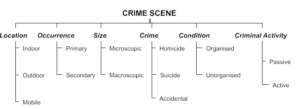
1. Location
- Indoor: Crime scenes located within enclosed structures (e.g., homes, buildings).
- Outdoor: Crime scenes located outside in open areas (e.g., streets, fields).
- Mobile: Crime scenes associated with vehicles or other mobile objects that can move from one place to another.
2. Occurrence
- Primary Scene: The main location where the crime took place.
- Secondary Scene: Additional locations related to the crime, where evidence may have been moved or found (e.g., a suspect’s home, vehicle).
3. Size
- Microscopic: Small-scale crime scenes that focus on specific, minute pieces of evidence (e.g., bloodstains, fingerprints).
- Macroscopic: Large-scale crime scenes that encompass entire areas or rooms (e.g., a whole house, a section of a forest).
4. Type of Crime
- Homicide: Crime scenes involving unlawful death.
- Suicide: Scenes where a death appears to be self-inflicted.
- Accidental: Scenes where incidents result in unintended harm or death, often requiring verification that no foul play was involved.
5. Condition
- Organised: Crime scenes that appear planned, showing evidence of premeditation and careful actions by the perpetrator.
- Unorganised: Crime scenes that appear chaotic, often impulsive, and lacking order, possibly suggesting a spontaneous act or inexperienced perpetrator.
6. Criminal Activity
- Passive: Crime scenes where the criminal activity is low-energy or involves minimal physical interaction (e.g., poisoning, fraud).
- Active: Crime scenes with high-energy interactions, often involving direct physical contact or aggression (e.g., assaults, break-ins).
Preservation of Crime Scenes
-
Preserving a crime scene is crucial to avoid contamination or loss of evidence. Preservation involves careful, methodical steps to secure the scene and protect all physical, biological, and digital evidence.
-
Steps in Crime Scene Preservation:
- Securing the Scene: First responders secure the perimeter, restricting unauthorized access.
- Documentation: Detailed photography, videography, sketches, and notes are taken before evidence collection.
- Search Methods: Using methods like grid, spiral, or zone search to systematically locate all evidence.
- Collection of Evidence:
- Handling Biological Evidence: Use gloves, masks, and sterile equipment to prevent contamination.
- Handling Digital Evidence: Follow cyber protocols to ensure the integrity of digital data.
- Proper Packaging: Each piece of evidence is packed separately in appropriate containers (e.g., paper bags for biological samples, plastic bags for non-biological).
- Labeling and Chain of Custody: Label all evidence with details such as the case number, date, and time of collection. Chain of custody ensures evidence remains unaltered and accounted for.
-
Challenges in Crime Scene Preservation:
- Environmental Factors: Weather or natural conditions (like rain or heat) may degrade evidence in outdoor scenes.
- Human Interference: Unauthorized personnel or onlookers may disturb or contaminate the scene.
- Time-Sensitive Evidence: Biological evidence and certain chemicals deteriorate over time, requiring prompt collection.
Criminal Investigations
Criminal investigations aim to systematically collect, analyze, and preserve evidence to reconstruct events and establish facts that identify suspects and victims, ultimately bringing perpetrators to justice. Investigators employ various forensic techniques and methods based on the crime type, scene characteristics, and the nature of the evidence.
1. Unnatural Deaths
- Definition: Unnatural deaths include fatalities from external causes such as homicide, suicide, accidental death, or unexplained circumstances.
- Investigative Focus:
- Autopsy and Medical Examination: Determines the cause and manner of death (e.g., asphyxiation, stabbing, poisoning).
- Scene Analysis: Collect evidence from the death scene, including bloodstains, fingerprints, and personal items.
- Witness Testimonies: Interviews with family, friends, or witnesses to understand the victim’s background, relationships, and any threats.
- Types of Evidence: Bloodstains, fingerprints, weapon marks, toxicology reports, medical records.
2. Criminal Assaults
- Definition: Criminal assaults are violent physical attacks on individuals, potentially leading to serious injury or death.
- Investigative Focus:
- Injury Analysis: Examine the nature of injuries (e.g., blunt force trauma, lacerations) to determine the type of weapon used and the sequence of events.
- Suspect Identification: Gather fingerprints, DNA, or eyewitness statements to identify the assailant.
- Behavioral Analysis: Profiling techniques may help understand the motive and pattern of the attacker.
- Types of Evidence: DNA (e.g., blood, saliva), fingerprints, weapon traces, clothing fibers, and CCTV footage.
3. Sexual Offenses
- Definition: Sexual offenses include crimes involving sexual assault, molestation, and rape, often associated with physical, psychological, and forensic challenges.
- Investigative Focus:
- Victim Examination: A medical exam, including a Sexual Assault Evidence Kit (SAEK), is conducted to collect biological evidence and assess injuries.
- Collection of Biological Evidence: DNA evidence (e.g., bodily fluids, hair) is crucial in linking the suspect to the victim.
- Interviewing Victims and Witnesses: Sensitive questioning and counseling are provided to support the victim and gather information.
- Types of Evidence: Bodily fluids, hair, fibers, bruising patterns, and items of clothing.
4. Poisoning
- Definition: Poisoning involves the intentional or accidental ingestion, inhalation, or exposure to toxic substances leading to injury or death.
- Investigative Focus:
- Toxicology Tests: Conduct tests on blood, urine, stomach contents, and tissues to identify toxins or drugs.
- Scene Analysis: Search for signs of poison containers, syringes, or medications at the scene.
- Background Check: Gather information about the victim’s lifestyle, relationships, and any recent activities involving substances.
- Types of Evidence: Chemical residues, medications, bodily fluids, autopsy reports, and environmental samples.
5. Vehicular Accidents
- Definition: Vehicular accidents cover collisions and hit-and-run cases involving vehicles, which may lead to property damage, injury, or fatalities.
- Investigative Focus:
- Scene Reconstruction: Analyze skid marks, vehicle damage, and debris to reconstruct the event’s timeline and possible causes.
- Witness Accounts and Surveillance Footage: Testimonies and video evidence aid in understanding circumstances and identifying responsible individuals.
- Mechanical Inspection: Examine vehicle conditions, such as brake functionality, tire quality, and possible defects.
- Types of Evidence: Tire marks, debris, vehicle parts, CCTV footage, injury patterns, and toxicology reports.
Courts
The judicial system in India is organized in a hierarchy to address civil and criminal cases, each level having specific types, powers, and jurisdictions. Courts operate under various legal frameworks, such as the Criminal Procedure Code (Cr.P.C.), 1973, and the Indian Evidence Act, 1872, which also define the role of experts and admissibility of evidence.
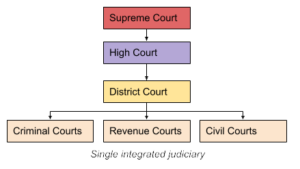
Types of Courts, Powers, and Jurisdiction
-
Supreme Court of India:
- Jurisdiction: Apex court with original, appellate, and advisory jurisdiction.
- Powers: Has the authority over constitutional matters, appeals, and disputes between states and the central government.
-
High Courts:
- Jurisdiction: Each state or union territory has a High Court with original and appellate jurisdiction.
- Powers: Handles cases under its territorial jurisdiction, can hear appeals, and has supervisory powers over subordinate courts.
-
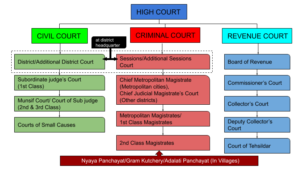
District and Sessions Courts:
- Jurisdiction: Serve as the principal courts in a district for both civil (District Court) and criminal cases (Sessions Court).
- Powers: District Courts hear civil cases, while Sessions Courts handle serious criminal cases, such as those involving severe punishments.
-
Subordinate and Magistrate Courts:
- Jurisdiction: Lower-level courts handling minor civil and criminal matters.
- Powers: Magistrate Courts are categorized into Chief Judicial Magistrate, First-Class Magistrate, and Second-Class Magistrate, each with specific powers for sentencing and case handling.
Admissibility of Evidence in Courts
- Indian Evidence Act, 1872: Governs the rules for admissibility of evidence in Indian courts.
- Types of Evidence Admissible:
- Oral Evidence: Statements made by witnesses in court, which must be direct.
- Documentary Evidence: Written or recorded material (documents, digital files) relevant to the case.
- Material Evidence: Physical objects or exhibits presented in court.
- Expert Evidence: Opinions provided by experts, such as forensic scientists, which are admissible to aid the court in understanding complex facts.
- Relevance and Competence: For evidence to be admissible, it must be relevant, competent, and comply with established procedures under the Evidence Act.
Definition of Experts
- Expert: Defined under Section 45 of the Indian Evidence Act, an expert is an individual with specialized knowledge, skill, or experience in a specific field such as science, art, trade, or the like. Experts provide their opinion on matters beyond the understanding of laypersons.
- Examples: Forensic scientists, medical practitioners, document examiners, ballistics experts, and fingerprint analysts.
Provisions in Cr.P.C., 1973 & Indian Evidence Act Relating to Experts and Their Reports
- Section 45 of the Indian Evidence Act: Allows expert opinions as admissible evidence on matters requiring specialized knowledge (e.g., fingerprints, handwriting, toxicology).
- Sections 293, Cr.P.C. 1973: Enables courts to consider reports from government scientific experts, such as forensic reports, without the need for the expert’s personal appearance unless explicitly required by the court.
- Section 46, Indian Evidence Act: Allows experts to be cross-examined on their opinions, enhancing the credibility and reliability of expert testimony.
Court Procedures Pertaining to Expert Testimony & Witness
- Examination-in-Chief: The expert witness presents findings and opinions in court, explaining how evidence was analyzed and conclusions were reached.
- Cross-Examination: Defense or opposing counsel questions the expert, challenging the methodology, qualifications, and findings to verify credibility.
- Re-Examination: The counsel who called the expert may clarify points questioned during cross-examination.
- Presentation of Expert Reports: Expert reports are presented as written documentation. Courts may accept the report directly under Section 293 Cr.P.C. if it is from a certified government lab or call the expert to testify.
- Reliability of Expert Testimony: Courts assess the reliability of an expert’s opinion based on their qualifications, methodologies, and adherence to standardized procedures.